
Agras T70P in Windy Wildlife Work: Flight Height
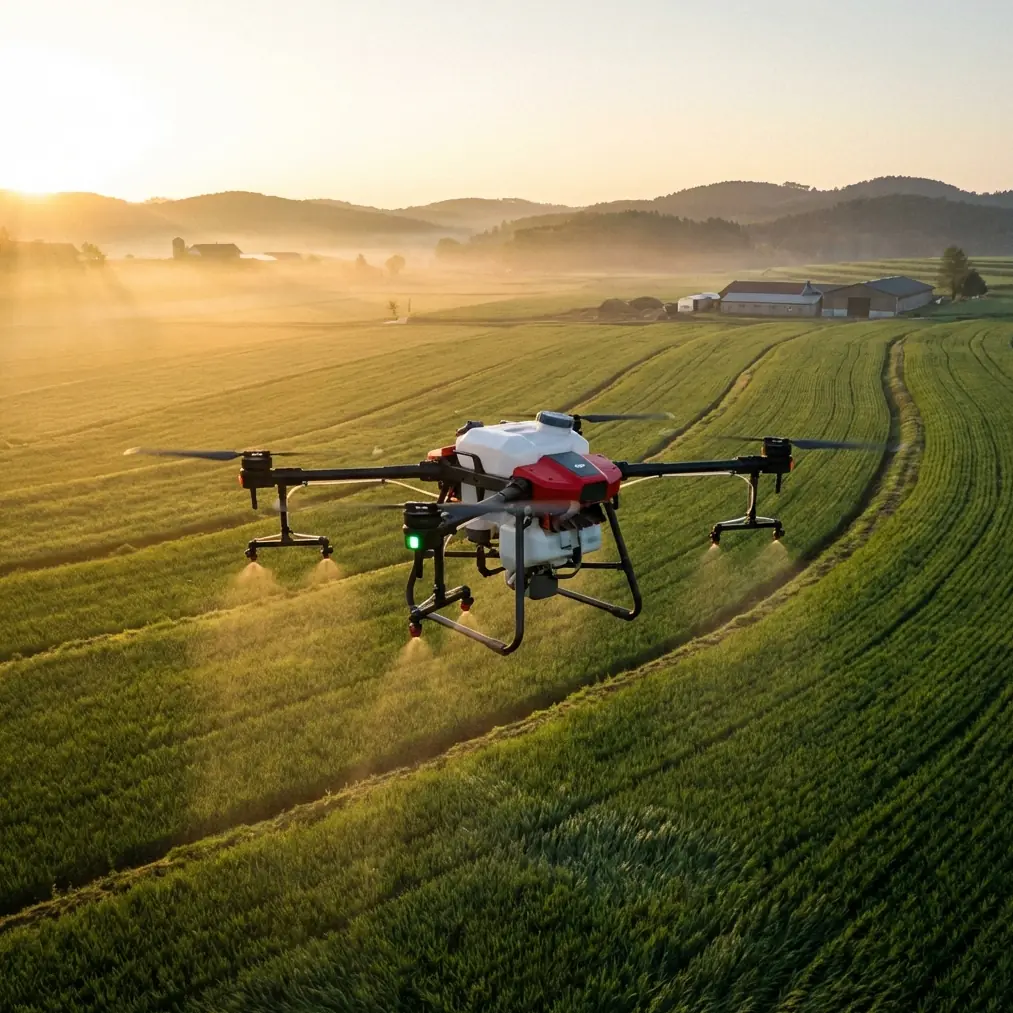
Agras T70P in Windy Wildlife Work: Flight Height, Mapping Discipline, and What Actually Matters in the Field
META: Practical Agras T70P guidance for windy wildlife tracking, with flight altitude strategy, mapping workflow discipline, data management, and precision lessons drawn from real UAV operations.
People do not usually associate the Agras T70P with wildlife tracking first. They think spraying, spreading, acreage, throughput. That’s understandable. But in rough field conditions, especially in open, windy landscapes, the same traits that make an agricultural platform useful at scale can also make it valuable for wildlife-related observation and habitat work—provided the operation is planned with discipline.
That “provided” is doing a lot of work.
If you are trying to track wildlife movement corridors, identify grazing pressure, monitor habitat edges, or document disturbance in windy conditions, the aircraft is only one part of the system. The more decisive factors are flight altitude, map alignment, data sharing, and how reliably your team can turn repeated flights into usable spatial evidence over time.
This is where many operations quietly fail. Not because the aircraft cannot fly, but because the workflow around it is weak.
Start with the real constraint: wind changes what “good altitude” means
For wildlife tracking, there is no universal perfect height. The right altitude is always a compromise between image detail, coverage efficiency, disturbance risk, and stability. In windy conditions, that tradeoff gets sharper.
Fly too low and the aircraft spends more time reacting to gusts relative to its ground track. Your coverage becomes less consistent, your overlap can suffer, and repeated lines may drift enough to reduce the value of comparisons between surveys. Fly too high and you gain smoother coverage, but lose the detail needed to distinguish fresh trails, bedding areas, crop intrusion paths, or small habitat signatures that tell you where animals have actually been.
For most windy wildlife-monitoring tasks with a platform like the T70P, the useful insight is this: do not choose altitude based only on maximum visible area. Choose the lowest altitude that still preserves stable line keeping and repeatable coverage in the day’s wind.
That sounds simple. In practice, it means watching for three field cues:
Ground detail remains actionable
You need enough resolution to interpret sign, edge conditions, and repeated movement patterns.The aircraft maintains consistent swath behavior
Even if your mission is not conventional crop application, stable swath width matters because it affects how evenly you can document the landscape.Your repeated passes are spatially comparable
If your second survey cannot be cleanly aligned with the first, your dataset loses value fast.
In wind, I generally favor a slightly higher operating altitude than teams initially want, but not so high that the survey turns into a broad visual impression instead of evidence. The best altitude is the one that protects repeatability. Wildlife work benefits more from consistent surveys over time than from one dramatic but noisy pass at ultra-low level.
Why centimeter thinking matters, even when the target is biological
Wildlife tracking may sound observational, but operationally it is a spatial problem. That is why centimeter precision and RTK Fix rate belong in the conversation, even if your end goal is ecological rather than agronomic.
If you are trying to compare habitat change, trail development, forage pressure, or water-edge movement over several flights, positional uncertainty becomes the hidden enemy. A strong RTK Fix rate does not just make a map look better. It helps your team answer the question that matters: is that change real, or is it just misalignment?
The reference material around ArcGIS workflows underscores this in a practical way. It notes that a city- or province-level survey unit can generate thousands of orthomosaic outputs from a single census cycle. That is not a theoretical number. Once repeated UAV surveys accumulate over seasons or years, the burden shifts from flying to managing, retrieving, and comparing imagery.
That has direct relevance for a T70P wildlife program.
If your field team is collecting orthomosaics, sample points, and occasional oblique models, those assets need to be shared and organized in a system that supports search by time, area, and resolution. The ArcGIS reference specifically points to a portal-based sharing model where orthophotos, sampling points, and oblique photogrammetry models can be distributed across teams and devices. Operationally, that means a biologist, field pilot, land manager, and analyst can all work from the same current geospatial record rather than emailing exported screenshots around.
That is not glamorous. It is also the difference between a program and a pile of files.
The overlooked field detail: map offset can ruin a mission before takeoff
One of the most useful details in the references is not about a headline flight or market size. It is about map offset.
The ArcGIS document warns that satellite imagery inside China may contain positional shift and recommends enabling the appropriate domestic map correction setting in DJI GO and Altizure before takeoff to improve sample-location finding and flight boundary planning.
Even if your wildlife project is outside that exact regulatory mapping environment, the lesson is broader and valuable: never assume the basemap is right enough for mission planning.
For T70P users in wildlife and habitat work, this has a concrete consequence. If you are tracking nesting zones, fence-line breaches, salt lick activity, or animal crossing points in a windy area, a map base with positional error can cause:
- incorrect mission polygons
- misplaced takeoff expectations
- wasted battery on reacquisition
- poor repeatability between survey dates
In other words, your aircraft may perform correctly while your operation still produces bad data.
My recommendation is simple. Before a formal survey cycle begins, verify a small control area on the ground. Compare known field features to the planning basemap. If offset is present, correct it in the workflow before building a season’s worth of missions on a flawed reference. This is especially important if the wildlife target is tied to narrow linear features such as creek banks, hedgerows, levees, or field margins.
What an agricultural aircraft teaches us about disturbance and coverage
The T70P belongs to a class of UAVs shaped by payload, stability, and repeatability. That matters in wildlife work because wind punishes weak platforms. One of the reference documents, though focused on a wider drone-industry view, makes an important technical point: aircraft that carry load place higher demands on flight control, stability, and cruise performance, and those demands create a meaningful technical barrier.
That observation applies beyond delivery or field operations. In windy wildlife monitoring, an aircraft designed around load-bearing control authority can offer a steadier working envelope than a lightly built platform that looks adequate on calm days but degrades quickly when gusts arrive.
This does not mean bigger is always better. It means the platform’s control behavior under environmental stress matters more than brochure simplicity.
It also means your optimal flight altitude is tied to how the aircraft actually holds line in wind, not just what the mission planner suggests. If the T70P can maintain cleaner track fidelity at a modestly higher height, that can yield better orthomosaics, cleaner repeatability, and less disturbance to animals than forcing low-altitude passes that look precise on paper but generate unstable data.
For wildlife-sensitive work, disturbance is not only acoustic. It includes repeated corrections, hovering indecision, and awkward turns near the target zone. A smooth, pre-planned survey at the right height is often less intrusive than a lower, more dramatic flight.
Build a repeatable evidence chain, not a one-off flight
I often see teams treat wildlife drone work as an image-capture exercise. It should be treated as an evidence chain.
That chain has five links:
1. Basemap validation
Check alignment before the first mission. If the base is wrong, the whole survey season is compromised.
2. Mission altitude chosen for repeatability
In wind, prioritize stable coverage over aggressive low-altitude detail chasing.
3. Precision logging
Monitor RTK Fix rate and note any periods of degraded positional confidence.
4. Structured data publication
Use a shared portal environment so orthomosaics, sample points, and derived layers remain discoverable and comparable.
5. Cross-season retrieval
A good system should let you pull imagery by date, area, and resolution quickly. The ArcGIS reference highlights this exact value proposition: metadata-driven image management reduces long-term handling cost and increases the practical value of the imagery archive.
For a wildlife program, that last point is decisive. If your team cannot efficiently compare spring and autumn movement patterns, or this year’s habitat edge against last year’s, the UAV has only delivered pictures, not insight.
The Doha lesson: time compression changes operational thinking
At first glance, the EHang news from Doha seems unrelated to an Agras T70P wildlife workflow. It is not directly about agriculture or habitat monitoring. Still, one detail is worth attention because it reveals something fundamental about aerial operations.
In Doha, the EH216-S completed an urban route between Doha Port and Katara Cultural Village in about 8 minutes, cutting comparable ground travel by roughly 70%. That was also described as the first urban-environment eVTOL passenger flight in the Middle East, conducted with authorization from the Qatar Civil Aviation Authority and support from the transport ministry.
Why does that matter here?
Because it shows how aerial systems create value when they compress time over difficult or congested terrain. Wildlife operations face a different terrain problem, but the logic is similar. In windy, remote, or fragmented field conditions, the usefulness of a UAV often comes from shortening the time between question and answer:
- Is herd pressure moving toward a vulnerable crop edge?
- Has a habitat corridor shifted after irrigation or mowing?
- Are animals using the same crossing path after recent weather?
- Did a restoration plot hold ground cover after wind exposure?
Aerial systems matter when they reduce the delay between observation need and operational response. The Doha case is urban mobility; your T70P mission is environmental monitoring. Different use cases, same underlying advantage: air routes bypass friction.
Practical altitude guidance for windy wildlife tracking
If I had to reduce this to one field rule for T70P users, it would be this:
Set altitude by the minimum detail you truly need, then raise it slightly if wind is degrading line consistency.
That small upward adjustment often improves the mission more than teams expect.
Here’s how to apply it on site:
- Define the smallest feature you need to interpret confidently.
- Fly a short test segment at your initial planned height.
- Review edge clarity, overlap consistency, and positional stability.
- If gusts are forcing visible correction behavior, step the mission higher rather than lower.
- Recheck whether the resulting ground detail still supports the biological question.
This is a better process than relying on habit from crop operations or forcing a cinematic low pass because it feels more “accurate.”
If your work also intersects with habitat treatment or agricultural adjacency, keep concepts like spray drift, nozzle calibration, and swath width in the operational picture even when the day’s mission is observational. Why? Because the same site may cycle between monitoring and intervention. Good teams do not separate those workflows mentally. They manage the landscape as one spatial system.
And if you are layering in multispectral outputs alongside visual imagery, hold your altitude strategy steady enough across dates that your comparisons remain meaningful. Data richness is wasted if acquisition geometry changes too much between flights.
Weather resistance is not permission to get casual
Ruggedness ratings such as IPX6K are useful in real-world field work, especially where dust, moisture, and washdown resilience matter. But environmental protection is not a substitute for judgment. Wind remains an image-quality problem, a repeatability problem, and sometimes an animal-disturbance problem even when the aircraft is physically capable of flying.
The strongest operators are conservative in one specific way: they cancel or redesign missions based on data quality thresholds, not just airworthiness.
That mindset protects your archive. And over time, archive quality is what makes wildlife drone operations credible.
Final thought for T70P users in this niche
The Agras T70P can be a serious tool for windy wildlife tracking if you use it like a measurement platform rather than a flying camera. The crucial decisions happen before the motors spool up: validate the map, choose altitude for stable repeatability, preserve RTK integrity, and store outputs in a system built for long-term retrieval.
If you are refining a T70P workflow for habitat surveys or wildlife movement monitoring and want to compare mission design options with an operator who understands both aircraft behavior and mapping discipline, you can message the field team here.
The aircraft matters. The workflow matters more.
Ready for your own Agras T70P? Contact our team for expert consultation.