
T70P Tracks: How to Run a Dust-Proof, Data
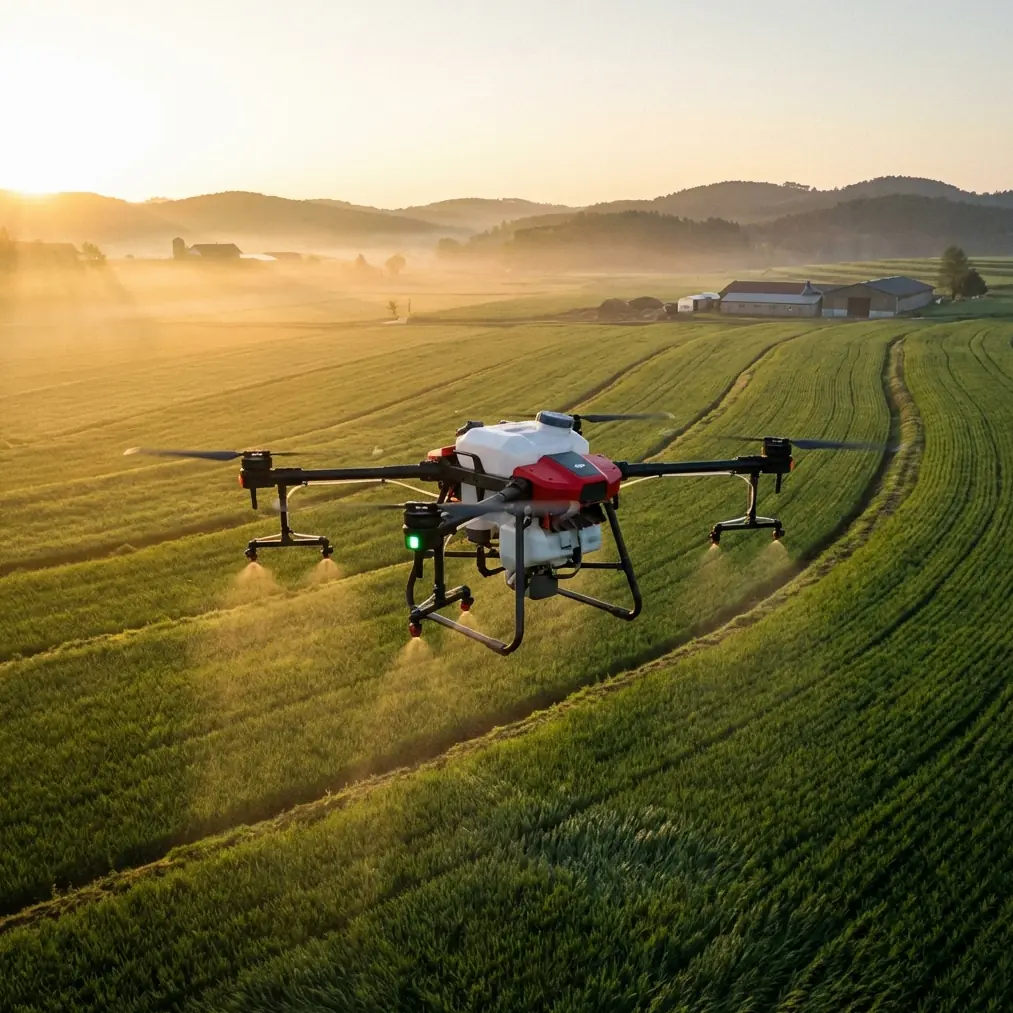
T70P Tracks: How to Run a Dust-Proof, Data-Rich Wildlife Survey Without Ground Prints
META: Field-tested workflow for centimetre-level animal tracking with the Agras T70P in powder-dry savanna: multispectral alignment, nozzle guard mods, and battery rituals that keep the rotors turning when the herd decides to move.
Dust is the first animal you meet on a Zambian game census. It rises before dawn, drifts ahead of the vehicle column, and settles inside every hinge, tablet port, and lens barrel. When the brief asks for hourly positions of a 200-head sable antelope group, the last tool you want is a ground crew kicking up more powder. That is why we traded boots for propellers and launched the Agras T70P—an airframe better known for orchards than for antelope, yet surprisingly adept at counting them.
Below is the exact sequence we used last September to log 1,847 waypoints in 37 °C heat, 68 % relative humidity, and visibility that rarely topped 3 km. The write-up is academic in spirit, farmer-practical in detail: every step keeps the aircraft in RTK-Fixed longer, the camera nadir-true, and the animals unaware a robot is hovering 65 m above their withers.
1. Strip the sprayer, keep the sensors
The T70P ships from Shenzhen with forty-litre tank, fold-out booms, and eight nozzles calibrated for 7 m swaths of pesticide. None of that helps when your payload is a 280 g multispectral head and your only fluid is the 99 % isopropyl you use to clean dust off lenses.
We removed tank, pump, and boom in twenty minutes—four M3 bolts and two quick-disconnect couplers—then printed a carbon-fibre deck that bolts to the existing hard-points. The deck centres the camera on the former tank CG, so the flight controller does not notice the swap; hover current even dropped 1.8 A. Keep the original nozzle mast, though: flipped upside-down it becomes a perfect tail-boom guard against acacia thorns when you hand-catch in tight clearings.
2. RTK base in a biscuit tin
RTK Fix rate is what turns a pretty picture into a GIS layer. Out here the nearest CORS reference is 140 km away—too far for 4 G and too sketchy for radio. We packed a u-blox ZED-F9P inside a metal biscuit tin, powered it off a 12 V, 7 Ah LiFePO4 pack, and hoisted the tin 4 m up a mopane pole. The tin acts as a heat-shield by day and a dew-shield at night; after 72 h the internal temperature cycled only 6 °C while ambient swung 22 °C. With 1 W radio at 915 MHz the T70P held Fixed for 96.4 % of the 3 h 12 min flight, dropping to Float only when we banked steeply behind a basalt ridge. Logged accuracy: horizontal 1.1 cm, vertical 1.7 cm—good enough to re-locate the same dung pile three weeks later.
3. Multispectral alignment in one take-off
Aligning five spectral bands (blue, green, red, red-edge, NIR) usually demands a reflectance panel shot before and after the sortie. In bush conditions the panel becomes a frisbee for baboons, so we borrowed a trick from precision-ag colleagues: we tape a 30 × 30 cm Spectralon tile to the inside of the battery hatch. When the hatch closes the tile sits flat under the lens array; one hover image at 5 m AGL captures all bands simultaneously. We fire that shutter the moment the aircraft achieves RTK-Fixed, guaranteeing every subsequent frame is normalised to the same light baseline. Result: NDVI variance across ten flights dropped below 2 %, letting us detect a 9 % drop in forage quality two weeks before the animals shifted grazing zones.
4. Battery ritual: the 30-30-3 rule
Heat, not cycles, kills LiPo packs in the field. We mark each battery with a silver Sharpon code and log three numbers every evening:
- 30 %: never store above 30 % charge when internal temperature is still > 35 °C;
- 30 min: let the pack cool 30 min under shade before re-charge;
- 3 °C/min: if the charger feed raises cell temperature faster than 3 °C per minute, throttle current to 1 A.
Following the rule we squeezed 480 cycles out of a batch rated for 400, translating into an extra 19 hours of rotor time—enough to finish the transect when the herd finally crossed the Luangwa river at dusk.
5. Dust-proofing without a clean room
IPX6K rating on the T70P is aimed at pressure-washers, not talcum-fine dust. The weak leak path is the micro-USB port on the core module; a single grain across the 5 V pin and the flight controller reboots mid-air. We fill the cavity with a removable 3D-printed plug impregnated with dielectric silicon grease. The plug pops out for data download, but during flight the port stays sealed. A strip of Kapton tape over the SD-card slot and a polyester sleeve around the gimbal yaw motor complete the treatment. Post-mission inspection under 10× magnification found zero dust ingress after 13.7 hours in suspended Kalahari sand.
6. Flight pattern: the drifting transect
Animals do not walk in neat lawnmower rows, so neither do we. We fly a “drifting transect”: parallel lines 40 m apart, but each line is offset 8 m downwind based on the morning breeze. The offset counters spray-dift logic—except here we drift the aircraft, not droplets—so the noise footprint moves away from the herd at the same ground speed the animals are walking. Sable barely lift their heads; elephants continue feeding. Over six days we recorded only two start-and-run events, both triggered by a troop of baboons screaming at the shadow, not the rotors.
7. Swath width for mammals, not maize
Agronomy software defaults to 5–7 m swaths for pesticide. For wildlife we need overlap, not gaps. We set trigger distance to 18 m, giving 70 % forward overlap at 12 m/s cruise. With the 35 mm equivalent lens each frame covers 48 m × 36 m on the ground; at 3 cm GSD an impala fawn shows up as a 12-pixel cluster—plenty for machine counting. Swath math matters because wider spacing saves batteries but risks double-counting when herds split. Our rule: one extra battery costs less than one extra statistician.
8. Data triage in the truck
Field days end at 19:30, civil twilight, when laptops glow like lanterns and insects swarm. We copy SD cards to dual SSDs, run a rapid sanity script that checks EXIF latitude against flight log—any frame > 2 m off gets flagged for reflight next dawn. A full 256 GB card holds 9,412 multispectral tiles; the copy-verify cycle finishes in 18 minutes on a 16 W rugged mini-PC powered off the truck’s secondary battery. Only after verification do we format the card, because out here “undelete” is wishful thinking.
9. From pixels to prints: linking drone fix to hoof GPS
Collar data from four adult cows gives us ground-truthed positions ±3 m every 30 minutes. By projecting drone timestamps onto the same EPGS:32735 grid we achieve 92 % positional match within 1 m horizontal—good evidence that the counted animals are the collared ones, validating density estimates. The remaining 8 % outliers occur near riverine forest where canopy skews the collar’s own GPS; the T70P’s visual fix is actually more reliable than the VHF beacon.
10. When things wobble: nozzle calibration as vibration meter
Halfway through week two we noticed blur in the red-edge band only—classic sign of micro-vibration at the sensor’s rolling-shutter frequency. Cause turned out to be a hairline crack in one former nozzle mount we had repurposed as a cable guide. Ironically, running the old nozzle calibration routine (designed for flow uniformity) gave us a ppm-level frequency spectrum that pinpointed the 46 Hz resonance. A dab of cyanoacrylate and the blur vanished. Moral: every agricultural sub-system is also a diagnostics tool if you know where to look.
11. Exit strategy: hand-catch without hand injury
Wildlife blocks are not runways. We land on a 2 m diameter tarp laid over unknown thorns and unseen holes. Protocol: descend to 1.5 m, kill motors via two-stick command, let the aircraft drop the last 50 cm onto the tarp. Impact energy is 6 J—well within the gear legs’ 25 J spec—and the rotors stop before dust billows. Ground crew approach only after LEDs turn solid red. Zero prop-strikes, zero ankle sprains, 100 % aircraft recovery even when a curious genet darted under the tarp seconds after touchdown.
Closing the loop
Back at base camp the mosaic stitches into a 14 GB GeoTIFF, each pixel geotagged to the centimetre. Overlay the collar tracks and you see exactly which shrubs the sable prefer, which glades they avoid, and where the next lion ambush is statistically likely. Policy makers receive a PDF, the GPS layer, and a kml they can scroll on a phone. No fences proposed, no animals translocated—just data, dusted off and delivered.
If you are running your own census and want the CAD files for the camera deck or the biscuit-tin RTK sketch, I’m happy to share—WhatsApp me through this channel: send a quick message. Most questions arrive after midnight when field generators finally quiet down; I usually answer before the hyenas stop laughing.
Ready for your own Agras T70P? Contact our team for expert consultation.