
Agras T70P in Vineyards: A Smarter Way to Track Rows
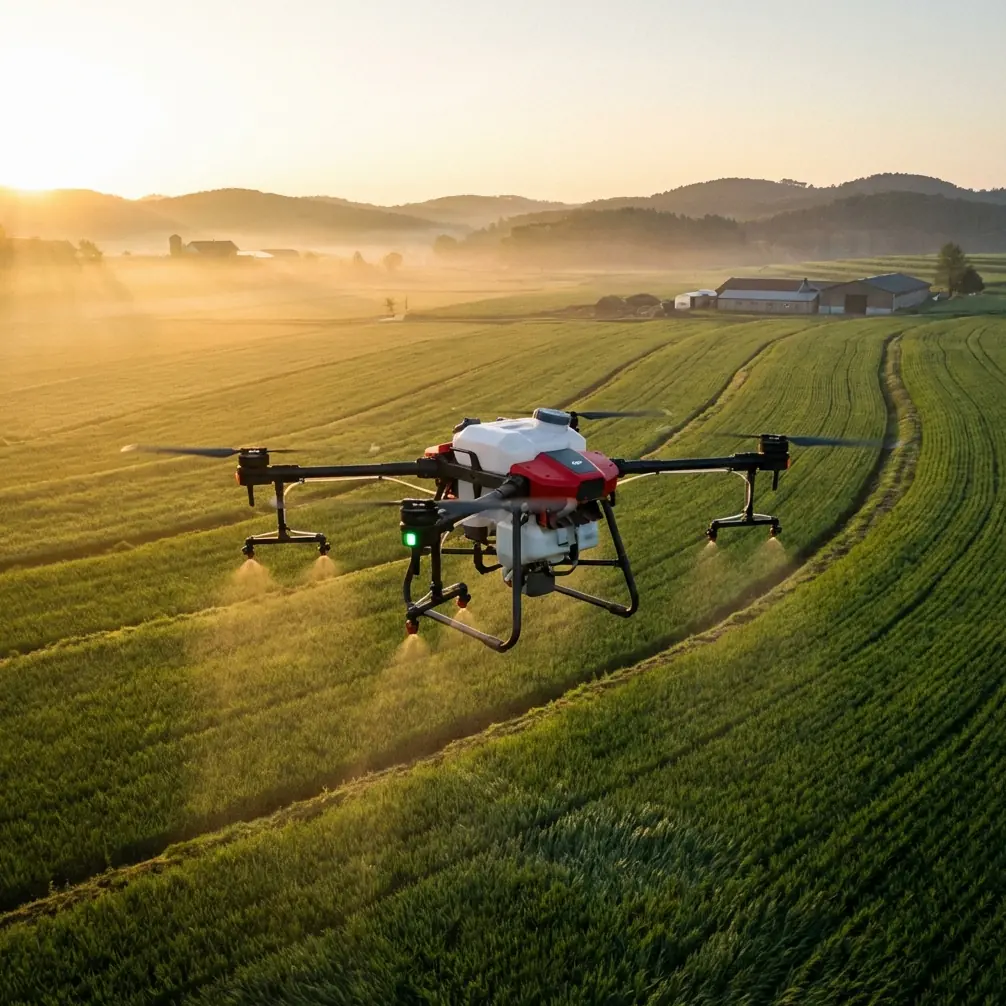
Agras T70P in Vineyards: A Smarter Way to Track Rows, Control Drift, and Train Pilots on Difficult Ground
META: Expert Agras T70P article for vineyard operators working in complex terrain, covering row tracking, spray drift control, nozzle calibration, RTK precision, training workflow, and battery management.
Vineyards punish sloppy drone operations.
Rows bend with the hillside. Canopy density changes block by block. Wind funnels through valleys, then disappears near a berm. A mission that looks simple on a flat field becomes technical the moment the aircraft has to hold a clean line above uneven terrain while maintaining consistent droplet placement. That is exactly where an Agras T70P has to prove itself: not in ideal conditions, but in vineyards where precision, repeatability, and pilot discipline all show up in the crop.
If your goal is tracking vineyards in complex terrain, the real question is not whether the aircraft can fly the route. It is whether the entire operating system around the aircraft is disciplined enough to deliver uniform work. That means row tracking with centimeter precision, stable RTK fix behavior, correct swath width assumptions, clean nozzle calibration, and a pilot training approach that does not overload beginners on day one.
There is a useful lesson hidden in the reference material behind this article. One document breaks down control logic in a very practical way: left stick for altitude and yaw, right stick for fore-aft movement and side-to-side movement, with the amount of stick deflection directly affecting speed. Another training reference makes an even more valuable point: split learning into essential first-stage tasks and only later refine technique. Those two ideas may come from educational and model-flight contexts, but together they map surprisingly well to real T70P vineyard work.
The vineyard problem: accuracy is meaningless if the pilot cannot repeat it
Operators often talk about centimeter precision as if it solves everything. In vineyards, it does not.
Yes, precise positioning matters. RTK Fix rate matters. If the T70P is holding a stable RTK solution, the aircraft is far better equipped to stay centered over a narrow row corridor and maintain predictable spacing between passes. That matters when row geometry is irregular or terraces compress your margin for error. But precision data only becomes useful when the aircraft’s movement is also smooth and controlled. A jagged line flown with abrupt corrections can still create uneven coverage, missed clusters, and drift beyond the intended canopy.
This is why the control behavior described in the source matters operationally. The document states that greater stick movement increases speed, whether the aircraft is rotating, moving forward and back, or sliding left and right. That sounds basic. It is not. In vineyard flying, especially during manual intervention at row ends, obstacle avoidance, or terrain transitions, aggressive stick inputs usually create two problems at once: speed spikes and attitude changes. Those in turn alter spray deposition and raise drift risk.
The operator who understands stick amplitude as a speed command is less likely to overcorrect on slopes or near headlands. That translates into steadier entry and exit behavior, less overspray, and more consistent application across a variable canopy.
Why training method matters more than most operators admit
Many drone teams make the same mistake new aerobatic pilots make: they chase smooth perfection before they have built reliable fundamentals.
The second source argues for separating the factors required to complete a task from the refinements that can come later. It also emphasizes that early automation of core skills frees the brain for higher-level judgment. That is not just a teaching philosophy. It is probably one of the most practical ways to train T70P crews for vineyards.
A good vineyard training program should not begin with “master everything.” It should begin with staged competence.
First stage:
- Hold altitude consistently over changing terrain
- Maintain row centerline discipline
- Learn controlled turns at row ends
- Understand how small control inputs affect speed
- Confirm nozzle calibration and spray output before every serious mission
Second stage:
- Refine swath width strategy based on canopy density
- Adjust for micro-wind behavior in gullies and exposed slopes
- Improve timing of acceleration and deceleration
- Fine-tune route planning for irregular blocks
- Build judgment around drift risk by time of day
That training structure mirrors the source material’s logic almost perfectly. Separate what is necessary for successful completion from what can be polished later. In a commercial vineyard context, that approach has a direct payoff: fewer rushed corrections, fewer inconsistent passes, and shorter time to operational reliability.
The T70P’s real job in vineyards: stable line tracking through messy geometry
On paper, row tracking sounds like a mapping problem. In practice, it is a geometry-plus-fluid-delivery problem.
The T70P may fly a clean route, but if your swath width assumptions are wrong for the canopy, coverage still suffers. Vineyard rows are not broad-acre cereal passes. The crop structure is narrow, vertical, discontinuous, and highly sensitive to lateral misplacement. In some blocks, a swath width that looks efficient in the planner will leave shadow zones within the canopy. In others, overlapping too heavily increases runoff and waste.
This is where nozzle calibration becomes one of the most underrated parts of the whole workflow.
Calibration is not just about confirming flow. It is about matching output behavior to actual field speed, target canopy volume, and row spacing. When operators skip this step or rely on old settings from another block, they often blame the aircraft for what is really a liquid delivery mismatch. If the T70P is tracking correctly but application still looks uneven, calibration is one of the first places to look.
For vineyards on sloped terrain, calibration should be paired with realistic route speed assumptions. Remember the first source detail: greater control input produces greater movement speed. Even in semi-automated operations, any manual takeover, correction, or aggressive line re-entry can shift effective speed enough to affect dose consistency. That is why training and calibration cannot be treated as separate topics. They influence each other every day.
Spray drift is not just a weather issue
Ask enough vineyard managers about drone application and eventually someone says, “We had a little wind.” Usually that is an understatement.
Spray drift in vineyards is often created by a mix of factors: local wind channels, abrupt altitude changes, overconfident swath width settings, and unnecessary speed during turns or corrections. Complex terrain amplifies all of them. A hillside can create a calm zone in one row and a lateral push three rows later.
The T70P operator needs a drift mindset, not just a drift checklist.
That means understanding when row orientation relative to slope and wind increases the chance of off-target movement. It means reducing the temptation to recover time with higher speed in exposed sections. It also means recognizing that smooth aircraft behavior reduces variability in droplet path. Again, the source material’s control lesson applies directly: larger stick displacement means faster aircraft response. In the vineyard, faster is not automatically better. Often it is the beginning of inconsistency.
For teams trying to standardize procedures, one practical move is to create a simple “three-point drift check” before each block:
- Confirm actual wind behavior inside the rows, not just at the road.
- Verify nozzle calibration against today’s intended speed profile.
- Reassess swath width for the block’s canopy density and slope exposure.
That routine catches a surprising number of problems before the first productive pass.
RTK Fix rate is the quiet metric that keeps row tracking honest
A stable RTK solution is especially valuable in vineyards because the margin for lateral error is smaller than many operators realize. A few decimeters off line in an open field may go unnoticed. In a vineyard, that shift can mean one side of the canopy is under-covered while the other gets too much attention.
So when teams talk about centimeter precision, they should also talk about RTK Fix rate consistency over the entire mission area. If the aircraft is repeatedly moving between stronger and weaker positioning states near terrain breaks, tree lines, or structures, route execution quality can become uneven even before the pilot notices obvious path deviation.
Operationally, that means pre-mission checks should include not just mission design but signal confidence across the block. If certain zones are known to challenge fix stability, build that into route logic and pilot expectations. The T70P is most effective when precision guidance and human handling complement each other rather than compensate for each other.
A field-tested battery tip that saves more time than a spare charger
Battery management in vineyards rarely gets discussed with enough honesty. People talk about capacity. They should talk about rhythm.
Here is the field habit I recommend: do not run your battery rotation around theoretical maximum utilization. Run it around terrain-induced workload. In complex vineyard blocks, power consumption becomes less predictable because the aircraft is constantly adjusting for slope, turn timing, and line corrections. If you wait until packs are deeply cycled before rotating them out of the active pattern, you increase the chance of ending up with uneven mission fragments and rushed decisions late in a block.
A better method is to pair batteries to specific block segments and keep your turnaround sequence consistent all day. In practical terms, assign fresh packs to the most topographically demanding sections first, then use the steadier sections for the next rotation. This keeps performance more predictable and reduces the temptation to “squeeze one more row” out of a battery when the terrain is already asking more from the aircraft.
It also helps your crew. Predictable battery rhythm creates predictable loading, refilling, and route handoff rhythm. That lowers mental clutter, which matters in narrow-row work.
Why controller setup and pilot interface still matter on a modern ag drone
One of the more overlooked facts in the source material is the option to add a GameSir T1d controller via Bluetooth to a tablet while the aircraft remains connected over WiFi. Even though that reference comes from an educational drone context, the underlying operational lesson is relevant: physical control interfaces can improve handling quality for some users compared with screen-only virtual sticks.
That matters more than it sounds.
When a pilot has to make small, confident corrections at row ends or during unexpected deviations, tactile input often produces cleaner control than tapping glass. The reference also notes that the two physical sticks mirror the virtual stick functions. That kind of one-to-one control logic is useful in training because it reduces confusion. Pilots build muscle memory faster when the interface behaves consistently.
For T70P teams, the takeaway is not that they need a consumer game controller. The real takeaway is broader: interface clarity improves pilot consistency. If your operators struggle with manual interventions, review the control environment, not just the route settings. Better ergonomics often lead to better flying.
Multispectral thinking, even without a multispectral mission
Vineyard operators increasingly think in zones. Some have formal multispectral workflows. Others do not. Either way, the mindset is useful.
A T70P mission should not assume every row segment deserves identical treatment just because it shares a route file. Variability in vigor, canopy density, and moisture exposure changes how you should think about application quality. Even if the aircraft is not running a multispectral payload in the same flight workflow, decisions informed by prior block variability can improve route planning, swath width choices, and timing.
That is especially true in complex terrain where vine condition often changes with elevation and exposure. Precision in navigation should be paired with precision in agronomic intent. Otherwise the aircraft is simply being accurate about a mediocre plan.
The practical operating model that works
For most vineyard teams, the strongest T70P workflow is not built around one heroic pilot. It is built around repeatable systems:
- Use RTK-supported row tracking to protect line discipline.
- Confirm nozzle calibration against the actual block and day’s conditions.
- Treat swath width as a vineyard-specific variable, not a fixed default.
- Train pilots in stages so fundamentals become automatic before refinement begins.
- Prioritize smooth control inputs because speed variation affects coverage and drift.
- Manage batteries by terrain workload, not by optimistic theory.
- Build cockpit ergonomics and control consistency into training.
If you are reviewing a difficult block and want a second opinion on route logic or drift control strategy, you can message our vineyard drone team here.
The strongest argument for the Agras T70P in vineyards is not that it can fly a row. Many aircraft can do that. The stronger argument is that, when paired with disciplined training and careful setup, it can deliver repeatable work where terrain, canopy variation, and drift pressure usually expose weak operations. That is the difference between finishing a mission and finishing it well.
Ready for your own Agras T70P? Contact our team for expert consultation.