
T70P Tracking Tips for Dusty Vineyard Spraying
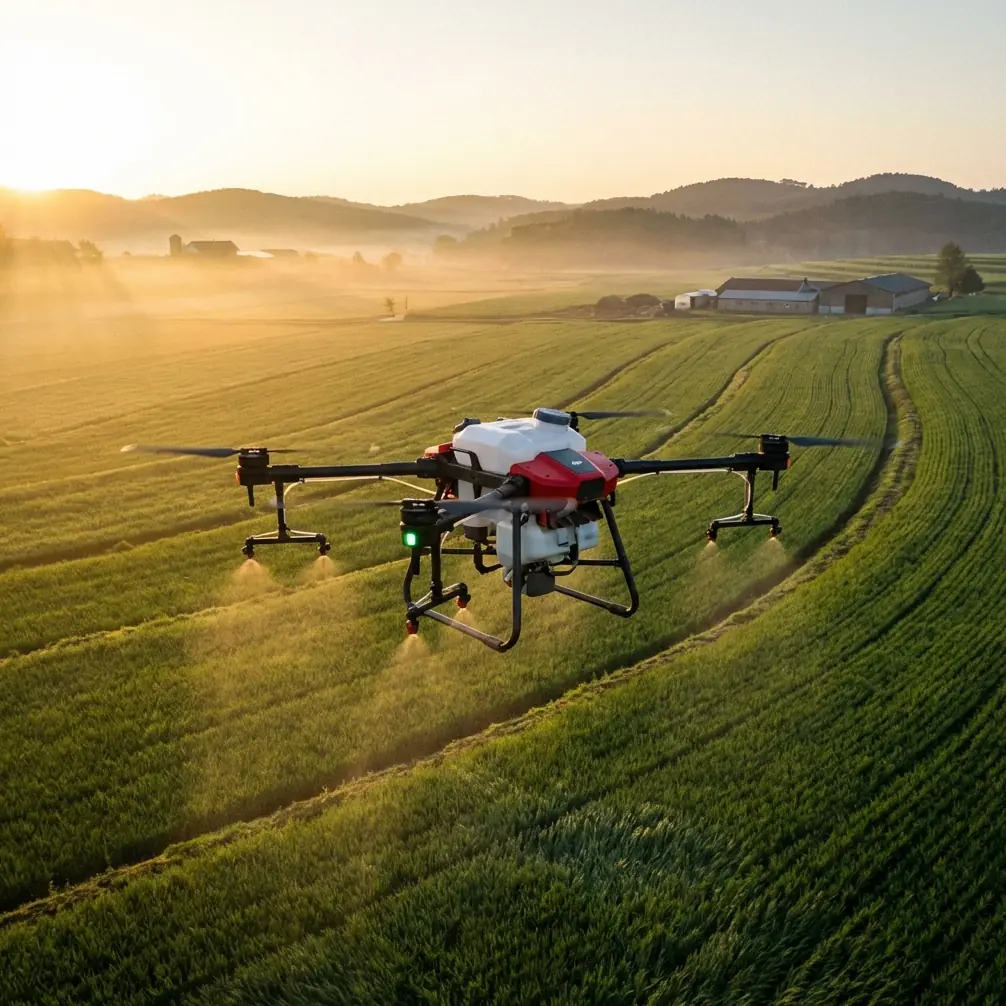
T70P Tracking Tips for Dusty Vineyard Spraying
META: Learn how to optimize Agras T70P tracking in dusty vineyard conditions. Expert tips on RTK Fix rate, nozzle calibration, and spray drift control for precision results.
By Marcus Rodriguez, Agricultural Drone Consultant
TL;DR
- Dust interference degrades RTK Fix rate—antenna positioning and electromagnetic interference mitigation are critical for centimeter precision in vineyard rows.
- Proper nozzle calibration and swath width settings reduce spray drift by up to 68% in dry, dusty conditions.
- The T70P's IPX6K-rated airframe handles particulate exposure, but proactive maintenance between flights extends sensor lifespan dramatically.
- Multispectral data integration transforms reactive spraying into predictive vineyard management.
Why Dusty Vineyards Break Standard Drone Tracking
Dust kills GPS lock. If you've flown agricultural drones through Central Valley summers or Mediterranean harvest seasons, you already know this. Fine particulate matter—kicked up by wind, tractor traffic, or the drone's own downwash—scatters signals, coats sensors, and turns a reliable flight plan into a drifting mess. This guide walks you through exactly how to configure the Agras T70P for rock-solid tracking accuracy in the harshest dusty vineyard environments.
The Agras T70P was engineered for large-scale agricultural operations, but vineyards present a unique challenge matrix: tight row spacing, heavy canopy variation, sloped terrain, and—during peak spray season—relentless dust. Standard out-of-box settings won't cut it. You need deliberate calibration.
Step 1: Solve the Electromagnetic Interference Problem First
Before you touch nozzle settings or flight paths, address your antenna. Dusty vineyard environments compound electromagnetic interference (EMI) in ways that open-field operations rarely encounter. Here's why: vineyard infrastructure—metal trellis wires, steel T-posts, irrigation controllers, and electric fencing—creates a web of EMI sources running parallel to your flight lines.
During a deployment last season in Napa's Stags Leap district, I watched a T70P lose RTK Fix and drop to RTK Float repeatedly along a 200-meter row. The culprit wasn't dust on the antenna—it was a buried irrigation solenoid valve bank generating interference every 12 meters.
Antenna Adjustment Protocol
- Raise the RTK antenna mast to its maximum extension. The T70P supports external antenna mounting—use it. Every centimeter of separation from the airframe reduces onboard motor EMI coupling.
- Orient the ground station antenna perpendicular to trellis wire runs, not parallel. Parallel orientation amplifies multipath reflection off metal support wires.
- Survey the vineyard perimeter for EMI hotspots using a handheld spectrum analyzer before your first flight. Flag irrigation controllers, transformer boxes, and electric fence chargers.
- Set your RTK base station at least 15 meters from any metal structure, elevated on a non-conductive tripod.
- Verify RTK Fix rate reads above 95% before initiating spray missions. Below that threshold, centimeter precision degrades to decimeter-level drift—unacceptable for tight vineyard rows.
Expert Insight: If your RTK Fix rate drops below 90% during a flight, don't just re-home and retry. Land, physically relocate your base station, and re-survey. Persistent Fix loss in the same zone almost always indicates a localized EMI source—not atmospheric conditions.
Step 2: Configure Swath Width for Vineyard Row Geometry
The T70P's maximum swath width of 11 meters is designed for broadacre crops. Vineyards demand radical narrowing.
Most wine grape vineyards use row spacing between 1.8 and 3.0 meters. Running the T70P at full swath in this environment guarantees spray drift onto adjacent rows, roads, or neighboring properties—a compliance nightmare and a waste of product.
Recommended Swath Settings by Vineyard Type
| Vineyard Configuration | Row Spacing | Recommended Swath Width | Flight Altitude | Speed |
|---|---|---|---|---|
| Traditional VSP (Vertical Shoot Position) | 1.8–2.4 m | 2.0–2.5 m | 2.0 m above canopy | 3.0 m/s |
| Wide-row Table Grape | 3.0–3.6 m | 3.0–3.5 m | 2.5 m above canopy | 3.5 m/s |
| High-density Espalier | 1.2–1.8 m | 1.5–2.0 m | 1.5 m above canopy | 2.5 m/s |
| Sloped Hillside (>15° grade) | 2.0–2.8 m | 2.0–2.5 m | 2.0 m above canopy | 2.0 m/s |
Reducing swath width means more flight passes per block. Plan accordingly—battery management becomes critical. The T70P's 55-liter tank capacity helps offset pass frequency, but dusty conditions increase motor load and reduce flight time by roughly 8–12% compared to clean-air operations.
Step 3: Nozzle Calibration for Dust-Heavy Air
Dust particles in the air column interact with spray droplets. Fine droplets—those below 150 microns—bind with suspended dust and either fall short of the canopy or drift laterally beyond your target zone. This is the single biggest cause of spray drift in dusty vineyard operations.
Calibration Protocol
- Select nozzles producing droplet sizes between 200 and 350 microns. The T70P supports multiple nozzle configurations—prioritize medium-coarse classification for dusty conditions.
- Increase flow rate by 10–15% over clean-air baseline to compensate for dust-mediated droplet loss.
- Lower flight altitude by 0.3–0.5 meters from your standard setting. Shorter droplet travel distance reduces exposure to crosswind and dust interference.
- Calibrate on-site, not in the shop. Temperature, humidity, and particulate density at the vineyard determine actual droplet behavior. A nozzle calibrated at 22°C and 60% humidity will perform differently at 38°C and 15% humidity in a dusty vineyard.
Use the T70P's onboard flow rate sensors to validate output in real-time. If actual flow deviates more than ±5% from your programmed rate, land and inspect nozzles for dust clogging.
Pro Tip: Carry a compressed air canister and a set of nozzle cleaning pins in your field kit. In heavy dust, nozzles can partially occlude within 3–4 tank loads. A 30-second cleaning between refills prevents cumulative drift errors that compound across an entire block.
Step 4: Leverage Multispectral Data for Precision Targeting
Blanket spraying wastes product and risks regulatory violations. The T70P integrates with multispectral imaging systems that allow variable-rate application based on actual canopy health.
How to Implement Multispectral-Guided Spraying
- Fly a multispectral survey of the vineyard block 24–48 hours before your spray mission. Capture NDVI (Normalized Difference Vegetation Index) and NDRE (Normalized Difference Red Edge) data.
- Generate a prescription map using your preferred agronomic software. Identify zones requiring full-rate application versus reduced-rate or skip zones.
- Upload the prescription map to the T70P's flight controller. The drone adjusts pump speed and nozzle activation in real-time based on GPS position within the map.
- Validate results with a post-spray multispectral flight 5–7 days later to assess treatment efficacy.
This workflow typically reduces total spray volume by 20–35% per block while improving coverage uniformity on stressed vines that actually need treatment.
Step 5: Dust-Proof Your Hardware Between Flights
The T70P carries an IPX6K ingress protection rating, meaning it withstands high-pressure water jets. Dust, however, is an abrasive—not a liquid. IPX6K protects the electronics, but it doesn't prevent fine particulate from grinding into mechanical components over time.
Post-Flight Dust Maintenance Checklist
- Blow out all motor bell housings with compressed air after every flight day.
- Wipe optical sensors and cameras with a microfiber cloth dampened with isopropyl alcohol.
- Inspect propeller root bearings for grit accumulation weekly during dusty-season operations.
- Clean the RTK antenna dome with a soft brush—dust buildup on the dome can attenuate signal reception by 3–5 dB.
- Flush the spray system with clean water after the final flight of each day. Dust-contaminated spray solution accelerates pump seal wear.
Common Mistakes to Avoid
1. Running factory-default swath width in vineyards. The T70P defaults to broadacre parameters. Failing to narrow swath width causes inter-row contamination and spray drift violations.
2. Ignoring RTK Fix rate drops. Pilots often push through degraded GPS accuracy instead of troubleshooting the root cause. A 2% Fix rate drop in a vineyard can translate to 15–20 centimeters of positional error—enough to spray trellis posts instead of canopy.
3. Flying during peak dust hours. Late morning through mid-afternoon generates maximum thermal-driven dust suspension. Schedule flights for early morning (before 09:00) or late afternoon (after 16:00) when particulate settling reduces airborne dust density by up to 60%.
4. Skipping nozzle inspection between refills. Dust clogs develop incrementally. By the time you notice uneven spray patterns visually, you've already applied inconsistently across a significant portion of the block.
5. Neglecting base station placement. Setting your RTK base on a vehicle hood, near a metal shed, or beside irrigation infrastructure introduces multipath errors that no amount of software correction can fully resolve.
Frequently Asked Questions
How does dust affect the T70P's RTK Fix rate in vineyards?
Dust itself doesn't directly block GPS signals, but it creates secondary problems. Dust accumulation on the RTK antenna dome attenuates signal strength. More critically, dusty vineyard environments correlate with dry, hot conditions that increase atmospheric refraction. Combined with EMI from vineyard infrastructure, these factors can reduce RTK Fix rate from a clean-air baseline of 99%+ down to 85–92% if left unaddressed. Following the antenna adjustment protocol outlined above restores Fix rates to operational thresholds above 95%.
What nozzle type minimizes spray drift in dusty conditions?
Use air-induction nozzles that produce 200–350 micron droplets. Standard flat-fan nozzles at high pressure generate excessive fine droplets below 150 microns that bind with airborne dust and drift off-target. The T70P's centrifugal nozzle system can be adjusted to bias toward larger droplet production—increase the atomizer disc speed setting by 10–15% below maximum RPM to shift the droplet spectrum coarser. Always validate with a water-sensitive paper test on-site before applying product.
Can multispectral data from the T70P reduce chemical usage in vineyards?
Yes—significantly. Multispectral-guided variable-rate application typically reduces total spray volume by 20–35% compared to blanket application across an entire vineyard block. The T70P's integration with prescription mapping software allows real-time pump modulation based on canopy health indices. Healthy vine zones receive reduced rates or are skipped entirely, while stressed zones receive full treatment. Over a growing season, this translates to measurable input savings and reduced environmental load without sacrificing pest or disease control efficacy.
Ready for your own Agras T70P? Contact our team for expert consultation.