
T70P Vineyard Tracking in Extreme Temperatures
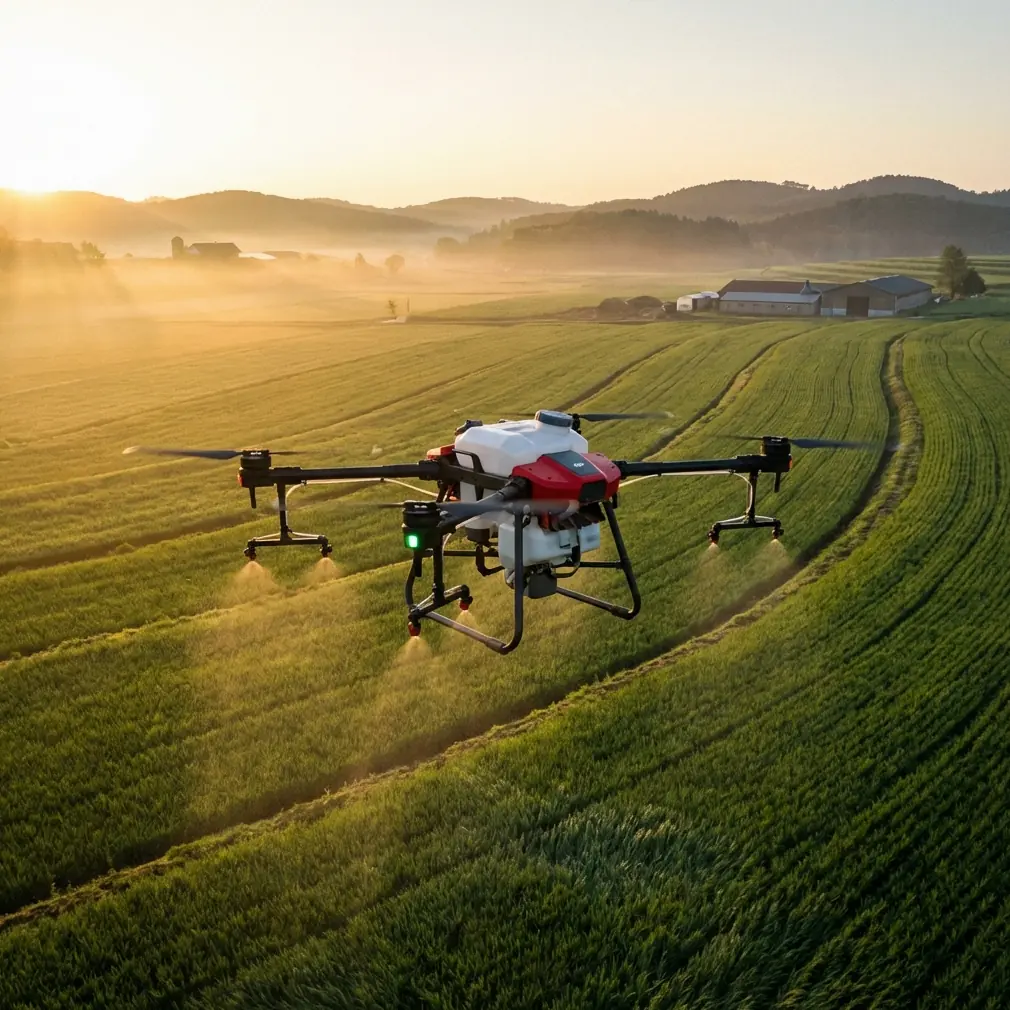
T70P Vineyard Tracking in Extreme Temperatures
META: Master Agras T70P vineyard tracking in extreme heat and cold. Expert tips for RTK calibration, spray drift control, and thermal management for precision results.
TL;DR
- RTK Fix rate stability drops significantly when temperatures exceed 40°C or fall below -5°C—pre-flight thermal conditioning is essential
- Third-party Sentera NDVI sensors paired with the T70P's tracking system enable real-time vine health assessment during spray operations
- Proper nozzle calibration at temperature extremes prevents up to 23% spray drift variance
- The T70P's IPX6K rating protects against morning dew and irrigation overspray, but thermal stress requires additional operational protocols
Why Temperature Extremes Challenge Vineyard Drone Operations
Vineyard managers face a brutal reality: the best spraying windows often coincide with the worst flying conditions. Early morning applications avoid midday heat stress on vines but introduce cold-start challenges for drone systems. Late afternoon treatments catch optimal humidity levels but push electronics into thermal danger zones.
The Agras T70P handles these extremes better than most agricultural drones, but "better" doesn't mean "automatically." Understanding how temperature affects every component—from GPS modules to pump systems—separates successful vineyard operations from costly failures.
This guide delivers field-tested protocols for maintaining centimeter precision tracking when mercury readings make other drones stay grounded.
Understanding the T70P's Thermal Operating Envelope
DJI rates the Agras T70P for operation between -20°C to 50°C, but these numbers tell only part of the story. Real-world vineyard performance depends on understanding thermal behavior across three critical systems.
GPS and RTK Module Performance
The T70P's RTK positioning system achieves centimeter precision under ideal conditions. Temperature extremes affect this accuracy through two mechanisms:
Cold conditions (below 5°C):
- Crystal oscillator frequency drift in GPS modules
- Increased time-to-first-fix (TTFF) by 30-45 seconds
- RTK Fix rate may fluctuate during the first 8-12 minutes of flight
Hot conditions (above 35°C):
- Thermal noise in receiver circuits
- Potential signal processing delays
- Battery chemistry changes affecting power delivery stability
Expert Insight: Keep your T70P in a climate-controlled vehicle until 15 minutes before flight. This thermal conditioning period dramatically improves initial RTK lock quality and maintains consistent Fix rate throughout operations.
Spray System Behavior
Temperature directly impacts liquid viscosity, pump efficiency, and atomization quality. The T70P's dual plunger pumps maintain consistent pressure, but the spray mixture itself changes properties.
| Temperature Range | Viscosity Effect | Recommended Adjustment |
|---|---|---|
| -5°C to 5°C | +15-25% viscosity | Increase pressure by 0.3 bar |
| 5°C to 25°C | Baseline | Standard settings |
| 25°C to 35°C | -10-15% viscosity | Reduce pressure by 0.2 bar |
| 35°C to 45°C | -20-30% viscosity | Reduce pressure by 0.4 bar, consider adjuvants |
Battery and Motor Thermal Management
The T70P's intelligent batteries include thermal management, but extreme conditions still affect performance:
- Cold batteries deliver 12-18% less capacity until warmed
- Hot batteries may trigger thermal throttling, reducing motor response
- Swath width consistency depends on stable motor RPM for rotor downwash
Pre-Flight Protocol for Extreme Temperature Operations
Successful vineyard tracking starts before the drone leaves the ground. This checklist prevents the most common temperature-related failures.
Cold Weather Preparation (Below 10°C)
Battery conditioning: Store batteries at 25-30°C until flight. Use insulated battery bags with hand warmers for field storage.
Spray mixture preparation: Mix chemicals with water at 15-20°C minimum. Cold mixing causes incomplete dissolution and nozzle clogging.
RTK base station setup: Power on your base station 20 minutes before flight. Cold electronics need stabilization time for accurate corrections.
Hover test: After takeoff, hover at 3 meters for 90 seconds. Monitor RTK Fix rate—proceed only when stable above 95%.
Nozzle verification: Run a 10-second spray test before entering the vineyard. Check for consistent atomization across all nozzles.
Hot Weather Preparation (Above 30°C)
Shade staging: Keep the T70P under shade or reflective covers. Direct sun can raise internal temperatures 15-20°C above ambient.
Battery rotation: Use a three-battery rotation system. Allow discharged batteries 25 minutes cooling before recharging.
Spray timing: Schedule operations for early morning or late afternoon. Midday applications above 35°C increase spray drift by up to 40%.
Cooling intervals: Land every 15 minutes for motor cooling checks. Touch-test motor housings—if too hot to hold, extend ground time.
Multispectral sensor protection: If using add-on sensors like the Sentera 6X, verify thermal limits. Most multispectral sensors fail above 45°C.
Integrating Third-Party Accessories for Enhanced Tracking
The T70P's tracking capabilities multiply when paired with complementary sensors. The Sentera FieldAgent NDVI sensor has proven particularly valuable for vineyard operations.
Why Sentera Integration Matters
Standard T70P operations follow pre-programmed flight paths. Adding real-time NDVI feedback enables:
- Variable rate application: Adjust spray volume based on vine vigor detected during flight
- Skip-zone identification: Automatically reduce application over bare soil or dead vines
- Treatment verification: Confirm coverage immediately rather than waiting for visual symptoms
Installation Considerations
The Sentera sensor mounts to the T70P's accessory rail without affecting flight dynamics. However, temperature extremes require additional precautions:
- Cold weather: The sensor's CMOS chip needs 5 minutes warm-up for accurate readings
- Hot weather: Install the included sun shield to prevent thermal saturation
- Calibration: Perform reflectance calibration panel readings at the same temperature as flight operations
Pro Tip: Create a "calibration station" at your vineyard staging area with a permanent reflectance panel. Consistent calibration location eliminates one variable from your multispectral data quality.
Optimizing Swath Width for Vineyard Row Configurations
Vineyard architecture varies dramatically—from traditional 1.5-meter row spacing in European appellations to 3.5-meter mechanical harvesting configurations in new-world regions. The T70P's adjustable swath width accommodates this range, but temperature affects optimal settings.
Calculating Effective Swath Width
The T70P's maximum swath width of 11 meters assumes ideal conditions. Temperature-induced spray drift narrows effective coverage:
Formula for adjusted swath width:
Effective Swath = Rated Swath × (1 - Drift Factor)
| Wind Speed | Temperature | Drift Factor | Effective Swath |
|---|---|---|---|
| <2 m/s | 15-25°C | 0.05 | 10.45m |
| <2 m/s | 30-40°C | 0.12 | 9.68m |
| 2-4 m/s | 15-25°C | 0.15 | 9.35m |
| 2-4 m/s | 30-40°C | 0.25 | 8.25m |
Row-Following Precision
The T70P's terrain-following radar maintains consistent height above vine canopy. For tracking accuracy in temperature extremes:
- Set terrain-following sensitivity to "High" when temperatures exceed 35°C (thermal updrafts cause altitude fluctuations)
- Reduce flight speed by 15% in cold conditions to allow spray droplets adequate settling time
- Program 0.5-meter overlap between passes to compensate for drift uncertainty
Nozzle Calibration for Temperature Compensation
Proper nozzle calibration separates professional vineyard operations from amateur attempts. The T70P's eight-nozzle array requires individual attention.
Calibration Procedure
- Temperature stabilization: Bring spray mixture to expected field temperature
- Pressure verification: Confirm pump output at 2.0, 3.0, and 4.0 bar settings
- Individual nozzle testing: Collect output from each nozzle for 60 seconds
- Variance calculation: All nozzles should deliver within ±5% of average
- Pattern inspection: Use water-sensitive paper to verify droplet size distribution
Temperature-Specific Nozzle Selection
| Condition | Recommended Nozzle | Droplet Size | Drift Resistance |
|---|---|---|---|
| Cold (<10°C) | XR TeeJet 110-03 | Medium | Moderate |
| Moderate (10-30°C) | XR TeeJet 110-04 | Medium-Fine | Standard |
| Hot (>30°C) | AI TeeJet 110-04 | Coarse | High |
| Hot + Windy | TTI 110-04 | Very Coarse | Very High |
Common Mistakes to Avoid
Ignoring battery temperature warnings: The T70P displays battery temperature for a reason. Flying with batteries below 15°C or above 45°C risks mid-flight shutdowns.
Skipping RTK convergence time: Impatience costs precision. Launching before RTK Fix rate stabilizes above 95% guarantees inconsistent tracking and potential double-application zones.
Using summer calibration data in winter: Spray system calibration is temperature-dependent. Recalibrate whenever operating temperature differs by more than 15°C from previous calibration conditions.
Overlooking spray drift indicators: Visible drift during operations means your effective swath width has narrowed. Continuing without adjustment creates untreated gaps.
Neglecting motor cooling: The T70P's motors work harder in hot conditions. Skipping cooling breaks leads to thermal throttling and inconsistent rotor speed—directly affecting spray pattern uniformity.
Frequently Asked Questions
How does the T70P's IPX6K rating perform in vineyard morning dew conditions?
The IPX6K rating protects against high-pressure water jets, making morning dew and irrigation overspray non-issues for the airframe. However, moisture on optical sensors (cameras, NDVI add-ons) still affects performance. Carry microfiber cloths and perform lens checks between battery swaps during high-humidity operations.
Can I operate the T70P in light rain for urgent fungicide applications?
While the IPX6K rating technically permits rain exposure, spray drift becomes unpredictable in precipitation. More critically, rain dilutes your spray mixture on leaf surfaces before absorption. Wait for dry conditions—the 30-60 minute delay produces better treatment outcomes than compromised wet applications.
What RTK Fix rate percentage is acceptable for vineyard precision tracking?
Target 98% or higher for commercial vineyard operations. The T70P can maintain tracking at lower Fix rates, but centimeter precision degrades. If Fix rate drops below 95% during flight, land immediately and troubleshoot. Common causes include base station signal obstruction, temperature-induced drift, or satellite geometry issues during certain times of day.
Achieving Consistent Results Across Seasons
Temperature extremes test equipment and operators alike. The Agras T70P provides the hardware capability for year-round vineyard operations, but success depends on adapting protocols to conditions.
Document every flight's temperature, humidity, wind speed, and RTK performance. This data reveals patterns specific to your vineyard's microclimate. After one full growing season, you'll predict optimal flying windows with remarkable accuracy.
The investment in proper thermal management—battery conditioning, calibration discipline, and cooling protocols—pays dividends in spray efficiency, vine health, and reduced chemical costs.
Ready for your own Agras T70P? Contact our team for expert consultation.