
Agras T70P for Tracking Power Lines in Windy Conditions
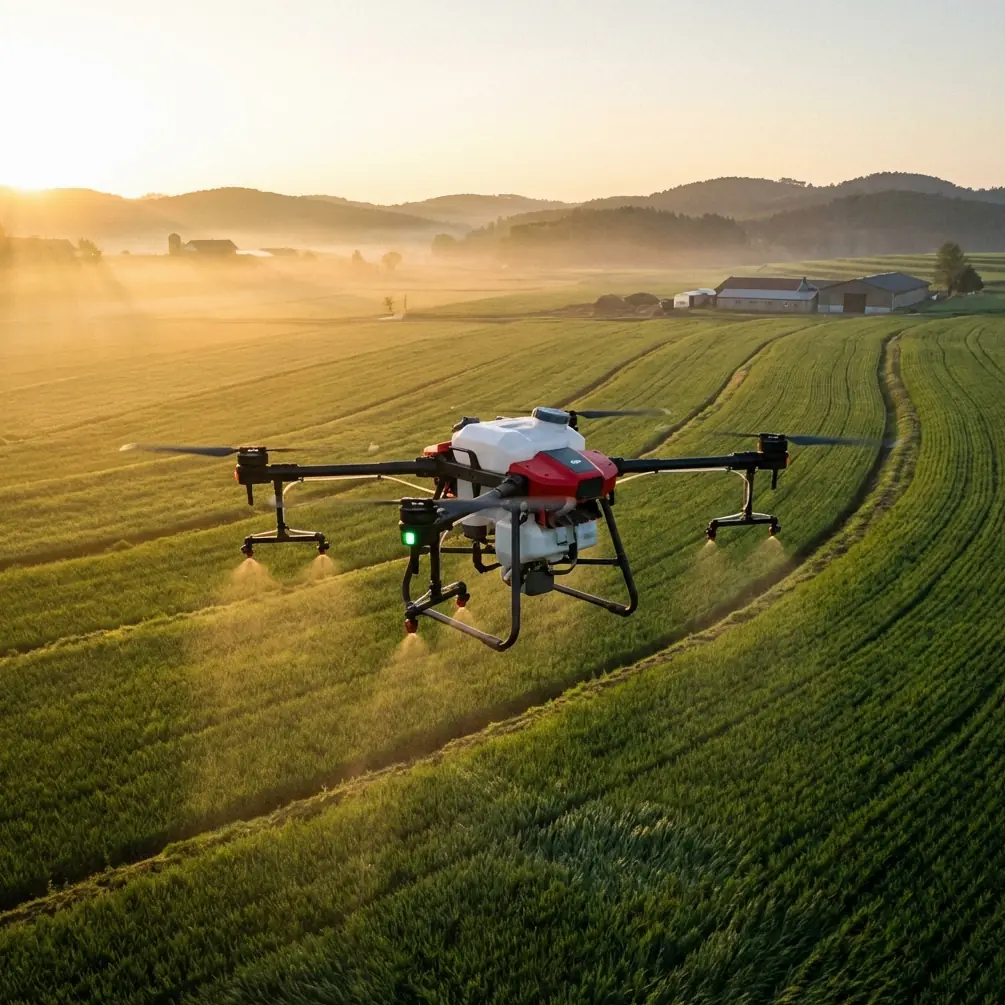
Agras T70P for Tracking Power Lines in Windy Conditions: What Actually Matters in the Field
META: An expert field analysis of how the Agras T70P handles power line corridor work in wind, with practical insight on RTK fix rate, spray drift, nozzle calibration, swath control, and mid-flight weather changes.
Power line corridor work exposes every weak point in an agricultural drone operation. Wind funnels unpredictably along open easements. Terrain changes airflow without warning. Metallic structures, conductors, and vegetation edges all complicate positioning and route consistency. If the mission involves the Agras T70P near energized infrastructure in gusty weather, the real question is not whether the aircraft is powerful on paper. The question is whether it remains controllable, precise, and operationally useful when the weather shifts halfway through a sortie.
That is where the Agras T70P becomes interesting.
I am not approaching this as a spec-sheet exercise. For operators tracking power lines in windy conditions, the platform only earns its place if three things hold together at the same time: stable path keeping, repeatable application behavior, and enough environmental resilience to finish the mission without creating a second problem. In practice, that means paying close attention to RTK fix rate, drift management, nozzle setup, corridor geometry, and weather exposure. The T70P sits at the intersection of those demands.
The Problem: Power Line Corridors Turn Small Errors Into Expensive Ones
A corridor inspection or treatment flight is not like broad-acre field work. In a field, a few centimeters of path variation can often be absorbed by overlap. Along power lines, the geometry is less forgiving. The route is narrow. Obstacles are continuous. Wind does not hit uniformly; it shears around towers, rises off embankments, and accelerates through gaps in tree cover.
That matters for two reasons.
First, a corridor mission depends on reliable lateral control. Even slight line deviation can distort your intended swath width, especially when the aircraft is trying to maintain consistent spacing relative to poles, conductors, and encroaching vegetation. If the drone is carrying liquid, that deviation immediately raises the risk of spray drift beyond the target zone. Drift near utility assets is not an abstract agronomy concern. It is an operational liability.
Second, line tracking in wind stresses navigation integrity. The phrase “centimeter precision” gets repeated too casually in this industry. Precision is not a badge. It is a condition that has to be sustained. When the RTK fix rate drops or fluctuates, corridor work gets messy fast. Waypoint fidelity weakens. Repeat passes become less trustworthy. If you are mapping, inspecting, or applying along infrastructure, weak positioning confidence forces the pilot to compensate manually, which increases workload precisely when conditions are already deteriorating.
The Agras T70P is relevant here because it is built for serious field operations, but windy corridor work tests whether its design choices translate into control discipline rather than just brute carrying capacity.
The Solution: Use the T70P as a Controlled Corridor Platform, Not Just a Big Ag Drone
The strongest way to use the Agras T70P in this scenario is to think of it as a corridor platform with agricultural hardware, not the other way around.
That mindset changes setup immediately. Instead of chasing maximum coverage, the operator should optimize for consistency. Swath width should be treated as a variable to be tightened, not stretched. In calm field conditions, wider passes may be efficient. Along power lines in wind, a narrower and more conservative swath often produces better real-world productivity because it reduces overcorrection, lowers off-target drift risk, and gives the aircraft more room to absorb gust loading without missing the line.
Nozzle calibration becomes central. This is one of the most overlooked parts of windy utility-adjacent work. If output is calibrated only for nominal field conditions, then a mid-flight wind increase can transform a previously acceptable droplet pattern into a drift problem. On the T70P, the operational advantage is not just payload capability but the ability to pair that carrying power with deliberate flow-rate and droplet management. A properly calibrated nozzle setup helps keep deposition behavior predictable when airflow stops cooperating.
The same applies to route planning. A corridor flight should not be built around theoretical straightness alone. It should be built around expected wind direction relative to the line. Crosswind segments require different spacing discipline than headwind or tailwind segments. A skilled T70P operator will adjust track offsets, speed expectations, and turn behavior before takeoff, rather than discovering those limits near a tower structure.
What Happened When the Weather Changed Mid-Flight
Let’s make this concrete.
Imagine a late-morning corridor mission over mixed terrain. The plan is straightforward: track a transmission easement bordered by vegetation, maintain a controlled offset from the line path, and cover the route with stable positioning support. Conditions at launch are manageable. Wind is present but consistent enough to support the mission envelope. The RTK link is healthy. The aircraft is holding a dependable fix. Passes are clean.
Then the weather shifts.
This is the moment that exposes weak procedures. A gust front does not need to be dramatic to disrupt corridor work. A moderate increase in crosswind can start moving fine droplets sideways, alter stopping distance on turns, and force more aggressive attitude changes to maintain track. If terrain is uneven, the aircraft may encounter alternating bands of smooth and turbulent air over just a few hundred meters.
A well-configured Agras T70P can handle this transition better than many operators expect, but only if the mission design respects what changed. The drone’s value in that moment is not magic stability. It is the combination of power reserve, positional discipline, and weather-tolerant construction that gives the pilot time to adapt intelligently rather than abort in confusion.
This is where an IPX6K-style protection profile matters in operational terms. Weather resistance is often treated like a durability footnote, yet in corridor work it directly affects uptime. If the aircraft encounters blowing moisture, mist, dust, or contaminant-laden airflow kicked up by changing weather, a robust ingress protection rating helps preserve confidence in continuing the sortie or recovering safely without treating every environmental shift as a hardware threat. The operator still needs sound judgment, of course, but resilience broadens the envelope for controlled decision-making.
In the same scenario, maintaining RTK fix rate becomes more valuable than raw speed. If wind picks up halfway through a pass, the pilot may need to tighten line adherence and reduce speed to preserve path integrity. The T70P’s practical strength is that it allows this tradeoff without collapsing mission utility. You are not simply slowing down because the aircraft is struggling. You are slowing down to protect centimeter-level repeatability where it matters most.
Why RTK Fix Rate Is the Real Confidence Metric
Operators often focus on whether RTK is available at all. That is too simplistic. In windy power line missions, the meaningful indicator is RTK fix rate stability over the route.
A strong, stable fix rate allows the T70P to hold corridor geometry with much greater repeatability. That affects everything downstream: swath overlap, vegetation targeting, boundary containment, and safe clearance behavior around infrastructure. If fix integrity degrades, the drone may still be airborne and technically operational, but the mission quality starts eroding before the pilot feels it viscerally.
For line tracking, this is especially significant because the route itself is linear and unforgiving. A broad-acre mission can tolerate some GNSS imperfection through overlap and statistical averaging. A utility corridor mission cannot. You need the aircraft to know exactly where it is, repeatedly, not just approximately.
This is also why multispectral discussions should be kept in perspective. Multispectral workflows can add value when vegetation encroachment analysis or plant stress mapping is part of a broader corridor maintenance program. But if the T70P is in the air during unstable wind, the first priority is not richer data layers. It is flight integrity and accurate spatial control. Data quality starts with stable positioning and repeatable path execution.
Spray Drift Near Power Lines Is Not Just an Agronomy Issue
The phrase “spray drift” tends to be boxed into crop protection conversations. Along power lines, that framing is incomplete.
Near utility infrastructure, drift can affect non-target vegetation, adjacent right-of-way areas, access tracks, and sensitive zones beyond the intended treatment corridor. If the aircraft is operating near insulators, support structures, or maintenance access corridors, off-target material movement becomes an operational planning issue, not simply an application quality issue.
The T70P can be part of the solution, but only when nozzle calibration, droplet size strategy, and swath width discipline are all aligned. Bigger platforms sometimes tempt operators into thinking they can overpower environmental conditions through throughput. That logic fails in wind. More output does not solve poor atmospheric fit. In fact, it can magnify consequences if calibration is wrong.
The better approach is restrained precision. Reduce swath width when gusts rise. Recheck nozzle calibration against current conditions, not just morning conditions. Accept a lower area-per-hour figure if that is what preserves target accuracy. That is the difference between a technically completed mission and a defensible one.
Structural Resilience Matters More Than Marketing Suggests
The Agras T70P’s value in this scenario is partly mechanical. Corridor work in inconsistent weather is hard on equipment. Wind loading changes constantly. Dust and moisture exposure can arrive in the same hour. Repeated acceleration and correction cycles put pressure on both flight control smoothness and hardware durability.
This is why ingress protection and system robustness deserve serious attention. An aircraft with strong environmental sealing and agricultural-grade construction is simply better suited to long utility-adjacent workdays than a lighter platform designed around ideal conditions. That does not eliminate preflight checks or maintenance discipline. It means the platform is less likely to become the mission bottleneck when the environment gets unpleasant.
For operators building a power line workflow around the T70P, that translates into steadier scheduling. Fewer weather-related interruptions. More confidence when conditions are marginal but still workable. Better continuity between planning and execution.
If you are building that operating model and want to compare setup choices with a field team, this direct channel can help: message a corridor operations specialist.
How I Would Set Up the T70P for Windy Line Tracking
For this specific mission type, I would bias the aircraft toward control discipline over nominal productivity.
Start with a conservative swath width. The exact number depends on nozzle setup, target type, and local wind, but the principle is fixed: narrow enough to preserve containment and line fidelity when the crosswind sharpens. Next, verify nozzle calibration for current meteorological conditions, not yesterday’s settings and not a generic preset. Then check RTK performance before committing to full-route execution. Do not just confirm lock at takeoff. Confirm that the fix remains stable along representative corridor segments.
I would also treat route segmentation seriously. Long, uninterrupted passes look efficient in software, but windy power line work often benefits from breaking the route into segments based on terrain exposure, vegetation density, and likely gust behavior. That gives the pilot cleaner decision points if weather shifts mid-flight.
Finally, I would build an explicit weather change trigger into the mission plan. Not a vague warning. A concrete threshold. If crosswind increases beyond the point where the aircraft requires persistent aggressive correction, the response is predetermined: tighten swath, slow the route, or suspend the liquid phase and recover. The T70P gives you room to make those choices. Good SOPs make sure you use that room wisely.
The Bigger Takeaway for Agras T70P Operators
The Agras T70P is not interesting because it is large or capable in general terms. It is interesting because, in a difficult use case like tracking power lines in windy conditions, it can remain useful after conditions stop being comfortable.
That distinction matters.
A drone that performs only in stable air is easy to admire and hard to rely on. A drone that maintains route discipline, supports strong RTK-based positioning, tolerates harsh exposure with an IPX6K-class durability mindset, and still lets the operator manage spray drift through careful nozzle calibration has genuine operational value. Those are not isolated features. Together, they determine whether the aircraft can protect mission quality when weather changes mid-flight.
For utility corridor operators, vegetation management teams, and technical pilots working near infrastructure, the lesson is simple: the T70P should be flown as a precision corridor tool with agricultural capacity, not merely as a high-output farm aircraft repurposed for line work. When that mindset is paired with disciplined setup, the platform becomes far more than a payload carrier. It becomes a controllable, weather-aware system that can hold its line when the air no longer wants to cooperate.
Ready for your own Agras T70P? Contact our team for expert consultation.