
Agras T70P in Mountain Powerline Tracking
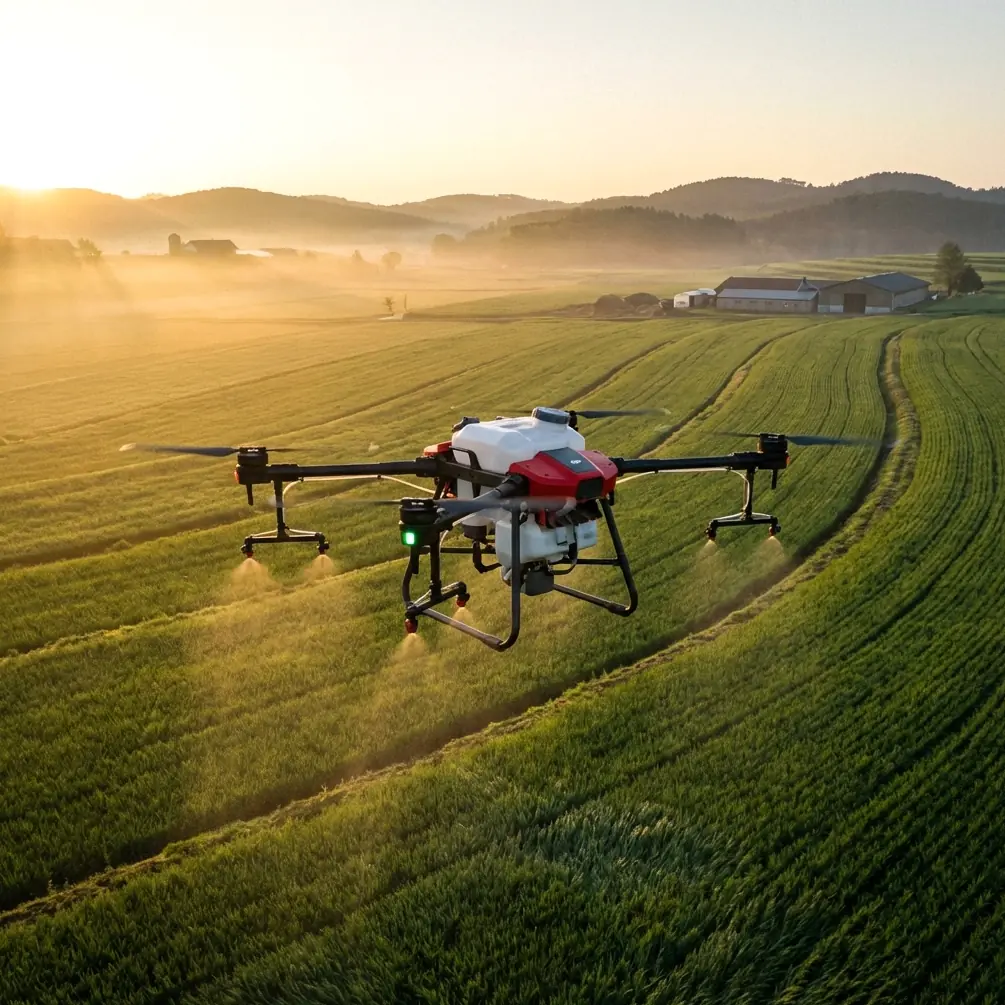
Agras T70P in Mountain Powerline Tracking: Why Chongqing’s Low-Altitude Network Push Changes the Field Playbook
META: A case-study analysis of how Chongqing’s proposed low-altitude intelligent network and professional operations platform could improve Agras T70P mountain powerline missions with stronger coordination, safer routes, and better RTK reliability.
Mountain powerline work exposes the real difference between a capable drone and a usable operating system around that drone. The aircraft matters, of course. So does payload logic, positioning stability, weather resistance, and how well a crew can manage steep terrain. But anyone who has worked ridge corridors, river cuts, and fragmented valleys knows the harder problem is usually not lift or spray geometry. It is coordination.
That is why the recent signal from Chongqing deserves attention from anyone following the Agras T70P, especially operators adapting the platform for powerline tracking in mountain environments. The headline issue is not a new airframe release. It is infrastructure and operating architecture. According to the referenced report, Xia Yong called for faster construction of a low-altitude intelligent network and for the development of a professional, intensive operations service platform. Just as notable, the proposal points to Chongqing’s already established low-altitude economy industry development company and an existing collaborative insurance framework as the base for building stronger professional low-altitude operations.
For crews in the field, that sounds abstract until you map it onto a real mission.
A mountain corridor case study: what the T70P actually runs into
Picture a team assigned to follow transmission infrastructure through mountain sections outside a major urban edge. The route is not a neat agricultural block. It snakes across elevation shifts, folds behind ridgelines, and frequently loses clean radio geometry. In some segments, the challenge is simple visibility. In others, it is signal shadowing, inconsistent GNSS quality, and the practical burden of moving personnel safely between launch points.
This is where the Agras T70P becomes an interesting platform to discuss. The aircraft is generally associated with heavy-duty field operations, but in mountain powerline tracking, users care less about headline capacity and more about how reliably the system holds course, how well it maintains centimeter precision under difficult sky visibility, and how resilient the platform remains when moisture, dust, and terrain force frequent redeployment. Those details decide whether a mission produces actionable data or burns time.
The Chongqing policy direction matters because it addresses the missing middle layer between aircraft capability and field success. A low-altitude intelligent network is not just a bureaucratic phrase. In mountain operations, it can mean route support, traffic awareness, communications continuity, and a more structured path from approval to execution. A professional operating platform can standardize dispatch, maintenance, pilot oversight, data handling, and risk controls. That changes the economics and the safety envelope of drone work around power infrastructure.
Why this specific news matters for Agras T70P users
Two details from the report stand out.
First, the call to accelerate construction of a low-altitude intelligent network. For mountain powerline tracking, that has direct operational significance. Ridgelines can cut off command links, interfere with stable antenna geometry, and create inconsistent RTK Fix rate performance. When crews rely only on ad hoc field judgment, each launch point becomes its own isolated problem. A more mature low-altitude network can support route planning across terrain, identify known weak-signal sections, and reduce the guesswork that often forces conservative flight envelopes.
Second, the emphasis on building a specialized operations platform on top of Chongqing’s existing low-altitude economy development company and coordinated insurance foundation. That is not a minor institutional detail. It suggests the region is thinking beyond one-off demonstration flights and toward repeatable commercial operations. For a T70P team tracking power corridors in mountains, repeatability is everything. It affects pilot qualification standards, incident reporting, aircraft downtime, battery logistics, weather thresholds, and liability management. Insurance coordination, in particular, matters more in mountain utility work than many casual observers realize. These missions happen around critical assets, remote access routes, and elevated risk conditions. A shared framework reduces friction that would otherwise slow deployment.
In plain terms: this is the kind of policy architecture that can make a strong aircraft genuinely useful at scale.
The hidden bottleneck is not always the drone
A lot of discussion around the Agras T70P tends to collapse into hardware talk. Operators ask about swath width, nozzle calibration, spray drift behavior, IPX6K resilience, payload flow, or whether multispectral integration can support vegetation encroachment assessment near line corridors. Those are valid questions. They are also incomplete if the mission environment is mountainous powerline tracking.
In this scenario, the harder bottleneck is often connection integrity and operational continuity.
Let’s break that down.
A mountain corridor can produce abrupt changes in line of sight. Even with excellent aircraft performance, your usable range may shrink sharply once the drone passes behind terrain. This is where antenna positioning advice stops being an afterthought and becomes mission-critical. For maximum range, keep the ground antenna elevated whenever possible, with the broad face oriented toward the intended route rather than the aircraft’s takeoff point. Do not stand flush against vehicles, steel guardrails, or utility structures that can distort the signal pattern. In broken terrain, a small relocation of the pilot station can outperform any attempt to “push through” a shadowed ridge. On some routes, gaining just a few meters of launch elevation is worth more than adding distance from the asset.
That advice becomes even more effective in a city-region ecosystem that is actively building a low-altitude intelligent network. Why? Because the better the wider operating framework becomes, the less the crew has to improvise around every single dead zone. Networked support can help identify preferred staging areas and known corridor constraints before the team starts walking batteries uphill.
What a professional operations platform changes on the ground
The Chongqing proposal highlights “intensive” or “aggregated” operating services. That wording matters. It implies centralization where it counts.
For mountain powerline missions with a T70P, a professional platform can unify at least five things that are too often fragmented:
Mission planning
Instead of pilots individually building routes from incomplete maps, teams can use standardized terrain-aware planning workflows with known utility corridor overlays.Airspace coordination
Low-altitude work near infrastructure becomes faster when permissions, notices, and local conflict checks are handled through a specialized operating layer.Risk transfer and insurance
The report’s reference to a coordinated insurance base is practical, not decorative. It lowers uncertainty for operators and utility clients alike.Maintenance and dispatch discipline
Mountain assignments are hard on equipment. Structured maintenance cycles reduce avoidable failures that show up only after repeated field moves, dust ingress, or wet-weather exposure.Data governance
Utility tracking is not useful if image sets, route logs, and inspection records remain scattered across personal devices and small contractor silos.
For the Agras T70P community, this is the real story. A capable platform becomes more valuable when the region around it matures into a service ecosystem.
How this connects to line tracking, not just crop work
Some readers may ask why a model known from agricultural workflows belongs in a mountain powerline discussion at all. The answer is that the operational DNA overlaps more than outsiders assume.
A T70P-style workflow depends on stable navigation, route discipline, environmental resilience, and controllable low-altitude behavior. In corridor tracking, those same strengths can support repeated passes along rights-of-way, vegetation observation, and structured route coverage where ground crews face slow access. Centimeter precision matters because utility inspection zones are narrow and mistakes in lateral tracking can place the aircraft in poor proximity to obstacles or reduce image consistency between passes.
Even terms that sound purely agricultural have relevance here. Consider spray drift as an analogy for environmental behavior: in mountains, wind does not move in a flat predictable sheet. It curls around towers, accelerates through gaps, and changes character as the drone crosses contour lines. That same local wind complexity affects route holding, hover stability, and safe standoff margins. Nozzle calibration may not be the mission priority in line tracking, but the discipline behind calibration absolutely is. Teams that rigorously calibrate equipment tend to fly better missions because they treat performance as a measured variable rather than a hope.
The same applies to RTK Fix rate. In open farmland, operators may expect clean positional stability for long stretches. In mountain corridors, canopy edges, cliffs, and partial sky occlusion can interrupt that confidence. A regional low-altitude intelligent network cannot solve physics, but it can reduce uncertainty by supporting better route design and more professional operating standards.
Why Chongqing is a meaningful reference point
Chongqing is not just another place name in this discussion. Its terrain profile makes it a useful proving ground for low-altitude operational models. If a city-region with complex topography is serious about strengthening low-altitude intelligent networking and specialized service platforms, the lessons will matter beyond one municipality.
That is especially relevant for T70P operators working in western China and other mountainous utility environments worldwide. When local governments or industrial ecosystems move from “encourage drone use” to “build the operating layer,” field deployment changes character. Missions become less dependent on individual heroics and more dependent on repeatable systems.
That is good for safety. It is good for utilization. It is good for clients who need predictable outcomes rather than impressive demos.
If your own team is trying to benchmark mountain communication setups and field procedures, this quick WhatsApp briefing may help: see our antenna placement notes.
The practical takeaway for Agras T70P operators
The immediate lesson from this news is not that the T70P suddenly gains new specifications. The lesson is that aircraft value rises when the surrounding low-altitude ecosystem becomes more organized.
For mountain powerline tracking, that means operators should be watching three things closely:
Network support maturity
Better low-altitude intelligence infrastructure can improve route confidence, conflict awareness, and mission continuity in terrain that punishes weak planning.Professionalized service layers
Central operating platforms reduce the friction that usually limits scale: approvals, dispatch quality, maintenance, and standardized reporting.Institutional risk alignment
The mention of Chongqing’s coordinated insurance base is easy to overlook, but it signals that stakeholders are preparing for real operational volume, not isolated trials.
For consultants, utility managers, and drone teams, the broader point is sharper still. The future of mountain corridor drone work will not be decided by aircraft specs alone. It will be decided by whether regions can create the operational scaffolding that lets capable aircraft perform consistently in difficult air and difficult terrain.
That is why this Chongqing development deserves more than a passing glance. It goes to the heart of what makes the Agras T70P useful in the field: not just what it can do, but how often, how safely, and under what operating discipline it can do it again.
Ready for your own Agras T70P? Contact our team for expert consultation.