
Agras T70P in Extreme Temperatures: How to Track Fields
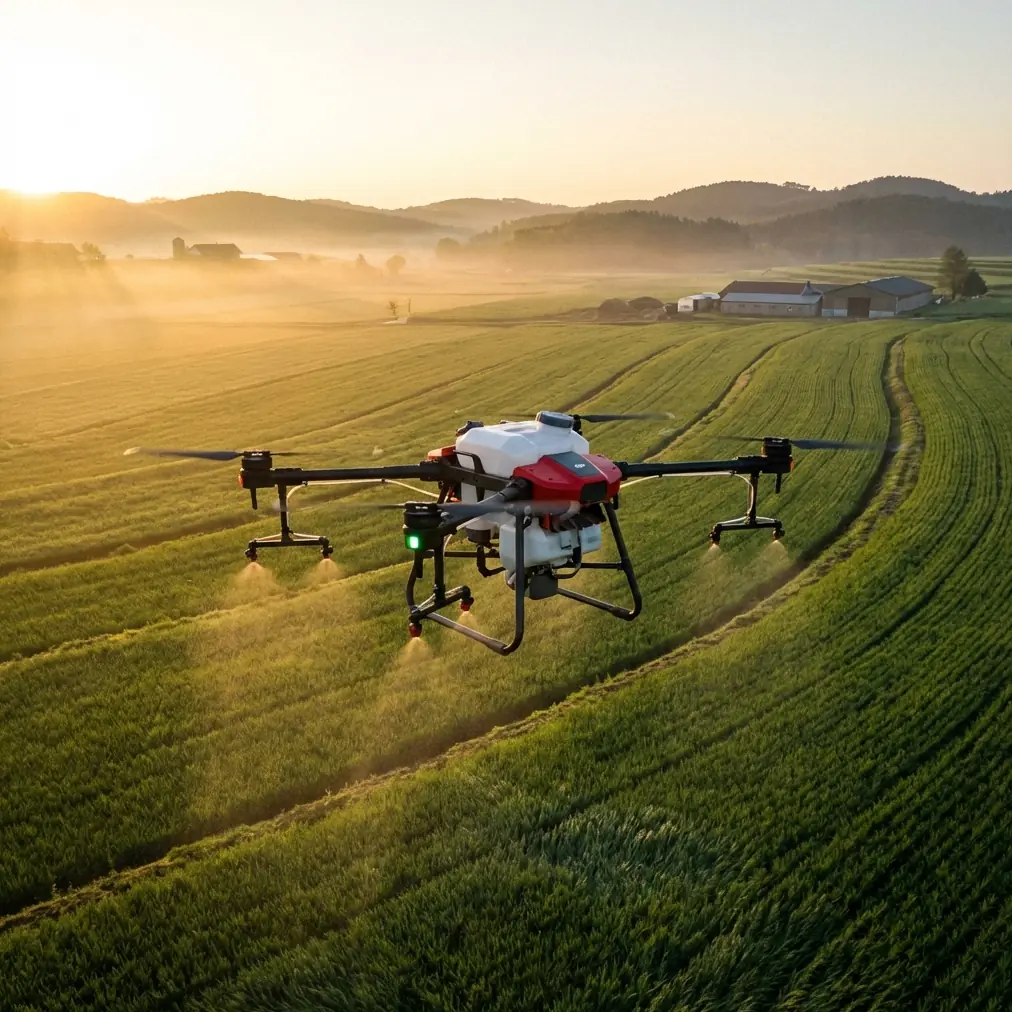
Agras T70P in Extreme Temperatures: How to Track Fields Accurately When Heat, Dust, and Drift Start Working Against You
META: A field-focused expert analysis of Agras T70P operations in extreme temperatures, with practical insight on flight altitude, spray drift control, RTK discipline, and data-backed route accuracy.
Extreme temperatures do not just make field work uncomfortable. They distort the margins that separate a clean, efficient Agras T70P mission from a patchy application run, poor boundary tracking, or drift that lands product where it should not.
That is the real operational question with the Agras T70P: not whether it can cover acres fast, but whether it can keep tracking fields accurately when the environment becomes unstable. High heat can intensify evaporation and lift fine droplets. Cold mornings can create uneven density layers near the surface. Dust, glare, and variable airflow complicate line holding. And if you are working large blocks where centimeter-level path discipline matters, a small error repeated over every pass becomes an expensive pattern.
For operators managing fields in temperature extremes, the right answer is not simply “fly lower” or “wait for better weather.” It is a system approach: route geometry, altitude choice, RTK integrity, nozzle calibration, and post-flight data interpretation all have to support each other.
Why extreme temperatures expose weak operating habits
A drone spraying mission can look stable from the ground while performance is already slipping in the air. In hot conditions, the problem usually starts with droplet behavior and boundary fidelity.
When the air is hot and dry, spray drift risk rises because smaller droplets lose mass quickly and become easier for lateral airflow to carry away. That changes the meaning of “tracking.” You may hold a straight route on the controller, yet still miss your intended treatment line biologically because the spray cloud no longer stays centered over the crop.
Cold conditions present a different kind of trap. Operators often assume cool air automatically helps. Sometimes it does, but not always. Early-day temperature stratification can create inconsistent near-surface movement. If the field is bordered by tree lines, embankments, irrigation lanes, or terraces, local airflow can shift between passes. In those moments, swath width consistency matters just as much as navigation precision.
This is where an Agras T70P operator needs to think like both an applicator and a surveyor.
The most practical altitude insight for Agras T70P field tracking in harsh temperatures
If your main objective is reliable field tracking under extreme temperatures, the optimal flight altitude is usually the lowest height that still preserves a stable, uniform swath over the canopy without forcing the aircraft into excessive terrain-following corrections.
That sounds simple, but it is more useful than a fixed-number rule.
In hot weather, climbing too high gives wind and thermal activity more time to act on the spray pattern. Flying lower shortens droplet travel distance and generally improves line fidelity. But there is a limit. If altitude is too low relative to crop structure or terrain irregularity, the aircraft may need constant micro-adjustments. That can disrupt speed consistency, overlap, and nozzle performance.
So for the Agras T70P, the best altitude in extreme-temperature work is not the highest efficiency setting shown on a calm demonstration plot. It is the height where three conditions remain true at the same time:
- The swath remains uniform across the crop top.
- The route line stays disciplined with minimal correction.
- The spray cloud reaches the target before heat or crossflow starts moving it.
In plain terms: lower is usually better in high heat, but only until route stability and canopy clearance begin to suffer.
Why route geometry matters more than many operators realize
One of the more interesting clues in the reference material comes from an unexpected place: a phone photography article. It explains that visual “leading lines” such as benches, railings, roads, and stairs guide the eye toward a subject, and that diagonal lines entering from the edge of the frame create the strongest effect.
That idea translates surprisingly well to field operations with the Agras T70P.
In difficult temperature conditions, operators should think in terms of agricultural leading lines: irrigation lanes, tramlines, shelterbelt edges, drainage paths, road margins, and planting orientation. These linear references help maintain route logic when visibility, dust, or glare make the display more cognitively demanding. Diagonal entry paths into a block can also reduce awkward correction behavior at the start of a run, much like the photo technique where the diagonal line strengthens the composition.
The significance is operational, not artistic. When your route aligns with strong field geometry, you reduce hesitation at turn-in points and lower the chance of off-line drift during transition moments. Those are exactly the moments when temperature-driven airflow changes often create the biggest spray placement errors.
RTK discipline is not optional when repeating passes in large fields
The LiDAR road-survey reference provides another useful operational parallel. In that project, teams placed 44 target points to correct trajectory, and target placement was driven by safety and measurement constraints in a road environment. They also used GPS-RTK for planar coordinates and maintained coordinate discipline with at least 4 to 5 known points in both WGS84 and the local coordinate system.
The Agras T70P is not a road mapping platform, but the lesson is highly relevant: if the mission environment is complex, positioning confidence cannot be assumed. It must be reinforced.
For field tracking in extreme temperatures, RTK Fix rate should be treated as a live production variable, not a background technical detail. Why? Because heat shimmer, edge obstructions, long field geometry, and repeated passes all amplify the consequences of degraded positioning. A slight path offset on one run may seem minor. Across an entire block, it can create underlap, overlap, edge misses, and inconsistent dosage.
The survey reference also notes practical spacing logic, with target points placed roughly every 200 units along road sides in constrained conditions. The agricultural equivalent is not literal target deployment every 200 meters, but disciplined reference planning: base station placement, field boundary verification, obstacle awareness, and confidence checks at logical intervals before and during operation.
If you want the Agras T70P to track reliably in extreme weather, do not rely on a single green status icon. Verify that your RTK environment is genuinely stable across the working area.
What flight data can teach Agras T70P operators after a bad run
The educational drone document offers a second important lesson. It explains that aircraft use an inertial measurement unit, TOF sensing, and barometric altitude sensing to capture flight data such as speed, acceleration, attitude angle, altitude, forward obstacle distance, and battery state. It also gives a useful detail: the roll attitude range can extend from -179° to 179°.
That range is far beyond anything a normal agricultural mission should approach, but the point is not dramatic maneuvering. The point is diagnosis.
When a T70P mission in extreme temperatures produces uneven coverage or unexplained line deviation, flight data should be reviewed systematically. Look for:
- abnormal roll behavior during crosswind segments
- repeated altitude fluctuations over one side of the block
- speed inconsistency during thermal uplift periods
- obstacle-triggered deviations near shelterbelts or field edges
- battery-related performance changes late in the cycle
This matters because operators often blame drift for everything. Sometimes drift is the symptom, not the root cause. If the aircraft was making repeated correction inputs due to terrain, signal instability, or disturbed airflow, the spray pattern may have been compromised before the droplets even encountered ambient crosswind.
The TT training material frames data as the answer to “unknown” flight events. That mindset belongs in precision agriculture too. Good operators do not just observe results. They interrogate the mission record.
Nozzle calibration becomes more critical as temperatures move away from normal
Extreme temperatures narrow the tolerance for sloppy setup. Nozzle calibration is one of the first places to tighten discipline.
In high heat, fine droplet bias can become punishing because evaporation accelerates before deposition. If the T70P is configured without careful attention to output consistency, the operator may think the aircraft is tracking poorly when the deeper issue is droplet spectrum mismatch for the weather and crop target. In cooler but unstable morning conditions, inconsistent nozzle behavior can worsen swath variability when airflow changes from pass to pass.
This is why altitude and nozzle calibration should never be separated in planning. Raise altitude while producing a finer spray pattern and you compound exposure to drift. Lower altitude with a better-matched droplet profile and a clean RTK fix, and field tracking usually improves substantially.
Field edges are where accuracy claims get tested
Most aerial application looks good in the middle of the block. The edge tells the truth.
Extreme temperatures often create the biggest challenge where crops meet open roads, drainage lines, tree belts, ditches, or hard-packed margins radiating heat. These boundaries generate local airflow differences and visual complexity. They are also the places where off-target movement matters most.
This is where the survey-document mindset is useful again. The road LiDAR team could not safely measure every desired point directly, so they introduced control through target placement and coordinate management. On an Agras T70P mission, the equivalent is rigorous boundary setup, obstacle-aware route planning, and preserving a flight altitude that keeps the aircraft close enough to the canopy for accurate placement without inducing unstable tracking behavior.
If you are struggling with edge accuracy in heat, reduce assumptions. Recheck the boundary. Verify RTK stability. Inspect swath overlap logic. Watch how the aircraft behaves on the first two edge passes before committing to the entire field.
A practical problem-solution workflow for Agras T70P operators
Here is the workflow I recommend for tracking fields in extreme temperatures with the Agras T70P.
Problem: The route is accurate on-screen, but deposition looks inconsistent
Solution: Separate navigation accuracy from spray behavior. Confirm RTK Fix rate first, then reassess nozzle calibration and altitude. If the aircraft held line but the pattern spread or drifted, the issue is probably atmospheric exposure rather than mapping error.
Problem: Passes look uneven near roads or tree lines
Solution: Treat these edges like constrained corridors. Use strong field references the way a photographer uses leading lines. Align entry and exit logic with visible agricultural geometry so the aircraft transitions cleanly into each pass.
Problem: High heat causes visible drift
Solution: Lower flight altitude within safe canopy-clearance limits, maintain a stable swath, and avoid creating extra droplet travel time. In most hot-weather cases, a modest reduction in altitude improves practical targeting more than aggressive speed changes.
Problem: Coverage quality drops later in the mission
Solution: Review flight data after the run. Speed variation, roll correction, altitude oscillation, and battery state can reveal why late-pass consistency deteriorated.
Problem: Repeated missions on the same field never line up quite the same way
Solution: Strengthen coordinate discipline. The survey reference’s use of 4–5 known points and 44 correction targets underscores a broader truth: repeatability comes from control, not optimism.
What sophisticated operators do differently
The best Agras T70P operators in difficult climates do not chase a single “perfect” setting. They build a robust envelope.
They verify positioning.
They watch swath behavior instead of trusting nominal width.
They tune altitude to the crop and the day, not to habit.
They use field geometry to support route discipline.
And when something goes wrong, they inspect data rather than inventing explanations.
If you want a productive benchmark, start by asking one question before each mission: at what altitude will this aircraft remain most stable over this canopy, in this temperature, with this drift risk, while preserving precise pass spacing? That is the altitude that matters.
For operators refining T70P setup in demanding conditions, it can help to compare notes with someone who has worked through similar scenarios; this direct field support channel is often useful: message an application specialist here.
The bottom line on Agras T70P tracking in extreme temperatures
The Agras T70P can be highly accurate in harsh field conditions, but only when tracking is treated as a complete operating system rather than a navigation feature. Extreme heat and cold expose hidden weaknesses fast. They magnify drift, punish poor altitude choices, and turn weak RTK discipline into visible agronomic inconsistency.
Two reference lessons stand out. First, strong directional lines guide outcomes; in photography that means the viewer’s eye, but in field work it means cleaner route logic and fewer transitional errors. Second, controlled measurement wins in complex environments; the road survey team’s use of 44 target points, GPS-RTK, and 4–5 known coordinate points is a reminder that precision depends on deliberate control structures.
Add in flight-data awareness from the training document—IMU, TOF, barometric altitude, speed, attitude, and obstacle distance—and the picture becomes clear. Better field tracking with the Agras T70P is not about guesswork. It is about combining stable positioning, disciplined altitude, calibrated spray output, and post-mission analysis.
Ready for your own Agras T70P? Contact our team for expert consultation.