
Tracking Fields with the Agras T70P | Pro Tips
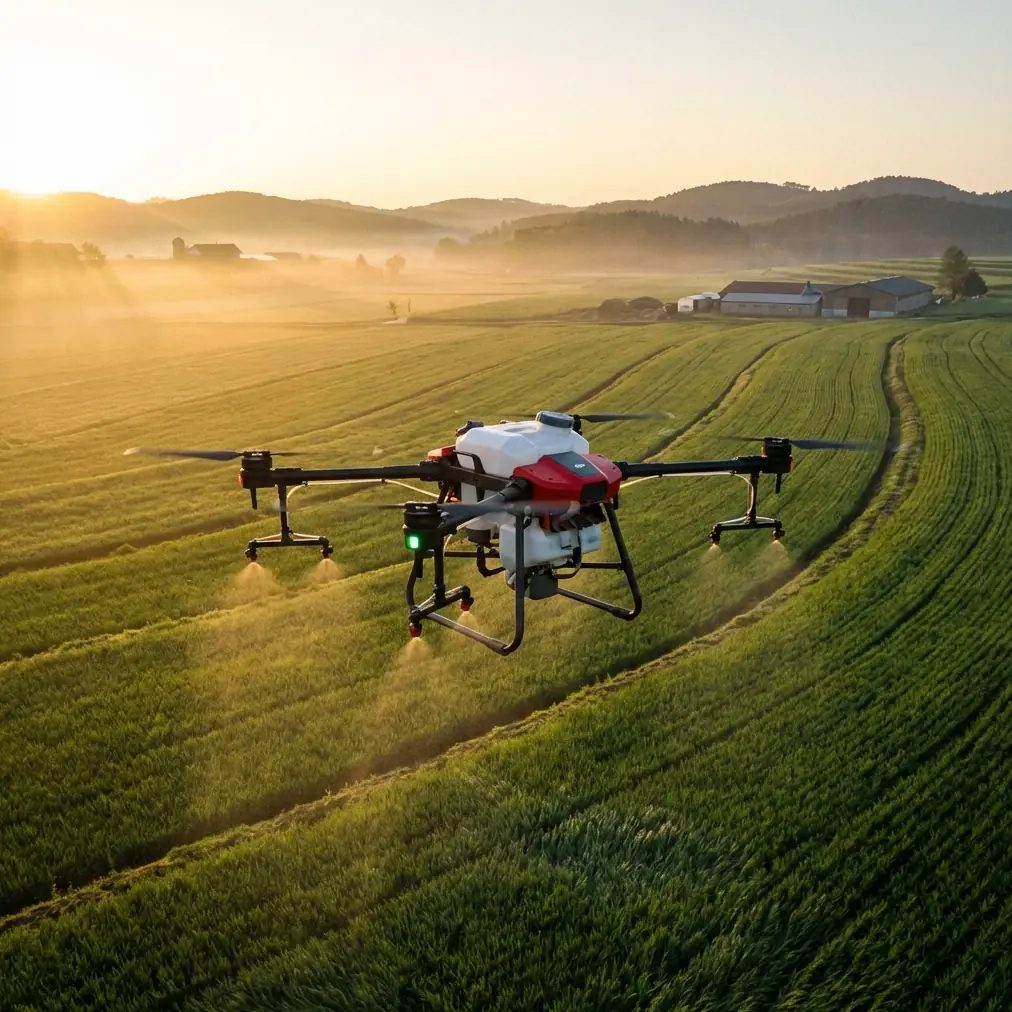
Tracking Fields with the Agras T70P | Pro Tips
META: Learn how to track fields in complex terrain using the DJI Agras T70P. Expert tutorial covers RTK setup, flight altitude, nozzle calibration, and more.
By Marcus Rodriguez, Agricultural Drone Consultant
TL;DR
- Optimal flight altitude of 2.5–3 meters above canopy delivers the best balance between coverage accuracy and spray drift control in complex terrain.
- The Agras T70P's centimeter-precision RTK system and terrain-following radar make it uniquely capable of tracking irregular, hilly, and multi-elevation fields.
- Proper nozzle calibration and swath width configuration are essential before every mission—skipping these steps leads to costly overlap or missed zones.
- This tutorial walks you through the complete workflow, from pre-flight RTK setup to post-mission field analytics.
Why Complex Terrain Demands a Smarter Approach
Flat, uniform fields are forgiving. Complex terrain is not. If you're managing orchards on hillsides, terraced rice paddies, or uneven pastureland, standard GPS-guided drones leave gaps, create dangerous overlap zones, and waste product. The DJI Agras T70P was purpose-built to solve these problems.
This guide breaks down the exact workflow I use with clients across Southeast Asia, Latin America, and sub-Saharan Africa to track fields in challenging landscapes. You'll learn how to configure the T70P's terrain-following systems, dial in your spray parameters, and avoid the mistakes that plague even experienced operators.
Let's get into it.
Understanding the Agras T70P's Core Capabilities
Before we touch the controller, you need to understand what makes the T70P different from its predecessors and competitors. This isn't just a bigger tank on a bigger frame. It's a precision agriculture platform.
Key Specifications at a Glance
| Specification | Agras T70P |
|---|---|
| Max Spray Tank Capacity | 70 L |
| Max Spread Load | 80 kg |
| Swath Width (Spraying) | 6–11 m (adjustable) |
| RTK Positioning Accuracy | 1 cm + 1 ppm (horizontal) |
| Terrain-Following Radar | Dual phased-array + binocular vision |
| Weather Resistance | IPX6K rated |
| Max Flight Speed (during operation) | 12 m/s |
| Multispectral Compatibility | Yes (via DJI Smart Agriculture Platform) |
The standout here is the combination of dual phased-array radar with binocular vision. This gives the T70P the ability to detect both terrain elevation changes and individual obstacles—trees, poles, structures—simultaneously. For complex terrain work, this is non-negotiable.
The IPX6K Advantage in the Field
Many operators overlook weather resistance when planning field-tracking missions. Complex terrain often means microclimates—fog rolling through valleys, sudden rain in highland zones. The T70P's IPX6K rating means high-pressure water jets from any direction won't compromise the aircraft. I've operated through tropical downpours without pulling the drone back. That durability translates directly to uptime and mission completion rates.
Step-by-Step: Tracking Fields in Complex Terrain
Step 1: Pre-Mission Field Survey with Multispectral Data
Before the T70P ever leaves the ground, I recommend conducting a multispectral survey of the target field. If you have access to DJI's Mavic 3 Multispectral or similar platform, capture NDVI and NDRE data at 50–80 meters AGL.
This survey accomplishes three things:
- Identifies vegetation stress zones that need variable-rate application
- Maps the actual field boundaries, including irregular edges common in terraced or hillside plots
- Generates a 3D terrain model you can import into DJI Smart Agriculture Platform for mission planning
Expert Insight: Multispectral data collected within 48 hours of your spray mission gives you the most accurate prescription map. Vegetation changes fast during growing season—stale data leads to stale decisions.
Step 2: Establish RTK Base Station and Verify Fix Rate
This is where missions succeed or fail. The T70P supports both network RTK (NTRIP) and D-RTK 2 base station modes. For complex terrain, I strongly recommend the D-RTK 2 base station for one critical reason: cellular coverage in remote, hilly areas is unreliable.
Here's the setup checklist:
- Place the D-RTK 2 on the highest accessible point with clear sky view (minimum 15-degree elevation mask)
- Wait for the base to achieve a RTK Fix rate above 95% before launching
- Verify the rover (T70P) maintains a solid RTK Fix—not RTK Float—during pre-flight checks
- If the Fix rate drops below 90% during hover test, reposition the base station
RTK Fix rate is arguably the single most important metric for complex terrain operations. Centimeter precision disappears the moment you drop to Float mode, and on a hillside with 3–5 meter elevation changes within a single pass, that precision is everything.
Step 3: Configure Terrain-Following Parameters
The T70P's terrain-following system uses its dual phased-array radar to maintain consistent height above the crop canopy. Here's how to configure it properly:
- Set terrain-following mode to "Active" in DJI Agras app
- Configure your target height above canopy: I recommend 2.5–3 meters for most complex terrain spraying applications
- Set the terrain angle limit to match your field's maximum slope—the T70P handles slopes up to 50 degrees, but I set my limit at 40 degrees as a safety buffer
- Enable obstacle avoidance at "Brake" mode rather than "Bypass" in complex terrain—you want the drone to stop and alert you, not autonomously reroute into unknown territory
Pro Tip: The sweet spot of 2.5–3 meters above canopy isn't arbitrary. Below 2.5 meters, you risk mechanical damage from unexpected tall vegetation or terrain spikes that radar detects too late at high speed. Above 3 meters, spray drift increases exponentially, especially in the wind corridors that form naturally between hills and along ridgelines. This altitude window gives you the best deposition uniformity while maintaining safe clearance.
Step 4: Nozzle Calibration and Swath Width Setup
Nozzle calibration is not a "set it once" task. Environmental conditions change between fields—and in complex terrain, they change within a single field. Temperature inversions in valleys, wind acceleration over ridges, and humidity gradients all affect droplet behavior.
Follow this calibration protocol:
- Select nozzle type based on target crop and application (fine droplets for fungicides, coarse for herbicides)
- Run the flow rate test at your planned flight speed—the T70P app provides real-time flow rate verification
- Set your swath width based on actual spray pattern tests, not manufacturer defaults; in complex terrain with variable wind, I typically reduce swath width by 10–15% compared to flat-field settings to ensure overlap coverage
- Verify spray pattern uniformity using water-sensitive paper at three points across the swath
Step 5: Mission Execution and Real-Time Monitoring
With everything configured, it's time to fly. Here's the execution workflow:
- Launch from a flat, elevated position with clear line of sight to the field
- Monitor RTK Fix rate continuously on the controller display—it should stay above 95%
- Watch for terrain-following altitude alerts; the T70P will flag rapid elevation changes
- Keep flight speed between 5–7 m/s in complex terrain (slower than the 12 m/s maximum to give the radar adequate response time)
- Monitor spray flow rate for consistency—fluctuations indicate nozzle clogs or pressure issues
After each battery swap, do a quick hover check at your launch point to reconfirm RTK Fix before resuming the mission.
Step 6: Post-Mission Verification
The T70P logs comprehensive flight data including:
- Actual spray coverage maps
- RTK accuracy throughout the mission
- Terrain elevation profiles encountered
- Application rate variations
Import this data into DJI Smart Agriculture Platform and overlay it with your pre-mission multispectral map. Look for gaps, excessive overlap zones, and any correlation between terrain features and application inconsistencies.
Common Mistakes to Avoid
1. Trusting RTK Float as "good enough." It's not. RTK Float gives you sub-meter accuracy at best. On complex terrain where a 2-meter elevation error could mean spraying tree canopies instead of the target crop, you need true RTK Fix with centimeter precision.
2. Using flat-field swath width settings in hilly terrain. Wind behaves differently around hills. What works on a Kansas wheat field will cause spray drift disasters on Vietnamese terraced rice paddies. Always reduce swath width and verify with water-sensitive paper.
3. Ignoring the terrain angle limit setting. The T70P can handle steep slopes. That doesn't mean your spray pattern remains effective at extreme angles. Gravity pulls spray downhill, creating uneven application. Set conservative slope limits.
4. Skipping the pre-mission multispectral survey. Flying blind into complex terrain wastes product and time. A 30-minute multispectral flight saves hours of rework and potentially thousands in wasted inputs.
5. Positioning the RTK base station in a valley or low point. Signal multipath and satellite occlusion are severe in low terrain positions. Always go high, always go clear.
Frequently Asked Questions
How does the Agras T70P maintain spray accuracy on steep hillsides?
The T70P combines dual phased-array radar and binocular vision to continuously measure the distance between the drone and the crop canopy. As the terrain rises or falls, the aircraft automatically adjusts its altitude to maintain your configured height—typically 2.5–3 meters above canopy. This active terrain-following system updates at high frequency, allowing the drone to handle slopes up to 50 degrees while keeping spray deposition consistent.
What RTK Fix rate should I aim for when operating in complex terrain?
You should target a RTK Fix rate above 95% throughout your entire mission. Before launching, confirm the Fix rate at your base station and on the rover. If you're consistently dropping below 90%, reposition your D-RTK 2 base station to higher ground with better sky visibility. In complex terrain, satellite occlusion from ridgelines and tree lines is common, making base station placement a critical planning step.
Can the Agras T70P handle operations in rain or heavy morning dew?
Yes. The T70P carries an IPX6K weather resistance rating, which means it withstands high-pressure water jets from any angle. This makes it fully operational in rain, heavy dew, and high-humidity conditions common in valley and highland environments. That said, heavy rain affects spray deposition quality, so while the drone is protected, your application effectiveness may decrease—schedule spray missions accordingly.
Ready for your own Agras T70P? Contact our team for expert consultation.