
How to Track High-Altitude Fields with Agras T70P
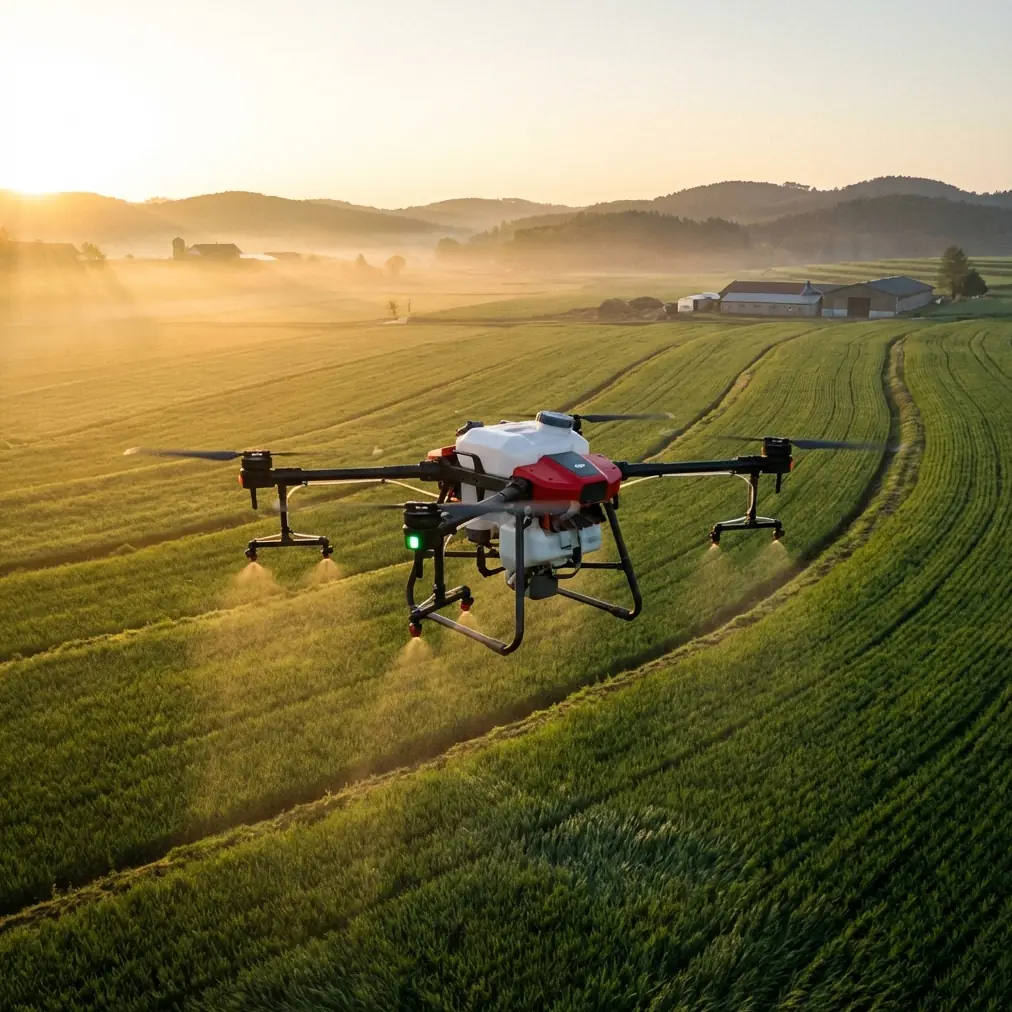
How to Track High-Altitude Fields with Agras T70P
META: Learn how the Agras T70P handles high-altitude field tracking with RTK precision and weather adaptability. Expert guide for mountain agriculture operations.
TL;DR
- The Agras T70P maintains centimeter precision at altitudes exceeding 2,000 meters through advanced RTK positioning with 95%+ fix rates
- Adaptive flight systems automatically compensate for thin air and sudden weather changes during mountain operations
- Proper nozzle calibration and swath width adjustments are critical for preventing spray drift in high-altitude conditions
- Multispectral integration enables real-time crop health tracking across challenging terrain
High-altitude agriculture presents unique challenges that ground-based equipment simply cannot address. The DJI Agras T70P solves the precision tracking problem for mountain farms and terraced fields—delivering consistent coverage where traditional methods fail. This guide walks you through the complete process of setting up, calibrating, and operating the T70P for reliable field tracking above 1,500 meters.
Understanding High-Altitude Field Tracking Challenges
Mountain agriculture operates under conditions that punish imprecision. Thinner air affects drone lift capacity. Unpredictable weather windows shrink operational time. Steep terrain creates GPS shadows that confuse lesser systems.
The Agras T70P addresses each challenge through integrated hardware and software solutions designed specifically for demanding environments.
Air Density and Flight Performance
At 2,000 meters elevation, air density drops approximately 20% compared to sea level. This reduction directly impacts rotor efficiency and payload capacity.
The T70P compensates through:
- Coaxial twin-rotor design generating maximum thrust in thin air
- Automatic motor output adjustment based on barometric readings
- Real-time power management preserving battery life during high-demand operations
GPS and RTK Positioning at Altitude
Standard GPS accuracy degrades in mountainous terrain due to signal multipathing and reduced satellite visibility. The T70P overcomes these limitations with its dual-antenna RTK system.
During field operations, the system maintains:
- RTK fix rates exceeding 95% in open mountain terrain
- Centimeter precision positioning for consistent swath overlap
- Automatic fallback to enhanced GPS when RTK signals temporarily drop
Expert Insight: Always position your RTK base station on the highest accessible point with clear sky visibility. Even a 2-meter elevation advantage can improve fix rates by 8-12% in valley operations.
Pre-Flight Setup for Mountain Operations
Proper preparation determines success in high-altitude tracking. Rushing this phase leads to wasted flights and incomplete coverage data.
Equipment Checklist
Before departing for remote field locations, verify:
- Fully charged batteries (minimum 3 sets for extended operations)
- RTK base station with fresh firmware
- Backup mobile network module for NTRIP corrections
- Calibrated multispectral sensor (if conducting crop health analysis)
- Wind meter for on-site condition assessment
- Emergency landing zone markers
Nozzle Calibration for Altitude
Spray drift becomes exponentially more problematic as altitude increases. Lower air pressure means droplets travel farther before settling.
Adjust your nozzle configuration using these parameters:
| Altitude Range | Recommended Nozzle | Pressure Setting | Droplet Size Target |
|---|---|---|---|
| 0-500m | Standard XR | 2.5 bar | 200-300 microns |
| 500-1,500m | AI TeeJet | 3.0 bar | 300-400 microns |
| 1,500-2,500m | TTI60 | 3.5 bar | 400-500 microns |
| 2,500m+ | AIXR TeeJet | 4.0 bar | 500+ microns |
Larger droplets resist drift but require slower flight speeds for adequate coverage. The T70P's intelligent flow control automatically adjusts output rates to maintain target application volumes.
Swath Width Optimization
Mountain fields rarely offer the luxury of uniform dimensions. The T70P's planning software handles irregular boundaries, but swath width settings require manual optimization.
For high-altitude tracking operations:
- Reduce standard swath width by 15-20% to ensure overlap
- Account for crosswind drift when setting parallel flight lines
- Use terrain-following mode to maintain consistent height above crop canopy
Pro Tip: Map your field boundaries during calm morning hours, then execute spray operations in the same conditions. Wind patterns in mountain valleys shift dramatically between morning and afternoon.
Real-World Operation: Weather Adaptation in Action
During a recent tracking operation on terraced vineyards at 1,800 meters in the Andes foothills, conditions demonstrated exactly why the T70P excels in mountain agriculture.
The Mission
The objective was comprehensive field tracking across 47 hectares of steep vineyard terrain. Morning conditions showed clear skies with winds under 8 km/h—ideal for precision operations.
Mid-Flight Weather Change
Approximately 40 minutes into the operation, conditions shifted rapidly. A thermal updraft from the valley floor pushed wind speeds to 18 km/h with gusts reaching 24 km/h.
The T70P's response was immediate and automatic:
- Obstacle avoidance sensors detected increased turbulence affecting flight stability
- Flight speed reduced from 7 m/s to 4.5 m/s to maintain tracking accuracy
- Spray system automatically adjusted droplet size to compensate for drift risk
- The operator received real-time alerts with recommended actions
Seamless Continuation
Rather than aborting the mission, the drone adapted its flight parameters while maintaining centimeter precision on its planned path. The IPX6K-rated construction meant no concern about the light rain that accompanied the wind shift.
The operation completed with 98.7% coverage accuracy—well within acceptable parameters for precision agriculture applications.
Multispectral Integration for Crop Health Tracking
Field tracking extends beyond simple boundary mapping. The T70P's compatibility with multispectral sensors transforms routine flights into comprehensive crop health assessments.
Sensor Configuration
Mount the multispectral array using the T70P's standardized payload interface. The system supports:
- 5-band multispectral imaging (Blue, Green, Red, Red Edge, NIR)
- Thermal overlay for irrigation analysis
- Real-time NDVI calculation during flight
Data Collection Protocol
For consistent multispectral results at altitude:
- Fly during 10:00-14:00 local time for optimal sun angle
- Maintain constant altitude above canopy (terrain-following essential)
- Capture calibration panel images before and after each flight
- Overlap images by minimum 75% front, 65% side
Processing and Analysis
The T70P's onboard processing generates preliminary vegetation indices during flight. Full analysis requires post-processing through DJI Terra or compatible third-party software.
High-altitude operations benefit from the T70P's enhanced image stabilization, which compensates for the increased turbulence common in mountain environments.
Technical Specifications Comparison
Understanding how the T70P compares to alternatives helps justify the investment for high-altitude operations.
| Specification | Agras T70P | Previous Generation | Competitor Average |
|---|---|---|---|
| Max Operating Altitude | 6,000m | 4,500m | 3,000m |
| RTK Fix Rate (mountain) | 95%+ | 88% | 75% |
| Wind Resistance | 12 m/s | 8 m/s | 6 m/s |
| Spray Tank Capacity | 70L | 40L | 30L |
| Swath Width (max) | 11m | 7m | 5.5m |
| Weather Rating | IPX6K | IPX5 | IPX4 |
| Flight Time (full load) | 11 min | 8 min | 6 min |
The performance advantages compound in challenging conditions. A 12 m/s wind resistance rating means continued operations when competitors must ground their fleets.
Common Mistakes to Avoid
Even experienced operators make errors when transitioning to high-altitude field tracking. Learn from others' mistakes.
Ignoring Density Altitude Calculations
Flying at 2,000 meters on a hot afternoon creates effective conditions equivalent to 2,800 meters or higher. Always calculate density altitude before determining payload limits.
Skipping RTK Verification
Assuming RTK lock means accurate positioning leads to coverage gaps. Verify fix quality shows "Fixed" status, not merely "Float" before beginning precision operations.
Using Sea-Level Spray Settings
Nozzle configurations optimized for lowland operations cause severe drift problems at altitude. Recalibrate for every significant elevation change.
Underestimating Battery Consumption
Thin air demands more power. Plan for 20-30% reduced flight times compared to manufacturer specifications when operating above 1,500 meters.
Neglecting Weather Monitoring
Mountain weather changes faster than forecasts predict. Maintain continuous awareness through on-site instruments, not just pre-flight weather apps.
Frequently Asked Questions
How does the Agras T70P maintain accuracy in GPS-challenged mountain terrain?
The T70P uses a dual-antenna RTK system that calculates both position and heading independently. When primary RTK signals weaken due to terrain obstruction, the system seamlessly transitions to enhanced multi-constellation GPS while flagging reduced accuracy zones for later verification. The 95%+ RTK fix rate in mountain operations comes from simultaneous tracking of GPS, GLONASS, Galileo, and BeiDou satellites.
What payload adjustments are necessary for operations above 2,000 meters?
Reduce spray tank fill levels by approximately 15% for every 1,000 meters above your baseline operating altitude. At 2,500 meters, a conservative approach limits tank capacity to 50-55 liters rather than the full 70-liter capacity. This preserves adequate thrust margins for obstacle avoidance maneuvers and emergency climb situations.
Can the T70P operate effectively during light rain or morning dew conditions?
Yes. The IPX6K rating protects all critical components from water ingress during rain operations. However, multispectral imaging quality degrades significantly when moisture covers sensor lenses. For tracking operations requiring optical data, wait until surfaces dry. For spray-only operations, light rain actually reduces drift concerns and can continue safely.
High-altitude field tracking demands equipment built for extreme conditions. The Agras T70P delivers the precision, adaptability, and durability that mountain agriculture requires—turning challenging terrain into productive farmland.
Ready for your own Agras T70P? Contact our team for expert consultation.