
Agras T70P for Dusty Vineyard Survey Work
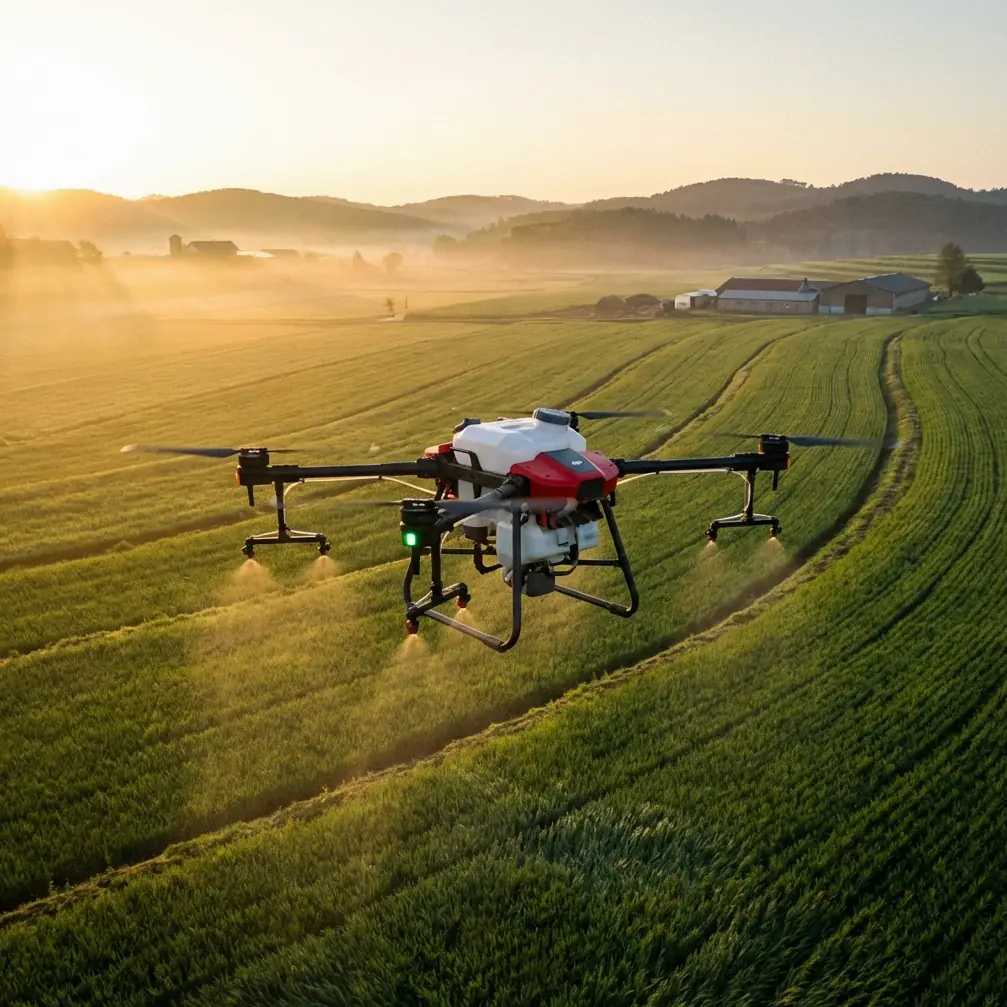
Agras T70P for Dusty Vineyard Survey Work: A Technical Review from the Field
META: Expert review of the Agras T70P for vineyard operations in dusty conditions, with practical insight on RTK precision, nozzle calibration, spray drift control, IPX6K durability, and battery management.
Vineyard work exposes weaknesses fast. Dust gets into everything. Rows are narrow, irregular, and often sloped. Light changes by the minute. A drone that looks capable on a spec sheet can become awkward once it is asked to hold a reliable line over vines, maintain clean coverage at row edges, and keep its positioning stable when the terrain and air are both working against it.
That is the right lens for evaluating the Agras T70P.
I am approaching this less as a glossy product overview and more as an operational review for crews surveying vineyards in dusty environments, where mapping quality, repeatability, and uptime matter as much as payload capability. The most useful way to understand the T70P is not to ask whether it is “advanced.” Many aircraft are advanced. The real question is whether its design supports disciplined, repeatable work in conditions that punish inconsistency.
Why vineyard survey work is harder than it looks
A vineyard is not a flat rectangle. Row spacing can vary. Canopy height can shift noticeably across a single block. Wind funnels through corridors. Dust rises from service tracks, especially after vehicle movement or dry mechanical work. These are exactly the conditions that amplify small errors.
If RTK fix stability wavers, your passes drift off the intended line. If your swath width assumptions are wrong, overlaps become messy and data confidence drops. If the aircraft cannot tolerate repeated dust exposure and washdown cycles, maintenance time starts eating into productive time.
That is why the T70P deserves a closer look through five specific filters:
- Positioning confidence in repetitive row-based flight
- Stability in dusty operating environments
- Control of drift and coverage consistency
- Integration with agronomic sensing workflows, including multispectral interpretation
- Battery handling under stop-start field routines
These are not abstract concerns. They decide whether the aircraft becomes a dependable tool or a source of accumulated small frustrations.
The hidden value of precision: why centimeter-level repeatability changes vineyard decisions
For vineyard survey work, centimeter precision is not just a talking point. It affects whether you can compare one mission to another with enough confidence to spot real change rather than flight-path noise.
In practical terms, a strong RTK fix rate matters most when flying long, repeating corridors. Vineyard managers are often less interested in a beautiful one-off map than in a consistent sequence of observations: stress in one block after irrigation changes, canopy variation after dust deposition, or edge effects near access roads. If the aircraft returns to nearly the same track each time, the data becomes more actionable.
This is where the T70P’s value is easy to underestimate. People often focus on payload or area coverage, but in vineyards the bigger operational win is repeatability. When the aircraft can hold a tight line along rows and preserve stable geometry between missions, the agronomic team can trust the trend, not just admire the image.
That also strengthens multispectral workflows. Multispectral results are only useful when the geospatial framework underneath them is dependable. A block showing variable vigor may signal irrigation imbalance, disease onset, compaction, or dust-related leaf surface effects. The interpretation improves when flight-to-flight alignment is consistent enough to reduce positional ambiguity.
Dust is not a side issue. It is the operating environment.
Many vineyard buyers treat durability ratings as a secondary specification. They should not.
In dusty production corridors, IPX6K-class protection matters because the aircraft is rarely operating in a clean lab-like space. It is exposed during takeoff, landing, battery swaps, transport, and post-mission cleaning. Fine particulates collect around folding points, landing gear interfaces, sensor windows, and exposed body surfaces. The operational burden is not just contamination during flight. It is the cumulative effect of repeated exposure over weeks.
An aircraft built for harsher field conditions gives the operator more freedom to maintain it properly rather than timidly. In my own field routines, I strongly prefer platforms that can tolerate disciplined exterior cleaning after dusty deployments. Dust left in place becomes its own problem. It insulates heat, obscures visual inspection, and increases wear on moving interfaces.
The T70P’s suitability for vineyard use improves sharply if the crew treats its environmental protection as a maintenance enabler, not as permission to become careless. That distinction matters. Protection ratings buy resilience, but only good habits preserve long-term reliability.
Spray drift and nozzle calibration still matter, even during survey-centered operations
At first glance, spray drift and nozzle calibration sound more relevant to application work than survey work. In vineyards, the distinction is not so neat.
Most operators evaluating an Agras platform are not making a permanent choice between surveying and spraying. They are building a field system. Survey informs treatment. Treatment outcomes get checked by later flights. That means the same operational discipline carries across both tasks.
Nozzle calibration is one of those deceptively simple procedures that separates usable field performance from inconsistent results. Even if your immediate task is vineyard assessment, the aircraft’s role in a broader application workflow means calibration quality will shape the value of what you learn from survey flights. If treatment delivery is uneven, your follow-up maps may reflect application inconsistency rather than crop condition.
Spray drift is similar. A vineyard often has vulnerable margins: neighboring crops, roads, open boundaries, worker routes. Drift control depends on more than nozzles alone; it includes droplet behavior, aircraft speed, height above canopy, and lateral stability. A survey operator who understands drift mechanics will usually make better route decisions and safer block plans later when the same system is used for application.
That is why I do not separate survey competence from application competence. The best T70P crews build one discipline for both.
What a weather drone and a flight school can teach a vineyard operator
The references behind this article were not vineyard brochures. One discussed meteorological drones scanning the outer cloud structure of Typhoon Sinlaku in a kind of three-dimensional “CT-style” pass, returning real-time temperature, humidity, pressure, and condensate data to improve path and intensity forecasting. Another described a flight-training method refined through instruction of hundreds of radio-control pilots, with a blunt but useful rule: when a trainee gets stuck, step back and rebuild the previous fundamentals.
Those two ideas are unexpectedly relevant to the Agras T70P.
First, the weather-drone example highlights something many operators forget: useful aerial work is not about flying for spectacle. It is about collecting the right data in a structured way and getting it back in real time so a decision can be improved. In the typhoon case, the value came from multiple atmospheric variables being transmitted to the ground fast enough to support forecast accuracy. In a vineyard, the scale is smaller, but the principle is identical. The T70P’s role is not simply to cover rows. Its purpose is to generate dependable information that changes what the agronomist or manager does next.
Second, the training reference speaks directly to safe and productive field deployment. That guide was based on experience with several hundred learners and emphasized a step-by-step method rather than skipping ahead. For T70P operators in vineyards, that matters more than most teams admit. If your route planning, low-speed precision control, headland turns, and dust-site battery procedures are sloppy, more advanced functions will not rescue the operation. When a crew struggles with row alignment or uneven coverage, the fastest fix is usually not a more complicated setting. It is going back one step and tightening the basics.
That lesson scales all the way up to professional operations.
A battery management tip that saves time and pack health
Here is the field habit I recommend most often for dusty vineyard sites: do not place a warm battery straight onto a dusty tailgate or crate lid during rotation.
That sounds minor. It is not.
A battery coming out of active flight is warm, and dusty surfaces are magnets for fine particulate transfer. Once dust settles around connectors, vents, handles, or contact areas, every swap becomes a little less clean and a little more error-prone. Over time this contributes to poor contact hygiene, extra cleaning, and avoidable wear.
My routine is simple. I use a dedicated clean pad or enclosed battery case at the edge of the block. Fresh packs stay sealed until needed. Landed packs go into a separate “cool-down” position, shaded and off the ground, before they are moved again. In hot, dry vineyard conditions, this does three things:
- It reduces dust contamination during the most frequent handling event of the day
- It helps operators track pack rotation more accurately
- It avoids rushing a pack from discharge into an immediate handling cycle while it is still hot
The practical result is better uptime. Not because the battery is magically stronger, but because the crew becomes calmer and more systematic.
If you are comparing workflows or want to sanity-check your own battery rotation routine for vineyard blocks, this quick field discussion link is often the easiest option: message our technical team here.
Swath width in vineyards: wider is not always better
People love big coverage numbers. Vineyards punish that mindset.
Swath width must be treated as a controllable operational parameter, not a marketing trophy. In open broadacre work, wider can translate cleanly into productivity. In vineyards, row spacing, trellis geometry, canopy density, and border conditions can make an aggressive swath inefficient or misleading. You may save minutes in the air only to lose confidence in the data or create uneven application patterns later.
The T70P is best used when swath planning respects the crop architecture. For survey-oriented missions, I advise operators to think in terms of data confidence per pass, not just hectares per hour. Narrowing assumptions and increasing overlap where dust, slope, or canopy variability are highest can produce more trustworthy outputs than pushing maximum theoretical coverage.
That same mindset carries into later agronomic action. A well-planned swath width is part of crop understanding, not just route efficiency.
What the Mars helicopter anecdote really says about UAV design discipline
One of the source references described the first powered rotorcraft flight on another planet, achieved on April 19, 2021. The aircraft had to deal with an atmosphere with less than 1% of Earth’s density, so it relied on an ultra-light design and rotor speeds up to 2400 rpm, far above the 450 to 500 rpm range cited for a traditional helicopter.
Why mention that in a vineyard review?
Because it reminds us that serious UAV performance comes from matching the aircraft to the environment with ruthless engineering clarity. The environment dictates the solution. On Mars, thin atmosphere forced extreme rotor behavior. In a dusty vineyard, the constraints are different, but the lesson holds: design choices must answer the field, not the brochure.
For the T70P, that means the useful questions are grounded ones. Can it preserve stable navigation among repetitive rows? Can it support disciplined drift management? Can its structure and protection level tolerate dusty daily deployment? Can the operator build repeatable routines around it? These are the vineyard equivalents of engineering for the atmosphere you actually have.
My verdict on the Agras T70P for dusty vineyard survey operations
The Agras T70P makes sense when it is treated as part of a precision field system rather than a standalone flying machine. Its value rises when the operator cares about repeatable row tracking, disciplined calibration, and maintenance behavior in dust-heavy conditions. It becomes even stronger when linked to a sensible agronomy workflow that combines regular flights, multispectral interpretation where needed, and careful follow-up.
The weak point is rarely the aircraft alone. It is usually operator impatience. The training reference I mentioned earlier had the right idea: each step supports the next. That applies directly here. If your crew builds strong habits around RTK setup, nozzle calibration, swath planning, cleaning, and battery rotation, the T70P is far more likely to deliver the kind of consistency vineyard work demands.
And consistency is what separates nice-looking drone operations from useful ones.
Ready for your own Agras T70P? Contact our team for expert consultation.