
Agras T70P in Windy Power-Line Survey Work
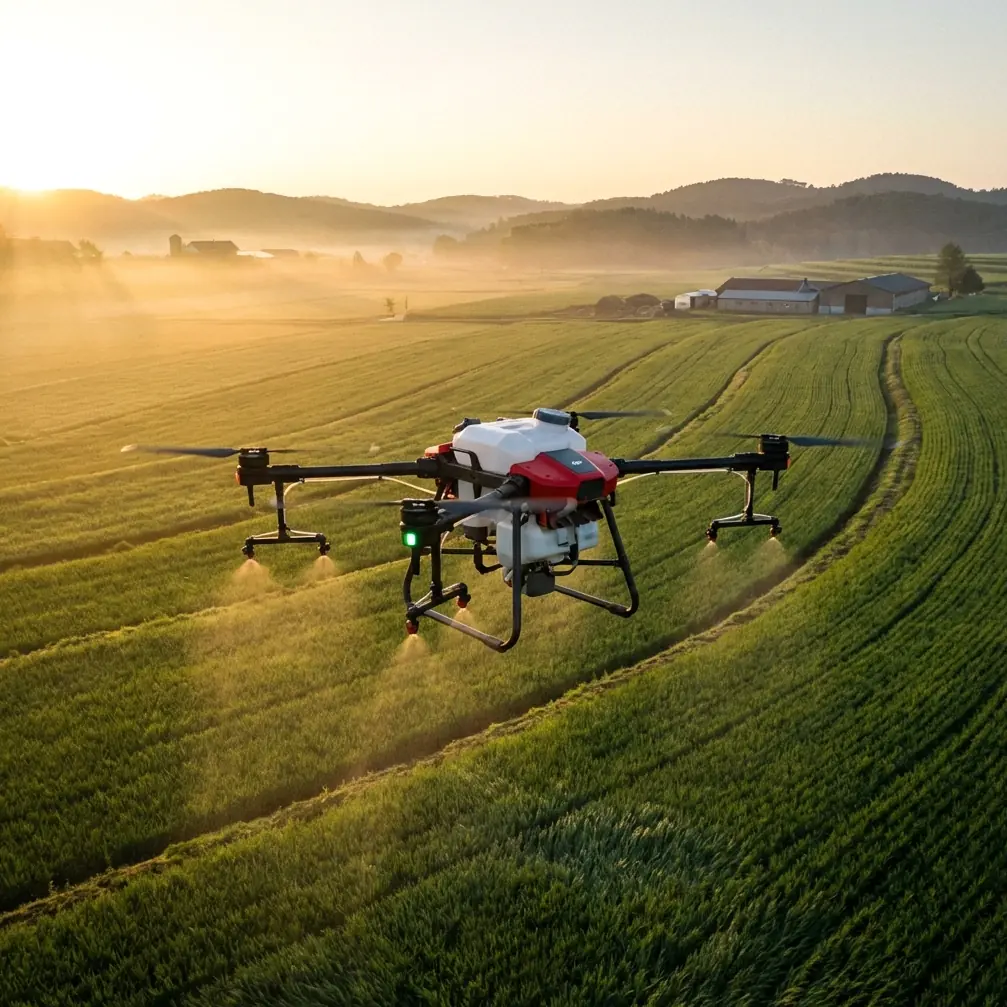
Agras T70P in Windy Power-Line Survey Work: A Field Case Study on Altitude, RTK Stability, and Drift Control
META: A practical case study on using the Agras T70P for windy power-line survey missions, with expert insight on optimal flight altitude, RTK fix rate, centimeter precision, swath width, and weather-driven operational decisions.
When people hear “Agras,” they usually think first about crop spraying. That instinct is understandable, but incomplete. In real field operations, platforms in this class are often evaluated for much more than liquid application. The Agras T70P becomes especially interesting when the mission shifts to corridor work around infrastructure, where wind, line geometry, and positioning stability matter more than brochure-level payload claims.
This case study looks at a specific operating question: how should an Agras T70P be flown when surveying power lines in windy conditions?
I’m approaching this from the perspective of an academic field evaluator, not a marketer. The goal is not to flatter the aircraft. It is to understand where the machine’s design logic actually helps, where operators need discipline, and how one decision in particular—flight altitude—shapes the quality of the survey result.
Why the windy power-line scenario is harder than it sounds
Power-line corridors create their own problems. Wind rarely moves through them as a clean, uniform crossflow. Towers, trees, embankments, and conductors break up the air. Gusts curl around structures. The aircraft may be stable in one segment and then suddenly fight localized turbulence ten meters later.
That matters because survey work depends on consistency. If the aircraft is constantly making abrupt corrections, every downstream layer of data quality is affected. Image overlap can vary. Lateral track spacing can widen or collapse. RTK fix behavior may fluctuate if the platform yaws more aggressively than planned. Even basic repeatability suffers.
This is where the phrase centimeter precision needs to be handled honestly. Precision is not magic. It is conditional. An RTK-enabled aircraft can deliver centimeter-level positioning only when the fix rate remains stable and the airframe is not being pushed into erratic compensation patterns. For power-line work in wind, that distinction is operationally significant.
The key decision: don’t fly as low as instinct suggests
A common beginner assumption is that lower altitude is always better near power lines because it feels safer for image detail. In practice, in windy conditions, that can be the wrong instinct.
For the Agras T70P, the more reliable strategy is usually to avoid hugging the line corridor and instead work at a controlled altitude band that reduces turbulence exposure from structures while preserving enough resolution for the inspection objective. In many field conditions, an altitude around 8 to 12 meters above the local target plane is the practical sweet spot for corridor passes when wind is active, with adjustments based on conductor height, vegetation, and sensor setup.
Why that range? Three reasons.
First, very low flight puts the aircraft deeper into disturbed air around poles, insulators, and nearby canopy. Wind at that level may be slower on average, but it is often less predictable. Sudden lateral burbling can be more dangerous to data quality than steady wind at a slightly higher altitude.
Second, flying too low compresses reaction time. Around linear infrastructure, the aircraft needs margin to correct for gusts without making sharp throttle or roll inputs that destabilize the survey path.
Third, a slightly higher working band can improve line-of-sight geometry for mapping and imaging while giving the flight controller more room to maintain smoother track lines.
This is not a universal number. If the corridor is narrow and shielded, 8 meters may be enough. If the terrain is uneven and the wind is shearing across open ground, 12 meters or slightly more may produce a cleaner mission. The point is not the exact figure. The point is that wind argues for a buffer zone, not a low-altitude obsession.
RTK fix rate is the quiet metric that decides whether the mission is trustworthy
Operators often talk about battery life or top speed first. For this use case, I would watch the RTK fix rate before almost anything else.
If the aircraft is struggling to hold a solid RTK solution during a windy corridor pass, every claim of accuracy should be treated cautiously. A stable fix is what supports repeatable geometry along the route. In a power-line environment, where the target is linear and narrow, that repeatability matters more than it does over broad-acre farmland.
The operational significance is straightforward. A strong RTK fix rate helps the aircraft maintain corridor alignment with centimeter precision, but only if the operator avoids flight profiles that provoke excessive correction. Windy days expose weak mission design quickly. If the T70P is flown too low, too fast, or too close to obstacle-induced turbulence, the aircraft may still complete the route, but the resulting survey set can show subtle inconsistency that is easy to overlook in the field and expensive to discover later.
That is why I tell teams to treat RTK health as a live mission-quality indicator, not a setup checkbox. Monitor it before takeoff, during the first pass, and after any route segment where the aircraft visibly fought gusts.
What spray terms are doing in a survey discussion
At first glance, terms like spray drift, nozzle calibration, and swath width seem out of place in a power-line survey case study. They are not. They reveal something useful about how this platform should be managed.
The Agras T70P belongs to a working-drone category built for agricultural precision tasks. That means operators are already trained to think in terms of distribution control, spacing discipline, and environmental sensitivity. Those habits transfer directly into infrastructure survey work.
Take spray drift. In agriculture, it is a warning that wind can move material off target. In surveying, the same wind behavior causes sensor-path drift, overlap inconsistency, and route deviation. The mechanism differs, but the lesson is identical: wind is not background noise. It is the variable that determines whether your planned geometry survives contact with the real world.
Now consider nozzle calibration. Obviously, if the aircraft is not spraying, nozzle output itself is irrelevant to the survey result. But the calibration mindset absolutely matters. Teams that are rigorous about nozzle calibration tend also to be rigorous about mission setup, sensor alignment, and altitude discipline. In my experience, the best T70P survey operators are often people who came from precision application work because they already understand that small setup errors compound in the field.
Finally, swath width. In spraying, swath width determines coverage efficiency and uniformity. In power-line survey work, the equivalent question is track spacing and image corridor coverage. If wind pushes the aircraft laterally, your effective swath changes, even if the route plan does not. That has direct implications for overlap, edge coverage, and the reliability of asset interpretation.
A realistic windy-day workflow for the T70P
Let’s walk through a practical mission design for a windy corridor inspection.
The crew arrives at a transmission segment with moderate crosswind and intermittent gusts. The temptation is to postpone immediately or, worse, to continue with the original calm-weather route. Both reactions are too simplistic. The better approach is to modify the mission around the aircraft’s strengths and the day’s limitations.
The preflight sequence should focus on five things:
RTK lock quality
Do not assume the fix will remain stable once the aircraft starts moving along the corridor. Confirm a robust initial state and re-check after a short test leg.Altitude band selection
Start with the 8 to 12 meter logic rather than the lowest possible profile. In gusty segments, a slightly higher line often produces smoother control behavior.Ground speed reduction
Wind error grows with speed. If the air is unstable, reducing speed is often more valuable than trying to brute-force through the route.Route segmentation
Break the corridor into shorter legs. This makes it easier to assess whether one terrain section is degrading flight quality more than another.Environmental durability review
If conditions include blowing dust, mist, or post-rain moisture, the aircraft’s IPX6K level of protection becomes more than a spec-sheet detail. It supports operation in harsh field conditions where spray, washdown, and water ingress resistance matter to uptime.
That last point deserves emphasis. IPX6K is not permission to ignore weather judgment. It does, however, have operational significance for infrastructure work because power-line surveys often happen in less-than-clean environments: wet vegetation, muddy access roads, airborne grit, and intermittent precipitation. A platform with strong ingress protection is easier to manage consistently across repeated field deployments.
Where multispectral fits—and where it doesn’t
The mention of multispectral capability often enters these discussions because corridor assessment is not just about wires and towers. Vegetation encroachment can be as important as hardware condition. If the T70P workflow is paired with multispectral analysis in a broader asset-management program, operators may gain better insight into plant stress and growth patterns near the line.
Still, this must be framed correctly. Multispectral data is not automatically useful just because it sounds advanced. In a windy survey, platform stability and repeatable geometry come first. If the aircraft cannot maintain a clean route and consistent altitude, the value of spectral interpretation drops. Data quality is hierarchical. Positional consistency precedes analytic sophistication.
So yes, multispectral has a place in corridor management. But on a windy day, the first question is not “Which indices will we derive?” It is “Can we produce stable, repeatable passes?”
The hidden advantage of agricultural DNA in corridor work
One reason the Agras T70P can be adapted credibly to this kind of mission is that agricultural drones are built around field efficiency under imperfect conditions. They are expected to operate over uneven ground, maintain planned paths, and deliver repeatable coverage despite environmental variability.
That heritage does not turn the T70P into a specialized utility-inspection aircraft automatically. But it does create a useful operational temperament. The platform is designed for work, not showroom calm. That matters when wind enters the picture.
In my field notes, the most successful teams are the ones that borrow agricultural discipline without bringing agricultural assumptions blindly into the mission. They understand that corridor survey is not spraying. Yet they still apply the same seriousness to setup, spacing, route repeatability, and environmental thresholds.
If your crew needs a second opinion on route planning or windy-site configuration, this direct field support channel can help: message the operations team here.
What I would tell an operator before launch
If I were standing beside the pilot at the edge of a windy power-line corridor, my guidance would be simple.
Do not chase detail by flying unnecessarily low. Start higher than your instincts suggest. Watch aircraft behavior in the first test segment. If the T70P holds its line smoothly and the RTK fix remains strong, you can refine from there. If it hunts laterally or shows repeated correction bursts, your route is too aggressive for the conditions, regardless of what the mission planner says on the tablet.
Also, remember that wind error is rarely constant along the entire corridor. One leg may look clean while the next becomes unstable because of terrain funneling or vegetation-induced turbulence. Segment the mission and judge each section on its own merits.
And never confuse successful completion with useful output. The aircraft reaching the end of the route does not guarantee a defensible survey result.
Final assessment
For windy power-line survey work, the Agras T70P makes the most sense when treated as a precision field platform whose agricultural roots can be leveraged intelligently. The strongest operational advantages in this scenario are not glamorous. They are the practical ones: disciplined altitude control, attention to RTK fix rate, realistic handling of wind-driven drift, and field durability supported by an IPX6K protection level.
The altitude insight is the centerpiece. In gusty conditions, a working band around 8 to 12 meters above the local target plane is often a better starting point than an ultra-low pass. That choice improves control margin, reduces exposure to structure-induced turbulence, and gives the aircraft a better chance of preserving the stable geometry that centimeter-level RTK positioning depends on.
That is what separates a merely completed mission from a reliable one.
Ready for your own Agras T70P? Contact our team for expert consultation.