
Agras T70P in Windy Forest Survey Work: A Field Report
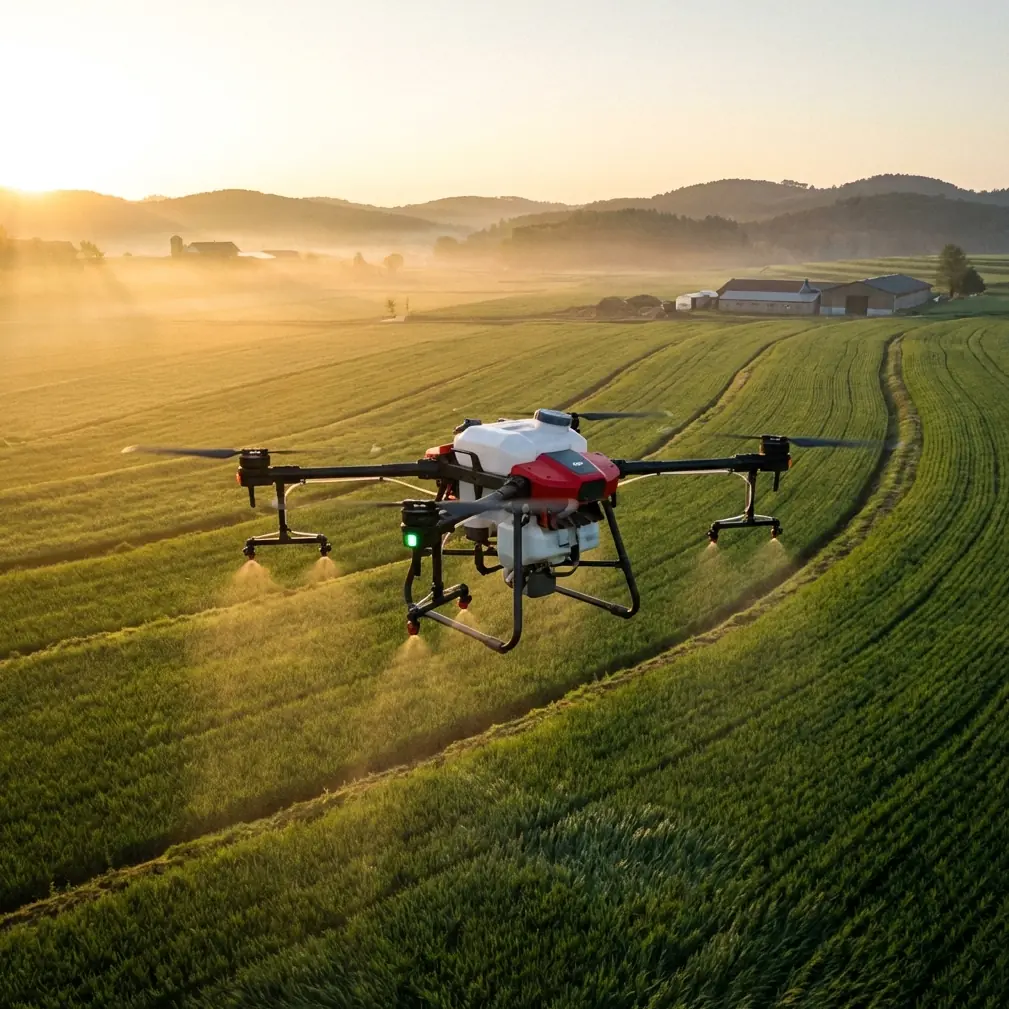
Agras T70P in Windy Forest Survey Work: A Field Report on Stability, Mapping Discipline, and Why Agricultural UAV Logic Still Matters
META: A field-style expert report on using the Agras T70P around windy forest environments, with practical insight on multirotor stability, mapping workflow, RTK discipline, accessory choices, and why agricultural drone design principles matter beyond spraying.
When people search for information on the Agras T70P, they usually expect a discussion centered on crop protection. That is fair. The platform belongs to a class of multirotor aircraft shaped by agricultural realities: uneven terrain, repetitive tasking, payload-bearing flight, and work that cannot stop just because conditions are less than ideal.
But that is only part of the story.
In forest-edge survey scenarios, especially where wind funnels through valleys or breaks unpredictably above tree lines, the value of an agricultural multirotor is not just spraying capacity. It is operational discipline. A machine designed for low-altitude, precision field work has to hold line, manage disturbance, and repeat passes with consistency. Those same traits matter when the mission shifts from droplet placement to data capture.
I have been thinking about the T70P through that lens: not as a generic forestry aircraft, and not as a marketing symbol, but as a working multirotor whose design DNA comes from a long technical lineage. That lineage matters more than many buyers realize.
The forest problem is really a wind problem
Surveying forests in windy conditions is rarely about simple coverage. The real problem is airflow disorder.
Open fields are one thing. Forest margins are another. Wind accelerates through gaps, curls upward along canopy edges, and creates small pockets of turbulence that can throw off path consistency, camera overlap, and altitude control. Even when the aircraft remains perfectly flyable, data quality may drift before the pilot notices it. Swath width assumptions become unreliable. Image spacing changes. RTK fix quality can fluctuate under partial canopy exposure. If a multispectral payload or mapping camera is added through a third-party accessory system, the stakes rise because every deviation in track geometry affects downstream interpretation.
This is where the T70P becomes interesting. A platform built for agricultural precision already lives in a world where spray drift, nozzle calibration, and pass-to-pass repeatability are non-negotiable. Those concepts sound specific to application work, yet they translate directly into survey operations.
Spray drift is, in a sense, a visual reminder of aerodynamic instability. If wind can push droplets off target, it can also push a survey line off its intended corridor. Nozzle calibration has an equivalent in mapping: camera triggering discipline, overlap planning, and speed matching. The habits are different, but the mindset is the same. Good agricultural aircraft are built around repeatability, and repeatability is exactly what forest survey work demands.
Why multirotor history still explains modern field performance
The T70P did not emerge from nowhere. Modern agricultural multirotors stand on twenty years of development in both commercial and academic environments.
The early product phase from roughly 2005 to 2010 is especially relevant. Germany’s Microdrones introduced the Md4-200 in 2006 and later the Md4-1000 in 2010. Draganflyer had already released the Draganflyer IV in 2004 and followed it with the industrial Draganflyer X6 in 2008. Around the same time, the 2006 Mikrokopter open-source quadrotor project helped spread practical multirotor experimentation, while Ascending Technologies, founded in 2007, became influential enough to be acquired by Intel in 2016.
Those dates are not trivia. They mark the period when multirotors stopped being exotic lab curiosities and became work platforms. The academic side reinforced that shift. Researchers built indoor test environments to validate control algorithms, especially attitude control. By 2007, the field was receiving attention from Nature, and by 2008 and 2010, serious work from MIT and UPenn had already established test beds for real-time autonomous vehicle development.
Operational significance? Stability in disturbed air is not magic. It is the product of years of control-system refinement, sensor fusion work, and repeated validation of multirotor behavior. When a T70P is asked to hold itself together near tree lines in changing wind, it benefits from that history. The platform may be modern and application-specific, but the foundations were laid in the exact era when multirotor control left the experimental stage and became dependable enough for industrial work.
What the agricultural use case teaches us about survey work
One of the more useful reference points comes from educational material describing where drones are already effective: crop protection, fertilization, seeding, disaster warning, yield assessment, and agricultural remote sensing. That bundle of tasks is revealing. It combines direct action and measurement in the same platform category.
The same source also notes drones being used for terrain mapping, high-precision 3D map generation, and geological monitoring through lidar and mapping cameras, producing 3D point-cloud imagery. This matters for T70P users who want to push beyond pure application tasks. It confirms a broader truth: the line between “ag drone” and “survey drone” is often thinner than spec sheets suggest. Once an aircraft can fly stable low-altitude missions, maintain route repeatability, and support disciplined payload integration, it starts to cross operational categories.
For forest surveys, that means the T70P should be evaluated less as a brand label and more as a mission carrier. Can it maintain centimeter precision with a robust RTK fix rate at the edge of canopy interference? Can it preserve enough consistency in speed and altitude for usable overlap? Can a third-party payload mount add mapping or multispectral capability without creating balance or vibration penalties that undermine the data?
These are the right questions. They come straight from the aircraft’s agricultural roots.
A practical field view: where the T70P helps, and where crews get sloppy
The strongest operators I know treat windy forest survey work as a calibration problem before it becomes a flight problem.
That means three things.
First, route design has to be built around wind direction, not just terrain boundaries. A flight line that looks efficient on the tablet can become a poor choice if it repeatedly crosses a canopy edge at an angle that triggers lateral corrections. In those cases, fewer, cleaner lines often beat aggressive coverage planning.
Second, RTK status needs to be watched as a live operational variable, not a box checked at takeoff. “Centimeter precision” is not a fixed property. It is a condition that has to be preserved. Forest adjacency, topography, and changing aircraft attitude can all influence the quality of the positioning solution.
Third, accessory integration has to be treated seriously. The context for this article suggested mentioning a third-party accessory that enhanced capability, and that is exactly where many otherwise competent teams either gain an edge or create their own problems. A well-designed aftermarket mapping bracket or multispectral mount can turn the T70P into a more versatile survey tool. A poorly designed one shifts center of gravity, increases drag, or introduces subtle vibration into the imaging payload. In a windy environment, those penalties are amplified.
I have seen crews improve results simply by swapping to a cleaner accessory mount with better mechanical isolation. Same aircraft. Same site. Same nominal mission. Better output because the payload integration respected the airframe.
If you are sorting through accessory options or field setup questions, one efficient way to compare configurations is to message a technical specialist here and verify payload balance, cable routing, and mission fit before deployment.
Windy forests expose the difference between flyability and data quality
This distinction deserves emphasis.
Many aircraft can remain airborne in rougher air than they can tolerate for quality survey capture. The T70P may be physically capable of maintaining flight when a mapping mission should actually be postponed or redesigned. That is not a weakness. It is a sign of a robust work platform. The mistake is assuming that aircraft stability automatically guarantees survey-grade consistency.
Forest operators should pay attention to:
- Cross-track error near tree lines
- Variability in altitude above uneven canopy transitions
- Trigger timing consistency when groundspeed fluctuates
- RTK fix persistence during turning segments
- Payload vibration after gust response
- Practical swath width versus theoretical swath width in turbulent corridors
Swath width is often discussed carelessly. In open-field application work, it is already sensitive to wind because drift alters effective coverage. In forest survey work, the analog problem is image geometry. If the aircraft is being nudged off line or forced into repeated micro-corrections, your effective capture corridor changes whether the mission planner admits it or not.
That is why experienced crews build margin into overlap, particularly when working alongside canopy edges.
The overlooked lesson from fruit-picking drones
One unusual but relevant reference describes fruit-harvesting drones equipped with a manipulator arm, front-facing cameras, soft protective structures, and algorithms that identify ripe fruit. The aircraft detects maturity, flies close, gently grasps and twists the fruit, then deposits it into a storage bin, repeating the cycle autonomously.
At first glance, that sounds unrelated to an Agras T70P in a forest survey role.
It is not.
The operational lesson is proximity discipline. Any drone that works close to trees, branches, and irregular natural structures must pair sensing with controlled motion. Forest survey crews face a lighter version of the same challenge. Even if the T70P is not plucking fruit, it is still operating in an environment where vertical structure, clutter, and gusting air interact. The more precisely the aircraft handles low-speed corrections and route adherence near natural obstacles, the better the resulting dataset.
This is one reason I remain skeptical of purely brochure-driven comparisons. Real work happens in disturbed environments. The better question is not “How advanced is the drone?” but “How gracefully does it manage edge cases?”
Weather sensing matters more than many T70P users expect
Another reference point from the educational material is the use of drones for meteorological sensing: temperature, pressure, humidity, wind, and cloud data, with special usefulness in typhoon tracking. That may seem far removed from forestry. Yet the implication is straightforward. Small atmospheric changes are not background noise for UAV operations; they are mission variables.
For T70P users surveying forests in wind, weather awareness should not stop at checking a forecast. A site-level interpretation matters more. Is the valley channeling gusts? Is the canopy creating rolling turbulence after midday heating? Is moisture changing visibility or sensor behavior?
Agricultural operators often develop sharper instincts here than pure mapping crews because their work is visibly punished by bad environmental judgment. Spray drift makes the mistake obvious. In survey work, the penalty is subtler: compromised overlap, inconsistent georeferencing, or degraded point-cloud quality that only becomes apparent in processing.
My bottom-line view on the Agras T70P for this niche
The T70P makes sense in windy forest-adjacent survey operations when approached as a stable, precision-oriented multirotor platform with agricultural discipline baked in. Its relevance is not that it was born for forests. It was not. Its relevance is that the design logic behind serious agricultural drones aligns with the exact habits that difficult survey environments require: route consistency, disturbance tolerance, payload awareness, and rigorous calibration culture.
Two details from the reference record frame this well.
First, agricultural drones are already central to tasks like crop protection, fertilization, seeding, disaster warning, yield assessment, and remote sensing. That shows these aircraft are built for repeatable work, not occasional demonstration flights.
Second, the multirotor technology stack behind platforms like the T70P was shaped during the 2005-2010 takeoff period, with milestones such as the Md4-200 in 2006 and industrial systems like the Draganflyer X6 in 2008, plus academic control-system research that matured autonomy and flight stability. That technical history explains why today’s work drones can function reliably in complex air at all.
As for the unrelated news item about a “mystery naval drone” found in the Ionian Sea, I would leave it exactly where it belongs: outside the civilian commercial discussion. Confusion around unidentified drones tends to cloud public understanding. The Agras T70P belongs in the opposite category—transparent, task-specific, civilian field operations where performance is measured by data integrity, work rate, and safe repeatability.
That is the real frame.
If your goal is forest survey work in wind, do not reduce the T70P to a crop sprayer with extra capacity. Think of it as an agricultural multirotor whose operational grammar—precision passes, environmental sensitivity, and payload-conscious setup—can be transferred into a demanding survey role. Done well, that crossover is not a compromise. It is an advantage.
Ready for your own Agras T70P? Contact our team for expert consultation.