
Agras T70P in Forest Survey Operations: What Actually
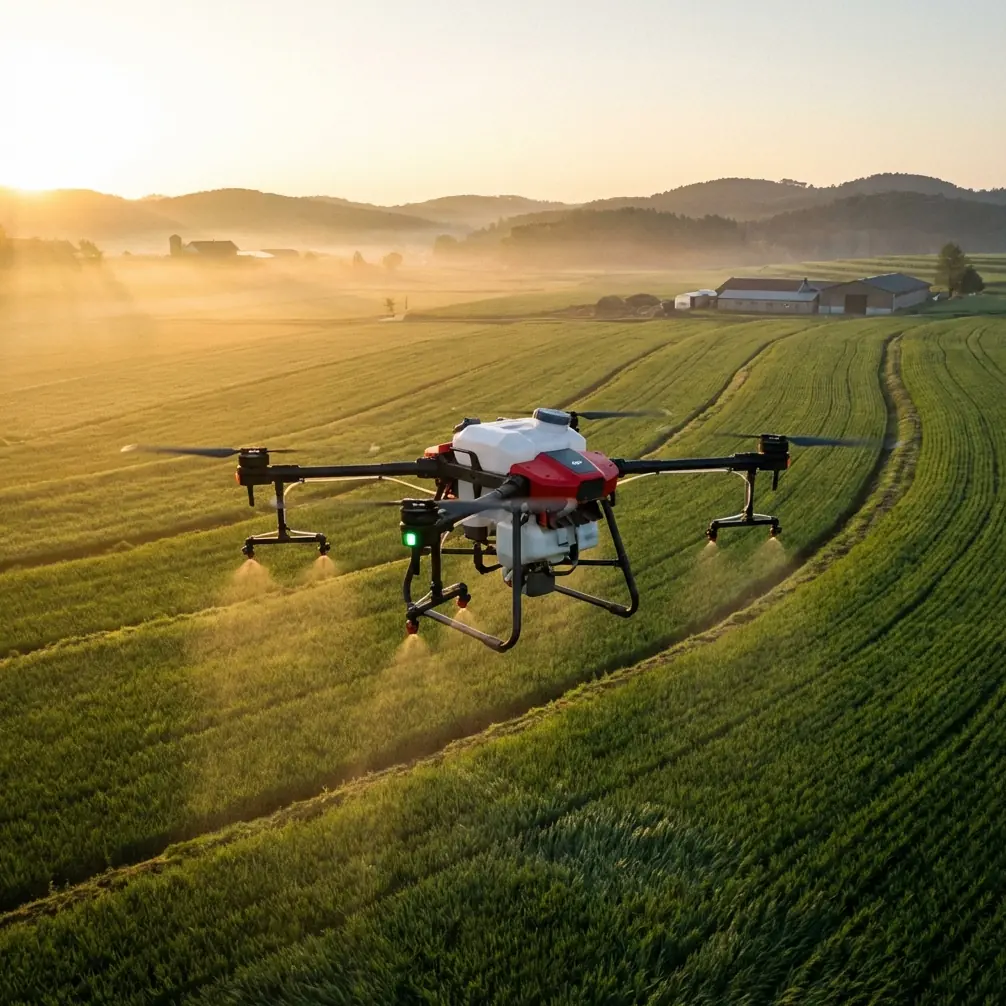
Agras T70P in Forest Survey Operations: What Actually Matters in Complex Terrain
META: A technical review of the Agras T70P for forest work in difficult terrain, covering multirotor flight behavior, pre-flight survey procedures, spray drift, nozzle calibration, RTK precision, and operator compliance.
Forest work exposes the difference between brochure performance and operational performance very quickly. Open farmland is forgiving. Mountain edges, broken canopy lines, confined clearings, shifting wind channels, and uneven elevation are not. If the mission involves an Agras T70P in forest terrain, the real question is not whether the aircraft can fly. The real question is whether its platform logic, operator workflow, and risk controls remain sound once the terrain starts dictating the flight.
That is where the T70P deserves a closer look.
Although the Agras line is usually discussed through the lens of agricultural application, the T70P is also relevant to technical users working around forestry blocks, access roads, shelterbelts, orchards near wooded slopes, and edge-zone vegetation management. In those environments, the aircraft’s multirotor architecture matters more than many users realize. A multirotor does not rely on runway space or a long approach. It generates lift through multiple symmetric propellers and changes movement by adjusting rotor speed, tilting the flight plane to move forward, backward, laterally, or to rotate in place. That sounds basic, but in forest terrain it has direct operational value: vertical takeoff and landing, stable hovering in constrained launch zones, and fine positional correction near uneven ground.
Those are not abstract aerodynamic benefits. They decide whether a pilot can safely launch from a muddy service track, pause over a canopy gap to reassess a route, or hold position long enough to confirm terrain clearance and swath alignment.
Why multirotor behavior suits wooded terrain
The underlying reference material on civil UAV categories points to a simple but useful contrast. Fixed-wing aircraft excel in endurance, speed, and long-range coverage, and they are suitable for broad agricultural information gathering such as nutrient assessment, maturity estimation, and disaster warning. But they are also more sensitive to weather and less practical when air currents become unstable. In forested terrain, unstable air is common rather than exceptional. Wind bends around ridgelines, rises sharply along heated slopes, and tumbles in turbulent pockets near tree lines.
A platform like the T70P, built around multirotor flight, is better aligned with that environment because it can hover stably and operate with minimal site restrictions. The source text describes the multirotor category as having strong flight stability and a simple dynamic structure. In practical terms, that translates into better control authority when the aircraft has to slow down, re-center, or make repeated low-speed passes over irregular boundaries rather than simply cover a large, uniform block.
For users surveying forests in complex terrain, this matters even if the mission is not pure spraying. A forestry-adjacent operation often blends imaging, block verification, spot treatment planning, edge mapping, and terrain-aware route refinement. The aircraft may need to hold a position while the crew confirms a visual reference, checks an RTK fix rate, or decides whether the next line should tighten to avoid drift into a buffer zone. Hover quality and positional consistency are not luxuries here. They are the difference between usable data and compromised output.
The overlooked discipline: pre-flight area reconnaissance
One of the most practical details in the operating rules for light and small UAVs is also one of the easiest to neglect under field pressure: before beginning an operational flight, the work area should be surveyed. That requirement sounds procedural until you walk a forest edge after rainfall and discover that the apparent launch point is a sink, that the treeline masks a downdraft corridor, or that the route drawn on a tablet passes closer to workers and property than it appeared on satellite basemaps.
Area reconnaissance is not paperwork. It is the first control layer.
For the T70P in forest terrain, pre-flight reconnaissance should answer several specific questions:
- Where are the rotor wash-sensitive surfaces, people, vehicles, and structures downslope of the operation?
- Which sections of the route are likely to amplify spray drift because of crosswinds funneling through canopy gaps?
- Is the takeoff zone truly suitable for a vertical departure and return, with enough clearance for safe ascent and descent?
- Are there elevation steps that could distort perceived altitude if the operator relies too heavily on visual judgment?
- If RTK is being used for centimeter precision, where might canopy obstruction degrade lock quality or slow the RTK fix rate?
The reference rules also emphasize that operators should understand the aircraft’s flight performance and operating limits, not merely its controls. In forest settings, that is a decisive distinction. A crew can know how to fly and still fail operationally if it does not account for terrain-induced air movement, partial signal masking, or the way steep gradients distort application geometry.
A mid-flight weather shift: where theory gets tested
On one hillside mission I use when teaching graduate field methods, conditions looked manageable at launch. The lower air was calm, and a forest access corridor provided a clean lift path. Ten minutes in, the weather changed the way it often does near mixed canopy and exposed slope: the wind did not simply increase, it changed character. A steady light flow turned into irregular side gusts coming through gaps in the tree line.
This is exactly the point where a multirotor platform earns its keep.
Instead of needing a broad turning arc or long recovery path, the T70P-type operating profile allows the pilot to slow, stabilize, and reassess. Stable hover capability is not just about looking impressive in a demo. In a real forest-edge mission, it gives the crew time to evaluate drift risk, review route geometry, and decide whether to continue, adjust swath width, or suspend the run. When the air started shearing across the slope, the right response was not to “push through.” It was to shorten the line, tighten the working area, and confirm whether nozzle output and droplet behavior still matched the target conditions.
That is where spray drift stops being a textbook term and becomes an operational hazard. Drift in complex terrain is not only a matter of chemical loss. It can also create off-target deposition in ecologically sensitive fringe zones, along watercourses, or near personnel access paths. The operating rules explicitly require measures to prevent sprayed material from creating hazards to people and property on the ground. In wooded or semi-wooded areas, the buffer logic has to be more conservative because the terrain itself can redirect air.
Nozzle calibration is not optional in uneven terrain
Agras users often talk about tank capacity and throughput first. In my view, nozzle calibration deserves equal attention, especially around forests. Uniform application over flat fields is already a calibration problem. Over undulating ground with mixed vegetation heights, it becomes a systems problem involving aircraft speed, altitude consistency, rotor wash interaction, and local wind structure.
If you are running an Agras T70P near tree lines or inside fragmented clearings, nozzle calibration should be checked with the actual mission logic in mind, not a generic benchmark. That means matching the intended flow behavior to realistic line speed and expected air disturbance. If a weather shift occurs mid-flight, the question is not simply whether the aircraft remains controllable. The question is whether the calibrated application profile remains defensible.
This is one reason I encourage crews to think in terms of swath integrity rather than nominal swath width. A claimed working width on an ideal test plot means very little if cross-slope gusting and canopy turbulence are deforming the edges of the pattern. A narrower but verifiable swath is operationally superior to a wider one that leaks material into non-target space.
RTK, canopy interference, and the myth of perfect precision
Search interest around the T70P often includes phrases like “centimeter precision” and “RTK fix rate,” and for good reason. In structured agricultural environments, high-precision positioning can materially improve route repeatability, overlap management, and boundary adherence. In forest work, though, precision is less about headline accuracy and more about continuity under interference.
Canopy mass, terrain shadowing, and edge reflections can all affect positioning confidence. A strong RTK solution is valuable, but the crew must monitor whether the solution remains stable as the aircraft transitions between open corridor, partial canopy edge, and slope break. Precision that degrades intermittently is still useful if the operator understands where and when it tends to degrade. It becomes risky only when crews assume the number on the screen tells the whole story.
The T70P is best evaluated here as part of a workflow: route design, takeoff site selection, line orientation relative to slope and wind, and onboard positioning confidence. In forestry-adjacent operations, centimeter-class guidance should be treated as a powerful aid, not a substitute for terrain judgment.
Training and certification are part of performance
The regulatory source contains a detail that deserves more attention from professional operators: anyone conducting independent spraying work, or conducting operations at heights above 15 meters, should hold a civil UAV pilot qualification certificate. That 15-meter threshold is not trivial in forest environments. Once you are working near varying canopy heights, embankments, or elevated terrain faces, altitude management becomes more complex than it appears from the launch point.
The same rules also call for operator training in toxic chemical handling, used-container disposal, symptoms of poisoning, emergency response, and safe operating procedures. Some readers may file that under compliance rather than aircraft evaluation. I disagree. In practice, these are performance issues. A crew that understands chemical handling, emergency signs, and procedural discipline tends to make better airborne decisions as well. Aviation quality is rarely isolated from ground-process quality.
Recordkeeping is another example. The rules require operators to retain items such as service date, customer details, the name and amount of sprayed material, and the pilot’s name, contact information, and certificate number where applicable. In a forestry context, disciplined records make it far easier to audit drift complaints, trace route anomalies, verify nozzle settings, and refine future mission plans. Good documentation is not bureaucracy after the fact. It is feedback for safer operations.
If your team is comparing operating workflows or field implementation details for the T70P, a practical way to continue the discussion is through this direct technical channel: message a field specialist.
What about multispectral use?
The T70P discussion around forest surveying sometimes gets muddled because users blend application missions with sensing missions. Multispectral work has clear value in vegetation health analysis, stress detection, and management planning, but not every mission needs to place all tasks on one aircraft. The better question is whether the T70P fits the operational envelope around a forestry workflow.
Often, it does. Not because it replaces a dedicated mapping platform in every case, but because it handles the close-quarters, terrain-sensitive, utility-driven portion of the job well: localized treatment, edge correction, route verification, and work in sites where hovering precision and vertical access matter more than long endurance. In other words, the T70P becomes especially useful when the mission is shaped by the terrain rather than by the elegance of a pure survey plan.
Durability and field reality
Forest-edge operations are dirty operations. Mud, leaf moisture, fine dust from access roads, splashed chemical residue, and intermittent rain are normal, not exceptional. That is why many buyers look for ruggedization cues such as IPX6K-level protection. Weather resistance does not make a mission automatically safe, and it certainly does not justify flying through unsuitable conditions. What it does offer is confidence that the aircraft is built for repeated exposure to harsh field environments where cleanup and contamination management matter.
Again, the serious point is operational continuity. A drone used around forests must tolerate field abuse without turning routine moisture exposure into a maintenance event. Reliability is never just a hardware story, but hardware still sets the ceiling for how dependable the daily workflow can be.
Final assessment
The Agras T70P makes the most sense in complex forest terrain when you judge it as a multirotor work platform, not just as a headline agricultural drone. Its core strengths align with the real demands of these environments: vertical takeoff and landing, stable hover, controlled movement in tight spaces, and practical adaptability when wind shifts mid-flight. Those characteristics are supported by the broader logic of multirotor aircraft described in the reference material, especially their ability to operate with limited site constraints and maintain stable flight through rotor-speed-based control.
Just as important, the regulatory material adds a grounded reality check. Forest-adjacent spray operations are not only about aircraft capability. They require area reconnaissance before the job starts, disciplined understanding of chemical risk, and qualified pilots for independent work or operations above 15 meters. They also require records detailed enough to reconstruct what happened if anything goes wrong.
That combination—platform suitability plus procedural rigor—is what separates a workable T70P deployment from a fragile one.
For readers focused on forests and uneven terrain, that is the real story. The T70P is not compelling because it sounds advanced. It is compelling when its flight behavior, operator training requirements, and terrain-aware workflow all line up under field conditions that change faster than the mission plan.
Ready for your own Agras T70P? Contact our team for expert consultation.