
Agras T70P for Dusty Construction Site Surveying
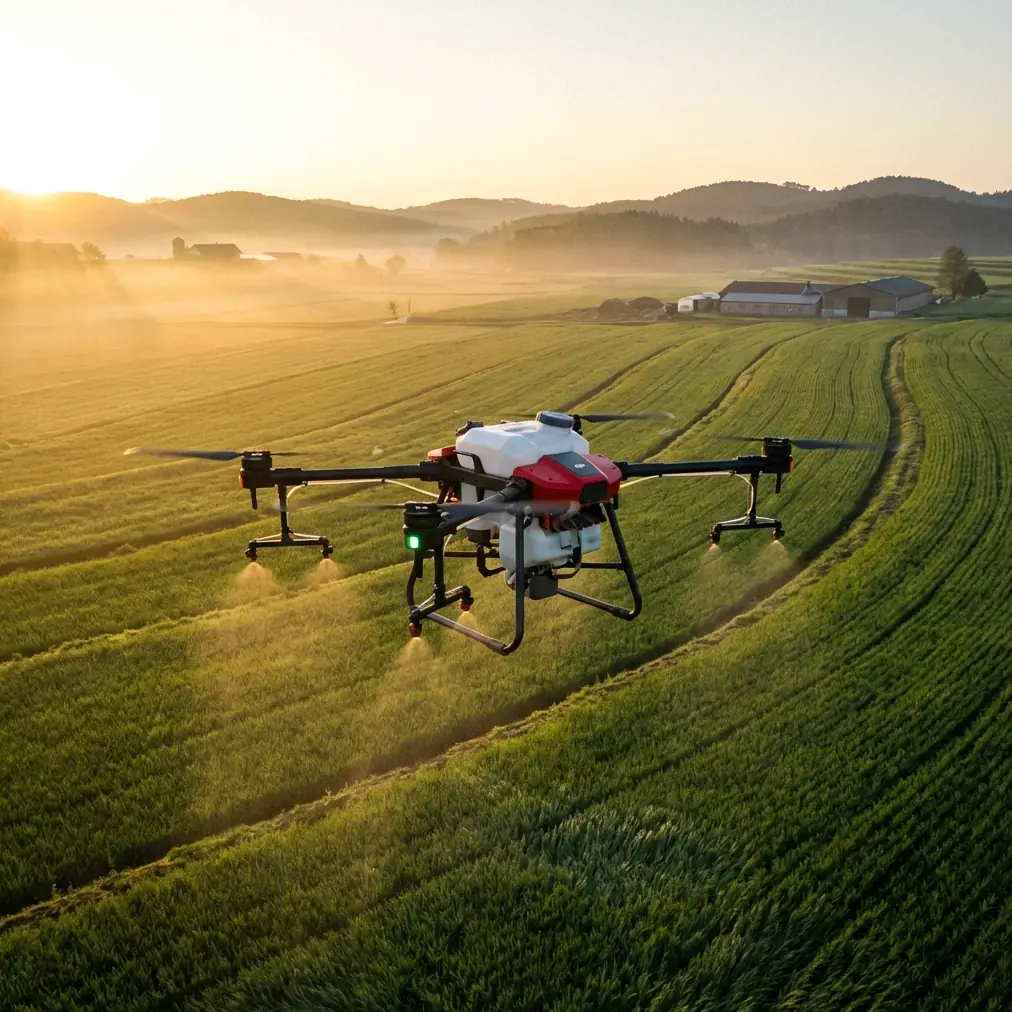
Agras T70P for Dusty Construction Site Surveying: What Actually Matters in the Field
META: A field-focused look at using the Agras T70P around dusty construction sites, with practical insight on control rhythm, sensor awareness, RTK precision, weather resistance, and safer data capture.
Construction sites punish equipment.
Dust hangs in the air, visibility changes by the hour, and the ground itself keeps moving. One week you are documenting cut-and-fill progress. The next, haul roads have shifted, stockpiles have doubled, and scaffolding or steel packages have altered every safe takeoff and landing option. In that setting, “can it fly?” is the least interesting question. The real question is whether a platform can deliver repeatable, trustworthy site intelligence when the environment is dirty, dynamic, and full of distractions.
That is the lens I would use for the Agras T70P.
Even though the Agras line is usually discussed in an agricultural context, the discipline behind successful operation carries over to construction surveying surprisingly well. A dusty site demands two things at once: robust hardware and disciplined pilot inputs. One without the other leads to weak datasets, sloppy passes, and needless risk around people, machines, and unexpected obstacles.
The problem with dusty construction surveying
Dust does more than coat motors and airframes. It degrades contrast in imagery, affects pilot perception, and increases the odds of overcorrection during low-altitude work. On an active site, the survey task also competes with real-world interruptions: dump trucks crossing a planned line, excavators swinging into a corridor, and gusts generated by exposed grade changes or concrete structures.
Operators often think the answer is simply “more automation.” That helps, but it is not enough.
A construction survey mission still depends on control quality. If the aircraft enters a line unevenly, hesitates during a turn, or drifts while reacquiring a route, that inconsistency shows up downstream in overlap quality, edge fidelity, and confidence in measurements. When stakeholders want centimeter precision from RTK workflows, small handling errors become expensive.
This is where an old training principle from model aircraft instruction becomes unexpectedly relevant.
Why timing, not constant correction, improves survey accuracy
One of the most useful lessons in manual flight training is that precision maneuvers depend on timing rather than holding a control input and visually chasing the result. In the reference material on 4-point roll training, the common beginner error is straightforward: the pilot keeps aileron pressure on while watching the wing attitude, and every 90-degree stop overshoots. The lesson is that the maneuver is governed by “timed control,” not by late visual correction.
That may sound far removed from a construction survey with an Agras T70P. It is not.
On dusty sites, operators often make the same category of mistake. They hold correction too long while reacting to what they think they are seeing through haze, glare, or blowing debris. The aircraft then overshoots the intended track, overcompensates on the next input, and the mission starts to look ragged. The reference text’s point about finding a usable rhythm matters here operationally: the correct cadence is the one that returns the aircraft to the intended orientation cleanly, whether that rhythm is fast or slow.
For survey work, that means:
- entering runs with deliberate, measured stick inputs rather than long continuous pressure
- treating route reacquisition as a rhythm problem, not a panic correction problem
- avoiding the instinct to chase every tiny apparent deviation when visibility is degraded by dust
The same source makes a second point that translates directly to complex site operations: in 8-point roll training, the control tempo is roughly twice as fast as in 4-point work, with pauses every 45 degrees instead of every 90. The operational significance is simple. As tasks become more segmented and the aircraft spends more time in transitional attitudes, the pilot must tighten timing and reduce excessive control duration.
Construction surveying has its own version of that. A broad, open lot may fly like the “4-point” case: fewer interruptions, gentler route changes, longer stable segments. A congested build with cranes, partial structures, fencing, and moving equipment behaves more like the “8-point” case: more transitions, more frequent corrections, and less tolerance for lazy inputs. If the mission complexity doubles, your control rhythm needs to sharpen with it.
That is not aerobatics. That is professionalism.
Where the T70P fits in a harsh site environment
The Agras T70P makes sense when the site is physically demanding. Dusty construction work is hard on exposed components, connectors, and cooling paths, so environmental resilience becomes more than a spec-sheet talking point. If you are evaluating a drone for this kind of role, IPX6K-grade protection is especially relevant. On a site where airborne particulate and washdown practicality matter, a high ingress protection level can significantly reduce downtime tied to contamination management.
That matters because survey consistency depends on uptime. A drone that is constantly sidelined for cleaning or inspection after every dusty sortie erodes the whole point of rapid progress capture.
RTK performance is just as important. A high RTK fix rate is what separates a visually plausible map from a dataset that engineers and project managers will actually trust. On construction sites, “close enough” is not close enough. Grade verification, stockpile measurement, and corridor progress tracking all benefit from centimeter precision. The T70P conversation should therefore be less about broad claims of smart flight and more about whether the aircraft can hold a reliable positional solution through dusty air, reflective materials, and constantly changing geometry.
If RTK lock degrades, everything downstream suffers: swath alignment, repeatability between missions, and confidence in cut/fill comparisons.
Dust changes how you plan payload behavior
Many crews overlook this point. Dust does not only affect the aircraft; it affects how your sensing strategy should be designed.
A site with suspended particulate may require more conservative altitude planning and stronger overlap margins to preserve usable image quality. If your workflow includes multispectral capture for environmental monitoring, reclamation checks, or vegetation condition around site boundaries, airborne dust can also distort surface interpretation. The T70P operator who understands this will not treat multispectral as a magic layer. They will time flights around site activity peaks, wind shifts, and haul-road traffic.
Swath width choices matter too. A very aggressive swath can look efficient on paper, but dusty conditions may reduce the practical quality of edge data, especially when the atmosphere is uneven across a flight line. In those cases, a slightly tighter operational swath often produces a cleaner deliverable because the overlap is more forgiving.
That same thinking applies to nozzle calibration if the T70P is being used in dual operational environments where liquid application and survey-related site documentation both occur. Nozzle calibration is not just an agronomy detail. It is part of the broader discipline of making sure the aircraft is behaving exactly as expected, under field conditions, with known output and predictable coverage. Teams that are meticulous about calibration are usually better at survey repeatability too.
A real obstacle is rarely the one on the risk register
On paper, dusty construction sites are full of obvious hazards: trucks, berms, power lines, unfinished structures.
In real flight, the unexpected often comes from wildlife.
During one site inspection near a retention pond at the edge of a grading package, a pair of lapwings rose abruptly from the scrub line and cut across the planned route at low altitude. It was the sort of encounter that never shows up in the morning briefing but can instantly turn a routine pass into a judgment test. This is where the value of sensor awareness becomes very practical. A drone’s ability to detect and respond to sudden obstacles is not only about avoiding steel and concrete. It also helps the pilot manage brief, unpredictable crossings without inducing a heavy-handed manual correction that ruins the rest of the line.
That distinction matters. Good systems can help avoid the immediate conflict. Good operators also know how to resume the mission without introducing downstream positional slop.
The best response is calm, not dramatic: break the line cleanly, maintain orientation, let the airspace clear, then re-enter with controlled timing. Again, that training principle returns. Do not hold correction and chase the moment. Reset the rhythm.
Education matters more than most operators admit
One of the reference documents, although centered on DJI’s education ecosystem rather than the Agras series directly, makes a point the industry should take seriously: DJI built educational resources around the idea that advanced technology should become accessible through practice, not slogans. The document ties that philosophy to broader educational reforms, the rise of AI and robotics learning, and hands-on engineering development through programs like RoboMaster.
That matters for T70P operations because construction surveying is no longer a hobbyist task wearing a hard hat. It sits at the intersection of robotics, site engineering, geospatial workflow, and safety management. Teams that train systematically outperform teams that just accumulate flight hours.
The same source also highlights collaboration with an educator who came from physics teaching and youth technology training. The operational takeaway is not about schools. It is about instructional structure. Strong drone programs are built, not improvised. They define control drills, route discipline, emergency procedures, environmental limits, payload checks, and data QA methods before the aircraft ever lifts off.
If you want the T70P to produce dependable construction intelligence, train like an engineering team, not like a group of gadget users.
A practical operating model for the T70P on dusty sites
For site managers and drone leads, the most effective approach is usually a problem-solution framework.
Problem 1: Dust degrades visibility and confidence
Solution: Build missions around RTK stability and repeatability, not pilot guesswork. Favor disciplined route timing and conservative re-entry procedures after any interruption.
Problem 2: Harsh conditions shorten usable flight windows
Solution: Lean on ruggedization features such as IPX6K-class protection and establish a strict cleaning and inspection cycle between sorties. Dust tolerance should be treated as a productivity factor.
Problem 3: Congested layouts create too many small corrections
Solution: Train pilots to shorten input duration and improve cadence. The reference distinction between 4-point and 8-point timing is a useful mental model: more segmented environments require faster, cleaner control decisions.
Problem 4: Data quality falls apart at the edges
Solution: Reassess swath width, overlap, and flight timing against actual dust conditions. Do not assume nominal settings survive site reality.
Problem 5: Sensor events interrupt the mission
Solution: Expect wildlife and moving equipment. Use obstacle awareness as a safety layer, then recover the route with deliberate timing rather than abrupt compensation.
If your team is building out those procedures and wants to compare notes on workflow design, a direct project discussion can save a lot of trial and error: message a UAV specialist here.
The bigger point
The Agras T70P is most interesting on dusty construction sites not because it can survive hard conditions, but because those conditions expose whether an operation is mature.
A serious program understands that centimeter precision starts with control discipline. It knows that a high RTK fix rate is only valuable if the aircraft is flown in a way that preserves repeatability. It recognizes that IPX6K-level resilience supports productivity only when paired with methodical maintenance. It plans multispectral and visual capture around actual site atmosphere, not idealized assumptions. And it treats sudden sensor events, including wildlife crossings, as moments for composure rather than improvisation.
The references behind this discussion may seem unrelated at first glance: one rooted in DJI’s educational philosophy, another in technical roll training with 4-point and 8-point timing. Put them together, and they describe something construction drone teams need badly: practical mastery. Not buzzwords. Not broad claims. Practice, rhythm, and systems thinking.
That is the standard the T70P should be held to on a dusty jobsite.
Ready for your own Agras T70P? Contact our team for expert consultation.