
How to Use the Agras T70P for Construction
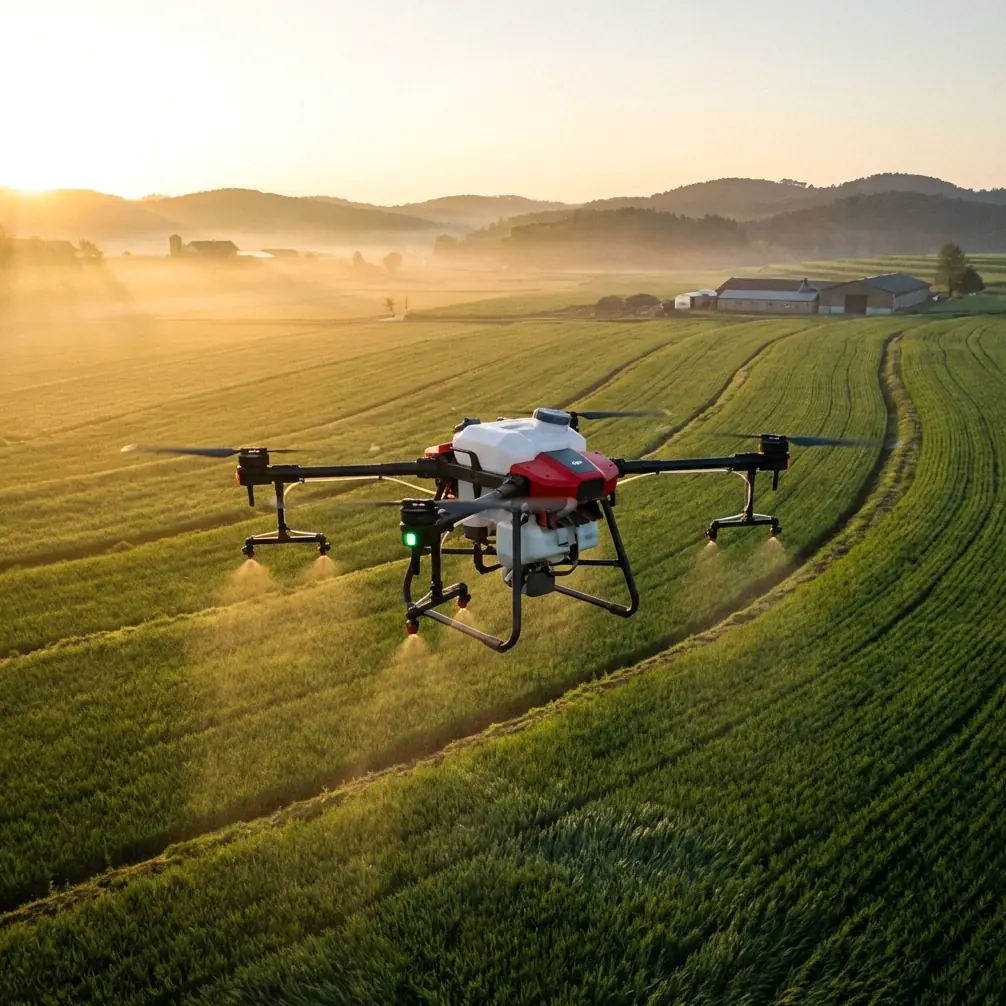
How to Use the Agras T70P for Construction-Site Surveying in Extreme Temperatures
META: A field-informed guide to surveying construction sites with the Agras T70P in extreme heat and cold, with practical notes on flight planning, operator management, sensor logic, and battery discipline.
Construction professionals do not usually look at an agricultural drone and think “survey platform.” That hesitation is understandable. The Agras T70P is associated with high-throughput field work, not site measurement. But that view misses something bigger happening across the drone sector: industrial UAVs are being evaluated less by category labels and more by how intelligently they operate under pressure.
That shift is visible well beyond product brochures. At the 139th Canton Fair, where the exhibition area, exhibitor count, and new-product launch frequency all hit record highs, one industrial drone exhibitor stood out in a very specific way. Rongqi Intelligent was described as the only drone company at that event to receive a dedicated all-English feature from Xinhua News Agency. The reason this matters to a reader considering the Agras T70P is not brand comparison. It is a market signal. The global conversation around drones is moving toward intelligent upgrading, practical autonomy, and China’s industrial drone capability as a serious operating standard. If you are trying to survey construction sites in punishing temperatures, those are exactly the criteria that matter.
So the better question is not whether the T70P was born as a “survey drone.” The real question is whether its control logic, positional discipline, environmental tolerance, and operator workflow can be adapted into a repeatable construction-site surveying method.
For many sites, the answer is yes—if you approach the job like an operations engineer, not a hobby pilot.
Start with the operating reality, not the airframe label
Construction-site surveying in extreme temperatures creates a different risk profile than flying over forgiving terrain on a mild day. Heat stress can destabilize batteries, distort mission timing, and increase cooling demands during turnaround. Cold can reduce discharge performance, slow chemical response, and make crews rush basic checks. Dust, reflective surfaces, hard vertical structures, and intermittent GNSS interference complicate route consistency.
That means your first design principle should be stability of execution.
One useful lesson comes from a very different class of drone training material. DJI’s TT education platform emphasizes that a drone becomes truly “intelligent” not simply because it carries sensors, but because those sensors can be controlled through programmed logic to collect environmental data, make decisions, and execute actions such as route planning, obstacle avoidance, turning, acceleration, and return-to-home. That educational point translates directly to industrial field work. When adapting the Agras T70P for construction-site surveying, your value is not just in getting airborne. It is in building a predictable logic chain: data capture, environmental sensing, route discipline, and recovery.
That is where metrics like RTK fix rate and centimeter precision stop being marketing shorthand and become operational necessities. On a construction site, a minor lateral inconsistency can turn into a measurable issue when you are documenting stockpile boundaries, access roads, drainage changes, or progress against design intent.
Step 1: Plan the mission around thermal stress
Extreme temperature operations should begin before the aircraft is powered on.
In high heat, schedule your flights around the site’s thermal rhythm. Early morning often gives you more stable surfaces, less convective turbulence, and less battery strain. In cold weather, avoid launching a battery that has equilibrated to ambient air if temperatures are very low. A pack that looks healthy at rest can sag under load faster than expected.
A practical battery tip from field experience: never judge pack readiness by charge percentage alone. For extreme-temperature work, I advise crews to track three things together—state of charge, pack temperature, and time since removal from storage or charger. In hot environments, letting a fully charged battery sit in direct sun while the crew lays out ground control is an avoidable mistake. In cold environments, installing a battery immediately after it has been exposed to freezing air can reduce consistency during the first demanding climb segment. The simple discipline is this: stage batteries in a shaded or temperature-moderated container, install close to launch, and rotate packs so no single unit absorbs all the harshest duty cycles in one shift.
That routine sounds basic. It is not. It preserves mission consistency, and consistency is what keeps your RTK performance and overlap assumptions trustworthy from one sortie to the next.
Step 2: Build for precision, not just coverage
Construction surveying has a habit of punishing sloppy assumptions. Wide site coverage is useful, but not if your positional fidelity drifts across multiple passes.
If your T70P workflow supports RTK, monitor fix stability before takeoff and during the first line of flight. A strong RTK fix rate is not merely a convenience for cleaner maps. It can reduce the amount of manual correction needed later when comparing progress over time. On an active site, where berms move, haul roads shift, and temporary structures appear and disappear, centimeter precision helps separate actual change from capture noise.
This is also why swath width should be chosen conservatively. Large swaths can improve efficiency, but construction environments are not open monoculture fields. You may have cranes, scaffolding, steel framing, stored materials, dust plumes, and varying elevations. If the site geometry is complex, a slightly narrower swath often pays back in cleaner edges and fewer questionable areas around vertical objects.
Readers coming from agriculture will recognize another useful concept here: nozzle calibration. On a spraying platform, nozzle calibration determines whether intended output matches actual delivery. In a surveying adaptation, the analogy is mission calibration. Before relying on production flights, validate speed, altitude, overlap, and route geometry on a controlled section of the site. The principle is identical: if your system is not calibrated to the task, scale only magnifies error.
Step 3: Treat autonomous functions as a workflow asset
A common mistake in industrial UAV operations is framing autonomy as a convenience feature. On temperature-stressed construction jobs, autonomy is a fatigue-management tool.
Again, the TT education material provides a helpful conceptual model. It describes programmed flight using sensors and onboard computation to support autonomous route planning, obstacle avoidance, acceleration management, turning, and return. Those are not just classroom concepts. They matter because extreme temperatures degrade human consistency faster than they degrade checklists.
When crews are dealing with glare, wind, dust, gloves, or heat exhaustion, repeatable automated behavior becomes more valuable. If your T70P mission profile can standardize takeoff sequence, route execution, and return logic, you reduce the number of micro-decisions the operator must make under stress.
That does not remove pilot responsibility. In fact, the opposite is true.
China’s civil drone pilot management framework offers an overlooked lesson here. The CAAC advisory circular AC-61-FS-2016-20R1 was issued on July 11, 2016, partly because drone applications and the number of operators were growing quickly and needed stronger normalization without blocking industry development. The document also specifically identifies plant-protection UAVs as a distinct category—Category V, 植保类无人机. That matters for the T70P because it reminds us that airframe class influences pilot expectations, training habits, and compliance culture. If you are repurposing a plant-protection platform for construction-site survey work, you should not assume that agricultural operating habits automatically fit a surveying task.
The operational significance is straightforward: use a survey-oriented SOP even if the aircraft originated in another commercial segment. That means pre-briefed route geometry, defined lost-link behavior, fixed go/no-go thresholds, and clear post-flight data verification.
Step 4: Adapt environmental protection to dusty, wet, abrasive sites
Construction sites are mechanically hostile places. Fine dust enters connectors. Mud splashes undercarriage areas. Light rain can turn into driven moisture on exposed surfaces. Extreme heat can combine with dust to impair cooling efficiency.
This is where ruggedization cues such as IPX6K become relevant. Even if your final weather envelope is governed by your own SOP and manufacturer guidance, the broader point is that environmental sealing changes how much daily abuse a platform can absorb before reliability starts to drift. A machine that can tolerate aggressive washdown-style exposure standards or similar levels of ingress resistance is usually better positioned for repetitive industrial work than a delicate mapping-only platform.
But rugged does not mean careless. After every hot, dusty mission block, inspect vents, sensor windows, prop hubs, and landing contact points. In cold weather, check for condensation when moving the aircraft between temperature zones. A site survey fails as often from a dirty sensing surface or moisture transition issue as from any dramatic flight event.
Step 5: Be realistic about payload logic and data goals
The T70P may not be the first aircraft people associate with multispectral work, but the keyword matters because it reveals a broader planning issue: define the data product before defining the flight.
If your construction client needs orthomosaic progress documentation, stockpile volumetrics, drainage path observation, or thermal condition awareness around curing or utility zones, your route design and sensor expectations will differ. Do not force a generic survey pattern onto all tasks. Surveying for measurement, surveying for condition assessment, and surveying for change detection are related but not identical jobs.
When people ask whether a platform like the T70P can “do surveying,” they often skip this step. The aircraft is only part of the chain. The real determinant is whether its mission behavior can produce data that is spatially stable, repeatable, and interpretable for the site decision you actually need to make.
Step 6: Match operator training to the mission category
One of the strongest signals in the reference material is regulatory maturity. The CAAC circular states clearly that pilot guidance will continue to be revised with industry development, with the longer-term aim of building a complete civil UAV pilot oversight system aligned with international civil aviation standards. That is not paperwork trivia. It is an industry clue.
As drone operations become more normalized, clients will care less about whether a flight “went fine” and more about whether your workflow is defensible. Who operated the aircraft? Under what SOP? Was the mission category appropriate? Were environmental limits respected? Was the data captured in a repeatable way?
For construction firms using the T70P outside traditional agricultural operations, this means training should include more than flight proficiency. It should cover site hazard recognition, GNSS awareness, thermal battery management, route repeatability, and post-flight data QA.
If your team is building that operating framework and needs to compare notes on setup choices, mission structure, or environmental handling, this direct field discussion channel can be a practical next step.
Step 7: Verify outputs immediately after landing
On extreme-temperature jobs, reflight opportunities can evaporate fast. Wind may pick up, glare may worsen, crews may move equipment, and battery performance may change later in the day.
That is why post-flight review should happen on-site, right after landing. Check for:
- route completeness
- edge integrity around structures
- RTK continuity or positional anomalies
- visible blur or exposure inconsistency
- dust contamination on the imaging path
- mismatch between planned and actual coverage width
This is the surveying equivalent of confirming spray drift and nozzle calibration in agricultural work. You do not want to discover a preventable quality problem after the site has changed.
The bigger takeaway for Agras T70P users
The most interesting part of the current drone market is not that categories are blurring. It is that intelligence, repeatability, and operator governance are becoming the shared language across categories.
The Canton Fair reference tells us the industrial drone conversation is now global, visible, and increasingly centered on intelligent upgrading. The CAAC pilot-management document shows that as applications expand, operator standards become more central, not less. The TT educational material reinforces a foundational truth: sensor-rich aircraft only become genuinely useful when they can execute programmed, environment-aware logic.
Put those three threads together, and the Agras T70P becomes easier to evaluate for construction-site surveying. Not as a novelty. Not as a shortcut. As an industrial UAV platform that may be adapted successfully when the mission is engineered with discipline.
If you are surveying construction sites in extreme temperatures, the aircraft alone will not save you. Battery handling, RTK stability, conservative swath planning, autonomous route logic, and a survey-specific SOP will.
Get those right, and the T70P can become far more than an agricultural machine operating outside its lane.
Ready for your own Agras T70P? Contact our team for expert consultation.