
Agras T70P Spraying Guide for Urban Wildlife Work
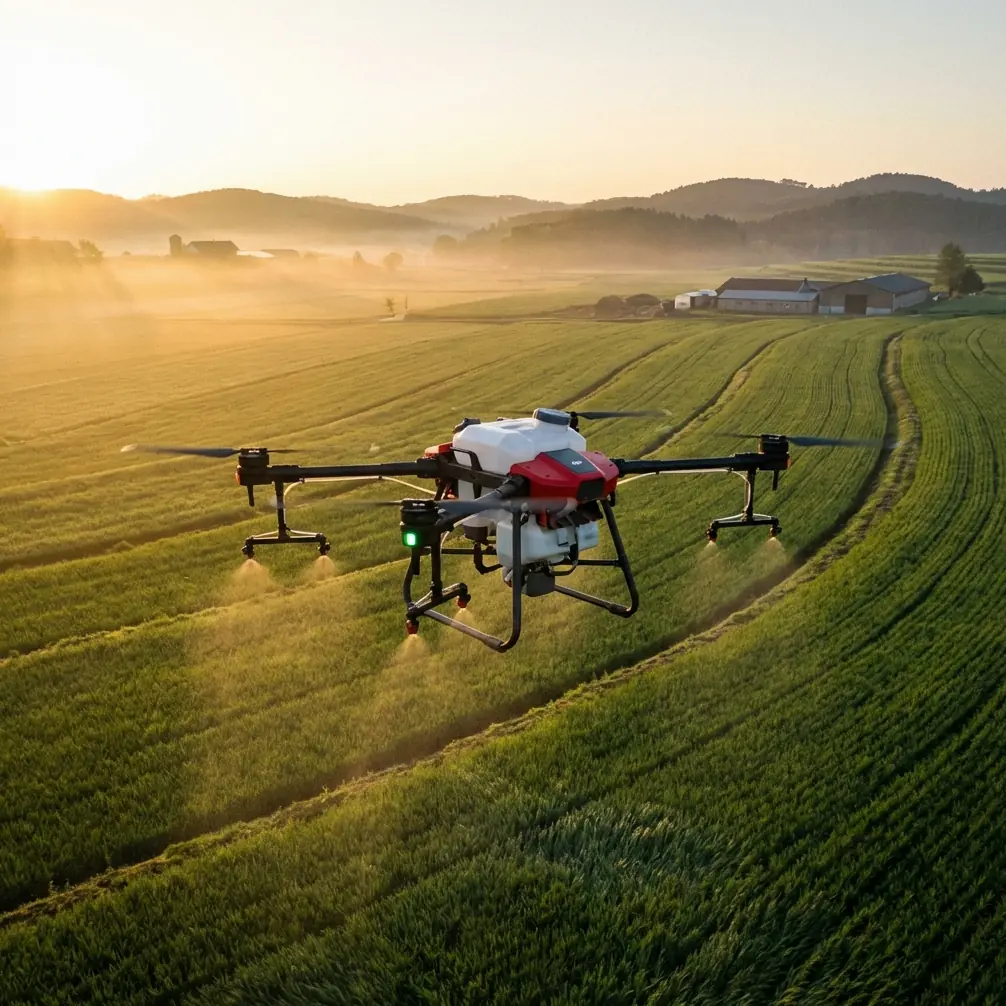
Agras T70P Spraying Guide for Urban Wildlife Work: Precision Habits That Matter
META: Practical Agras T70P tutorial for urban wildlife spraying missions, covering drift control, nozzle calibration, field discipline, RTK precision, and safer workflow habits.
Urban wildlife spraying is one of those jobs that looks simple from the outside and becomes unforgiving the moment the rotors spin up.
You are rarely working in a clean, open farm block. Instead, you may be treating mosquito habitat near drainage corridors, managing vegetation around ponds used by protected species, or applying approved agents in tight municipal green zones bordered by footpaths, fences, parked vehicles, and buildings. The aircraft matters, of course. But the larger story is control. Control of drift. Control of timing. Control of the aircraft when the work area is visually cluttered and operationally compressed.
That is where the Agras T70P earns attention.
I want to frame this guide around a problem many operators recognize. Years ago, on a compact urban-edge wildlife management assignment, the aircraft itself was not the weak link. The weak link was transition discipline. We had a competent pilot, acceptable weather, and a straightforward application plan. Yet small errors piled up at the worst moments: turning back too wide, correcting too late, re-entering the spray line slightly misaligned, and wasting attention on constant stick fixes rather than on the treatment zone itself. Drift risk rises when that happens, not only because of wind, but because imprecise flight geometry turns every pass into improvisation.
The T70P changes that equation when it is used the right way. Not because it removes pilot responsibility, but because it rewards structured workflow. If your mission is spraying wildlife-related areas in urban environments, that distinction is everything.
Start with the real constraint: urban wildlife work is a boundary problem
In broad-acre agriculture, operators often think first about throughput. In urban wildlife spraying, boundaries come first.
You may need to avoid ornamental planting, stormwater structures, public walkways, pet areas, and sensitive habitat buffers all within a short flight segment. That means your practical swath width is not just what the aircraft can lay down in ideal conditions. It is what you can hold consistently while managing spray drift, line spacing, and turn accuracy.
This is why centimeter precision and RTK fix stability deserve more attention than headline payload talk. In a constrained urban mission, a strong RTK fix rate is not a luxury feature. It is what helps the aircraft maintain predictable pass placement, especially when each lane has consequences. A few centimeters of repeatability may not sound dramatic on paper, but it becomes operationally significant when you are trying to avoid overlapping near a habitat edge while still maintaining full coverage over the treatment strip.
With the T70P, think of precision as a way to reduce mental load. The more confidently you can trust placement, the more attention you can devote to droplet behavior, pedestrian awareness, canopy variation, and treatment verification.
Drift control begins before takeoff, not at the nozzle
Most spray drift discussions get trapped in chemistry or weather. Those matter. But in urban wildlife work, drift often starts with poor setup discipline.
The best pilots I know do something that sounds almost too basic: they build a pause into the workflow. That idea echoes a useful lesson from classic flight training literature: precise correction becomes easier when you deliberately create a brief moment to observe, instead of rushing from one control input to the next. The source material puts it bluntly—when the pilot consciously makes a short pause, accurate correction happens earlier because there is no longer “something else” competing for attention. That applies directly to drone spraying.
On the T70P, this means pausing before committing to each spray segment:
- Verify aircraft attitude.
- Confirm the line.
- Confirm surrounding obstacles.
- Confirm wind read.
- Then enter the pass.
That tiny discipline helps prevent the common urban mistake of beginning a productive run while still mentally recovering from the previous turn. If your attention is still spent on correction, you are behind the aircraft.
Another detail from the same flight reference is surprisingly relevant: before any pull-out or recovery that depends on elevator input, the wings must be level. For fixed-wing aerobatics that is fundamental. For multirotor spray work, the equivalent lesson is this: do not start your next decisive movement from a sloppy attitude state. If the platform is not settled and aligned, every subsequent correction compounds uncertainty in where the spray is actually going.
Nozzle calibration is not a maintenance chore; it is your accuracy baseline
The T70P may be capable, but an uncalibrated spray system turns a precise aircraft into an inconsistent applicator.
Urban wildlife spraying usually involves narrow tolerance for over-application. You may be treating standing water margins, reeds, roadside vegetation, or habitat-linked pest zones where dose consistency matters as much as coverage. Nozzle calibration should therefore be tied to mission geometry, not handled as a box-ticking ritual.
I recommend operators think through three linked variables together:
- Target swath width
- Flight speed
- Droplet behavior in the actual urban microclimate
Cities distort airflow. Walls, tree lines, embankments, culverts, and parked vehicles create small wind shifts that do not show up in a simple preflight average. If your nozzle setup assumes open-field uniformity, your edge performance will suffer.
This is where repeated test strips are worth the time. Run them, inspect deposition, and adjust before the mission scales. The goal is not theoretical perfection. The goal is predictable coverage with minimum drift and clean edge control.
For teams building a repeatable workflow around the T70P, a short pre-mission checklist shared in the field can save hours later. If you need a quick operations reference tailored to urban spray planning, I usually suggest operators message our flight team here before a complex deployment rather than improvising on site.
Why turn management matters more than most operators admit
A useful insight from the reference material compares two aerobatic turning concepts: one maneuver that gains height but needs a longer recovery to rebuild speed, and another that restores speed quickly and leaves the aircraft closer to the pilot at the finish. That second point is the one worth borrowing.
In the source, the half Cuban eight is described as especially useful because after descending from the 45-degree line, speed returns quickly, so the next maneuver can begin immediately. It also ends with the aircraft slightly closer than where it started, which helps when the aircraft has drifted too far out.
Translated into T70P operations, this is a lesson in efficient recovery geometry. If your spray drone ends each turn too far away from the workable box, you spend the next segment regaining control rather than treating productively. Urban wildlife jobs punish that inefficiency because every unnecessary relocation creates more exposure to bystanders, more battery waste, and more room for drift.
The right turn style for the T70P in these settings is not the most dramatic one or the fastest-looking one. It is the one that:
- keeps the aircraft within the intended work envelope,
- restores alignment quickly,
- minimizes lateral overshoot,
- and sets up the next pass without frantic correction.
That sounds obvious, but many pilots still fly turns as if transit time does not matter. In urban applications, repositioning is part of the treatment accuracy. A turn that finishes “slightly closer” to your next useful line, to borrow the spirit of that aerobatic reference, is usually the better turn.
Field discipline from training environments applies directly to spray operations
One of the most overlooked lessons in drone performance comes from competition rules, not spray manuals.
The educational drone competition reference includes a strict boundary condition: if the drone remains outside the competition area for more than 5 seconds, the score is wiped and the aircraft must restart, with the timer still running. That is a harsh penalty, but it teaches the right instinct. Leaving the operational box is not a neutral event.
Urban wildlife spraying should be approached with the same mentality.
Create a defined work zone. Treat excursions outside it as operational failures, not as casual repositioning. In city-adjacent sites, drifting outside your intended envelope for even a few seconds can place the aircraft over public access routes, adjacent landscaping, or surfaces you never intended to treat. The competition document also notes that teams receive at least 5 minutes of debugging time before formal runs and a 1-minute preparation stage in which they may power up equipment but may not change the program, with the final 10 seconds reserved for powering the aircraft and placing it at the start point. That level of structure is useful.
Adapt it for the T70P:
- Build in a dedicated preflight debug window.
- Freeze the mission plan before launch.
- Use a short final setup phase for power, placement, and confirmation only.
- Do not reinvent the job after the rotors start.
This is especially important if your operation uses mapping support, multispectral reference layers, or habitat zoning overlays to define treatment boundaries. The more structured your preparation, the less temptation there is to improvise once airborne.
T70P workflow for urban wildlife spraying
Here is the practical sequence I teach.
1. Define the biological target first
Do not begin with aircraft settings. Begin with the wildlife management objective. Are you treating vector habitat, invasive vegetation, or a narrow ecological interface? The target determines tolerance for drift, overlap, and runoff.
2. Build your map around exclusion zones
Mark hard edges: public walkways, vehicle areas, water features, sensitive plants, nest zones, utility hardware, and reflective surfaces. If you have multispectral data or recent site imagery, use it to sharpen those boundaries rather than relying on memory.
3. Confirm RTK quality before trusting line spacing
Centimeter precision is only useful when the fix is stable. Watch RTK behavior early, not midway through the job. If the fix rate is inconsistent near structures or trees, tighten your operational assumptions.
4. Calibrate nozzles to the site, not to habit
Urban conditions vary. Re-check flow and pattern with the actual mission liquid, expected speed, and intended swath width.
5. Reduce speed before complexity, not after
When the site gets tight, do not wait until you are overloaded to slow down. Lower speed proactively before entering corners, habitat transitions, or narrow corridors.
6. Pause before each committed line
This is the habit that saves more missions than flashy piloting ever will. Settle the aircraft. Read the wind. Verify alignment. Then spray.
7. Choose turns that recover position cleanly
A turn is successful only if it sets up the next line without forcing rescue inputs. If you are constantly “fixing” after each turnaround, your geometry is wrong.
8. Inspect deposition, not just mission completion
A finished route does not mean a finished job. Check edge behavior, canopy penetration, and off-target signs. The T70P can execute accurately, but the site still has the final vote.
IPX6K and urban operations
Urban wildlife work often happens in messy places: damp embankments, splash-prone drainage areas, humid mornings, fine dust near service roads, and frequent rinse cycles between treatments. A rugged protection level such as IPX6K matters here because equipment resilience affects actual uptime. It does not replace proper care, but it supports a more realistic field tempo when the aircraft is repeatedly exposed to washdown and dirty operating conditions.
That is not a glamorous feature. It is a practical one.
The main shift the T70P enables
The biggest improvement the Agras T70P brings to this kind of work is not simply payload or automation. It is the ability to make disciplined flying worth the effort. When your aircraft can hold placement, support repeatable pass structure, and integrate into a tightly managed workflow, the operator stops chasing the machine and starts managing the application.
That is the difference between merely finishing an urban wildlife spray mission and finishing it cleanly.
And cleanly is the standard that matters.
Ready for your own Agras T70P? Contact our team for expert consultation.