
Agras T70P in Extreme-Temperature Wildlife Spraying
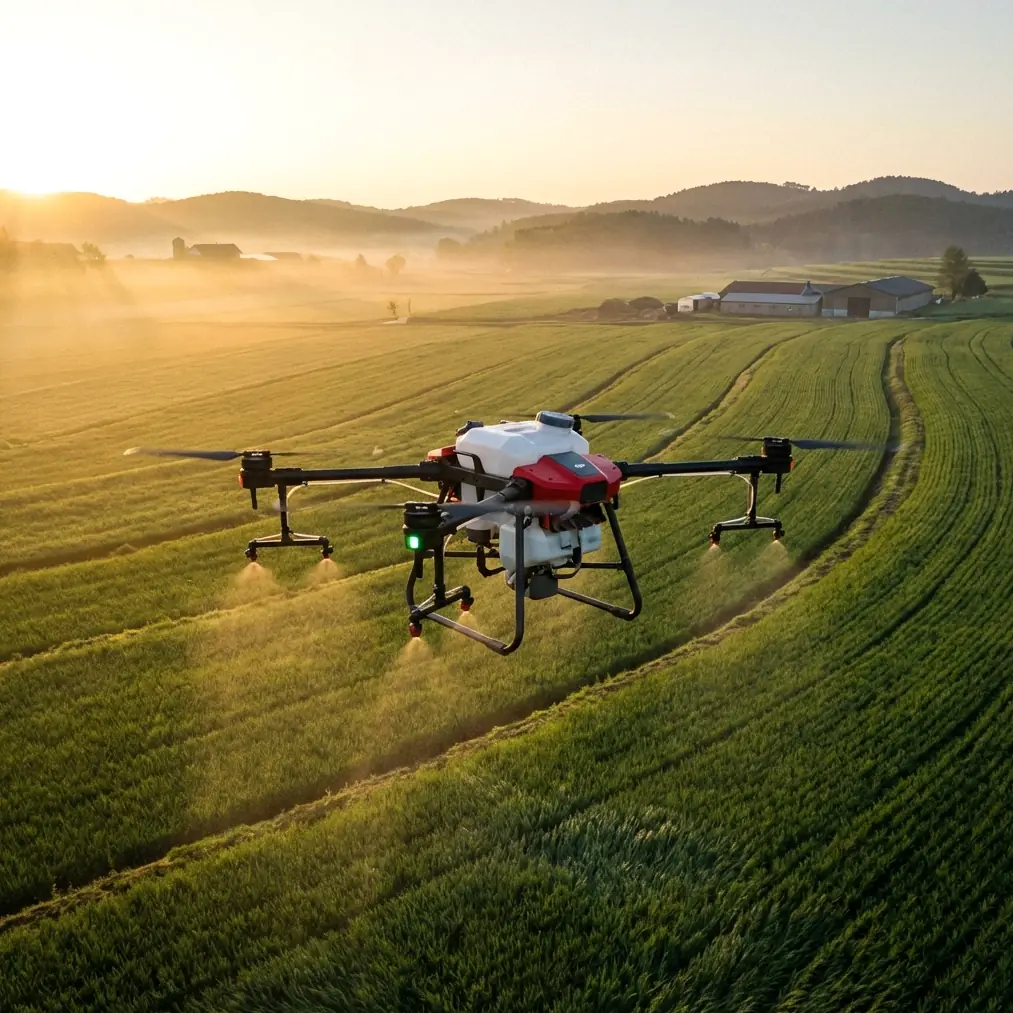
Agras T70P in Extreme-Temperature Wildlife Spraying: A Field Case Study on Precision, Drift Control, and Data-Driven Operations
META: A field-based Agras T70P case study covering wildlife-area spraying in extreme temperatures, spray drift control, nozzle calibration, RTK precision, and how UAV mapping and hyperspectral-style monitoring improve decisions.
I first began thinking seriously about the Agras T70P after a difficult assignment on a protected wetland edge where temperature swings were punishing both people and equipment. Dawn started cold enough to stiffen hoses and slow prep work. By late afternoon, heat shimmer above the vegetation made visual judgment unreliable, especially near shallow water and algal patches. The mission was civilian and ecological: targeted spraying in a wildlife management area where application accuracy mattered because overspray into nearby water would create downstream consequences.
That kind of job exposes a simple truth. In extreme temperatures, spraying is no longer just about payload and throughput. It becomes a question of whether the aircraft, the workflow, and the supporting data can hold precision when conditions are unstable.
The Agras T70P fits that discussion well, not because it exists in a vacuum, but because its value becomes clearer when paired with two broader realities from the UAV industry. First, remote sensing has moved far beyond coarse, low-resolution interpretation. High-spectral-resolution sensing, down to nanometer-level spectral discrimination, has shown why conventional remote sensing often misses diagnostic signatures in water quality analysis. Second, UAV-based mapping and 3D reconstruction have already proved their worth in construction by rapidly capturing high-density point cloud data, comparing actual conditions to design intent, and catching errors early. Those are not abstract ideas. They point to how a serious operator should use an aircraft like the T70P: not as an isolated sprayer, but as part of an evidence-based field system.
The field problem: spraying wildlife zones without treating them like ordinary farmland
Wildlife-area spraying in extreme temperatures differs from broadacre work in three ways.
The first is drift sensitivity. A farm block may tolerate a little edge variation. A wildlife corridor, reed bed, or shallow lake margin may not. Tiny mistakes become ecological issues.
The second is surface complexity. Terrain, vegetation height, open water edges, and intermittent access routes create irregular spray geometries. Uniform assumptions break down quickly.
The third is timing. Extreme heat shortens the practical spray window because evaporation and thermal activity increase drift risk. Extreme cold creates its own problems with fluid behavior, battery performance, and setup delays.
On our earlier mission, those three constraints collided. The challenge was not simply to spray. The challenge was to maintain centimeter-level flight confidence, keep droplet placement controlled, and avoid making decisions based on incomplete site knowledge.
That is where the Agras T70P earns attention. Its operational relevance lies in how well it can support repeatable, precise flight and disciplined application under demanding environmental conditions. For this kind of work, RTK fix rate matters because stable, high-confidence positioning is not a luxury. It is the difference between a clean treatment line and a creeping overlap into a sensitive buffer. When operators talk about centimeter precision, some readers hear marketing shorthand. In reality, for wildlife spraying near water, that precision affects boundary respect, route repeatability, refill consistency, and documentation quality.
Why remote sensing matters before the first spray pass
A common mistake in spraying operations is assuming the aircraft should solve every problem in the air. It cannot. Many failures begin before takeoff, when the treatment zone has been defined too loosely.
One of the most useful reference points here comes from hyperspectral water monitoring research. Traditional monitoring often relied on collecting water samples and analyzing them in a lab. That method is accurate but slow and limited in spatial coverage. Remote sensing approaches improved speed and area coverage by linking reflected spectral characteristics to water quality parameters. Yet lower-resolution multispectral systems often struggled to distinguish diagnostic absorption features clearly enough for robust parameter inversion. High-spectral-resolution sensors changed that by capturing diagnostic target characteristics at the nanometer scale, improving multi-parameter retrieval.
Why does that matter to an Agras T70P operator?
Because in wildlife-area spraying, especially near lakes or wetland channels, application planning should be informed by the best available environmental differentiation. If you can identify where eutrophication indicators, suspended matter patterns, or stressed vegetation zones are concentrated, you make better boundary decisions. You also reduce unnecessary treatment.
The source material specifically highlights lake eutrophication monitoring as a high-value use case and explains that scientists have built effective evaluation methods to assess trophic state for prevention and control. Operationally, that means UAV work around water should not be blind. If your workflow includes multispectral or higher-grade sensing support, you move from generalized spraying to selective intervention. The T70P then becomes the execution platform in a broader precision system.
In one practical scenario, our team used pre-mission imagery to separate dense vegetation from water-adjacent transition zones where treatment had to be reduced or excluded. Even when true hyperspectral capture is not part of the spray platform itself, the logic still applies: richer spectral intelligence leads to cleaner application maps. The T70P benefits because it is then flying a plan based on observed ecological variation, not rough visual estimation.
Extreme temperatures expose weak calibration habits
Most drift problems blamed on weather are actually a mix of weather and poor setup. Extreme temperatures amplify sloppy nozzle calibration.
In cold conditions, fluid viscosity shifts, startup behavior can lag, and operators sometimes rush to get moving once systems are finally ready. In hot conditions, evaporation and droplet shrinkage can distort the intended spray profile. If nozzles are not calibrated correctly, swath width assumptions become unreliable, and the operator may “fix” performance with speed changes that create a bigger problem.
The discipline I now recommend with the Agras T70P is straightforward:
- verify nozzle output consistency before the mission window opens
- confirm expected droplet behavior under current temperature conditions
- recheck swath width in the actual vegetation environment, not just on a planning screen
- treat RTK stability and nozzle calibration as linked factors, because accurate flight on a bad flow pattern is still bad application
This is where experienced operators separate themselves from casual users. The aircraft can hold a precise line, but the treatment quality still depends on the liquid delivery system matching that line. In wildlife spraying, the cost of mismatch is not just inefficiency. It can be off-target contamination.
Construction mapping offers a lesson spray operators should borrow
At first glance, a reference about engineering and construction UAVs seems unrelated to a spraying aircraft. It is not.
The construction source explains that UAV-based digital surveying overcame several persistent weaknesses of traditional aerial photography: high cost, imprecise aircraft attitude control, and difficult manual measurement conditions. It also notes that UAVs can rapidly create high-density colored point clouds and reverse 3D reconstruction models, then compare them to earlier design models to identify problems before they become expensive mistakes.
That workflow is highly relevant to the Agras T70P in complex wildlife terrain.
Before spraying, a detailed site model helps answer questions that matter in the field: Where are the actual edge transitions? Where does terrain pinch the flight corridor? Which access path is realistic for battery rotation and refill logistics? Which vegetation blocks create rotor-wash interaction risk? Where are the subtle depressions or wet fingers that are not obvious from ground level?
In our case, the breakthrough was not a change in chemistry. It was a change in geometry. Once we treated the site like a spatial problem and built a cleaner surface understanding, the spray routes improved immediately. Fewer awkward turns. Better boundary confidence. Less hesitation near sensitive margins.
This is one reason the T70P works best in professional hands when paired with a mapping mindset. Even if the aircraft’s primary task is spraying, the operation around it should borrow from surveying logic. Good maps reduce bad decisions.
RTK fix rate is not a spec-sheet footnote
When people discuss application drones, payload numbers usually dominate the conversation. For wildlife-area spraying in difficult temperatures, I would place RTK reliability much higher.
A strong RTK fix rate contributes to stable path adherence, more accurate overlap control, and cleaner execution around exclusion zones. In an open agricultural field, small deviations may average out. Near habitat edges or shallow water, they do not.
This matters more when weather is unstable. Heat shimmer, glare, operator fatigue, and compressed working windows all increase cognitive load. A drone that maintains position with confidence reduces the burden on the pilot and lowers the chance that manual compensation introduces inconsistency.
The T70P’s practical value, in that sense, is not merely “precision” as a buzzword. It is repeatability under pressure.
IPX6K and environmental resilience only matter if the workflow matches
Readers often ask whether ingress protection ratings matter in real spraying work. Yes, but not in the simplistic way they are usually discussed.
An IPX6K-class protection expectation is meaningful because wildlife spraying often involves wet vegetation, chemical exposure, rinse cycles, dust from access roads, and abrupt weather changes. But ruggedization is only one half of resilience. The other half is procedural.
Extreme-temperature operations demand:
- disciplined battery temperature management
- protected staging areas
- rinse routines that do not contaminate adjacent habitat
- regular seal and line inspections
- clear abort thresholds for wind and thermal activity
The aircraft can be robust, but the mission still fails if support practices are careless. The T70P gives operators a platform suitable for hard field use. It does not exempt them from field discipline.
A better way to think about swath width
Swath width is often treated as a productivity number. In sensitive civilian spraying, it should be treated as a risk-control number.
A wider swath may look efficient on paper, but in wildlife corridors or water-adjacent strips, the useful question is whether the effective deposition remains uniform across the working band under current conditions. Heat, crosswind, canopy variability, and nozzle state all affect that answer.
This is where calibration, trial passes, and environmental observation converge. The right swath width is not the largest one the aircraft can theoretically cover. It is the width that maintains acceptable deposition while preserving boundary discipline.
On our difficult site, reducing the assumed working swath in the hottest period actually improved overall mission quality. We made fewer corrections, avoided drift-prone edges, and finished with cleaner coverage records.
From reactive flying to evidence-based spraying
The most valuable shift the Agras T70P enabled for us was not speed. It was operational confidence.
Instead of reacting to conditions mid-mission, we began structuring jobs around three layers:
Spatial truth from UAV-style mapping and reconstruction principles
Construction-sector drone practice showed the value of rapid 3D capture, point clouds, and model comparison. We adapted that mindset to habitat geometry and access planning.Environmental truth from spectral interpretation
Water-quality monitoring research demonstrated why higher spectral discrimination improves parameter estimation and why conventional methods can miss important signatures. We used that logic to define treatment relevance near water and stressed vegetation.Execution truth from calibrated spraying and RTK repeatability
The T70P became the tool that turned the plan into a repeatable field action.
That combination changed the mission from “spray what looks problematic” to “treat the right zones, at the right width, with fewer assumptions.”
What operators should take from this
If you are evaluating the Agras T70P for spraying wildlife areas in extreme temperatures, the central question is not whether it can carry liquid and fly a route. Many machines can do that.
The better question is whether your operation can use the T70P as part of a precision workflow that respects ecological boundaries.
Two details from the reference material deserve special emphasis.
First, hyperspectral sensing with nanometer-level spectral resolution improves the identification of diagnostic spectral features and raises the accuracy of multi-parameter inversion. Operationally, that means environmental decision-making around water and vegetation can become more selective and scientifically defensible.
Second, UAV digital surveying in construction has already proven the advantage of rapidly generating high-density point clouds and 3D models for comparison and error detection. Operationally, that means spray teams can map complex terrain and boundaries before application instead of improvising around them in real time.
Those ideas matter because the T70P is at its best when precision is not just a flight feature, but a planning philosophy.
For teams working in harsh temperatures, near sensitive habitats, or around water bodies where spray drift is unacceptable, that philosophy is what reduces risk. The aircraft is part of the answer. The workflow is the rest.
If you are building that workflow and need a practical discussion around route design, nozzle setup, or integrating mapping and multispectral thinking into spray planning, you can message a field specialist here.
The Agras T70P deserves to be judged in the conditions that expose real strengths: tight boundaries, difficult weather, variable terrain, and missions where accuracy matters more than bravado. In that environment, its value comes into focus.
Ready for your own Agras T70P? Contact our team for expert consultation.