
Agras T70P in Extreme Temperatures: What Actually Matters
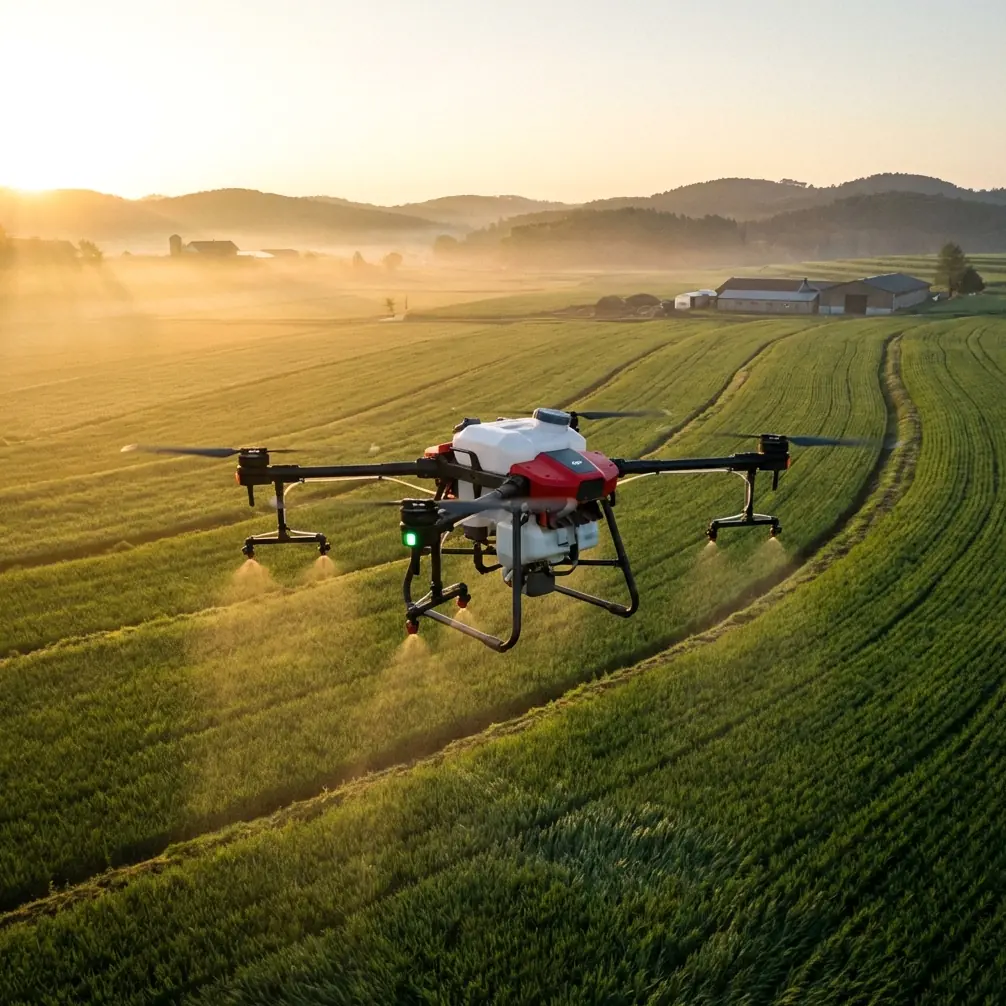
Agras T70P in Extreme Temperatures: What Actually Matters When the Job Is Wildlife Spraying
META: A field-focused analysis of the Agras T70P for wildlife spraying in extreme temperatures, with practical insight on drift control, nozzle calibration, RTK stability, IPX6K durability, and accessory choices.
Wildlife spraying is one of those jobs that looks simple on paper and becomes unforgiving the moment temperature swings, terrain, and biological sensitivity enter the frame. Extreme cold thickens liquids, alters droplet behavior, and punishes seals. Extreme heat pushes evaporation, drift, and operator timing into sharper focus. In both cases, the aircraft is only part of the equation. The real question is whether the platform can maintain predictable application quality when conditions are working against it.
That is why the Agras T70P deserves a closer look through a narrow lens rather than a broad product summary. Not “Can it spray?” Almost any agricultural drone can claim that. The better question is whether it can spray wildlife management corridors, habitat edges, wetlands access lanes, and temperature-stressed vegetation with enough consistency to protect both efficacy and environmental margin.
I approach this as an operations problem first.
The real problem with extreme-temperature spraying
When readers talk about wildlife spraying, they often mean one of several civilian tasks: habitat restoration, invasive plant suppression around protected zones, vector-control support in designated areas, or targeted vegetation treatment near conservation infrastructure. These are delicate applications. You are rarely trying to blanket a featureless field. You are often working around irregular boundaries, mixed canopy density, water, non-target species, and access constraints.
Now add extreme temperature.
In high heat, droplet evaporation accelerates before the spray reaches the target. Smaller droplets become more vulnerable to off-target movement, so spray drift risk rises even if the wind itself is not dramatic. In cold conditions, viscosity changes can distort flow behavior through the spray system. That affects nozzle calibration, pressure stability, and ultimately dose accuracy across the swath width. If an aircraft cannot hold a stable line or maintain repeatable output, the operator ends up compensating manually, which usually means lower efficiency and less confidence in the result.
This is where aircraft precision and spray system tuning stop being “nice technical features” and start becoming operational safeguards.
Why centimeter-level positioning changes the outcome
For wildlife spraying, overlap control matters more than most people admit. In a broad-acre crop field, a slight inconsistency may be tolerable if the agronomic target is resilient. Around wildlife corridors or habitat edges, overlap and miss zones can create two different kinds of problems at once: over-application in one strip and inadequate treatment in the next.
That is why centimeter precision and RTK Fix rate deserve attention in any serious discussion of the T70P. A stable RTK solution is not just about drawing a cleaner path on a screen. It directly influences repeatable swath placement, turn accuracy, and the operator’s ability to maintain treatment boundaries when visibility, terrain, or thermal conditions are degrading performance.
In extreme heat, convection currents can make the aircraft’s environment less stable than it appears from ground level. In cold weather, battery and system behavior can shorten the practical window for smooth repetitive sorties. When the positioning solution remains locked and the aircraft can hold its intended route with high repeatability, the operator spends less mental bandwidth correcting drift in path geometry and more on validating spray quality.
That distinction matters. In sensitive wildlife work, route fidelity is part of environmental control.
Swath width is only useful if it stays honest
A wide swath width looks efficient on a spec sheet. In real-world wildlife applications, a useful swath is one that remains predictable as temperatures shift. Extreme heat can push droplets sideways or reduce deposition uniformity. Cold weather can influence atomization and produce a pattern that no longer matches the calibration assumptions made in moderate conditions.
So the T70P’s value is not simply that it can cover ground efficiently. The value lies in how efficiently it can do so without forcing the operator to accept hidden application errors. A disciplined operator will treat swath width as a variable to be verified, not a fixed promise. In this sense, the T70P is best understood as a platform that gives you the control framework to tune around temperature stress.
That means shorter validation runs. Water-sensitive cards. Re-checking distribution at the start of the mission and after temperature changes. Confirming that the practical working swath still reflects the biological objective, not the theoretical maximum.
Aircraft capability helps, but process discipline closes the loop.
Nozzle calibration becomes non-negotiable in cold and heat
If there is one area where extreme-temperature spraying exposes weak operations, it is nozzle calibration. People often treat calibration as a setup task. It is not. It is a dynamic quality-control procedure.
In heat, the temptation is to chase productivity. Operators widen the pace of work, assume the spray system is behaving as expected, and only notice a problem after drift or under-deposition has already shown up in the treatment pattern. In cold conditions, thicker fluid behavior can subtly alter flow and droplet formation, especially if the spray mix was prepared under one temperature and applied under another.
For the T70P, the practical takeaway is straightforward: its spraying capability is only as good as the calibration discipline wrapped around it. This includes selecting the correct nozzle setup for the target, verifying flow consistency before full deployment, and adjusting mission parameters when environmental conditions have changed enough to affect droplet transport.
The aircraft can support precision. It cannot replace judgment.
IPX6K matters more than marketing usually admits
One of the more underappreciated details in a platform built for field work is environmental sealing. The mention of IPX6K is not decorative. For wildlife spraying in extreme temperatures, it has direct operational significance.
First, cleaning matters. Sensitive applications often require strict decontamination between agents, sites, or treatment objectives. If a platform cannot tolerate rigorous washdown practices, residue management becomes harder and downtime increases. IPX6K-level protection signals a machine designed for demanding exposure and cleaning routines, which is exactly what professional operators need when switching between jobs with different environmental stakes.
Second, temperature extremes rarely arrive alone. Heat often brings dust, dried residue, and repeated refill cycles. Cold conditions can bring condensation, muddy launch points, and washdown challenges after corrosive or sticky formulations. A more robustly protected airframe helps preserve reliability across those transitions.
That does not mean operators should become careless. It means the T70P is better aligned with the maintenance reality of harsh field deployment.
A third-party accessory that genuinely improves capability
Accessories are often oversold. Most add convenience. A few materially improve outcomes.
For wildlife spraying in extreme temperatures, one of the most useful third-party additions is a heated inline fluid conditioning module installed between the tank outlet and the spray distribution path. Used correctly and within formulation guidance, this kind of accessory can stabilize liquid flow in cold conditions by reducing viscosity-related inconsistency before atomization. It does not turn winter into spring, and it does not remove the need for calibration, but it can narrow the gap between expected and actual spray behavior when temperatures are low enough to distort flow.
Why does this matter on the T70P specifically? Because a high-capacity professional spray platform only reaches its potential if the fluid delivery profile remains consistent. An unstable liquid feed compromises everything downstream: droplet spectrum, swath uniformity, and confidence in dose rate. The aircraft may still fly perfectly. The application quality may still be wrong.
I have seen operators gain more practical value from a well-integrated fluid conditioning accessory than from chasing marginal tweaks elsewhere. The key is restraint. The accessory should support calibration, not replace it. It should be validated in test runs, not trusted blindly.
If you are sorting through field configurations and want a technical discussion rather than a generic pitch, this Agras T70P setup channel is a sensible place to ask detailed integration questions.
Multispectral isn’t just for crop analytics here
The phrase “Multispectral” tends to steer people toward row-crop thinking, but it has a useful role in wildlife-oriented spray planning too. In extreme temperatures, vegetation stress signatures can help operators distinguish between areas that need treatment, areas that need a lighter touch, and areas where application timing should be postponed altogether.
For example, a habitat restoration project may involve invasive growth suppression near stressed native vegetation. Under heat stress, visual inspection alone can make the whole zone look uniformly compromised. Multispectral data can reveal where plant vigor differs enough to justify adjusted application boundaries or altered mission sequencing. That matters because unnecessary coverage in stressed zones can produce ecological side effects even when the chemistry and dose are otherwise compliant.
Paired with centimeter precision, multispectral-informed planning can tighten where the T70P flies and where it does not. In wildlife operations, selective restraint is often the mark of the better deployment.
Temperature stress exposes weak operating habits
A capable drone does not rescue poor field protocol. If anything, a sophisticated platform can hide sloppy habits for longer because the mission appears smooth until the deposit pattern tells a different story.
The T70P is best used by teams that build a repeatable workflow around four checkpoints:
1. Environmental verification before takeoff
Measure actual conditions at the treatment zone, not just at the staging point. Heat near exposed vegetation or cold pooling in low areas can create a false sense of uniform conditions.
2. Calibration tied to the day’s formulation behavior
Nozzle calibration should reflect what the spray mix is doing now, under current temperature conditions. Yesterday’s settings are not evidence.
3. RTK stability review before committing to sensitive boundaries
A strong RTK Fix rate reduces path uncertainty. In wildlife work, that translates into better treatment edge control and less overlap creep.
4. Post-flight inspection and washdown discipline
This is where IPX6K durability becomes practical, not theoretical. A machine that can be thoroughly cleaned and quickly returned to service supports safer multi-site operations.
Those habits are not glamorous. They are what separate a successful wildlife spraying program from one that looks efficient but leaves behind inconsistent biological results.
The Agras T70P’s role in this niche
The Agras T70P is not interesting because it is a drone that can spray in difficult conditions. Plenty of aircraft can attempt that. It is interesting because several details align with the actual pain points of extreme-temperature wildlife operations.
Centimeter precision matters because wildlife work often involves complex edges and non-target sensitivity. RTK Fix rate matters because route repeatability is part of environmental control, not just flight elegance. Nozzle calibration matters because temperature can quietly distort application quality. IPX6K matters because harsh cleanup and reliability are part of the job. Multispectral planning matters because not every stressed area should be treated the same way. A carefully chosen third-party fluid conditioning accessory can add real value when cold weather threatens flow consistency.
That combination gives the T70P a serious operational argument.
Not a generic one. A specific one.
If your mission profile includes spraying around wildlife-sensitive areas in extreme temperatures, the smartest approach is to stop thinking of the aircraft as a standalone solution. Think of it as the center of a controlled application system. The better that system is tuned, the more the T70P’s strengths show up where they actually count: at the target, in the right amount, with fewer surprises.
One final point. Precision in these scenarios is not about chasing perfection. It is about reducing preventable error in a setting where preventable error has ecological consequences. That is the standard the T70P should be measured against.
Ready for your own Agras T70P? Contact our team for expert consultation.