
Spraying Wildlife Corridors in Extreme Temperatures
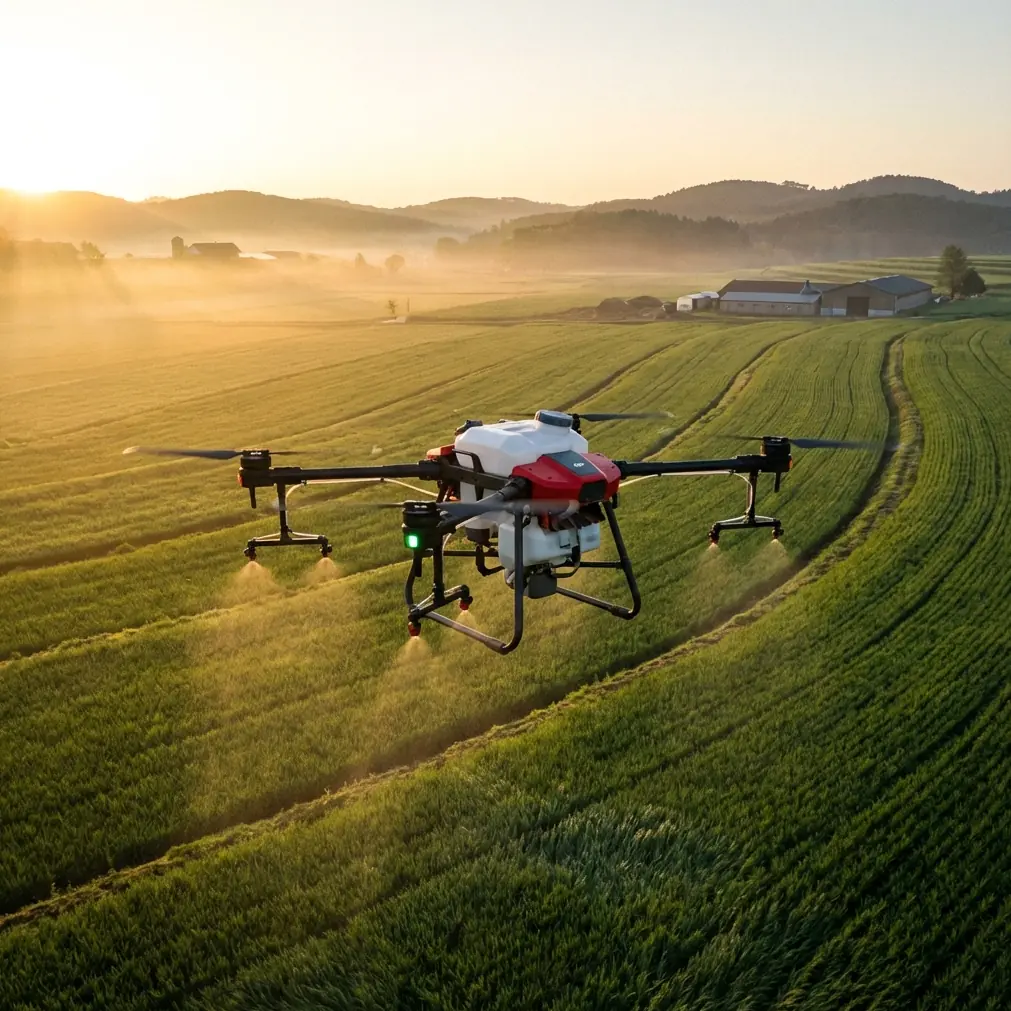
Spraying Wildlife Corridors in Extreme Temperatures With the Agras T70P: A Field Case Study
META: An expert case study on using the DJI Agras T70P for wildlife-area spraying in extreme heat and cold, with practical insights on drift control, nozzle calibration, RTK accuracy, and accessory setup.
When operators talk about agricultural spray drones, the conversation usually stays inside farm boundaries. That misses a growing use case: habitat management and wildlife-support spraying in places where manned access is poor, temperatures are punishing, and precision matters as much as payload. The Agras T70P fits that conversation well, not because it is merely powerful, but because its design choices solve the kinds of operational problems that appear when you are treating vegetation around nesting buffers, water edges, migration corridors, and forage plots under thermal stress.
I want to frame this as a case study rather than a spec recap. The scenario is straightforward. A conservation team needs to spray target vegetation in a wildlife corridor during a period of extreme temperatures, with hot afternoons producing unstable air and cold dawn starts affecting battery behavior, droplet consistency, and mission timing. The aircraft in focus is the Agras T70P. The question is not whether it can spray. The real question is whether it can spray predictably, safely, and repeatably when environmental margins get tight.
That is where the T70P becomes interesting.
Why the Agras T70P changes the conversation in wildlife spraying
The Agras T70P is built for high-throughput application, but throughput alone is not the reason it earns a place in environmental work. In wildlife areas, every pass has ecological consequences. A wide swath can reduce time over sensitive terrain, but only if the pattern is uniform. Centimeter precision sounds attractive on paper, but only if the RTK fix rate stays stable under tree edges, terrain breaks, or marginal satellite geometry. A sealed airframe sounds rugged, but only if that protection keeps the system reliable through washdowns, chemical exposure, dust, and temperature swings over a long work week.
Those details matter more in wildlife management than many operators expect.
Take spray drift. In crop work, off-target movement is expensive. In wildlife work, it can be ecologically destructive. If you are treating invasive weeds near pollinator strips or suppressing dense vegetation around conservation access routes, drift becomes a biological risk, not just an operational inefficiency. The T70P’s value starts with the operator’s ability to hold line discipline and droplet consistency while adapting to unstable conditions. That means matching nozzle calibration to chemistry, canopy density, and the time window when local air is least turbulent.
In the field scenario I am describing, the crew deliberately avoided the hottest period of the day. Instead, they used the cooler morning window for the main treatment runs, then reserved late-day flights for small correction areas where the air had settled again. That is not a minor scheduling preference. In extreme temperatures, it is the difference between a clean deposition pattern and a mission that produces visible lateral movement beyond the target zone.
The operational role of nozzle calibration
Nozzle calibration is easy to underestimate because it lacks the drama of payload or flight speed. Yet in real spraying, it often determines whether the operation works. On the T70P, careful calibration affects droplet size, spray distribution, and ultimately drift risk. In wildlife corridors, where the target vegetation may change from open grass margins to shrubby edge growth within a single mission block, calibration has to reflect not only volume rate but vegetation architecture.
In this case, the operator treated nozzle setup as a live field variable rather than a one-time preflight checkbox. They checked output uniformity after the first few runs and adjusted the plan when ambient temperature rose faster than forecast. That small correction reduced fine-droplet production and helped keep the spray where it belonged.
There is a larger point here. Extreme heat increases evaporation risk before droplets reach the target. Extreme cold can alter fluid behavior and lead to inconsistent atomization if the system is not brought into a stable working range. The T70P gives the operator a platform capable of carrying out those missions, but performance still depends on disciplined setup. The aircraft does not erase the physics. It gives a skilled team the control to work with them.
RTK fix rate and why centimeter precision actually matters
One of the most misunderstood ideas in drone spraying is precision itself. Many people hear “centimeter precision” and imagine a marketing phrase. In environmental spraying, it has a practical meaning. If the T70P maintains a strong RTK fix rate, its path repeatability improves. That means tighter overlap control, cleaner boundary definition, and fewer missed strips in irregular ground.
That becomes critical in wildlife applications because treatment polygons are rarely neat rectangles. They bend around drainage lines, feeding areas, tree belts, and exclusion zones. The difference between ordinary GNSS positioning and a stable RTK solution is operationally obvious on those edges. You spend less time correcting misses and less time wondering whether a second pass will put chemistry where it should not go.
In the field case, the team used RTK-guided route planning to hold crisp buffers near a riparian edge. This was not about chasing theoretical accuracy. It was about avoiding drift-prone manual corrections and preserving a non-treatment strip that protected amphibian habitat. A high RTK fix rate translated into fewer compensatory steering inputs and more confidence at the boundary.
That is the sort of detail that often separates a competent spray mission from a defensible one. If land managers or regulators later ask how tightly the treatment was controlled, mission accuracy is no longer an abstract talking point. It is part of the record.
Swath width is only useful if the pattern stays honest
The T70P’s broad swath capability can be a real advantage in habitat management because it reduces the total number of passes over a treatment block. Fewer passes mean less battery cycling, less time near wildlife-sensitive areas, and less cumulative exposure to shifting wind. But there is a catch. A wide swath is only operationally helpful if the spray pattern remains uniform across it.
In the case at hand, swath width was adjusted conservatively rather than pushed to a headline number. That decision improved edge-to-edge consistency in mixed vegetation and reduced the temptation to overextend the aircraft in gust-prone conditions. This is where experienced operators distinguish themselves. They do not ask for the largest possible width. They ask what width still produces repeatable deposition under the weather they actually have.
That choice also helped with battery management. In extreme temperatures, energy planning becomes part of spray quality. In cold starts, batteries may need careful conditioning to reach stable output. In extreme heat, aggressive cycle management protects both performance and component longevity. A slightly narrower, more stable swath can outperform a nominally wider one if it prevents rushed turnarounds and inconsistent flow behavior later in the mission.
IPX6K protection is more relevant than it sounds
The T70P’s IPX6K-level protection deserves more attention in real operations. People tend to treat ingress ratings as an abstract durability badge. For spray crews, especially in wildlife and remote-land management, it is directly tied to uptime. A machine working around water points, muddy access tracks, chemical residues, dust, and regular cleaning needs robust sealing. IPX6K matters because it supports repeatable maintenance between sorties and reduces the risk that environmental exposure turns into downtime.
In the case study setting, the team was operating across dusty access roads in the afternoon, then washing down the aircraft at day’s end before a pre-dawn cold-weather relaunch. That transition is exactly where sealing quality becomes operationally significant. A less-protected airframe might still complete a mission. The question is whether it remains dependable through repeated exposure cycles. The T70P’s protection profile supports that rhythm of use.
For conservation and wildlife contractors, this has a second-order benefit. Equipment that can be cleaned thoroughly and returned to service reliably is easier to manage across mixed chemical programs and sensitive sites where contamination control matters.
The third-party accessory that expanded capability
One of the most useful additions in this project was not part of the drone itself. The team mounted a third-party multispectral mapping workflow into the planning cycle. Not on the spray drone during application, but as a paired assessment tool used before and after treatment to identify stress signatures, patch density, and regrowth patterns in the corridor.
That accessory changed the quality of decision-making. Instead of treating the site as visually uniform, the crew could identify where target vegetation was truly dense and where lighter application zones or follow-up monitoring would be more appropriate. For wildlife management, this is a substantial improvement. It reduces unnecessary application in areas that do not need it and helps focus sorties on ecologically justified zones.
This pairing also sharpened nozzle and route decisions. Multispectral outputs revealed which strips had enough biomass and moisture variation to justify altered mission spacing. That kind of data-informed adjustment is where modern drone spraying begins to move beyond simple replacement of ground rigs. It becomes site-specific aerial treatment with evidence behind each pass.
If your operation is building toward that standard, a practical way to discuss setup options is through this direct field support channel: message the application team here.
Working in extreme temperatures: what the T70P does well, and what the crew still must manage
No aircraft removes the burden of judgment. The T70P gives crews a capable spray platform, but the mission still succeeds or fails on environmental discipline.
In heat, the main concerns are drift, evaporation, battery stress, and crew fatigue. The aircraft can cover ground quickly, which helps compress the working window into safer conditions. That speed is valuable. Yet fast coverage is only beneficial when paired with conservative decision-making on wind shifts and boundary integrity.
In cold conditions, the concerns change. Battery behavior becomes less forgiving. Fluids and seals may respond differently at dawn than they do by midday. Startup procedures matter more. The T70P’s robust design helps smooth these variables, but operators still need temperature-aware preflight checks and realistic mission lengths.
The result in this case was not dramatic. It was better than dramatic. It was uneventful. The treatment block was completed with clean boundaries, acceptable deposition, and no need for broad corrective rework. In professional aerial application, that is the benchmark worth chasing.
What this means for Agras T70P buyers and operators
If you are evaluating the Agras T70P for wildlife-area spraying, the strongest argument is not raw lift or platform presence. It is controllability under difficult operating conditions. Two details stand out.
First, centimeter precision through RTK support has real field value when you need defensible boundaries around water, habitat buffers, or irregular exclusion zones. That directly improves treatment discipline.
Second, IPX6K-grade protection matters because these aircraft do not live in clean labs. They live in dust, residue, rinse cycles, and rough transport schedules. Durability is not separate from productivity; it is part of it.
Add disciplined nozzle calibration and a realistic swath strategy, and the T70P becomes a serious tool for habitat work in extreme temperatures. Add a third-party multispectral assessment workflow, and it becomes a much smarter one.
That is the real story. Not that the drone is powerful. Plenty of heavy spray drones are powerful. The more relevant point is that the Agras T70P can be integrated into a careful, ecologically sensitive application program where weather pressure, terrain irregularity, and target specificity all compete for attention. In that environment, stable positioning, controlled spray behavior, sealed reliability, and data-informed planning are not luxuries. They are the baseline for doing the job responsibly.
For wildlife managers, land restoration teams, and specialist spray contractors, that is where the T70P earns its place.
Ready for your own Agras T70P? Contact our team for expert consultation.