
Agras T70P in Mountain Vineyards: A Practical Way to Manage
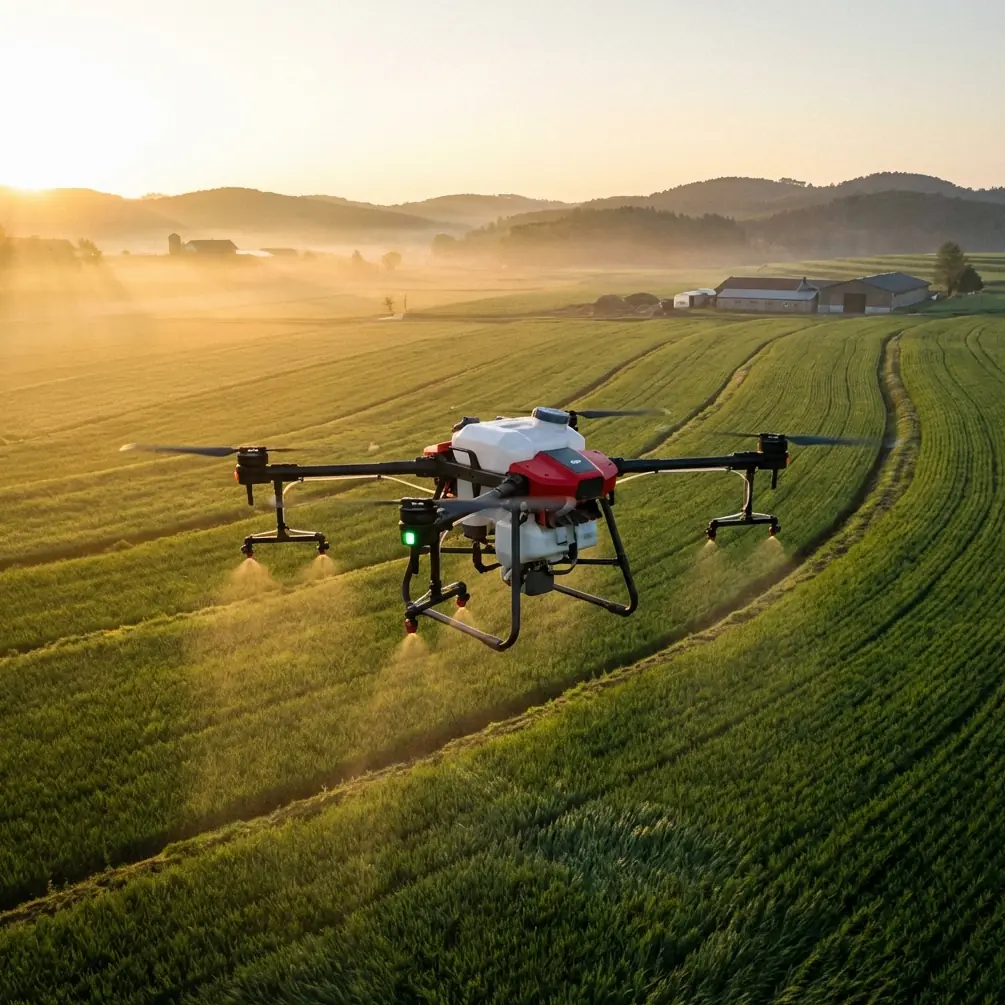
Agras T70P in Mountain Vineyards: A Practical Way to Manage Drift, Coverage, and Mid-Flight Weather Changes
META: A field-focused guide to using the Agras T70P in mountain vineyards, with practical insight on spray drift, nozzle calibration, swath width, RTK fix stability, and weather shifts during hillside operations.
Mountain vineyards punish sloppy spraying.
Rows bend around contour lines. Wind behaves differently at the top of a slope than it does near the lower terraces. Tree lines and rock faces create turbulence that does not show up in a simple weather app check before takeoff. If you are working with an Agras T70P in this environment, the real job is not merely getting liquid into the air. The job is holding accuracy when conditions stop behaving.
That is why I think about mountain spraying the same way a careful photographer thinks about aperture priority. In Av mode, the camera operator chooses the F value and lets the camera balance shutter speed. Pick the wrong aperture and the image falls apart for a predictable reason. Open up to F1.8 or F2.8 and background blur becomes strong. Stop down to F8 and a whole street can stay sharp. But there is a catch: in low light, a wide aperture can still drive shutter speed down to around 1/10 second, and a handheld shot turns into blur. Experienced shooters remember the rule of thumb: keep shutter speed above roughly 1 divided by focal length, so with a 50 mm lens you usually do not want to dip below 1/50 second.
That logic matters more in agriculture than many operators realize.
With the T70P, you can set a mission that looks perfect on the tablet and still miss the agronomic target if one critical variable slips outside its safe operating window. In a vineyard on a mountain, your “aperture” is not one setting. It is the combination of nozzle calibration, droplet behavior, swath width, terrain-following consistency, and RTK fix stability. Ignore one of them, and the map may still look clean while the vines tell a different story three days later.
Start with the mountain, not the drone
Before discussing flight parameters, the first practical step is to read the site as a spray environment.
A mountain vineyard is rarely uniform enough to treat as one block. The upper rows may be exposed and drier. Mid-slope sections often funnel crosswinds. Lower rows can hold cooler, heavier air and higher humidity. This affects drift, deposition, and evaporation all at once. The T70P gives you the platform to work precisely, but precision starts with deciding where conditions change and where one mission plan should end and another should begin.
I usually separate a steep vineyard into smaller operational zones based on three questions:
- Where does the wind pattern shift?
- Where does row spacing or canopy density change enough to alter swath behavior?
- Where do GNSS or RTK conditions become less stable due to terrain shadowing or vegetation?
That third point gets ignored too often. In mountain work, centimeter precision is not just a nice specification line. It is what allows repeated passes to stay aligned to the real shape of the vineyard instead of the idealized map. If the RTK fix rate degrades on one side of the slope, the operational significance is immediate: overlap and skips become more likely, especially when narrow terraces or irregular row geometry reduce your margin for error.
Why RTK fix rate matters more on slopes
On flat broadacre land, a small positional inconsistency may be hidden inside a generous swath width. In vineyards, especially on mountain plots, row-based treatment demands much tighter discipline. If your RTK fix rate is strong, the T70P can hold line fidelity through turns and uneven elevation changes with the sort of repeatability that protects both efficacy and crop safety.
That matters for two reasons.
First, vineyards are less forgiving of over-application. Extra liquid on one section of canopy is not a minor visual flaw; it can change runoff behavior and leave one side of the row wetter than intended.
Second, under-coverage is expensive in a very specific way. It often does not show up everywhere. It appears in a few difficult strips where the machine’s path or spray pattern was compromised by slope, turbulence, or fix instability. Then the operator ends up diagnosing a disease-control problem that was really an execution problem.
If you are chasing consistency, watch RTK health the same way a photographer watches shutter speed. The camera rule says that once you go below about 1/50 second with a 50 mm lens, handheld blur risk rises fast. In the vineyard, once your positioning confidence slips below the threshold needed for the block’s geometry, the mission can still continue, but quality risk rises fast. That is the operational lesson behind the camera example: automation works only while the underlying constraint stays inside a safe band.
Swath width is not a bragging number in vineyards
A lot of drone operators talk about swath width as if wider is always better. In mountain vineyards, that is backward.
The useful swath width is the one that produces stable deposition across the actual canopy under the current wind and terrain conditions. A wide theoretical swath means nothing if half of it lands shallow on the exposed edge and the rest pushes through the row gap. On contour terraces, you also have elevation-induced angle changes that can distort how the spray cloud meets the vines.
The T70P should be flown with a swath strategy that respects the crop geometry instead of trying to maximize hectares per hour on paper. In practice, that usually means validating coverage row by row on the first section of the block, then adjusting before committing to the whole slope. The drone may be capable of more aggressive spacing, but mountain vineyards reward conservative setup and punish assumptions.
This is where nozzle calibration stops being a maintenance task and becomes a business-critical procedure. If flow delivery is uneven, every later decision becomes harder to trust. You cannot meaningfully evaluate drift control or swath width if the nozzles themselves are not producing what you think they are producing.
Nozzle calibration: the overlooked control point
When spraying vineyards in the mountains, operators often focus on wind speed and route design while skipping a disciplined nozzle check. That is a mistake.
Nozzle calibration has direct operational significance because it determines whether the planned application volume translates into real output under field conditions. If one nozzle is partially restricted or atomization behavior has changed, your map still looks correct, but deposition will not be. In vineyards with variable canopy density, that inconsistency can hide for a while, which makes troubleshooting slower and more expensive.
I advise treating nozzle calibration as the equivalent of checking exposure before a critical photo sequence. You would not trust a beautiful camera body if the exposure system were lying to you. The same applies here. The T70P’s strength is not only lifting and flying; it is delivering a repeatable treatment profile. That repeatability begins at the nozzle.
A good mountain-vineyard workflow is simple:
- confirm nozzle condition before leaving the ground
- validate output consistency on a test section
- inspect droplet behavior in the actual hillside wind, not in a sheltered staging area
- adjust speed, height, or swath before the main run
That sequence saves more time than it costs.
What happened when the weather changed mid-flight
One recent mountain vineyard operation reminded me why disciplined setup matters.
The block sat on a long slope with exposed upper rows and a more sheltered lower section. We launched in stable conditions. Early passes looked clean, and the T70P was holding the terrain well. RTK lock was steady, path fidelity looked strong, and the initial deposition check was acceptable for the target treatment.
Then the weather shifted.
Not a dramatic storm front. Just the kind of mid-flight change that causes real trouble in vineyards: a temperature drop, a change in crosswind direction, and stronger gusts rolling over the ridge line. You could see it in the canopy movement before you saw it in the numbers. The upper rows started showing a different drift pattern than they had ten minutes earlier.
This is where the T70P earns its place if the operator is paying attention. The aircraft remained stable enough to let us make a decision instead of being forced into one. Terrain tracking stayed dependable, and positioning confidence remained usable, which gave us the chance to pause the aggressive section of the mission rather than pushing through a changing spray environment. On flatter land, some operators would be tempted to continue and sort it out later. On a mountain vineyard, later is too late.
We shortened the operating section, tightened the effective swath strategy, and resumed only where the airflow was still predictable. The sheltered lower block could be treated with much better control than the exposed crest, so we split the mission rather than pretending the whole field was one condition set.
That is the practical value of a robust spraying platform: not that it defeats weather, but that it gives you enough control and awareness to respond before drift becomes a costly mistake.
Spray drift in mountain vineyards is a microclimate problem
Spray drift is often discussed as if it were only about wind speed. In steep vineyards, it is also about wind shape.
Air rolls over ridges, rebounds off retaining structures, and slides along row corridors. A reading taken from the launch area can be misleading if the spray zone is a terrace above or below it. The T70P helps by giving operators consistent flight control and repeatable path execution, but drift management still depends on how intelligently the mission is divided.
Practical drift control on mountain vineyards usually means:
- treating exposed rows separately from sheltered rows
- reducing faith in maximum swath assumptions
- using calibration and deposition checks to confirm what the air is actually doing
- being willing to stop when a section no longer fits the plan
That last point is where experienced operators separate themselves from rushed ones. Continuing a mission because the map is already loaded is how drift incidents happen.
Where multispectral planning can help
Not every mountain vineyard needs multispectral input before each spray mission, but when variability is strong, it can improve decisions. The value is not in collecting another layer of imagery for its own sake. The value is in identifying where canopy vigor and density differ enough to justify separate treatment logic or different expectations for penetration and coverage.
In mountain blocks, vigor often shifts with water movement, sun exposure, and soil depth. If multispectral analysis reveals those patterns clearly, it helps define smarter operational zones. That means the T70P is not just flying one blanket job across a difficult hillside; it is executing a treatment plan shaped around the vineyard’s real variability.
The role of IPX6K in real field work
Mountain vineyards are tough on equipment. Fine mist, washdown routines, mud at the staging point, and repeated exposure to wet chemical environments all add up. This is where an IPX6K-level protection rating has practical significance. It suggests the machine is built for harsh cleaning and wet field conditions rather than gentle showroom handling.
For an operator, that does not mean careless maintenance. It means confidence that the aircraft is suited to the reality of agricultural work, where cleanup and contamination control are part of the operating day. On a mountain site, where access is slower and downtime hurts more, durability matters.
A field method that actually fits the T70P
If you are spraying mountain vineyards with an Agras T70P, this is the workflow I would recommend:
1. Break the vineyard into micro-zones
Do not treat the whole slope as one uniform job. Separate exposed ridges, mid-slope corridors, and sheltered lower rows.
2. Verify RTK performance before trusting precision
Centimeter precision is only useful if the fix remains stable where you are actually flying. Check the hard sections, not only the takeoff point.
3. Calibrate nozzles before every serious spray day
Do not assume yesterday’s output is today’s output. In vineyards, small inconsistencies become visible in the crop.
4. Validate the real swath width in the first rows
Use the actual conditions on the hillside, not the ideal spacing from a brochure or a flat-field habit.
5. Watch for weather shape changes, not just weather numbers
Canopy movement, gust direction, and ridge behavior often tell the story before a basic reading does.
6. Pause when the block stops matching the plan
The best decision is often to split the mission and continue only in the zones where deposition remains predictable.
If you want to compare setup notes for mountain vineyard work, I’d use this direct line: message Marcus here.
The real lesson
The Agras T70P makes sense in mountain vineyards when the operator understands that accuracy is conditional.
That is the thread connecting the camera reference and the drone in the field. A photographer can choose F2.8 for a beautiful look, but if shutter speed drops to 1/10 second at night, the image blurs unless the exposure problem is solved. Likewise, a drone operator can select a clean route and a productive spray plan, but if RTK confidence weakens, drift behavior changes, or nozzle output is off, the mission quality degrades unless the constraint is addressed.
Mountain spraying rewards people who can read those constraints early.
The T70P is not valuable because it makes hillside work easy. It is valuable because it gives a disciplined operator the control to handle difficult terrain without pretending the terrain is simple. In vineyards, that difference shows up where it counts: cleaner coverage, fewer misses, less drift, and a treatment plan that still makes sense after the weather changes.
Ready for your own Agras T70P? Contact our team for expert consultation.