
Agras T70P for Urban Solar Farm Spraying
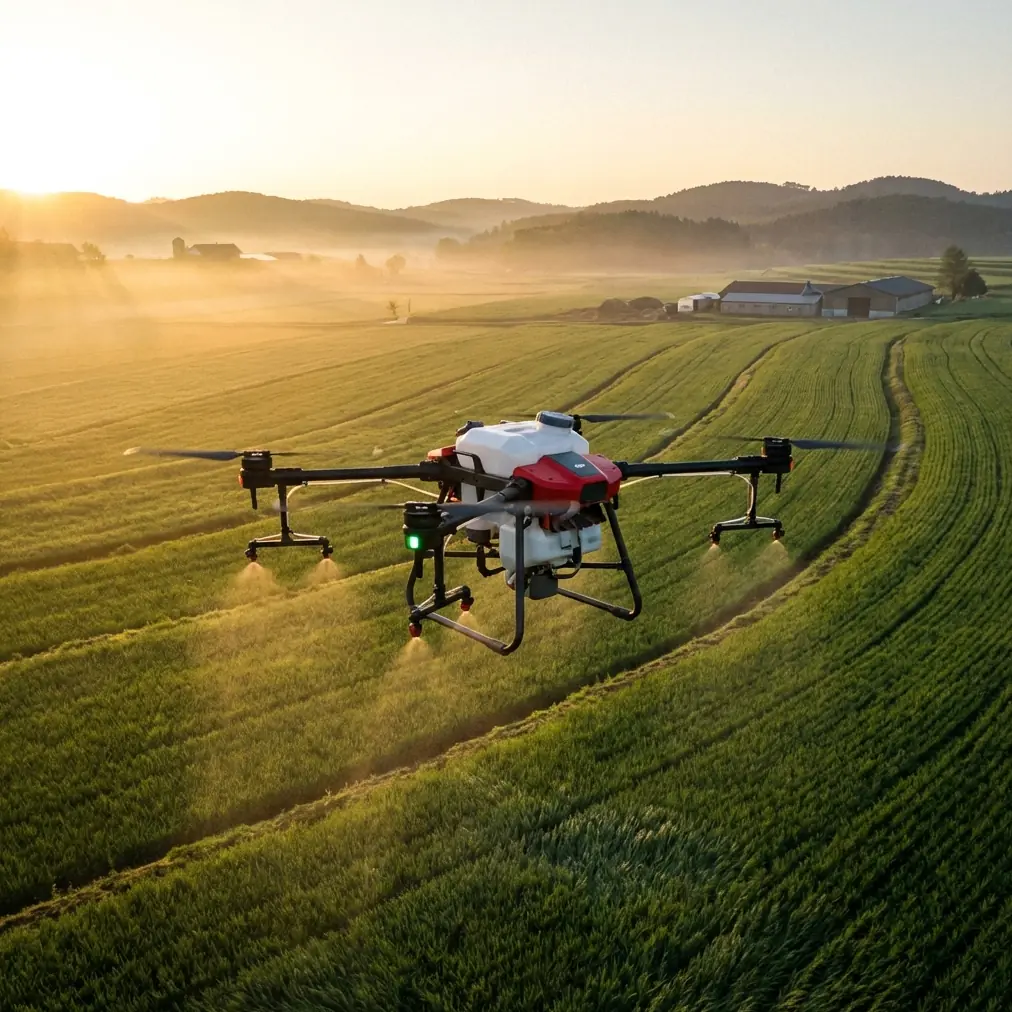
Agras T70P for Urban Solar Farm Spraying: A Practical Field Method That Reduces Drift and Rework
META: Learn a practical, field-tested approach to spraying urban solar farms with the Agras T70P, including drift control, nozzle calibration, RTK precision, route planning, and safety thinking.
Urban solar farm spraying looks simple until you are the one responsible for getting chemical exactly where it belongs and nowhere else.
Panels sit in tight rows. Access lanes are narrow. The site may be surrounded by roads, warehouses, offices, or residential edges. Wind behaves badly around structures. Overspray is not a theoretical concern; it is the job. And if your aircraft loses stability, misses a strip, or creates uneven coverage beneath panel edges, the consequences show up fast in labor, repeat visits, and client confidence.
I’ve worked with operators who came into this segment assuming agricultural spraying habits would transfer directly. They rarely do. Solar sites inside or near urban zones demand a more disciplined workflow, especially around spray drift, positioning, and route consistency. That is where the Agras T70P becomes interesting—not as a generic “big drone,” but as a platform that can simplify a very specific kind of operational headache when paired with the right method.
This article is not a brochure. It is a field framework based on the kind of problems that usually appear on urban solar jobs and the technical principles that actually matter.
Why urban solar farm spraying is a different mission
The first mistake many teams make is treating vegetation control at a solar site like open-field crop work. The environment is more constrained, and the tolerance for error is lower.
Under-panel weeds and perimeter growth create a messy airflow environment. Fencing, inverter stations, parked maintenance vehicles, and nearby buildings can disturb spray patterns. If your swath width looks good in ideal conditions but collapses near panel rows or fence lines, your real application rate is no longer what you planned.
On top of that, urban sites often come with strong expectations around traceability. You need to show where the aircraft flew, how accurately it held line, and why drift risk was managed. “Close enough” is not a professional answer when the nearest non-target surface could be a parked car, a walkway, or a neighboring facility.
That is why centimeter-level positioning and route repeatability matter so much here. If the Agras T70P is being used well, one of its main advantages is not just output. It is controlled placement.
The challenge I remember most
One project still stands out. The site itself was not large, but it was boxed in by urban infrastructure on three sides. The operator had done similar weed control jobs before, yet this one kept producing the same complaint: inconsistent coverage along panel margins and too much caution-induced underapplication near the perimeter.
That combination is common. Pilots pull back to avoid drift, then leave untreated bands. They return for touch-up work, which adds cost and can create overlapping application in nearby areas. The problem is not simply pilot skill. It is the absence of a system built for precision under constraints.
The fix was not flying faster or spraying heavier. It was reworking the mission around three principles:
- predictable route geometry
- verified nozzle calibration
- precise boundary holding
That is where a machine like the Agras T70P earns its place. In urban solar work, consistency beats aggression.
Step 1: Build the site map before you think about liquid
A surprising number of spraying errors begin with poor spatial understanding. Before application planning, you need a usable map of the site, especially where arrays, service paths, drainage cuts, cable runs, and exclusion areas intersect.
This is where drone-based mapping logic becomes operationally relevant. One of the reference materials describes how UAV mapping works: the aircraft captures multiple high-definition images with overlapping edges, then software stitches them into a distortion-controlled model, allowing operators to determine coordinates accurately and generate a 3D map. That matters here because overlapping imagery is not just a cartography concept. It is how you avoid guessing where terrain changes, obstructions, or no-spray buffers actually sit.
The same source also highlights that automated route planning makes drone surveying safer, faster, and more efficient than ground-based or crewed-aircraft methods. For an urban solar site, that translates into something practical: you can prepare flight logic around the true geometry of the installation rather than relying on rough boundary walks and memory.
Even if your Agras T70P deployment is primarily for spraying, the mapping mindset improves outcomes. If a site has elevation variation, irregular row spacing, or utility structures hidden from a simple perimeter inspection, your spray mission should reflect that reality.
A good rule: if you cannot explain the site in layers—arrays, service corridors, hazards, edges, runoff zones—you are not ready to spray it.
Step 2: Use RTK discipline as a drift-control tool, not just a positioning feature
People often talk about RTK fix rate as if it were only about neat flight logs. On urban solar farms, it is much more than that. High-quality positioning is one of the most effective ways to reduce indirect drift problems.
Here is why.
When your aircraft holds lane with centimeter precision, your planned swath width remains meaningful. You are less likely to compensate manually, less likely to wander toward sensitive boundaries, and less likely to create overlap that pushes more product into the air than needed. That means RTK is not just about accuracy on paper. It affects droplet placement, confidence near edges, and how conservatively the pilot needs to fly.
This is especially helpful when you are treating narrow strips between rows or around perimeter fencing. If the pilot trusts the aircraft to repeat lines cleanly, he can focus attention on wind behavior and nozzle performance instead of constantly correcting lateral drift in the flight path itself.
On urban jobs, I tell operators to review RTK behavior before reviewing spray volume. If your fix quality is unstable, application quality usually follows.
Step 3: Calibrate nozzles for the site you have, not the site you wish you had
Nozzle calibration gets lip service in this sector. It should get more respect.
Urban solar farms exaggerate calibration mistakes because panel rows and reflective surfaces can alter local airflow. If your output is even slightly off, the discrepancy appears quickly in the form of striping, runoff, or poor penetration in shaded vegetation zones.
Start with the chemistry requirement and target vegetation, then confirm the nozzle setup supports the droplet profile you actually need. Drift-sensitive sites often tempt teams to go overly coarse and reduce coverage quality. The opposite mistake is chasing thoroughness with a finer pattern that becomes difficult to contain.
The better approach is to calibrate with the site’s constraints in mind:
- actual row spacing
- realistic flight height
- local wind behavior around structures
- desired swath width under operational conditions, not ideal ones
This is where repeatability from the aircraft and discipline from the crew need to meet. A well-calibrated system on a poorly held route still wastes product. A perfectly flown route with poor nozzle output still creates uneven control.
If you are not checking nozzle condition and verifying output regularly, urban jobs will expose that weakness faster than broad-acre work.
Step 4: Plan for reduced drift at the perimeter first
The center of a solar site is rarely where the real risk lives. The perimeter is.
In urban locations, the outside rows often sit closest to public roads, buildings, pedestrian zones, drainage systems, or neighboring operations. You should assume those edges require a different mindset than interior passes.
That means:
- slower, more deliberate edge work
- tighter route offsets
- lower tolerance for marginal wind
- active adjustment of application sequence so sensitive boundaries are treated in the best conditions, not the leftover conditions
I prefer starting edge zones when wind is most stable, then moving inward. That sounds basic, but many operators do the opposite because the center feels easier to “get out of the way.” On urban solar farms, easier should not come first. Higher-risk areas should.
Step 5: Treat safety systems as operational planning, not emergency decoration
One detail from the reference material deserves more attention than it usually gets: the parachute concept as an emergency descent device. The document explains that when a UAV suddenly loses lift or power and cannot maintain balance, an onboard parachute can deploy automatically to slow descent. It also notes why this matters: not only to protect the aircraft and expensive payloads, but to reduce harm to nearby people and property.
That is directly relevant to urban solar spraying.
When you operate around densely managed commercial spaces, emergency descent planning is part of site suitability. The value of a fail-safe concept is not abstract. If something goes wrong over a service lane, panel aisle, or edge corridor near non-target assets, managed descent can drastically change the outcome.
This does not replace proper maintenance, preflight checks, or competent operating procedures. But it should influence your risk model. On urban jobs, every redundancy that lowers impact energy and collateral risk has operational significance.
I also advise crews to think beyond the aircraft itself. Emergency logic should include:
- where the drone would likely descend if propulsion is lost
- whether those zones are clear at launch time
- how ground personnel are positioned relative to likely descent paths
That level of planning separates professional urban spraying from hopeful urban spraying.
Step 6: Respect the microclimate created by the panels
Solar infrastructure creates its own little weather problems. Heat reflection, shaded lanes, abrupt airflow shifts at row ends, and gust acceleration through service gaps all affect application behavior.
This is where many pilots misread wind. A handheld reading from one point on the site may not describe what happens two rows over. If you have ever seen one pass look perfect and the next show edge movement, this is probably why.
The Agras T70P should be flown in a way that acknowledges these microclimates. Keep your route logic simple enough to be repeatable, but remain flexible on application timing. Urban jobs reward patience. If wind starts pushing off-target at exposed edges, stop and reassess. A clean unfinished job is better than a completed problem.
Step 7: Consider multispectral and follow-up inspection as a cost-control layer
Not every solar vegetation job needs multispectral analysis, but in maintenance programs with recurring visits, it can be valuable. The reason is simple: visual weed assessment often lags behind actual regrowth patterns, especially in mixed ground cover around panel bases and drainage channels.
Aerial review helps crews identify where treatment intensity should change, where repeat growth is concentrated, and whether prior passes were uniform. For larger urban portfolios, this turns a spray drone program into a site-management workflow rather than a sequence of one-off treatments.
The goal is not to collect data for its own sake. The goal is to reduce blind retreatment.
Step 8: Work like washdown is part of uptime
On dirty, outdoor utility sites, environmental protection matters as much as performance. An IPX6K-rated platform matters because solar farm work exposes the aircraft to moisture, dust, residue, and regular cleaning cycles. If your workflow includes frequent decontamination between chemicals, sites, or maintenance intervals, durability against high-pressure water ingress is not a luxury feature. It is a practical uptime feature.
That matters even more in urban operations because downtime often means missed access windows, contractor rescheduling, and client disruption.
A practical flight checklist for the Agras T70P on urban solar sites
Before each mission, I recommend a short operational discipline check:
- Confirm RTK fix stability before spraying begins
- Re-verify nozzle condition and output uniformity
- Adjust planned swath width to actual site airflow, not nominal expectation
- Identify sensitive perimeter edges and treat them first if conditions allow
- Mark emergency descent considerations and keep ground crew clear
- Review route automation against current obstacles, parked vehicles, and temporary site changes
- Log any sections likely to need post-flight inspection rather than improvising extra passes in uncertain conditions
If your team wants a second set of eyes on route setup or urban-site spray planning, send the site layout here: https://wa.me/85255379740
What makes the Agras T70P easier to live with on this kind of work
The real value of the Agras T70P in urban solar spraying is not that it makes complexity disappear. It makes complexity manageable.
That difference matters.
When you combine reliable route planning, strong RTK discipline, proper nozzle calibration, and an operator who understands drift at the perimeter, the aircraft becomes a tool for controlled execution rather than a source of new variables. Add in a robust cleaning-ready design and a serious view of emergency descent and the platform starts fitting the realities of commercial utility work.
That is the standard urban solar clients actually care about. Not marketing language. Not headline specs in isolation. They care that the right areas are treated evenly, that neighboring property is respected, and that the work can be repeated predictably across maintenance cycles.
The operators who do well with the Agras T70P are usually the ones who stop thinking about spraying as a single action and start treating it as a chain: map, plan, calibrate, position, apply, verify.
On urban solar farms, that chain is the whole job.
Ready for your own Agras T70P? Contact our team for expert consultation.