
Agras T70P: Mastering Solar Farm Spray Operations
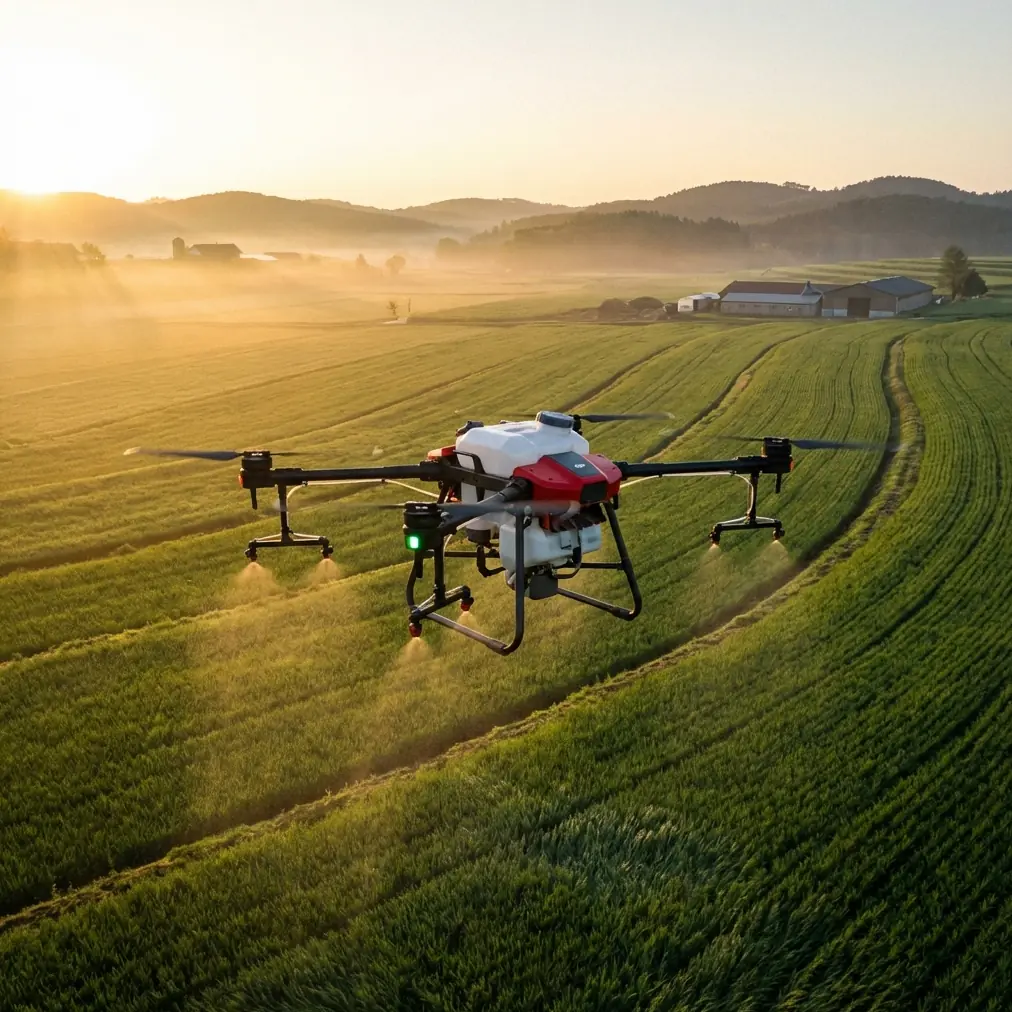
Agras T70P: Mastering Solar Farm Spray Operations
META: Discover how the Agras T70P tackles complex solar farm terrain with precision spraying, RTK accuracy, and intelligent obstacle avoidance for maximum efficiency.
TL;DR
- 70-liter tank capacity enables coverage of large solar installations with fewer refills
- Centimeter-level RTK positioning ensures precise spraying between panel rows without drift contamination
- Omnidirectional obstacle avoidance navigates complex terrain features and wildlife encounters safely
- IPX6K rating allows operations in challenging weather conditions common to remote solar sites
The Solar Farm Spraying Challenge
Solar farms present unique vegetation management nightmares. Panel arrays create narrow corridors where traditional spraying equipment can't operate effectively. Ground-based sprayers risk damaging expensive photovoltaic infrastructure. Manual crews face heat exhaustion and inconsistent coverage.
The Agras T70P addresses these operational gaps with agricultural-grade precision adapted for renewable energy infrastructure maintenance.
This guide breaks down exactly how this platform handles complex terrain spraying, what specifications matter for solar applications, and the operational protocols that maximize efficiency while protecting your investment.
Understanding Solar Farm Terrain Complexity
Panel Array Configurations
Modern utility-scale solar installations feature rows spaced between 3 to 6 meters apart. Fixed-tilt systems create consistent corridors, while single-axis trackers introduce variable gaps throughout the day.
The Agras T70P's swath width adjustability from 4.5 to 11 meters accommodates both configurations. Operators can program flight paths that match specific row spacing, eliminating overlap waste and preventing herbicide contact with panel surfaces.
Topographical Challenges
Solar farms increasingly occupy marginal land—hillsides, former mining sites, and irregular terrain that traditional agriculture rejected. These locations present elevation changes that affect spray drift patterns and application consistency.
The T70P's terrain-following radar maintains consistent altitude within 10 centimeters regardless of ground undulation. This precision prevents the coverage gaps that occur when fixed-altitude drones pass over depressions or risk collision approaching rises.
Vegetation Diversity
Solar site vegetation ranges from invasive grasses requiring broad-spectrum herbicides to native groundcover needing selective treatment. Different plant heights and densities demand adjustable droplet sizes and flow rates.
Expert Insight: Nozzle calibration becomes critical in mixed vegetation environments. The T70P supports multiple nozzle configurations that produce droplet sizes from 50 to 500 microns, allowing operators to match application characteristics to target species and minimize drift risk.
Technical Specifications That Matter
Positioning and Navigation
The RTK positioning system achieves centimeter-level accuracy when connected to base station networks. This precision enables:
- Repeatable flight paths for multi-application treatment programs
- Accurate boundary adherence preventing overspray onto panels
- Consistent swath overlap for uniform coverage
RTK Fix rate stability determines real-world positioning reliability. The T70P maintains fix rates above 95% in open-sky solar farm environments, dropping only in areas with significant electromagnetic interference from inverter stations.
Spray System Performance
| Specification | Agras T70P | Industry Standard |
|---|---|---|
| Tank Capacity | 70 liters | 40-50 liters |
| Flow Rate Range | 6-12 L/min | 4-8 L/min |
| Spray Width | 4.5-11 meters | 4-7 meters |
| Droplet Size Control | 50-500 microns | Limited adjustment |
| Pressure System | Dual pumps | Single pump |
The dual-pump system provides redundancy and enables independent control of left and right spray booms. This feature proves valuable when treating only one side of a panel row or managing asymmetric coverage requirements.
Environmental Protection
Solar farm operations expose equipment to dust, agricultural chemicals, and unpredictable weather. The IPX6K rating protects against high-pressure water jets and heavy rain, while sealed motor compartments prevent particulate infiltration.
Operating temperature range spans -20°C to 45°C, covering the extreme conditions found at desert installations and northern latitude sites.
Real-World Navigation: The Wildlife Factor
During a recent deployment at a 500-acre solar installation in the Central Valley, the T70P's omnidirectional sensing system demonstrated its value beyond obstacle avoidance.
A red-tailed hawk hunting ground squirrels between panel rows triggered the forward-facing radar at 15 meters. The aircraft executed an automatic hover, allowing the bird to complete its dive and depart before resuming the programmed route.
This encounter highlighted how the binocular vision and radar fusion system distinguishes between static infrastructure and moving biological obstacles. The system processes inputs from eight sensors simultaneously, creating a real-time environmental model that informs navigation decisions.
Pro Tip: Program conservative obstacle avoidance distances when operating in areas with known wildlife activity. The T70P allows customization of response distances from 2 to 15 meters, with longer settings recommended for sites near wetlands or raptor nesting areas.
Operational Protocol for Solar Installations
Pre-Flight Assessment
Effective solar farm spraying requires thorough site evaluation:
- Panel height mapping: Document maximum panel elevation at various tracker positions
- Inverter location marking: Create no-fly zones around electromagnetic interference sources
- Access point identification: Plan landing zones for tank refills
- Wind pattern analysis: Schedule operations during low-drift conditions
Flight Planning Optimization
The T70P's planning software accepts CAD files from solar installation designs, enabling precise boundary definition without manual GPS point collection.
Optimal flight patterns for solar applications include:
- Parallel row following: Maintains consistent distance from panel edges
- Headland turns: Minimizes unproductive flight time at row ends
- Variable rate zones: Adjusts application rates for different vegetation densities
- Exclusion areas: Automatically skips equipment pads and access roads
Application Rate Calibration
Spray drift represents the primary contamination risk in solar operations. Herbicide contact with panel surfaces reduces light transmission and may void manufacturer warranties.
Calibration factors affecting drift include:
- Droplet size: Larger droplets fall faster with less horizontal displacement
- Release height: Lower altitude reduces drift exposure time
- Ground speed: Slower speeds allow more precise placement
- Boom pressure: Lower pressure produces larger droplets
The T70P's multispectral camera option enables post-application verification, documenting coverage patterns and identifying areas requiring retreatment.
Common Mistakes to Avoid
Ignoring electromagnetic interference zones. Inverter stations and underground cabling can disrupt RTK signals. Map these areas during site assessment and program appropriate buffer distances.
Operating in excessive wind conditions. The T70P can fly in winds up to 8 m/s, but spray drift becomes unacceptable above 3 m/s for most herbicide applications. Weather station integration helps enforce operational limits.
Neglecting nozzle maintenance. Clogged or worn nozzles produce inconsistent droplet sizes and spray patterns. Inspect and clean nozzles after every 50 flight hours or immediately after using suspension-based products.
Underestimating tank weight effects. A full 70-liter tank significantly affects flight characteristics. Plan routes that account for changing weight distribution as product depletes.
Skipping calibration verification. Flow rates drift over time due to pump wear and nozzle erosion. Conduct catch-cup tests monthly to verify actual application rates match programmed values.
Frequently Asked Questions
How does the Agras T70P prevent spray contact with solar panels?
The combination of centimeter-level RTK positioning and adjustable swath width allows operators to program flight paths that maintain safe distances from panel edges. The terrain-following system maintains consistent altitude, preventing the altitude variations that cause unpredictable spray patterns. Additionally, nozzle selection for larger droplet sizes reduces drift potential.
What maintenance schedule applies to solar farm spraying operations?
Solar environments expose equipment to dust and chemical residue requiring more frequent attention than standard agricultural use. Clean the airframe and sensors after each operation day. Inspect propellers for erosion damage weekly. Flush the spray system with clean water after every flight session. Replace nozzles every 200 flight hours or when calibration tests show deviation exceeding 10% from specification.
Can the T70P operate autonomously across multiple solar farm sections?
The platform supports fully autonomous operation within programmed boundaries, including automatic return-to-home for battery swaps and tank refills. However, regulations in most jurisdictions require visual line of sight maintenance, limiting practical autonomous range. Multi-section operations typically require repositioning the operator and ground station between areas.
Ready for your own Agras T70P? Contact our team for expert consultation.