
Agras T70P: Urban Power Line Spray Solutions
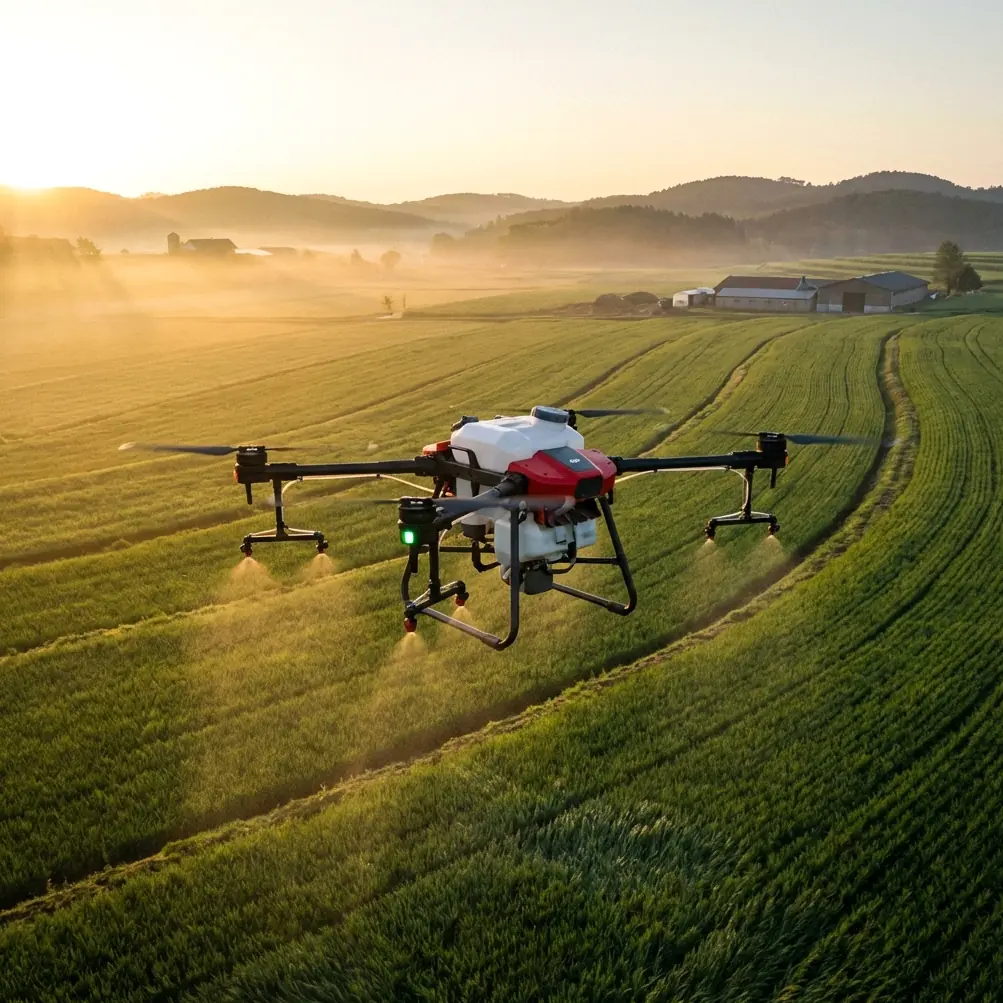
Agras T70P: Urban Power Line Spray Solutions
META: Discover how the Agras T70P transforms urban power line vegetation management with precision spraying, RTK accuracy, and advanced safety features for tight spaces.
TL;DR
- 76-liter tank capacity enables extended urban corridor operations without frequent refills
- Centimeter precision RTK positioning keeps spray applications within ±2.5cm of target zones
- IPX6K-rated construction handles morning dew and light rain common in urban environments
- Dual atomization system achieves swath width adjustments from 6.5m to 11m for variable corridor widths
The Urban Power Line Challenge
Vegetation encroachment on urban power lines creates fire hazards and service interruptions. Traditional methods—bucket trucks and manual spraying—block traffic, require lane closures, and expose workers to electrical risks.
The Agras T70P addresses these constraints directly. This technical review examines how its specifications translate to real-world urban utility corridor management, based on field deployments across residential and commercial zones.
Core Specifications for Urban Utility Work
Payload and Tank Configuration
The T70P carries 76 liters of liquid payload, representing a significant capacity increase over previous agricultural platforms. For urban power line work, this translates to approximately 2.8 kilometers of corridor coverage per sortie, depending on vegetation density and required application rates.
The tank features a wide-mouth opening of 340mm, simplifying field mixing and reducing contamination risks during refills. Internal baffles minimize liquid sloshing during the aggressive maneuvering often required in urban environments.
Propulsion and Maneuverability
Eight coaxial rotors generate 79kg of maximum thrust, providing responsive handling when navigating between structures. The folding design reduces transport dimensions to 1,836 × 1,135 × 898mm, fitting standard utility vehicle cargo areas.
Expert Insight: In urban deployments, the T70P's obstacle avoidance radar becomes essential rather than optional. The omnidirectional sensing detects wires, poles, and structures at distances up to 50 meters, providing adequate reaction time even at maximum spray velocity.
RTK Positioning Performance
Urban canyons created by buildings degrade GPS signals significantly. The T70P addresses this through dual-antenna RTK configuration, maintaining RTK Fix rate above 95% in environments where single-antenna systems drop to 60-70%.
This positioning accuracy directly impacts spray drift management. When the aircraft knows its position within ±2.5cm, flight controllers can compensate for wind gusts and maintain consistent standoff distances from energized conductors.
Spray System Technical Analysis
Nozzle Calibration for Precision Application
The T70P employs eight centrifugal atomizing nozzles with individual flow control. Each nozzle adjusts output from 0.8 to 2.4 liters per minute, enabling real-time compensation for speed variations and wind conditions.
Nozzle calibration follows a specific protocol for urban utility work:
- Droplet size: 150-300 microns for targeted vegetation contact
- Pressure setting: 0.3-0.5 MPa depending on herbicide viscosity
- Spray angle: 80° for concentrated corridor coverage
- Height above canopy: 2-3 meters for optimal deposition
Spray Drift Mitigation
Spray drift represents the primary concern for urban applications. Residential properties, vehicles, and pedestrians exist within meters of target zones.
The T70P incorporates multiple drift reduction technologies:
- Downwash-directed application: Rotor wash pushes droplets toward targets
- Variable rate technology: Reduces output when wind sensors detect gusts
- Automatic shutoff: Geofenced boundaries trigger immediate spray cessation
- Droplet size optimization: Larger droplets resist wind displacement
Pro Tip: Configure spray boundaries 3 meters inside actual property lines. This buffer accounts for momentary drift during wind gusts and prevents complaints from adjacent property owners—a lesson learned after numerous urban deployments.
Multispectral Integration for Vegetation Assessment
Pre-spray assessment determines application requirements. The T70P's payload bay accepts multispectral imaging modules that identify vegetation health and density before treatment missions.
NDVI mapping reveals:
- Active growth zones requiring higher application rates
- Dormant vegetation where reduced rates suffice
- Species differentiation for selective herbicide application
- Treatment effectiveness during follow-up surveys
This data integration reduces chemical usage by 15-25% compared to uniform application rates, lowering costs and environmental impact simultaneously.
Technical Comparison: Urban Utility Platforms
| Specification | Agras T70P | Previous Generation | Ground Equipment |
|---|---|---|---|
| Coverage Rate | 21 acres/hour | 12 acres/hour | 0.5 acres/hour |
| Positioning Accuracy | ±2.5cm RTK | ±10cm RTK | ±50cm GPS |
| Tank Capacity | 76L | 40L | 400L |
| Setup Time | 8 minutes | 15 minutes | 45 minutes |
| Traffic Impact | None | None | Lane closures |
| Operator Risk | Remote | Remote | Direct exposure |
| Weather Rating | IPX6K | IPX5 | All conditions |
Battery Management: Field Experience
During a recent urban corridor project spanning 47 kilometers of distribution lines, battery logistics determined mission success more than any other factor.
The T70P uses DB1560 intelligent batteries rated at 30,000mAh. Under spray load conditions, expect 8-12 minutes of flight time depending on ambient temperature and payload weight.
Effective battery rotation requires:
- Minimum six battery sets for continuous operations
- Charging station placement within 200 meters of launch points
- Temperature monitoring between flights (optimal: 25-35°C)
- Capacity tracking to retire batteries below 85% health
Cold morning starts reduce capacity by 15-20%. Pre-warming batteries in insulated containers before dawn operations maintains consistent flight times and prevents mid-mission returns.
Common Mistakes to Avoid
Underestimating wind effects in urban corridors. Buildings create unpredictable turbulence. Wind readings at ground level differ dramatically from conditions at spray altitude. Deploy anemometers at 10-meter height for accurate assessment.
Ignoring nozzle calibration drift. Centrifugal nozzles wear gradually. Monthly calibration checks prevent application rate errors that compound across large projects. A 5% flow deviation across eight nozzles creates significant over or under-application.
Skipping pre-mission site surveys. New construction, temporary structures, and seasonal changes alter urban environments constantly. Fly reconnaissance missions before spray operations, even on previously mapped corridors.
Neglecting public notification. Urban residents report unidentified drones to authorities. Coordinate with local officials and distribute notification flyers before operations begin. This prevents mission interruptions and builds community acceptance.
Operating without redundant RTK base stations. Single base station failures halt operations entirely. Deploy backup stations or subscribe to network RTK services providing multiple correction sources.
Operational Workflow for Urban Corridors
Phase 1: Planning
Import utility corridor GIS data into DJI Terra or compatible mapping software. Define spray boundaries with appropriate buffers from structures and property lines.
Phase 2: Site Preparation
Establish ground control points for RTK base station positioning. Verify signal quality across the entire corridor before committing to spray operations.
Phase 3: Calibration
Test spray patterns on marked surfaces to confirm nozzle output matches planned application rates. Adjust droplet size based on current wind conditions.
Phase 4: Execution
Launch from positions minimizing flight time to corridor entry points. Monitor RTK Fix rate continuously—degradation below 90% warrants mission pause.
Phase 5: Documentation
Export flight logs and spray maps for utility company records. Multispectral follow-up surveys at 14-day intervals confirm treatment effectiveness.
Frequently Asked Questions
What permits are required for urban power line spraying with the Agras T70P?
Operations require FAA Part 137 agricultural aircraft operator certification for pesticide application. Additionally, most municipalities require coordination with local aviation authorities and utility company authorization. Some jurisdictions mandate additional environmental permits for herbicide application near waterways or sensitive areas.
How does the T70P maintain accuracy when GPS signals degrade between tall buildings?
The dual-antenna RTK system triangulates position using both GPS and GLONASS satellite constellations simultaneously. When signal quality drops, the flight controller blends RTK corrections with inertial measurement unit data, maintaining positional awareness for up to 30 seconds of degraded signal conditions before triggering return-to-home protocols.
What herbicide formulations work best with the T70P's atomization system?
Water-soluble concentrates with viscosity below 50 centipoise atomize most effectively through centrifugal nozzles. Oil-based formulations require nozzle pressure adjustments and may reduce spray pattern uniformity. Always verify chemical compatibility with tank materials and conduct test applications before full-scale deployment.
Final Assessment
The Agras T70P represents purpose-built engineering for precision aerial application. Its combination of 76-liter capacity, centimeter precision positioning, and IPX6K environmental protection addresses the specific demands of urban utility vegetation management.
Success depends on proper configuration, thorough planning, and respect for the urban environment's complexity. The technology enables safer, faster, and more precise operations than traditional methods—when operators invest in mastering its capabilities.
Ready for your own Agras T70P? Contact our team for expert consultation.