
Agras T70P in Windy Highway Spraying: What a 2,524.8
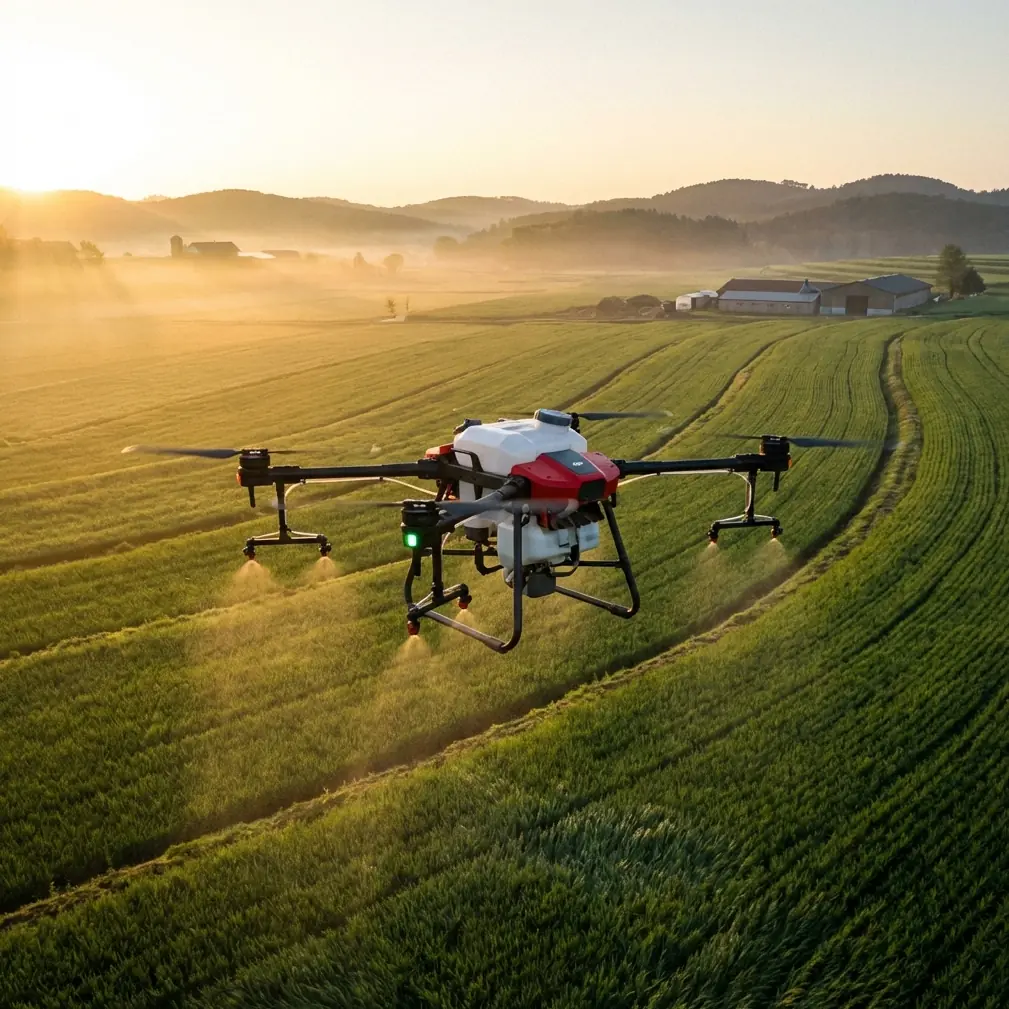
Agras T70P in Windy Highway Spraying: What a 2,524.8-Meter Plateau Flight Test Really Tells Us
META: A field-driven case study on what Yunnan’s high-altitude drone flight tests reveal for Agras T70P operations in windy highway spraying, including drift control, RTK performance, nozzle setup, and battery discipline.
High-altitude drone testing rarely makes farmers, contractors, or road-maintenance teams stop what they’re doing. It should.
A recent trial in Lanping, Yunnan, deserves attention well beyond the official aviation crowd because it answered a practical question that matters to anyone planning to run an Agras T70P in exposed, windy corridors: what still works when the air gets thin, the wind gets mischievous, and payload performance is no longer theoretical?
On February 4, multiple UAV types completed successful test flights at Fenghua General Airport in Nujiang’s Lanping County. That airfield sits at 2,524.8 meters above sea level, making it Yunnan’s first A1-class high-altitude general airport. The organizers did not run a symbolic demo. They put aircraft through meaningful tasks: maximum-weight takeoff, minimum and maximum level-flight speed checks, endurance testing, practical ceiling and hover ceiling evaluation, data-link and video-link demonstrations, detection and positioning, counter-UAS work, and even fire-suppression munition dropping. There had also been 11 days of prior closed testing.
Those details matter because they frame a truth that experienced spray operators already know: if an aircraft family proves stable and reliable in a thin-air, operationally demanding environment, that signal travels. It does not mean every drone is suddenly fit for every mission. It does mean that high-altitude reliability is becoming less of a fringe concern and more of a baseline expectation for commercial UAV work in difficult terrain.
For readers focused on the Agras T70P, especially in a highway spraying scenario with wind exposure, the Yunnan event is not a direct product launch story. It is more useful than that. It is a stress-case reference point. It shows the industry moving toward normalizing UAV performance verification in the exact kind of environment that punishes weak control authority, poor battery planning, sloppy nozzle setup, and unstable positioning.
Why this news matters to Agras T70P operators
Highway spraying is different from broad-acre crop work. The corridor is linear, often elevated, and almost always aerodynamically messy. Wind bends around embankments, cuts across overpasses, accelerates near guardrails, and changes character quickly when a vehicle convoy passes. Add altitude, and you begin to stack penalties: lower air density, altered rotor efficiency, shifting droplet behavior, and battery performance that can look fine on paper and disappointing in the field.
That is why the Lanping test program is relevant. The event included maximum-weight takeoff and endurance demonstrations at 2,524.8 meters. For a spraying platform like the Agras T70P, those are not abstract engineering milestones. They map directly to what operators care about on a windy roadside mission:
- Can the aircraft lift and hold a useful liquid load without becoming sluggish?
- Can it maintain a predictable swath width when the air is unstable?
- Does the control system keep a strong RTK fix rate and flight-path discipline near terrain changes?
- How quickly does battery performance drop off when repeated sorties are flown in thin air?
A successful high-altitude test campaign involving multiple small, medium, and large UAV categories suggests that the operational conversation is shifting from “can drones fly here at all?” to “which mission profile can be executed safely and repeatably here?” That is exactly the lens serious Agras T70P users should apply.
A case study mindset: highway spraying in wind is really a control problem
When clients ask me about the Agras T70P for roadside work, they usually start with tank capacity or area-per-hour assumptions. That is not where the job is won. The real issue is control. Wind control. Droplet control. Energy control.
The Yunnan trial highlighted stability and reliability in an extreme environment. Those two words are often treated as vague marketing language, but operationally they are specific.
Stability means the aircraft can resist external disturbance without requiring constant overcorrection. On a highway edge, that translates to better boom-free spray consistency, cleaner lane-edge targeting, and less variation in application rate when gusts arrive from odd angles.
Reliability means the system behaves predictably over repeated cycles. In spray work, predictability is what keeps nozzle calibration meaningful. If your platform’s speed, height, and lateral tracking vary too much, calibration becomes performative rather than useful. You may think you are applying a controlled volume, but the real deposition pattern tells a different story.
This is where the T70P discussion gets interesting. In windy roadside applications, the aircraft itself is only half the equation. The rest is setup discipline.
Spray drift is the first enemy, not acreage
Anyone spraying along highways in wind should treat drift as the primary constraint. The temptation is to chase throughput. That usually backfires.
At altitude, with thinner air and exposed corridors, droplet behavior can become less forgiving. A wider swath width looks efficient until lateral movement pushes the outer edge off target. That is why a platform like the Agras T70P should be tuned for containment first, output second.
The Lanping test sequence included minimum and maximum level-flight speed evaluation. That detail matters because speed range is not just an aerodynamic statistic. It influences deposition quality. If you are flying too fast in crosswind, droplets spend longer displaced from the intended target band. If you are flying too slow, rotor downwash and environmental gusts can create uneven loading and over-application patches.
For windy highway spraying, a narrower, more controlled swath width often produces better real-world results than a theoretically larger pattern. That sounds less exciting in a brochure. It is far more exciting when the job passes inspection.
Nozzle calibration deserves the same seriousness. A T70P operator working near pavement shoulders, drainage channels, guardrail posts, and traffic-adjacent vegetation should recalibrate around the actual mission environment, not a flat calm-yard assumption. The objective is not to hit a lab-perfect droplet size in isolation. The objective is to maintain a useful droplet spectrum under the aircraft’s real flight speed, real height, and real wind profile.
RTK fix rate is not a checkbox on highway work
One of the quiet lessons from the Lanping event was the emphasis on data-link and positioning demonstrations. In high-value corridor spraying, positioning performance is operational, not cosmetic.
A strong RTK fix rate supports centimeter precision, which becomes especially valuable when you are tracing narrow treatment bands or returning for a second pass along a highway shoulder. If the aircraft repeatedly drifts off the intended line by even modest amounts, overlap and skip patterns start stacking up. On a broad field, that may be tolerable. Along infrastructure, it often is not.
Highway environments can be nasty for signal quality. Terrain, roadside structures, metallic barriers, and changing line-of-sight conditions all take their toll. That is why disciplined operators monitor fix quality as an active metric during the mission, not just before takeoff. If the positioning solution degrades, your spray path integrity degrades with it.
In practical terms, for an Agras T70P job in wind, centimeter precision is only useful if the entire workflow supports it: base station placement, route planning, GNSS awareness, obstacle spacing, and realistic pass widths. The drone can only honor the geometry you give it.
The battery tip I give every field crew
Here is the field habit that saves more spray missions than people expect: rotate batteries by temperature behavior, not just by charge percentage.
Most crews sort packs by state of charge and cycle count. That is necessary, but it is not enough when you are operating in altitude or wind. Thin air changes thermal behavior. Repeated high-load segments during upwind legs can make one pack family sag earlier than another even when the dashboard numbers look similar.
My rule on exposed highway spraying with the Agras T70P is simple: after the first full cycle set of the day, label packs according to observed voltage stability under load, then assign the strongest, most thermally consistent batteries to the windiest route segments or the heaviest opening sorties. Do not waste your best packs on the easiest leg. Save them for the segments where crosswind correction and payload retention demand the most from the system.
A second habit matters just as much. Do not launch immediately after a hot fast-charge turnaround if the mission starts with a long upwind pull. Give the pack a brief stabilization window. In the field, that small pause often produces more consistent output than rushing back into the air. Operators who ignore this usually blame the drone when the real issue is battery management discipline.
If you want to compare notes on field battery routines for corridor work, I’ve shared that process with crews through direct WhatsApp coordination when they are refining windy-route procedures.
What the Lanping test says about mission planning discipline
The Yunnan flights involved a range of aircraft: three small VTOL fixed-wing drones, two medium VTOL fixed-wing drones, and one large multirotor fire-fighting drone. That mix matters because it reflects a serious test culture. The organizers were not validating one niche platform in isolation. They were examining how different configurations behave in a demanding high-altitude setting.
For Agras T70P operators, the lesson is not that a spray multirotor should be compared directly with a fixed-wing aircraft. The lesson is that mission planning has matured. The industry is increasingly testing drones in environment-specific terms: payload stress, altitude margin, communication integrity, endurance under mission load, and task execution in realistic operating envelopes.
That should influence how roadside spraying teams build SOPs.
If your workflow for windy highway spraying does not include route segmentation by wind exposure, battery assignment logic, abort thresholds tied to drift conditions, and nozzle calibration checks after environmental changes, then the aircraft is more advanced than the operation around it. That mismatch causes poor outcomes more often than hardware limitations do.
Where IPX6K thinking fits in
Roadside jobs are rough on equipment. Dust, wet foliage, chemical residue, fine grit from traffic, and washdown cycles all shorten service life when the platform is not maintained with discipline. This is why operators often ask about ruggedization concepts like IPX6K. The rating discussion is useful, but the larger point is operational resilience.
A drone suited to harsh field conditions still needs cleaning intervals, nozzle inspection, connector checks, and seal awareness after every demanding shift. In windy environments, drift and blowback can deposit material in places crews do not expect. That can alter spray performance on the next sortie if not caught early.
The Lanping story centers on stability and reliability under extreme conditions. Reliability is never just what happens during the flight. It is also what the machine looks like on the fifth sortie after residue, dust, vibration, and repeated thermal cycles have had time to accumulate.
Don’t overread the news, but don’t underread it either
The Yunnan test flights were not a public certification of the Agras T70P. They were not a highway spraying trial. And they were not a direct endorsement of any one agricultural platform.
But dismissing the event because it was broader than agriculture would be a mistake.
A successful multi-aircraft high-altitude campaign at 2,524.8 meters, backed by 11 days of prior closed testing, tells us something concrete: extreme-environment UAV operations in China are moving into a more mature phase, where repeatable performance is being demonstrated rather than merely claimed. For Agras T70P users working in windy, high-exposure spraying scenarios, that matters because it raises the standard for what “ready for deployment” should mean.
Not just lift. Controlled lift.
Not just endurance. Useful endurance under correction load.
Not just route automation. Stable route execution when the corridor tries to push the aircraft off the line.
If you are planning to use the Agras T70P for highway spraying in wind, this is the right takeaway from the Lanping news: treat environmental stress as a planning input, not a field surprise. Build your operation around drift containment, nozzle calibration, RTK integrity, battery behavior, and realistic swath width. The crews that do this are the ones that finish with cleaner application bands, fewer rework passes, and much less stress on the machine.
That is what real operational maturity looks like.
Ready for your own Agras T70P? Contact our team for expert consultation.