
Agras T70P in Dusty Forest Spraying: Flight Height
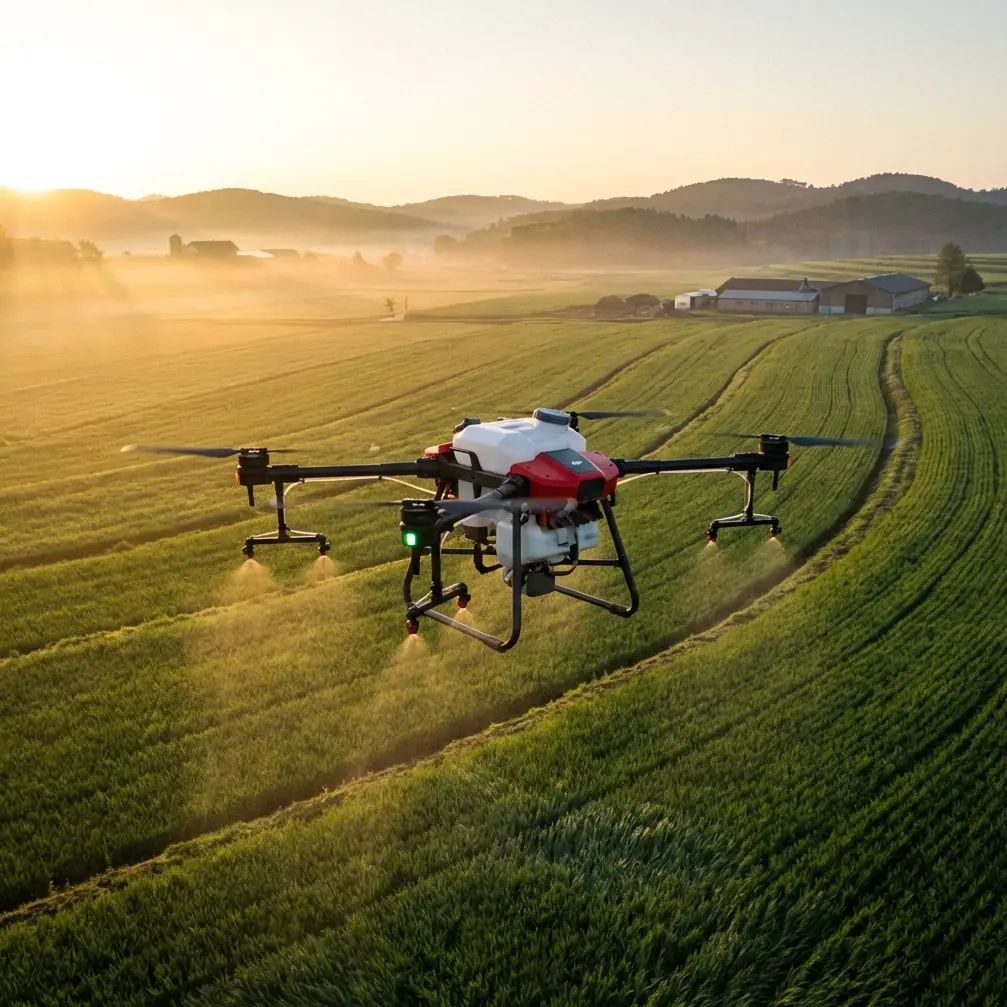
Agras T70P in Dusty Forest Spraying: Flight Height, Control Discipline, and Why the Job Is Never Just About the Drone
META: Practical Agras T70P guidance for dusty forest spraying, with flight altitude insights, drift control, data logging, restricted-area compliance, and operator workflow lessons drawn from current UAV regulation and rail-corridor safety enforcement.
Dust changes everything.
A spray mission that looks straightforward on paper can become unstable the moment a forest track dries out, rotor wash starts lifting fine particles, and visibility begins to soften around the aircraft. For operators considering the Agras T70P for forestry spraying in dusty conditions, the real question is not whether the platform can carry out the task. It is whether the mission design, flight discipline, and compliance habits around the aircraft are strong enough to keep spraying accurate and lawful when the environment starts working against you.
That distinction matters more now than many teams realize.
Recent enforcement activity around railway corridors in China shows how seriously authorities are treating unauthorized drone activity. Railway police have been working with local public security and market-regulation departments to investigate illegal flights near railway lines, and they have gone beyond field patrols. They have also visited drone sales companies and training bases to understand buyer profiles, use cases, and operating patterns. At the same time, they have stayed in close contact with local photography groups and train enthusiasts to identify flying or shooting activity that could affect rail safety.
At first glance, that may seem far removed from a forest spraying operation with an Agras T70P. It is not. If you spray shelterbelts, roadside woodland, forestry plots, or tree lines anywhere near transport infrastructure, your mission planning now sits under a much brighter regulatory light. A dusty forestry job is no longer just an agronomy question. It is also an airspace, traceability, and accountability question.
Why dusty forest spraying is harder than open-field work
Forestry spraying in dust is a compound-control problem. Trees break airflow. Slopes alter the aircraft’s effective height above the canopy. Dust obscures visual references. Fine particles can interfere with the operator’s situational awareness and make it harder to judge drift in real time. Add tall trunks, variable canopy density, and access roads running close to rail or utility corridors, and the operation becomes less forgiving than broad-acre crop work.
This is where the usual simplistic advice—fly lower, slow down, spray carefully—stops being useful.
With a platform like the Agras T70P, the optimal flight altitude in dusty forest conditions is best treated as a controlled compromise rather than a fixed number. In practice, many operators will do better by starting with a moderate canopy-relative height rather than hugging the trees too closely. If you fly excessively low in dust, rotor wash can recirculate loose surface material, contaminate the spray cloud, and reduce the pilot’s ability to monitor edge behavior. If you climb too high, drift risk grows and deposition consistency tends to worsen, especially along canopy shoulders and stand boundaries.
For this scenario, the most sensible operational insight is this: set altitude relative to the target canopy, not the ground track, and avoid the lowest possible pass if it triggers visible dust uplift. In many forest spraying setups, a working band around roughly 2 to 4 meters above the effective canopy target zone is a practical starting point for calibration, then adjusted based on drift behavior, swath continuity, and dust response. The exact number should be validated on site, but the principle is stable: if dust starts rising into the rotor-disc influence and visual quality drops, your “low and precise” profile may actually be less precise.
That is where nozzle calibration and swath width judgment become inseparable from altitude choice. A clean pattern at a slightly higher, more stable pass often outperforms a theoretically tighter pattern disrupted by airborne dust.
The compliance side of forest spraying cannot be an afterthought
The reference materials point to something many commercial operators still underestimate: traceability is becoming operational, not administrative.
Under the trial operating rules for light and small UAVs, users operating in restricted areas must comply with relevant authority requirements and avoid entering restricted zones. For users connected to a drone cloud system, they must follow the platform’s restrictions. For users not connected to such a system, the requirements become even more explicit: they need to understand local restricted-area boundaries through the relevant authorities and must not enter prohibited or unauthorized restricted zones.
This matters for Agras T70P forestry spraying because tree blocks near airports, rail corridors, power infrastructure, or sensitive transport routes may look rural and isolated while still falling inside controlled operating space. Dusty conditions can also compress reaction time. If an operator is already struggling with visibility and terrain management, accidental boundary encroachment becomes more likely.
There is a second detail from the same rules that deserves more attention: for certain UAV categories, the aircraft system must include a flight data recording function for recording, replaying, and analyzing the flight process, and the data must be retained for at least three months. That is not a minor paperwork item. In dusty forest spraying, flight logs become your operational memory when human observation is imperfect. If a customer reports an untreated strip, drift complaint, or suspected off-route deviation, the ability to review path, altitude, speed, and mission timing is the difference between guessing and knowing.
For teams using an Agras T70P in demanding environments, data retention should be treated as a performance tool, not only a compliance requirement. Dust tends to hide small mistakes during the mission; logs reveal them afterward.
Marking, identification, and why this affects real field work
Another rule from the same document is easy to dismiss until something goes wrong: if the aircraft is not connected to a drone cloud system, the UAV body should carry clear identification including model, number, owner, and contact information, so the operator can be quickly identified in the event of a crash.
That sounds basic. In forestry, it becomes very practical.
Dusty conditions increase the chance of degraded visibility during turning segments, obstacle proximity events, or emergency landings on rough access roads. If an aircraft comes down beyond the visual line created by trunks, berms, or scrub, physical identification shortens recovery time and reduces confusion with landowners, contractors, or nearby infrastructure managers. A clearly marked Agras T70P is not just compliant; it is easier to manage in fragmented operating areas where multiple crews, vehicles, and agencies may be present.
The human operator is still the center of the mission
One of the strongest insights in the reference material comes from a study on UAV photogrammetry and inspection in railway catenary engineering. The article argues that even as drones become more intelligent, they still require technicians to create flight plans and control ground-based real-time monitoring systems. It also makes a blunt point: UAVs should not be relied on exclusively. In difficult or urgent situations, a combined human-and-UAV workflow improves efficiency.
That lesson transfers directly to dusty forest spraying with the Agras T70P.
A skilled aircraft can meter liquid accurately, hold a stable line, and assist with terrain-following logic. None of that removes the need for human judgment. Dust changes too quickly. A stand edge can funnel airflow. A dry service road can create localized turbulence and particle plumes. A pilot or field technician has to decide when to pause, when to raise the pass slightly, when to narrow the working swath, and when to stop because the environment is no longer giving the spray cloud a fair chance to land where intended.
This is also why the regulation’s emphasis on controllability matters. The rules specify that the pilot must be able to control the UAV at all times, and if autonomous modes are used, the pilot must be able to override them at any moment. In a dusty forest mission, that is not abstract legal language. It is the operating logic behind every good outcome. Autonomous precision is useful; override readiness is essential.
A practical flight-height workflow for the Agras T70P in dusty forest plots
Rather than hunting for one “perfect” altitude, build a decision sequence.
1. Start with the target, not the terrain
Estimate the effective spray target height within the forest block. Young trees, understory treatment, and outer-canopy application all demand different reference heights. Ground undulation in forests can mislead altitude settings, so treat canopy-relative height as the meaningful number.
2. Run a dust response check
Before full-rate spraying, perform a short test segment. Watch for visible dust lifting into the rotor wash. If fine material rises and lingers, the aircraft is probably too low for the site condition, even if the deposition theory says lower should reduce drift.
3. Tune swath width after altitude, not before
Swath width that works in open plots may fail between tree lines. Dust and interrupted airflow can distort the pattern. Confirm that your chosen height still produces a continuous working band. If not, narrow the swath and re-test.
4. Recheck nozzle calibration under actual field conditions
Nozzle calibration should reflect the fluid, target, and airflow reality of the site. A dusty forest edge can alter how droplets behave after leaving the aircraft. Bench assumptions are not enough.
5. Protect RTK-supported consistency, but do not worship the map
A strong RTK fix rate and centimeter-level positioning are valuable for repeatability, especially when treating narrow corridors or irregular forest blocks. But positioning precision does not solve drift. A perfect line flown at the wrong height in bad dust is still the wrong application.
6. Stop early when visibility quality drops
If dust begins to mask canopy edges, obstacles, or pattern behavior, productivity has already become less valuable than control. The inspection-study reference is right: there are moments when human assessment must overrule the drone’s capacity to keep going.
Dust, restricted areas, and the railway lesson operators should take seriously
The railway enforcement report offers a bigger warning than “do not fly near tracks.” It shows that authorities are mapping the full ecosystem around drone use: where aircraft are sold, who is trained, what buyers use them for, and which communities are likely to operate nearby. Commercial operators should read that as a signal that mission context now matters.
If an Agras T70P team is treating forest belts near railway property, they should assume that local concern over unauthorized flights is high, even if the operation itself is legitimate. That means checking local restrictions before arrival, documenting the mission purpose, and making sure the aircraft’s identification and logs are in order. It also means keeping visual line-of-sight discipline where required and avoiding any casual “just one pass” thinking around corridor edges.
The regulations reinforce that structure. VLOS operations must remain within the visual range of the pilot or observer and must be conducted during daytime. For dusty forest spraying, that is more than a box-tick. Dust naturally degrades visual quality, so a mission that begins within acceptable visibility can drift toward marginal conditions as work progresses. The legal requirement and the safety best practice happen to align.
The best Agras T70P results in dusty forests come from restraint
The operators who usually get the cleanest results are not the ones who chase maximum area per hour at all costs. They are the ones who treat the aircraft as one component in a controlled application system.
They know when to raise altitude slightly to prevent dust recirculation. They know when a narrower swath is the smarter choice. They know why retaining flight records for three months is not bureaucratic dead weight but part of professional accountability. They know that restricted-area awareness is not optional, especially near transport infrastructure. And they know that even advanced UAV operations still depend on technicians making good decisions before, during, and after the mission.
If you are building a forestry spraying workflow around the Agras T70P, that is the mindset worth copying.
For teams comparing setup options, field procedure, or compliance planning for dusty tree-block work, you can message a specialist here and discuss the mission profile in practical terms.
The Agras T70P can be an excellent forestry spraying tool. But in dust, the aircraft only performs as well as the operating discipline around it. Flight height, nozzle setup, RTK consistency, visual control, data logging, and restricted-area awareness all converge in one place: the quality of the decision-maker standing behind the sticks.
Ready for your own Agras T70P? Contact our team for expert consultation.