
Agras T70P in Mountain Fields: A Practical Training
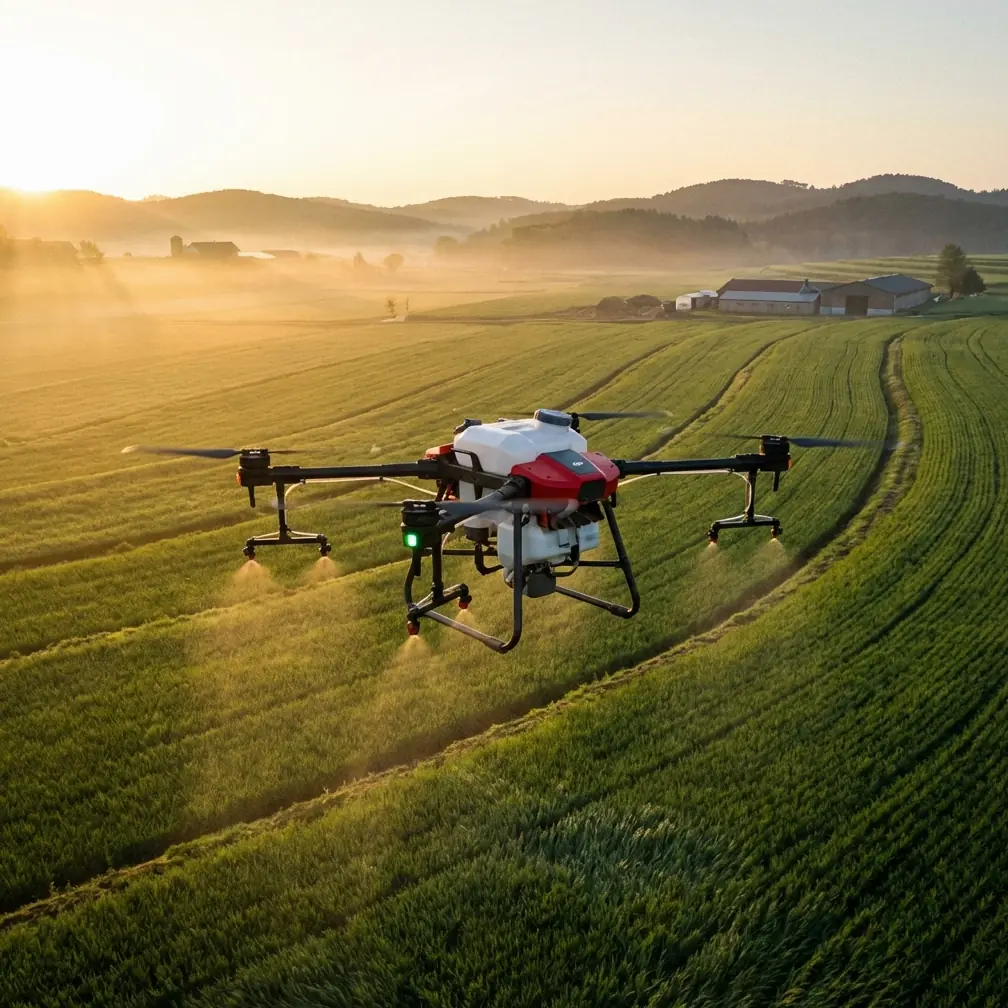
Agras T70P in Mountain Fields: A Practical Training-First Guide for Safer, Tighter Spraying
META: A field-focused expert guide to using the Agras T70P in mountain agriculture, with practical insight on training, nozzle setup, spray drift control, RTK precision, and maintenance.
Mountain spraying exposes every weak habit an operator has.
Flat ground can hide sloppy line planning, poor nozzle calibration, and casual maintenance. Hillsides do the opposite. They exaggerate drift, punish unstable flight paths, and turn small setup errors into skipped rows, crop stress, or wasted liquid. That is why any serious discussion of the Agras T70P for mountain fields should start somewhere less glamorous than payloads or specs: operator training.
A recent drone pilot training program launched in Urumqi offers a useful lens here. The course design combined classroom instruction with live hands-on practice. That matters. For agricultural aircraft, especially in uneven terrain, theory without field repetition is fragile, while field repetition without understanding becomes expensive. The curriculum also focused on four areas that map directly onto real-world T70P performance: plant protection drone flight principles, operating procedures, maintenance, and interpretation of agricultural machinery safety policy. Even the inclusion of machinery retirement and replacement policy is telling. It reflects a maturing operating environment where drone spraying is no longer treated as improvised work. It is becoming a managed agricultural system.
That shift is exactly where the Agras T70P belongs.
Why mountain fields change the way you should think about the T70P
When people ask whether the T70P is suitable for mountain spraying, they often mean one of two things. First, can it physically handle complex terrain? Second, can the crew behind it maintain safe, consistent application quality under those conditions?
The first question is partly about aircraft capability. The second is about discipline.
I learned this years ago while reviewing spraying workflows in hilly orchard blocks and stepped crop plots. On paper, the aircraft had enough capacity and positioning performance. In practice, coverage suffered because crews treated mountainous fields as if they were simply flat fields with more turns. They were not accounting for slope-induced altitude variation, wind channeling through valleys, or the way droplet behavior changes near ridgelines. The drone was capable. The workflow was not.
The T70P makes that workflow easier, but only if the operator uses it as part of a complete system: route planning, RTK reliability, nozzle calibration, maintenance discipline, and policy-compliant operation.
Start where the Urumqi training program starts: flight principles, not just flight controls
The Urumqi course specifically included plant protection drone flight principles, not just stick handling. That distinction matters in mountain agriculture.
A trained T70P operator should understand why terrain changes spray outcomes. On a slope, a “correct” height above takeoff point may be the wrong height above crop canopy. In narrow terraces, swath width can look generous on screen yet leave underdosed margins if the aircraft is tilted by wind or terrain-following adjustments. A pilot who only knows button sequences will miss that. A pilot who understands flight principles will catch it before the tank is half empty.
For mountain fields, flight principles should translate into three habits:
Think in canopy-relative height, not abstract altitude.
The useful measure is the drone’s relationship to the crop surface, because that drives droplet placement and drift risk.Treat swath width as a field variable, not a fixed promise.
In calm and uniform conditions, your planned pass spacing may hold. In mountain terrain, local wind and elevation changes can narrow the effective swath.Read the aircraft’s positioning quality continuously.
Centimeter precision only matters when the RTK fix rate is stable. If correction quality degrades on a steep edge or near obstructions, line repeatability may suffer exactly where overlap control matters most.
These are not abstract academic points. They determine whether the T70P lays down a clean, repeatable application or produces stripes and drift.
RTK discipline is one of the biggest hidden advantages in mountain spraying
In stepped plots and irregular hillsides, route consistency is not a luxury. It is the backbone of application quality.
This is where the T70P’s positioning workflow becomes operationally significant. If you have a strong RTK fix rate and maintain centimeter precision through the mission, the aircraft can repeat lines with far less wandering than crews used to accept as normal. That tighter path control reduces two costly problems in mountain fields: overlap on the inside edge of a contour turn and under-application on the outer edge.
Why does this matter so much on slopes? Because uneven terrain compresses your margin for error. On broad flat acreage, a small lateral miss may go unnoticed. On mountain strips, that same miss can push spray into a ditch line, onto a boundary, or off the target crop entirely.
My advice is simple: before discussing throughput, verify positioning integrity. Do not just assume RTK is “on.” Watch whether the fix remains stable through the trickiest sections of the block. The T70P is most valuable when it holds repeatability where the terrain tries to break it.
Spray drift is the mountain operator’s real exam
Ask experienced plant protection teams what worries them on slopes, and the honest answer is usually not battery swaps or route import. It is drift.
Mountain landscapes generate weird wind behavior. Air can accelerate through gaps, roll over ridge shoulders, or shift direction between the lower and upper half of the same field. That means a T70P operator must actively manage droplet placement rather than simply trust a default setup.
This is where nozzle calibration becomes non-negotiable.
The Urumqi training model included both operating standards and maintenance. That combination is exactly right, because nozzle calibration lives in both worlds. It is an operating task and a maintenance task. If the nozzles are worn, partially obstructed, or mismatched, your spray pattern changes. On a mountain field, that distortion is amplified by topography and wind.
For the T70P, practical nozzle calibration should include:
- confirming even output across all active nozzles
- checking for visible asymmetry in spray pattern
- matching application rate to crop canopy density and terrain complexity
- reassessing settings when moving from open slope sections to sheltered lower areas
You do not need to chase perfection. You do need to eliminate preventable inconsistency.
A surprising number of “drift problems” are actually setup problems. If your droplet spectrum is too fine for the day, your speed too aggressive for the contour, or your swath width too ambitious for the local wind, the aircraft may be blamed for what is really a calibration failure.
The overlooked value of maintenance in a dusty, wet, uneven environment
The Urumqi course did something many short-format drone programs skip: it taught maintenance and upkeep as a core subject.
That is smart. For the T70P in mountain agriculture, maintenance is not a background task. It directly affects spray quality and operational safety.
Mountain fields often involve dust from access roads, moisture from low-lying areas, splash contamination during refilling, and frequent transport in and out of rough terrain. Those conditions put pressure on pumps, nozzles, seals, landing structures, and sensor cleanliness. If the aircraft carries a high environmental protection rating such as IPX6K, that improves resilience during intensive agricultural work, but it does not eliminate maintenance discipline. Ruggedness is not immunity.
The crews who get the best results from platforms like the T70P are rarely the most aggressive flyers. They are usually the ones who perform boring checks consistently:
- inspect nozzles and lines after each spraying window
- clean residue before it dries into partial blockage
- verify frame, arms, and landing gear after rough field handling
- monitor any change in flow consistency or unusual vibration
- log recurring issues instead of treating them as isolated incidents
Maintenance quality shows up in application quality. That connection is stronger in mountain fields than many operators realize.
Safety policy is not paperwork. It shapes field decisions
Another noteworthy detail from the Urumqi program is the inclusion of agricultural machinery safety production policy, along with machinery scrappage and renewal content.
Some readers may see that as administrative filler. It is not.
For operators using the T70P in mountain regions, safety policy affects where you can stage, how you manage refilling areas, what operational standards you should document, and when older support equipment should be retired. It also reinforces the idea that plant protection drones are part of regulated agricultural production, not isolated gadgets.
That has practical consequences. A trained crew is more likely to establish proper pre-flight routines, maintain service records, and identify when a support vehicle, pump, tank, or battery handling process no longer meets safe operating practice. In mountain work, that discipline reduces hurried decisions made on poor access roads or uneven loading points.
The article-worthy point here is not bureaucracy. It is maturity. The ecosystem around agricultural drones is becoming more professional, and the T70P performs best inside that professional framework.
A simple mountain-field workflow for the Agras T70P
If I were advising a new team preparing to spray hillside crops with the T70P, I would not begin with marketing claims or abstract productivity talk. I would begin with a repeatable workflow.
1. Walk the field before route creation
Identify slope breaks, terraces, tree lines, exposed ridge sections, and refill access points. Mountain fields often have micro-zones that require different expectations for drift and swath behavior.
2. Check RTK status before trusting automated precision
Centimeter precision is valuable only when correction quality is stable. If the RTK fix rate is inconsistent, adjust expectations and avoid assuming contour repeatability will rescue a weak setup.
3. Calibrate nozzles for the actual day, not last week’s field
Differences in crop height, canopy structure, wind, and elevation exposure can all justify a change in settings. This is one of the fastest ways to reduce spray drift and improve uniformity.
4. Use conservative swath assumptions first
Start tighter than you think you need, then widen only when coverage quality supports it. On mountain fields, overestimating swath width is one of the easiest ways to create untreated strips.
5. Break the mission into terrain-consistent segments
A single route for an entire mountain block often looks efficient on a tablet and performs poorly in reality. Segmenting upper and lower zones usually produces cleaner results.
6. Inspect and clean immediately after operation
This is especially important after dusty transport or high-residue formulations. Delayed cleaning causes the kind of subtle degradation that operators only notice when performance has already slipped.
The training lesson that matters most for T70P operators
The strongest message from the Urumqi pilot training initiative is not simply that training exists. It is how that training is structured. Theory plus field practice is the right model for agricultural drone work, and mountain operations make the case more strongly than flatland ever could.
An operator who studies flight principle but never calibrates nozzles in the field is incomplete. An operator who has logged many hours but cannot explain drift risk, maintenance intervals, or safety policy is also incomplete. The T70P rewards complete operators.
If your team is building a mountain spraying workflow around this aircraft, I would strongly encourage using that same blended structure in-house: classroom review, supervised practical sessions, maintenance drills, and policy familiarization. It is a better investment than chasing speed before control is mature.
And if you need to talk through a mountain-field setup, route logic, or calibration approach with someone who works on these systems in practice, you can reach out here: message a T70P application specialist.
What made this easier than it used to be
The biggest change is not that agricultural drones can now fly in difficult terrain. They could before, at least in limited ways. The real improvement is that platforms like the Agras T70P fit into a more disciplined operating model.
You now see training programs teaching both flying principles and maintenance. You see more attention paid to safety policy. You see operators talking about RTK fix reliability, spray drift, and nozzle calibration instead of treating all coverage issues as “pilot feel.” That is progress.
For mountain fields, that progress matters. These are environments where every weakness gets exposed quickly. The T70P can make spraying easier, but not by removing the need for judgment. It makes the work easier by giving a trained operator a more controllable, more repeatable platform to manage a difficult job.
That is the real story.
Ready for your own Agras T70P? Contact our team for expert consultation.