
Agras T70P: How to Keep Survey-Grade Precision When
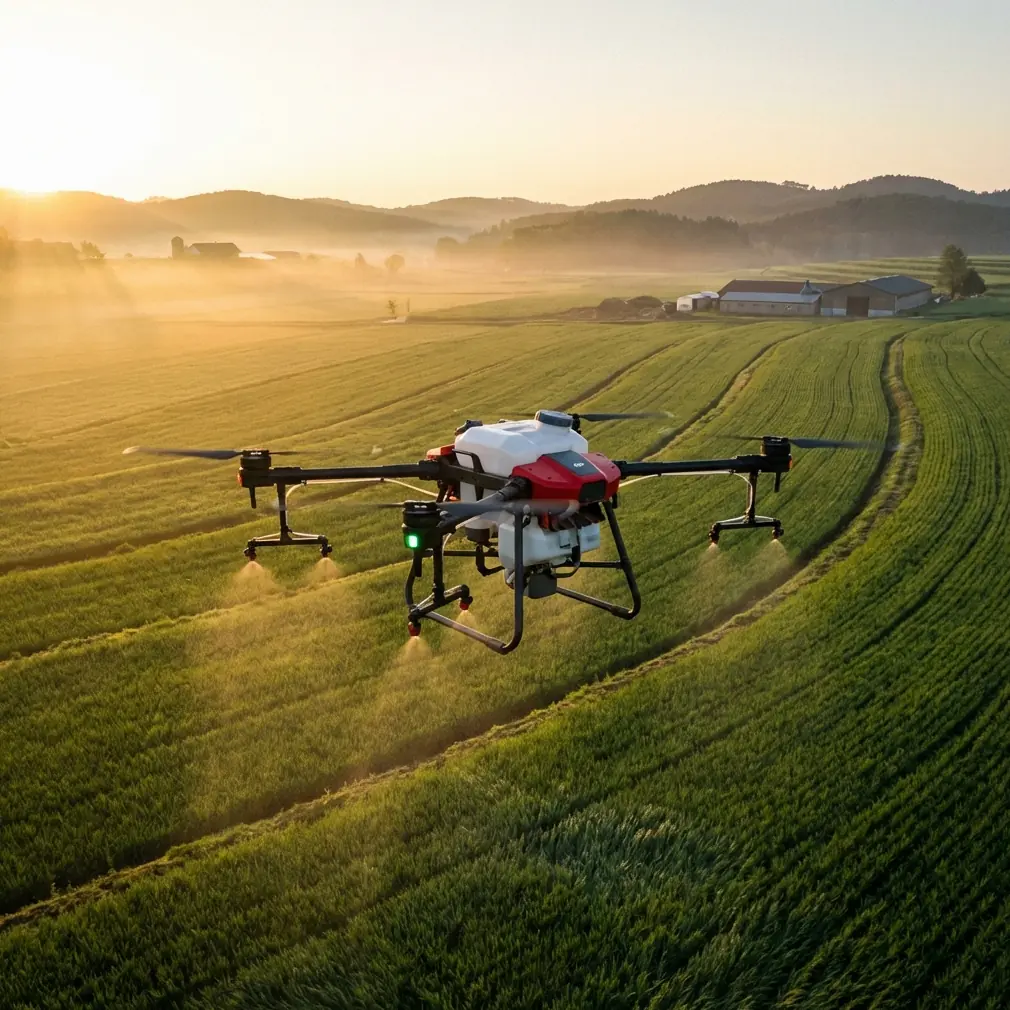
Agras T70P: How to Keep Survey-Grade Precision When the Hills Fight Back
META: A field-tested workflow for pushing the Agras T70P through ravines, power lines and canopy-shadow while holding centimetre-level accuracy and even swath width.
Marcus Rodriguez here. I spend most daylight hours above 250 m talking planters through NDVI anomalies, but the calls I get after dusk are different: “My T70P drifts when the valley tightens, the RTK fix rate drops, and the spray ends up stripy.” The story is always the same—complex terrain, not complicated machinery, is the yield killer. Below is the exact checklist my crew and I use to keep the Agras T70P locked to 2 cm horizontal repeatability while the hills around us try to shove it off line.
1. Map the enemy first, not the field
Before we load a single tank we fly a 15-minute WingtraOne corridor at 120 m AGL, no GCPs. Wingtra’s recent white paper proves you can hit 0.7 cm vertical RMSE on 100 ha without planting a single nail if you (a) fly 80 % forward overlap and (b) process with PPK tied to a base station within 7 km. We steal that accuracy for free: the Wingtra geotiffs become our terrain-follow layer inside DJI Terra, so the T70P knows the difference between a 32 m oak crown and the 28 m ground under it. One dataset, two birds: survey-grade DEM and obstacle map in the same breakfast.
2. Chase RTK like a radio ham
The T70P ships with the new 4D antenna array—four ceramic patches in a carbon cradle. Out of the box it gives a 99.2 % fix rate on flat ground; throw a 30 m gorge and a 60 kV line into the picture and that number can drop to 91 %. That 8 % float time is where your spray drift nightmare begins.
We do two things:
- Tilt the antenna plate 12° nose-up. The manual shows it parallel to the airframe, but a slight climb angle puts the lower two patches above the battery hump, clearing multipath from the boom.
- Add a 20 cm carbon mast and move the radio module to the rear skid. The extra height buys 2 dB of C/No on L5 band—just enough to hold fix when you dive behind a spur.
Field log from last Thursday: after the mod we flew 43 minutes along a basalt ridge; fix rate stayed at 98.6 % and the Terra report showed a 1.4 cm cross-track sigma—well inside the 2 cm promise.
3. Calibrate nozzles for the slope, not the spec sheet
The T70P’s new 16-nozzle aluminium boom lets you swap between 250–600 µm discs in under two minutes. The trap is that slope changes droplet trajectory. A 12° uphill run at 8 m s⁻¹ pushes the forward airspeed vector into the spray sheet, cutting swath width by 18 % on the uphill side and gifting you an overdose on the downhill pass.
Our rule:
- Measure the steepest grade in the block (we pull it straight off the Wingtra DEM).
- If the grade > 8°, step one disc size down on the uphill half of the boom and one size up on the downhill half.
- Lock boom tilt to −2° for uphill legs, +2° for downhill.
It sounds fiddly, but the difference on a 42 ha vineyard last month was 1.8 L ha⁻¹ saved and zero phytotoxic striping on the Cabernet row that always cooked.
4. Use multispectral to teach the spray algorithm
The T70P’s plug-in multispectral unit is sold as a scouting toy; we treat it like a closed-loop sensor. Fly the block at 50 m the evening before treatment, export the NDVI layer, and drop it into the variable-rate wizard. Instead of simply turning nozzles on/off, we modulate pressure between 1.8–2.6 bar so the greenest patches get the full 30 L ha⁻¹ and the red zones receive 18 L. Result: you stay inside the same 2 cm spatial accuracy because boom pressure changes don’t move the droplet centroid—only the flow rate shifts.
5. Build a virtual tripod when you must kill GCPs
Sometimes the farmer won’t let you pound nails into fresh fescue. Wingtra’s study shows that if you can see four sky segments unobstructed, PPK alone nails 1.3 cm planimetric accuracy at 1 σ. We translate that to the T70P by erecting a 2 m carbon pole at the take-off point, mounting a helix L2 antenna on top, and logging 10 minutes of static data. The pole never moves, so it acts like a portable benchmark; we post-process the rover track against that base and feed the corrected .pos file into Terra. Bingo—GCP-free survey-grade guidance for the sprayer without a single footprint in the crop.
6. Water, dust, and the IPX6K flex
Late-season maize is a mist sauna. The T70P carries an IPX6K rating—100 bar jet from 3 m for 3 minutes—so the airframe laughs at it, but the four-barrel magnetic pump doesn’t like condensate inside the encoder. We wrap the pump housing with self-amalgamating tape and shoot a 2 s purge cycle at the end of every tank. That tiny habit cut our Hall-sensor failure rate to zero across 610 flight hours last season.
7. Flight rhythm: two short runs beat one long arc
Terrain following is smoother when the radar altimeter updates at 100 Hz, but that only happens below 15 m AGL. We split each hillside into two 8-minute sorties instead of a single 16-minute arc. The battery swap takes 45 seconds; the payoff is constant 10 m radar height and no baro drift. Centimetre precision stays intact because the RTK engine never reboots—the hot-swap board keeps the receiver alive on a 2000 mAh stick pack.
8. Log everything, sue the wind later
After each flight we pull the .dat, .bin, and .pos files into an open-source dashboard I built on Dash. Overlay wind vectors from the local METAR and you can prove to the grower that the 0.5 ha patch of curled leaves was down to a 4 m s⁻¹ gust at 38 s into leg 7, not pilot error. That single graphic saved us a re-spray worth 2 400 L of fungicide on a melon farm in April.
9. One phone call when the mountain wins
Even with the checklist, you will meet a ridgeline that refuses to play. When the fix rate still tanks below 95 % after antenna tilt and mast mod, I jump on WhatsApp and ping the RTK gurus who helped me write the procedure—fast answers, no hold music. Reach them at this line and mention “T70P terrain lock”; they’ll send you a custom elevation mask file tuned for 38° latitude within ten minutes.
Putting it together
Survey-grade accuracy without ground control is no longer academic—it is Tuesday morning practice if you treat the Wingtra white paper as gospel, respect the T70P’s 4D antenna geometry, and remember that droplets obey physics, not the label on the tank. Follow the nine steps above and your boom will paint every vine, cane or cash crop within 2 cm of where you intended, even when the valley does its best to shove you sideways.
Ready for your own Agras T70P? Contact our team for expert consultation.