
Agras T70P Spraying Tips for Coastal Fields
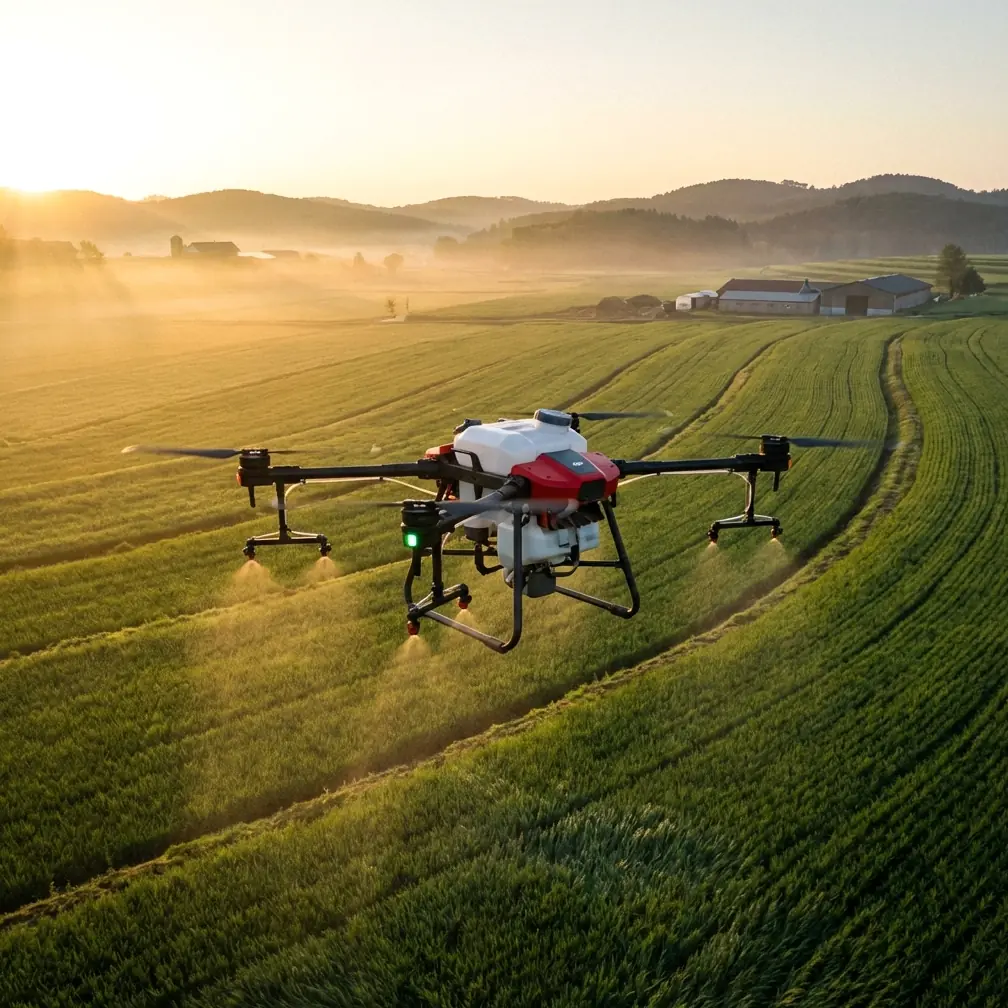
Agras T70P Spraying Tips for Coastal Fields: How to Control Drift, Keep RTK Locked, and Protect Battery Runtime
META: Practical Agras T70P spraying advice for coastal fields, including drift control, nozzle calibration, RTK fix stability, swath planning, and battery management from real field conditions.
Coastal farming exposes a spray drone to a different kind of stress. The issue is not only acreage. It is instability. Wind shifts faster near open water, air carries more moisture, salt finds its way into connectors and frames, and the window for clean, accurate application narrows without much warning.
That is exactly why the Agras T70P deserves a field strategy instead of a generic setup. On paper, the aircraft gives operators what they need for serious agricultural work: high-throughput application, RTK-supported centimeter precision, wide-area coverage, and a build designed for demanding environments. In coastal conditions, though, those features only pay off if the operator adapts the workflow to the environment. Otherwise, the same drone that performs beautifully inland can struggle with spray drift, uneven deposition, and battery inefficiency along exposed field edges.
I have seen this pattern repeatedly with growers and service operators working near estuaries, sea-facing vegetable blocks, and low-lying rice or grain parcels. The aircraft is capable. The weak point is usually the spraying plan.
The real coastal problem: the field changes faster than your checklist
A coastal field can look calm from the truck and still become difficult ten minutes after takeoff. Breeze direction can rotate just enough to push droplets off target. Moisture can alter droplet behavior. Satellite geometry can also feel less forgiving in wide-open terrain when operators rush the mission and fail to confirm a strong RTK fix before starting the run.
For a machine like the Agras T70P, that matters because its productivity depends on repeatable passes. If your swath width is not matched to actual conditions, the aircraft may appear efficient while quietly producing skips or overlap. If your nozzle calibration is off by even a small margin, output uniformity starts to degrade. And if the RTK fix rate is unstable, the result is not just a mapping problem. It becomes an application accuracy problem.
The coastal operator’s first mistake is usually treating the mission as a simple spray job. It is not. It is a stability management job.
Why spray drift gets worse near the coast
Spray drift is often discussed as if it were a one-variable issue caused by wind speed alone. Coastal fields prove otherwise. Wind direction shifts, humidity patterns, and thermal layering can all change how droplets travel and settle. A pass that looked acceptable along the interior of the parcel may become borderline near a canal, levee, or shoreline-facing boundary.
With the T70P, this has direct operational significance because the platform is built for substantial coverage. A wide swath is an advantage only when droplets are landing where they should. In exposed areas, trying to preserve maximum swath width under marginal wind conditions can be the fastest route to reduced efficacy.
A better approach is to treat swath width as a variable, not a fixed promise. If the field edge is taking crosswind, tighten the plan. Give away some theoretical efficiency to gain deposition quality. That trade is usually worth it. A narrower, better-controlled pass beats a broader pass that leaves one side underdosed and the other side overexposed.
This is where experienced operators separate themselves. They do not ask, “What is the widest path this drone can fly?” They ask, “What width can I hold accurately in this air mass?”
Nozzle calibration is not a startup ritual. It is a coastal survival habit.
On inland jobs, some crews get lazy after a few smooth days. They check output less often because the system “was fine yesterday.” Coastal work punishes that attitude.
Nozzle calibration matters more when conditions are inconsistent because every mismatch in flow rate compounds environmental variability. If one side of the spray system is slightly off, coastal crosswinds make the imbalance more visible in the crop response. Small calibration errors turn into visible striping, weak pest suppression, or uneven foliar coverage.
The T70P’s usefulness in this setting depends on disciplined calibration before a serious block is started, and again after any maintenance event, nozzle change, or suspected contamination. Salt-laden air and fine residues can accelerate wear patterns that are easy to miss if you only inspect visually. Do not rely on appearance alone. Verify flow behavior, inspect pattern consistency, and keep an eye on whether the aircraft is maintaining the intended application profile at the selected speed and altitude.
A lot of operators obsess over the aircraft and neglect the liquid delivery side. That is backward. In coastal spraying, the nozzle setup often determines whether the mission succeeds.
RTK fix rate is not a technical footnote
People like to talk about centimeter precision as if it were a marketing phrase. In coastal fields, it becomes a practical advantage only when the RTK fix rate is stable enough to support repeatable line holding.
That has two implications.
First, if you launch before confirming a dependable RTK state, you may save a minute on the ground and lose accuracy across the whole parcel. Small pass-to-pass deviations become more costly when there is wind pressure pushing droplets laterally. Tight navigation helps reduce one part of the error stack. You still need good spray settings, but precise line tracking gives those settings a fighting chance.
Second, unstable correction performance can distort how you evaluate field results. Operators sometimes blame drift or nozzle selection for a coverage issue that was partly caused by poor positional consistency. The cure is not guesswork. The cure is checking the fix quality before and during operations, especially when working long rectangular coastal fields where repeated straight-line accuracy matters.
If your T70P is capable of centimeter precision, use that capability deliberately. Do not just assume it is there because the system powered on.
The value of IPX6K in coastal work, and what it does not excuse
One of the most useful details for coastal operators is the aircraft’s IPX6K protection level. That matters because coastal spray operations are hard on equipment. Fine mist, washdown routines, humidity, and airborne contamination all increase the maintenance burden. A strong ingress-protection rating supports real-world durability in these environments.
But this is where some crews misunderstand the feature. IPX6K does not mean “ignore salt exposure.” It means the drone is better prepared for demanding operating conditions. Salt is still salt. It still accumulates. It still attacks neglected surfaces, fasteners, contacts, and vulnerable components over time.
So yes, IPX6K is operationally significant. It gives the T70P a better foundation for harsh field use. Still, a coastal maintenance routine should include careful post-job cleaning, connector inspection, and disciplined storage practices. Ruggedization expands your safety margin. It does not replace field discipline.
A battery management tip that saves more time than it costs
Here is one habit I recommend to every T70P operator working coastal blocks: do not charge a hot battery immediately after an aggressive spray cycle in humid air.
Let it stabilize first.
That sounds simple, but it changes reliability. In the field, crews often want maximum turnaround. They land, swap, and rush the used battery toward the charger without giving it time to cool and equalize. In coastal conditions, where ambient moisture and heat retention can work together, this habit accelerates stress on the pack and can produce inconsistent performance later in the day.
The smarter method is to build a rotation that includes a short rest window. Land, remove the battery, place it in a shaded and ventilated spot, and log its sequence rather than grabbing whichever pack is nearest. If you are running multiple batteries, avoid cycling the same “strong-feeling” pack too aggressively just because it seems dependable. That is how one battery ends up doing the hardest work all day.
I learned this the hard way on a coastal job where the morning was mild and the midday humidity climbed quickly. The aircraft was flying well, but the battery behavior late in the session became less consistent because the team had prioritized speed over thermal discipline. Nothing dramatic failed. The problem was subtler: reduced confidence, shorter effective windows, and unnecessary decision pressure. Since then, I tell crews to think of battery management as part of spray quality, not just a logistics task.
If you want to compare field setup notes with an operator who works these conditions regularly, this direct WhatsApp line is the easiest place to start: message Marcus here.
A practical coastal spraying workflow for the Agras T70P
If the field sits near open water or catches side wind from a tidal channel, I recommend a problem-solution workflow rather than a fixed recipe.
Problem: wind shifts are creating drift at the outer passes
Solution: Start with conservative edge strategy. Fly the exposed boundaries first while the air is still manageable, or delay those edges if the breeze has already become unstable. Reduce speed or tighten swath width where drift risk is highest. This keeps the most vulnerable zone from being treated with the least control.
Problem: application looks uneven despite normal settings
Solution: Recheck nozzle calibration before assuming the chemical or weather is at fault. Pattern uniformity matters more than most operators admit. If output is slightly unbalanced, coastal air movement magnifies the inconsistency.
Problem: repeatability drops across long runs
Solution: Verify RTK fix quality before resuming. The T70P’s centimeter precision is not just a nice specification. It directly supports cleaner overlap control and more dependable placement under marginal wind conditions.
Problem: the aircraft is handling the field, but equipment wear seems to accelerate
Solution: Treat IPX6K as a resilience benefit, not a maintenance exemption. Clean after every coastal session. Dry thoroughly. Inspect spray-path components, mounting points, and electrical interfaces before the next sortie.
Problem: productivity falls off in the second half of the day
Solution: Audit battery rotation and cooling time. In many cases, the aircraft is not the limiting factor. The workflow is. A battery plan with rest intervals often restores more real productivity than pushing each pack harder.
Where multispectral thinking fits, even if the spray mission is the main event
Not every T70P operator uses multispectral data directly, but the mindset behind it is valuable in coastal agriculture: stop treating the field as uniform. Coastal blocks often have invisible variability tied to salinity pressure, drainage differences, and exposure. If part of the field consistently behaves differently, your spray plan should reflect that reality.
Even without a separate multispectral workflow in every job, the operator who thinks in zones makes better decisions. Different canopy density, different disease pressure, different airflow behavior, different risk. Once you accept that, the T70P stops being just a large-capacity sprayer and becomes a precision tool for variable field conditions.
That shift in mindset matters. It leads to smarter pass planning, more realistic swath choices, better refill timing, and fewer avoidable misses.
What coastal operators should expect from the T70P
The Agras T70P is well suited to demanding agricultural spraying, but coastal success depends less on headline capability and more on operational discipline. The aircraft’s RTK-backed centimeter precision helps keep passes repeatable. Its IPX6K protection level supports work in wet, washdown-heavy environments. Its high-throughput design can cover ground efficiently. Yet none of those strengths cancel out the realities of spray drift, unstable edge conditions, nozzle wear, or poor battery rotation.
That is the central lesson.
For coastal fields, the best T70P setup is not the most aggressive one. It is the one that stays accurate when conditions become slightly unfriendly. The operators who get the best agronomic results are usually not the ones pushing the broadest swath or the fastest turnaround. They are the ones who calibrate often, watch the air closely, confirm RTK stability, and treat battery temperature as part of mission planning.
If you spray near the coast, precision is not a luxury feature. It is the margin that keeps a productive day from turning into a corrective one.
Ready for your own Agras T70P? Contact our team for expert consultation.