
Spraying Remote Coastlines with the Agras T70P
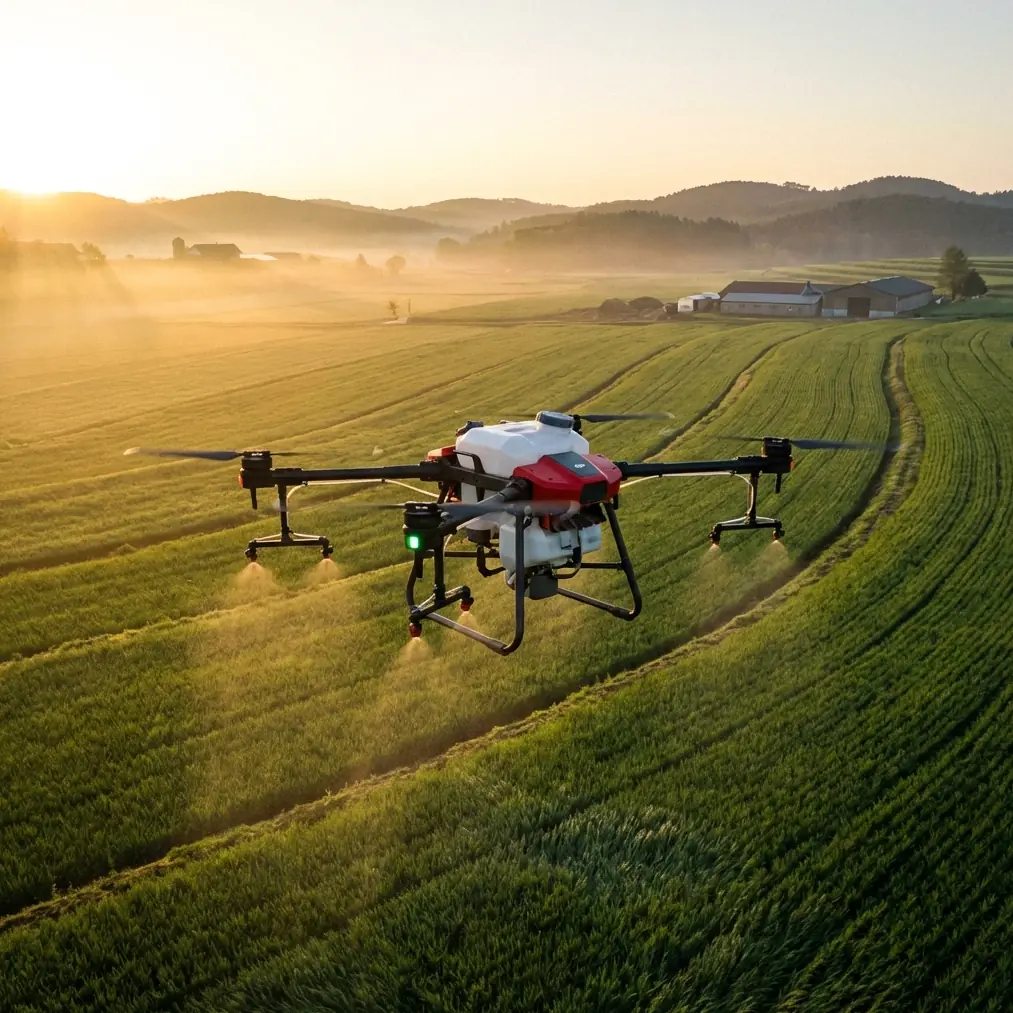
Spraying Remote Coastlines with the Agras T70P: Flight Height, Redundancy, and Detail That Actually Matters
META: A practical field guide to using the Agras T70P for remote coastline spraying, with focus on flight altitude, drift control, obstacle sensing limits, redundancy, and precision setup.
Remote coastline spraying is where polished marketing claims meet salt, wind, uneven terrain, and very little margin for error. The Agras T70P, on paper, looks built for demanding agricultural and vegetation-management work. But along shorelines, success depends less on headline capacity and more on how you manage three things at once: flight height, drift, and system reliability.
That is the real story here.
Coastal work is a different animal from spraying a flat inland block. You may be treating vegetation bands along access roads, embankments, drainage edges, aquaculture perimeters, or erosion-control planting zones. The ground profile changes quickly. Wind direction shifts. Visual depth can be deceptive because water and sand flatten your perception. In those conditions, the “best” altitude is not a fixed number pulled from a brochure. It is an operational choice shaped by drift risk, canopy target, and what the aircraft can and cannot sense.
The first priority: fly low enough to keep the spray where it belongs
If you are spraying coastlines in a remote area, the default instinct should be conservative flight altitude. Not reckless low flight, but disciplined low flight. The reason is simple: every extra meter between the nozzles and the target gives coastal wind more time to move droplets sideways.
That matters because shoreline environments often create crosswinds and gusts that arrive in layers. A height that feels acceptable over compact inland vegetation can become too high once sea breeze starts shearing the spray plume. In practice, the optimal flight altitude for the T70P in this scenario is usually the lowest stable height that still preserves safe terrain clearance and consistent swath coverage. For many shoreline vegetation jobs, that means treating altitude as a calibration variable, not a static setting.
If the target is short, sparse vegetation or linear strip growth, lower passes generally reduce spray drift and improve deposition uniformity. If the target is taller brush or irregular coastal planting, the aircraft may need a modest increase in height to preserve swath width and avoid clipping obstacles. Either way, altitude should be validated against nozzle output and droplet behavior, not guessed.
This is where nozzle calibration becomes more than a maintenance task. It is the bridge between planned application rate and actual field deposition. If your nozzles are not delivering consistently, changing altitude will not rescue the job. It may only spread the error over a wider area.
Why obstacle sensing is not the same as guaranteed clearance
Coastline operators often overestimate what the aircraft will “see” for them. That is risky.
One of the most useful reference points in the provided material comes from a DJI educational document discussing forward TOF sensing. It explains that when a forward-looking TOF distance sensor is mounted higher on the aircraft, an obstacle located below the sensor’s detection line but at propeller height can still interfere with flight. That detail is easy to miss, but operationally it is huge.
Translated into T70P field logic: a sensor can have a blind geometry relative to the actual physical envelope of the aircraft.
Along remote coastlines, this shows up in practical ways. Think of cable runs, branch tips, fence posts, trellis fragments, marker poles, irrigation risers, or angled driftwood snagged at the edge of access tracks. An object may sit low enough or at such an angle that the sensing system does not interpret it early in the way the pilot expects, yet it is still high enough to contact landing gear, arms, prop wash zone, or spray hardware.
That is one reason I recommend a slightly more conservative flight profile during reconnaissance than during the actual spray run. The survey pass is where you identify “sensor-awkward” obstacles. In a remote coastal environment, you should not assume all hazards are cleanly detectable just because the aircraft has obstacle-avoidance hardware.
A practical rule: if you need the sensor suite to save a poorly planned path, your path was wrong to begin with.
The best altitude is the one that matches the target and the wind layer
When operators ask for a single best flight height, what they usually want is a shortcut. Coastline work punishes shortcuts.
Here is a field-ready way to think about altitude on the T70P:
1. Start with the target, not the aircraft
Short grasses, weed bands, mangrove-edge regrowth, and low coastal cover usually reward lower altitude because it tightens droplet placement and limits off-target movement. Taller or uneven vegetation may require a higher pass to maintain coverage consistency across the canopy.
2. Watch the wind where the droplets travel
The wind reading at takeoff point is not enough. The relevant layer is the air between nozzle exit and plant surface. On coastlines, that layer can behave differently from the wind felt by the crew. Sea breeze often accelerates over open strips and then tumbles near embankments or vegetation edges. If drift becomes visible, reducing altitude is often a better first correction than pushing speed.
3. Re-check swath width after altitude adjustments
Lower altitude generally improves drift control, but it can narrow the effective swath width. That may sound inefficient, yet a slightly narrower, cleaner swath is usually preferable to a wider pass with uneven edge deposition. Precision beats apparent productivity when rework is difficult.
4. Treat RTK performance as part of the altitude decision
The scenario references RTK fix rate and centimeter precision. Along remote coastlines, both matter because the job often follows long, narrow treatment corridors. If the T70P is holding strong RTK status, repeatability improves and overlap control gets sharper. That lets you run tighter lines with more confidence. If fix stability degrades, you may need to slow down and widen your practical safety margin, especially near exclusion edges or water boundaries.
Centimeter-level positioning is not just about elegant maps. It directly affects how much untreated strip or overspray you leave behind.
Remote coastline spraying is really a reliability exercise
The second major reference detail worth unpacking is redundancy.
The source material describes how capable drones may use dual backup architecture in key systems such as battery, IMU, barometric altitude sensing, and signal transmission. It also gives a blunt but necessary caveat: redundancy improves reliability, but it does not eliminate risk, and failures are not always independent.
That point deserves more respect in agricultural drone operations.
For a coastline mission with the T70P, redundancy matters because remote jobs amplify the consequences of interruption. Recovery access may be poor. Salt-laden air is harder on equipment. Communication conditions can be inconsistent near bluffs, vegetation corridors, or sparse infrastructure. If a platform uses dual battery redundancy or backup communication paths, that is not just a spec-sheet comfort blanket. It can be the difference between a controlled return and an incident that strands equipment in a difficult location.
But the caution matters too. A backup system is not a free pass to fly into avoidable risk. The educational document explicitly notes that redundant systems can share vulnerabilities; one fault event can trigger broader problems. In plain terms, do not confuse “redundant” with “invulnerable.”
For shoreline spraying, that means:
- inspect power-system health before every coastal mission
- avoid pushing operation into stronger-than-planned wind just because the aircraft is robust
- keep route design simple where recovery options are limited
- reduce exposure to salt spray and perform post-flight cleaning promptly
Reliability is not only built into the aircraft. It is built into the operator’s restraint.
A useful analogy: image resolution and spray resolution
One of the provided news items was about smartphones labeled at 100 million pixels but set by default to output roughly 12 million pixel images through pixel binning. The reason is convenience: faster imaging and lower storage demand. The tradeoff is loss of fine detail, especially when zooming into distant signs or plant textures.
That has a surprisingly relevant lesson for T70P operators.
In spraying, there is a similar temptation to run “default coarse mode” in the field: fly a little higher, move a little faster, trust broad coverage, and assume the result will be good enough. It often looks fine from a distance. Then you inspect the margins and discover the details are soft: skipped patches on the windward edge, weak deposition on low targets, over-application near overlap zones, or drift beyond the intended treatment line.
Just as a phone’s default 12 MP output can hide the missed detail until you zoom in, a coastline spray mission can hide weak application quality until the site is inspected closely. The lesson is the same. Convenience settings are not always quality settings.
On the T70P, “full resolution” in operational terms means giving attention to the small variables: nozzle calibration, actual droplet behavior, RTK fix quality, and flight altitude relative to canopy and wind. Those details determine whether the aircraft performs like a precision tool or merely an efficient one.
A practical T70P setup sequence for remote coastline work
If I were briefing a team for this exact scenario, I would use a sequence like this.
Recon the route before loading for the main run
Identify poles, low branches, uneven berms, fence sections, and any objects that may sit below the most obvious sensor line but still intrude into the aircraft’s path. Pay special attention to obstacles at propeller height.
Verify positioning quality
Do not begin precision shoreline work until RTK status is stable enough to support repeatable corridor flying. Narrow coastal strips punish lateral error.
Calibrate nozzles and confirm flow consistency
Nozzle calibration is not optional in drift-sensitive zones. If one side is underperforming, your overlap corrections will never look right.
Start at a conservative low altitude
Begin with a low, stable height suitable for the target vegetation. Observe drift and canopy penetration. Raise only if coverage geometry demands it.
Adjust speed after altitude, not before
Altitude changes affect droplet travel and swath behavior more directly than small speed changes. Tune the big variable first.
Watch for changing wind layers near water edges
A run that is clean inland may drift once it parallels open water. Reassess at every section change.
Build in a reliability margin
Remote coastal jobs are not the place to finish the battery to the edge or stretch communication comfort. Leave room for contingencies.
If you want a second opinion on route planning or parameter setup for a specific site, a quick field discussion can save a lot of wasted chemical and rework; this is the kind of case where a direct WhatsApp check-in is genuinely useful: message a T70P application specialist.
What experienced operators usually get right
The best T70P operators on coastline work do not obsess over a single magic altitude. They think in layers.
They understand that lower flight usually helps control spray drift, but only if nozzle output is right. They respect obstacle sensing, but they do not assume sensors perceive every hazard that matters to the aircraft’s physical footprint. They value redundant systems, yet they still fly as if every backup has limits.
And they inspect the result with the same discipline they use to plan the flight.
That last part matters. A remote coastal strip can look uniformly treated from 30 meters away and still have visible inconsistency once you walk it. If deposition quality near the edges is poor, the correction is rarely “spray more.” It is usually “fly cleaner”: better height, tighter path control, truer calibration.
The real takeaway for Agras T70P coastline spraying
If you are using the Agras T70P on remote coastlines, the smartest altitude is usually a deliberately low one, chosen to minimize droplet drift while preserving safe clearance and complete coverage. That decision becomes stronger when paired with good RTK fix quality, careful nozzle calibration, and a route planned around the limits of obstacle sensing.
Two reference details sharpen this point. First, a TOF sensor mounted higher on the airframe may not fully account for obstacles that sit below its detection geometry but still threaten the aircraft at propeller level. Second, redundancy in batteries, IMU, barometric sensing, and communication improves reliability, but it does not erase system-level risk. Together, those facts argue for a coastal operating style that is precise, conservative, and detail-oriented.
That is how the T70P earns its keep in difficult shoreline conditions: not by brute-force productivity alone, but by disciplined application quality.
Ready for your own Agras T70P? Contact our team for expert consultation.