
Agras T70P in Low-Light Coastal Spraying
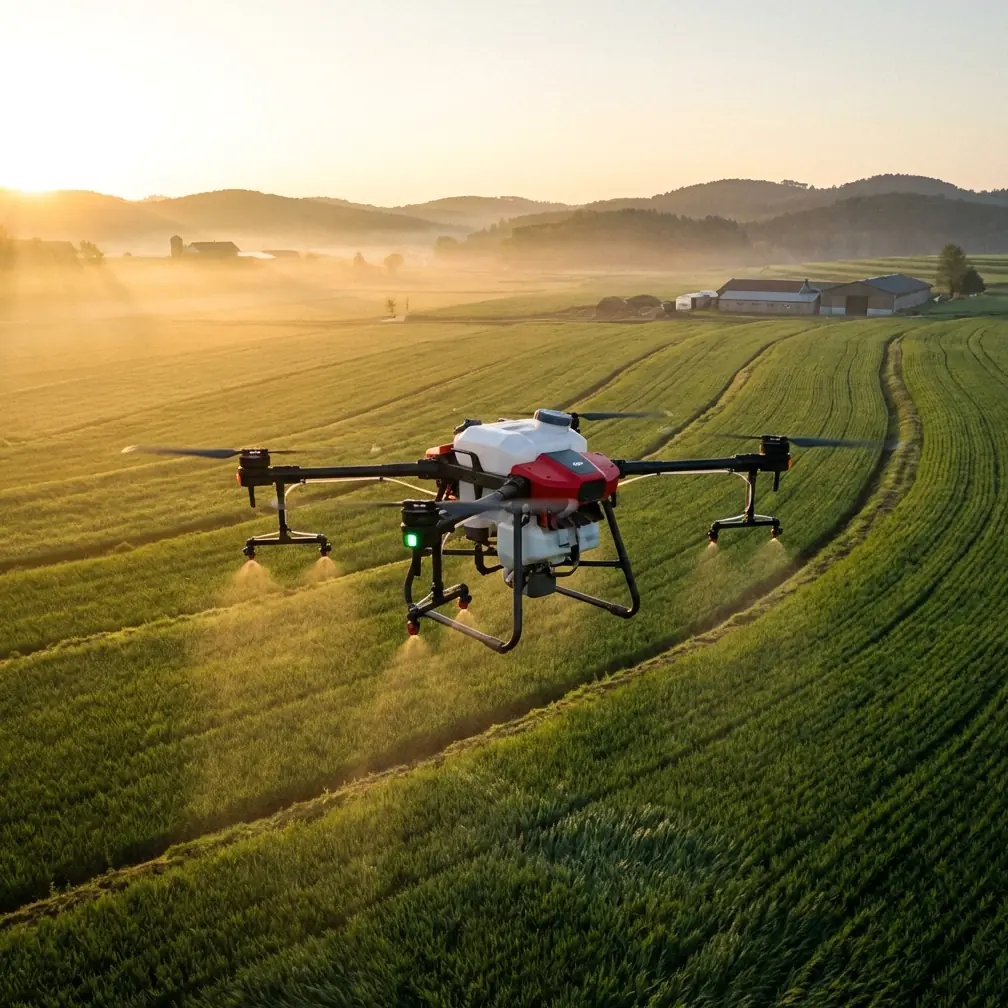
Agras T70P in Low-Light Coastal Spraying: A Field Report on Clean Starts, Stable Flight, and Operational Discipline
META: A field-style expert analysis of Agras T70P low-light coastal spraying, covering pre-flight cleaning, spray drift control, flight data retention, aircraft marking, and why heavy-lift stability matters in real agricultural operations.
Low-light spraying along a coastline sounds simple until the aircraft is on the pad and the details start to matter. Salt in the air. Fine dust on the frame. Damp residue collecting around spray components. A narrow weather window before sunrise. This is exactly the sort of operating environment where an Agras T70P is judged less by brochure language and more by whether the crew’s habits are strong enough to keep the aircraft predictable.
That is the lens of this field report.
The most useful place to begin is not in the air, but on the ground, with a maintenance step many teams rush through: cleaning. One of the clearest principles from general drone care guidance is that regular maintenance protects the aircraft’s condition, and the first priority is keeping dust and dirt from invading the body and critical parts. That sounds basic. In a coastal spraying scenario, it becomes operationally decisive.
Salt mist and dirt are not merely cosmetic contaminants. They interfere with connectors, moving assemblies, exposed surfaces, and any area where residue can accumulate after repeated spray missions. On an agricultural platform like the Agras T70P, that has direct consequences for nozzle consistency, system reliability, and the crew’s confidence in the aircraft when visibility is limited. In low light, there is less margin for spotting a developing issue in real time. A pre-flight cleaning step is therefore not about tidiness. It is about preserving the integrity of the aircraft before the mission starts.
Why the T70P conversation starts with payload dynamics
The reference material on the UAV sector makes an important point that maps directly onto the T70P class: aircraft that must fly with load demand more from flight control, stability, and cruise capability than mainstream drones. That difference creates a real technical barrier. For an agricultural aircraft, this is not abstract engineering theory. It shows up every time a spray tank is filled, every time the machine accelerates into a pass, and every time it has to hold a line in variable air near open water.
Coastal fields often generate micro-changes in airflow that inland operators underestimate. Before sunrise or near dusk, the air can feel calmer, but local movement can still shift droplet behavior and aircraft posture. A heavy-lift spray drone must remain stable not only to stay on track, but to maintain an even application pattern across its swath width. If the platform’s control behavior is inconsistent under load, spray drift worsens, overlap becomes uneven, and edge rows near the coastline can receive the wrong dose.
That is why the T70P should be understood first as a loaded aircraft, not just a smart one. The real question in low-light coastal spraying is whether the platform can maintain repeatable flight while carrying its working mass through a changing environment. The significance of the sector research is that loaded UAVs are a technically distinct category for a reason. Operators who treat them like ordinary camera drones usually discover the difference the hard way.
The pre-flight cleaning step that protects safety features
For this kind of mission, I recommend crews build a specific cleaning sequence into every launch cycle. The source material emphasizes that drone designs differ and cleaning methods are not identical from model to model, but common tools and habits still apply. That is a practical reminder for T70P operators: do not use a generic routine copied from another aircraft. Use a model-aware inspection and cleaning flow.
What does that mean in the field?
Start with the areas most likely to affect safe, accurate agricultural work:
- spray nozzles and related plumbing surfaces where residue can alter atomization
- arms, landing gear, and body seams where dirt and salt film collect
- connectors, covers, and exposed fittings that need to remain free of contamination
- sensors and positioning-related surfaces that must not be obscured before low-light operation
This is where the “narrative spark” behind a pre-flight clean becomes very real. Safety features only help if the aircraft can sense, communicate, and respond correctly. A dirty airframe is not just a maintenance issue. It can compromise the chain that supports stable control, position awareness, and predictable spraying.
On a mission near the coast, even a small amount of grime can matter because spraying itself creates another layer of residue. Each sortie adds material. Each landing gives it time to settle. If crews skip cleaning during a busy workday, minor buildup becomes cumulative, and cumulative buildup is what starts turning routine flights into troubleshooting sessions.
Low light changes the discipline, not the fundamentals
There is a temptation to think low-light spraying is mainly about visibility. It is partly that, but the bigger issue is procedural discipline. The operating rule set for light and small civil UAVs offers several principles worth applying here.
One is the requirement to avoid restricted areas and comply with relevant authorities. Another is that the operator must remain able to control the aircraft at all times, including when autonomous functions are in use. A third is that flight data recording systems should support recording, playback, and analysis, with records preserved for at least three months for applicable categories. These are not bureaucratic side notes. They are part of how professional agricultural operations protect continuity and accountability.
For a T70P crew spraying coastlines in low light, those rules matter in several ways.
First, coastal work can place crews closer to sensitive airspace, transport corridors, or other controlled areas than they realize. The reference material explicitly states that users not connected to a drone cloud system must understand how restricted areas are defined and must not enter prohibited or unapproved zones. Operational significance: route planning cannot be treated as a last-minute task. Before sunrise missions especially, the team needs a confirmed work area, a verified line of advance, and clear awareness of boundaries that may be harder to visually interpret in dim conditions.
Second, the requirement that pilots must be able to control the aircraft at any time is highly relevant for spray runs that rely on automation. Automation reduces workload, but it does not remove pilot responsibility. In low light near a coastline, sudden wind changes, people entering adjacent ground areas, or unexpected air traffic cues can force an immediate stop. The rule is simple: autonomy is a tool, not a substitute for command authority.
Third, retaining flight data for at least three months is one of the most underappreciated habits in agricultural drone operations. It matters for post-mission analysis after suspected spray drift, route deviations, unstable behavior, or application inconsistencies. If a crew notices that one block received a less even pattern than expected, archived flight data helps separate agronomic factors from piloting factors and hardware factors. In other words, data retention turns one awkward morning into a learnable event instead of a recurring mystery.
Marking the aircraft is not paperwork theater
Another reference detail deserves more respect than it usually gets: for users not connected to a drone cloud system, the aircraft body should carry clear identification including model, number, owner, and contact information so that, in the event of a crash, the operator can be quickly identified.
That requirement has obvious compliance value, but the operational significance for a T70P working remote or coastal fields is broader. Agricultural work often happens across dispersed plots, temporary staging areas, and edge-of-property access points. If an incident, forced landing, or equipment separation event occurs in marginal light, recovery can slow down fast. Clear physical identification shortens confusion, speeds communication, and supports responsible field operations. It also reflects a mature safety culture. Teams that label aircraft well usually document better, brief better, and recover from anomalies better.
In practical terms, identification is part of readiness, not an afterthought. A professional spray platform should be traceable as a matter of routine.
Spray drift in coastal work: the T70P question that matters most
The reader scenario here is coastal spraying in low light, so the central agronomic concern is drift. Drift is affected by droplet formation, nozzle condition, aircraft speed, altitude consistency, local airflow, and pilot judgment. Several of the LSI topics around the T70P fit naturally into this discussion, especially nozzle calibration, swath width, centimeter precision, and RTK fix rate.
Even without relying on manufacturer claims not present in the source set, the logic is straightforward. If nozzle calibration is off, the aircraft can fly a perfect path and still produce poor application. If the swath width assumption is too optimistic for the conditions, the operator creates untreated gaps or compensates with wasteful overlap. If positioning precision degrades, edge management becomes sloppier, which is especially costly near shorelines, drainage edges, or irregular field boundaries.
This is where disciplined maintenance and compliant operations come together. A clean spray system supports accurate nozzle output. Stable loaded flight supports a consistent pass profile. Strong positional confidence supports repeatable spacing. Archived flight records support post-job verification. None of these pieces replaces the others.
Crews who want cleaner results in low light should stop asking only, “Can the drone fly this block?” The better question is, “Can the aircraft, the spray system, and the operating procedure all stay consistent enough to control drift at this time of day and at this location?”
That is the real T70P standard.
The wider market context explains why crews are under pressure
The industry material also gives useful context for why agricultural UAV operations are becoming more demanding. In China alone, one company was reported to have covered 500,000 mu of work in Xinjiang, while the broader agricultural market was framed against an immense 1.8 billion mu scale. Whether one focuses on exact regional economics or not, the message is clear: agricultural drone work is no longer experimental. It is scaling.
As operations scale, informal habits become expensive. A crew can get away with rushed cleaning, vague recordkeeping, or loose route discipline for a while. But once the number of sorties climbs, the cost of inconsistency compounds. Small defects become schedule delays. Minor drift events become customer disputes. Weak logs become unanswerable questions.
The same source also discusses logistics and the appeal of moving small items under 2 kilograms, noting that 86% of Amazon’s online purchases fall below that weight threshold. While that statistic belongs to a different UAV segment, it still tells us something useful about the broader drone market: payload-specific operations create specialized aircraft categories. Agricultural spraying is one of those categories. The T70P belongs to a class where load handling, control stability, and mission discipline are not optional refinements. They are the product.
A practical field rhythm for T70P low-light coastal sorties
If I were structuring a coastal low-light spray day around these reference principles, the rhythm would look like this:
- Confirm airspace and field boundaries before setup. Restricted-area awareness should be settled before rotors spin.
- Inspect and clean the aircraft with emphasis on contamination-prone surfaces. Dust, grime, and salt are mission variables, not housekeeping issues.
- Check nozzle condition and calibration logic. A clean aircraft with a poor spray system still produces poor agronomy.
- Verify control readiness and operator authority over automated functions. The pilot must always be able to intervene.
- Fly with conservative assumptions on drift and edge passes in changing coastal air. Low light is not the time for optimistic margins.
- Retain and review flight data. Three months of record retention is not merely compliance language; it is an operational memory system.
- Maintain clear aircraft identification. If something goes wrong away from the launch point, traceability matters immediately.
That sequence is not glamorous, but it is exactly the kind of discipline that separates a reliable T70P operation from an erratic one.
Where expert support actually helps
The T70P conversation often gets dragged toward specifications in isolation. Operators compare figures, then discover their real bottlenecks are workflow and consistency. In low-light coastal spraying, the aircraft is only one part of the outcome. The rest is process: cleaning routines, route planning, nozzle management, data practices, and pilot decision thresholds.
If your team is refining those procedures and wants a second set of eyes on mission planning or operational setup, you can message a field specialist here.
The stronger the process, the more the aircraft can do what it was built to do.
Final assessment
The Agras T70P makes the most sense when viewed through the realities of loaded agricultural flight. The source material points to two truths that matter deeply here. First, drones carrying working loads demand stronger flight control and stability than mainstream UAVs. Second, disciplined maintenance begins with protecting the aircraft from dust and dirt, using model-appropriate cleaning and care.
Add the regulatory layer—restricted-area awareness, direct controllability, flight data retention for at least three months, and clear airframe identification—and a complete picture emerges. Low-light coastal spraying is not just a hardware exercise. It is an operations test.
A clean aircraft, a calibrated spray system, a stable loaded platform, and a crew that documents and controls every sortie: that is the formula that gives the T70P real value in the field.
Ready for your own Agras T70P? Contact our team for expert consultation.