
Agras T70P for Mountain Vineyards: Why CAAC Licensing
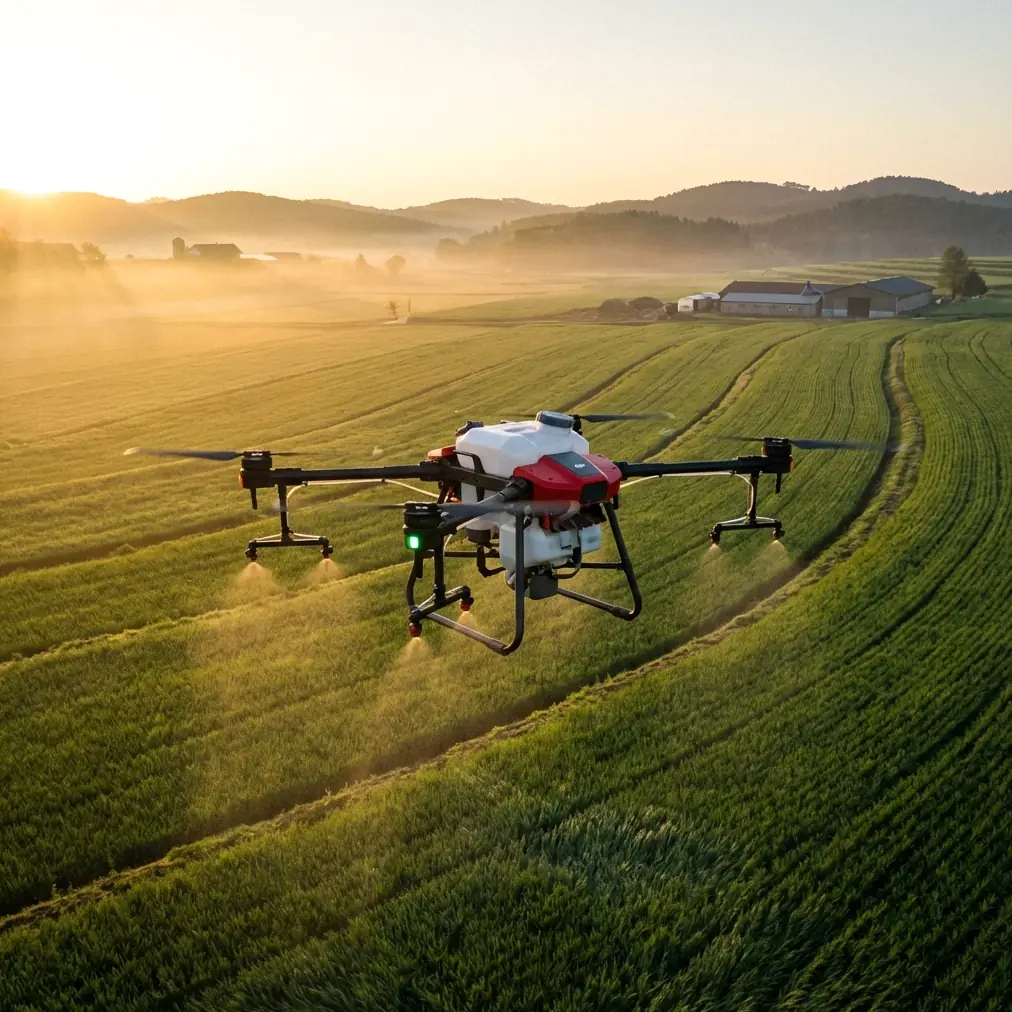
Agras T70P for Mountain Vineyards: Why CAAC Licensing Matters More Than Specs Alone
META: A field-based expert tutorial on using the Agras T70P in mountain vineyards, with practical insight on spray drift, RTK precision, weather changes, nozzle setup, and why CAAC licensing now shapes real operational limits.
Mountain vineyards expose every weakness in an agricultural drone program.
Slope changes alter altitude relative to the canopy. Wind funnels through rows unpredictably. Narrow access roads make field logistics slow. A pilot may start a mission in calm air and, twenty minutes later, find the weather shifting just enough to affect droplet behavior and route confidence. In that setting, the Agras T70P is not simply a machine choice. It is part of a larger operating system that includes pilot qualification, risk control, and the ability to keep work legal and insurable when conditions stop being textbook.
That is where many discussions around the T70P miss the real story.
People often want to talk first about payload, spray volume, or route efficiency. Those matter, especially in vineyards where swath width and nozzle calibration have to match canopy geometry rather than flat-field assumptions. But if you are scouting or planning T70P work in mountain vineyards in China, the harder limit is often not hardware. It is operator status. The CAAC unmanned aircraft operator license has become a practical gatekeeper for who can legally fly, who can take on commercial work, and who can continue operating as low-altitude economic activity moves into a stricter regulatory phase.
For a grower, service company, or academic field team, that changes the decision framework.
The T70P in vineyards is a precision tool, not a broad-acre template
Vineyards in mountainous terrain reward restraint. A drone that performs beautifully in open farmland can become wasteful or inconsistent if the operator treats a terraced vineyard the same way. Row spacing varies. Canopy density changes by block. Edge effects are stronger. Spray drift is not theoretical; it is operationally visible. You see it when fine droplets move sideways into adjacent rows or dissipate before reaching the target zone.
With the Agras T70P, the central question is not whether the platform can fly the mission. It is whether the mission has been structured around the biology of vines and the geometry of the site.
That begins with nozzle calibration. In vineyards, calibration is not just a maintenance box to tick before takeoff. It determines whether your droplet spectrum aligns with canopy penetration goals or creates unnecessary off-target movement. If weather changes mid-flight, calibration choices become even more consequential. A setup that looked acceptable at launch can become marginal once a crosswind begins building along a slope.
I have seen this play out during mountain block scouting: the first pass runs cleanly, the RTK fix remains stable, the aircraft tracks rows well, and coverage appears uniform. Then cloud cover shifts, valley wind picks up, and suddenly the operator has to decide whether to continue, modify the flight profile, or stop. In those moments, the T70P’s value is tied less to headline capability than to how intelligently the pilot responds.
A weather shift mid-flight reveals the real operating standard
Imagine a late-morning mission in a mountain vineyard. Conditions are initially manageable. The aircraft establishes centimeter-level positioning through RTK, helping it hold a consistent line along uneven rows. That matters because in vineyards, especially on slopes, a small positional error is not abstract. It changes canopy distance, overlap, and effective deposition. The difference between acceptable and sloppy application can be measured in very small deviations.
Halfway through the task, the weather turns. Not dramatic. No storm front. Just enough change to matter: wind speed rises, air movement becomes less predictable near the ridge, and the operator notices the beginning of drift at row edges.
This is where a disciplined T70P workflow earns its keep.
A capable operator does not rely on the drone to “power through.” They reassess swath width, confirm whether the spray pattern still matches the canopy, and determine whether row-by-row consistency remains acceptable. In some cases, the right choice is to reduce exposure by narrowing the operational envelope. In others, it is to pause the job altogether.
That decision is not only agronomic. It is regulatory and professional.
The recent industry discussion around CAAC licensing makes this plain: the CAAC unmanned aircraft operator license is no longer a nice credential to have on paper. It has shifted from an advantage to a threshold for legal flight and industry access as regulation tightens. For commercial agricultural drone operations, including plant protection work, that distinction matters because mountain vineyards are exactly the kind of environment where judgment, documentation, and standardized training separate a professional mission from a risky one.
Why the CAAC license now shapes the ceiling of T70P operations
The CAAC license is issued by the Civil Aviation Administration of China as the official national qualification for civil unmanned aircraft operators. That official status is not symbolic. It gives the license legal standing that informal training certificates do not have.
The reference material highlights three levels: visual line-of-sight pilot, beyond-visual-line-of-sight operator or captain, and instructor. Those tiers are operationally significant for T70P vineyard work.
A mountain vineyard is rarely a simple “fly what you can always see comfortably from one flat spot” environment. Terrain, row curvature, obstacles, and elevation change can complicate line of sight quickly. Depending on how the mission is structured, the distinction between line-of-sight and higher-level operational authority is not academic. It affects who can lead the mission, how the work is planned, and what kinds of jobs a team can confidently undertake.
The source also notes that the CAAC credential is nationally searchable and valid nationwide. For service providers working across different provinces or agricultural regions, that nationwide usability matters. Vineyard service work is seasonal and mobile. Teams often go where the crop calendar leads. A nationally recognized license reduces friction when projects span multiple areas and when growers or partners ask for verifiable credentials.
There is another layer that professionals should not ignore: the source frames the CAAC license as recognized across regulatory, enterprise, insurance, and judicial contexts. In plain terms, if something goes wrong in a commercial operation, documented official qualification carries weight well beyond the training classroom. In agriculture, where operations happen around crops, labor, neighboring plots, and changing weather, that matters far more than many buyers realize when comparing drone options.
The T70P buyer in vineyards should think like an operator, not a gadget enthusiast
If you are evaluating the Agras T70P for vineyard scouting or plant protection, your first question should not be “What is the maximum performance?” It should be “Who will operate it, under what certification level, and how will decisions be made when conditions degrade?”
That mindset changes procurement and deployment in useful ways.
It pushes you to build standard operating procedures around spray drift thresholds rather than relying on ad hoc judgment. It leads you to document nozzle calibration for different growth stages and canopy densities. It encourages route planning that respects mountain airflow rather than assuming a single swath width is efficient everywhere. It also forces realism about staffing. A strong drone program is not one skilled pilot and a machine. It is a system with licensed operators, repeatable workflows, and escalation rules when weather or terrain introduces uncertainty.
The CAAC reference is valuable here because it captures a broader industry shift: with low-altitude economic activity expanding and oversight becoming stricter, official licensing is becoming an entry requirement, not a bonus. In practical vineyard terms, that means your T70P’s operating ceiling is set partly by the person behind the mission and the license class they hold.
RTK fix rate and canopy accuracy: where paperwork meets agronomy
At first glance, licensing and RTK performance seem unrelated. They are not.
A mountain vineyard is one of the clearest examples of why technical precision and operator competency must be paired. High RTK fix stability supports centimeter-level route repeatability. That can help maintain reliable spacing from the canopy, improve overlap control, and reduce waste when returning to blocks for repeat treatments or close scouting passes. But RTK data alone does not decide whether a mission is still agronomically sound after wind changes.
A licensed, properly trained operator is the one who interprets that data in context. They know that a strong fix rate does not eliminate spray drift. They understand that path accuracy cannot compensate for a poor nozzle choice. They recognize when topography creates turbulence that the mission plan did not fully capture.
That distinction is easy to miss in marketing-heavy conversations. Vineyards expose it immediately.
IPX6K and durability are useful, but they are not the lead story
For mountain work, durability matters. Agricultural drones operate around moisture, dust, chemical residue, and constant transport stress. A protection rating such as IPX6K is relevant because vineyard operations are rarely clean-lab environments. The aircraft has to tolerate difficult field realities.
Still, environmental protection should be understood as enabling reliability, not replacing operational discipline. A robust airframe can help the T70P stay dependable through long field days, but it does not solve regulatory compliance or mission judgment. If weather shifts mid-flight, the fact that the drone is rugged does not automatically mean the flight should continue.
That may sound obvious, yet it is one of the most common blind spots in real adoption. Buyers overestimate hardware resilience and underestimate the role of licensed decision-making.
A practical workflow for mountain vineyard T70P missions
For teams preparing to use the Agras T70P in vineyards, a sensible field workflow looks something like this:
1. Start with licensing and role definition
Identify whether the planned missions fit within visual line-of-sight operations or demand a higher level of operational authority. The CAAC framework matters because it defines who should lead, supervise, and document the work.
2. Calibrate for vines, not for generic agriculture
Nozzle calibration should reflect canopy structure, target coverage, and expected weather window. The right setup on a flat orchard edge may not be right on a narrow terraced block.
3. Validate RTK performance where terrain actually challenges it
Do not assume a strong fix in the staging area will behave identically along the full slope. Check route confidence in the parts of the vineyard where elevation change and row orientation are most likely to stress consistency.
4. Use swath width conservatively
The widest theoretical coverage is rarely the smartest choice in mountain vineyards. Narrower, cleaner passes often outperform ambitious settings once drift risk enters the picture.
5. Build mid-flight weather decision points into the mission
A changing wind field should trigger a predefined reassessment. This is where licensed professionalism becomes visible in practice.
6. Keep records that stand up outside the field
Because the CAAC license is an official, nationally recognized qualification, operations built around it are easier to defend when clients, insurers, or partners want proof of competence. That is a business asset, not just an administrative detail.
If you need a field discussion around vineyard workflows and operator readiness, this direct line can help: message a T70P specialist here.
The real lesson from the current CAAC shift
The most useful takeaway from the licensing reference is not simply that the CAAC credential exists. It is that the market has changed around it. The source makes clear that, as regulation tightens, the license has become a hard threshold for legal operation and industry participation. It also points out that the same framework is relevant across sectors such as mapping, power inspection, logistics, aerial imaging, emergency response, and agricultural plant protection. Agriculture is not an exception to this trend. It is part of it.
For the Agras T70P, that means one thing above all: the drone’s practical value in mountain vineyards depends on whether the operator ecosystem around it is mature enough to match the aircraft.
A well-run T70P program can handle difficult rows, maintain precise routes, adapt when weather shifts, and protect crop outcomes through careful calibration. A poorly structured one may still have excellent hardware and still fail where it matters most.
That is why the smartest vineyard buyers now assess two capabilities at once. They evaluate the drone. Then they evaluate the legitimacy and readiness of the people who will fly it.
In 2026 and beyond, that second question may be the one that determines how far your operation can actually go.
Ready for your own Agras T70P? Contact our team for expert consultation.