
Scouting High-Altitude Cotton Venues with the Agras T70P
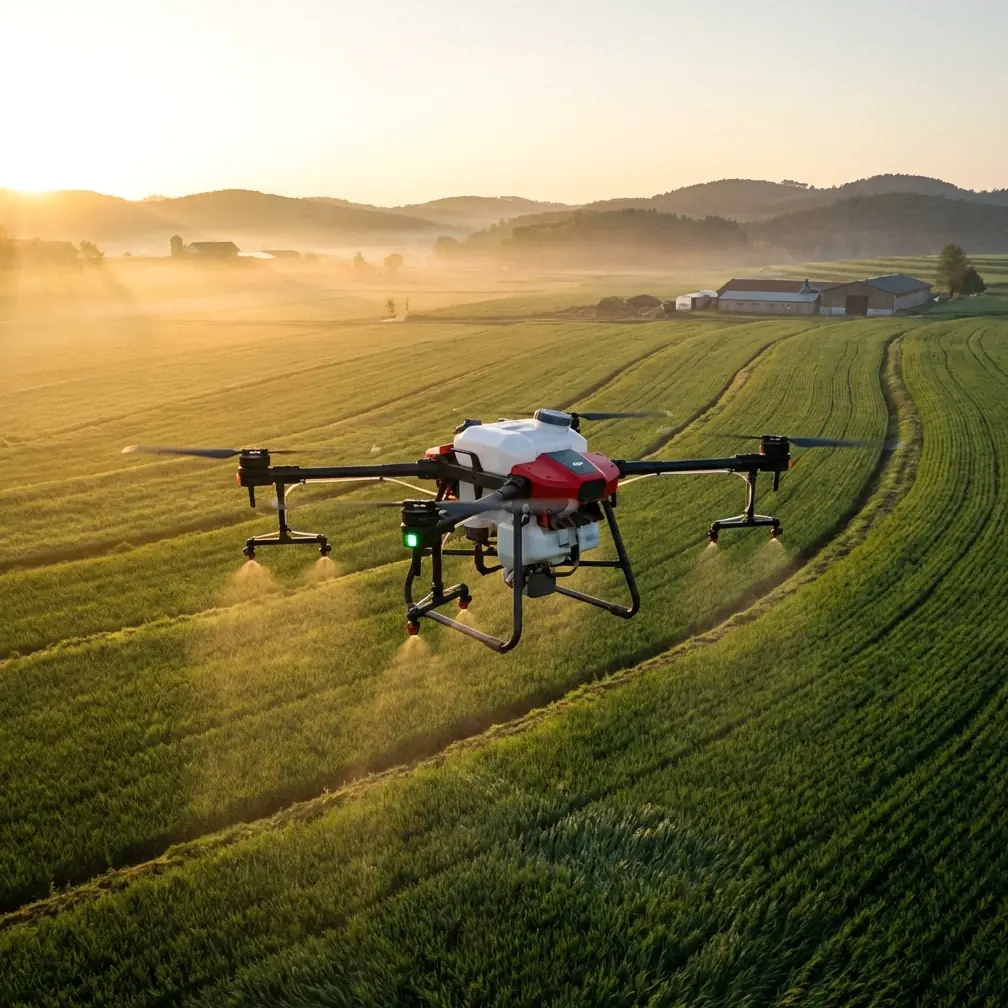
Scouting High-Altitude Cotton Venues with the Agras T70P: What Actually Matters
META: Technical review of the Agras T70P for high-altitude venue scouting in cotton operations, with a practical look at spray drift, nozzle setup, precision guidance, and terrain-aware planning.
High-altitude venue scouting sounds like a mapping problem until you bring agronomy into the picture. Then it becomes a performance problem, a drift-control problem, and often a timing problem. For cotton in particular, the terrain and canopy don’t wait for ideal logistics. They force decisions.
That is why the most useful way to assess the Agras T70P is not as an isolated aircraft spec sheet, but as part of a larger plant-protection workflow. A useful reference point comes from a 2016 Chinese study by Ma Xiaoyan and colleagues on UAV plant protection in cotton fields. Even though it predates the T70P itself, the paper remains strikingly relevant because it identifies the exact operational pressures that still define successful agricultural drone deployment: specialized spray nozzles, drift control, GPS/GIS-enabled application, high aerial work efficiency, and the ability to operate without being constrained by crop growth stage in the same way ground equipment is.
Those are not abstract advantages. In high-altitude scouting and treatment planning, they become the difference between a field that can be serviced precisely and one that becomes operationally expensive, inconsistent, or vulnerable to a fast-moving pest outbreak.
Why the cotton-field literature still matters for the T70P
The Ma Xiaoyan paper focused on unmanned aerial plant protection in Chinese cotton production and described UAV spraying as a system built around a light aircraft carrying pesticide application equipment, guided by GPS and geographic information tools. It also highlighted two technical pillars that remain central today: aviation-specific nozzles and droplet drift control. That framing is more useful than it might seem.
A lot of conversations around newer agricultural drones drift toward payload and automation alone. Payload matters, of course, but cotton operations in elevated terrain expose a harsher reality. If your scouting pass does not accurately characterize wind corridors, terrace edges, obstacle density, and treatment geometry, a large-capacity platform can still perform poorly. The T70P is best judged by how well it supports the chain from reconnaissance to stable application planning.
The old paper also made another point with direct operational significance: UAV work is less limited by crop growth than conventional ground methods and offers strong “surge” capability during outbreaks. For cotton managers scouting high-altitude venues, that matters because the venue itself often dictates delayed access. Fields on sloping ground, fragmented plots, and variable surface conditions can compress your response window. A platform like the T70P only becomes valuable if it helps you reclaim that window.
Venue scouting at altitude is really about risk discovery
When readers say they are “scouting venues,” they often mean evaluating whether a field block, hillside section, or remote cotton area is practical for repeated aerial work. In high-altitude settings, that assessment should answer five questions:
- Can the aircraft maintain reliable positioning?
- Is drift likely to increase because of terrain-driven wind behavior?
- Are there safe launch and recovery zones nearby?
- Will the intended swath width remain realistic across uneven topography?
- Can the application be calibrated for canopy density rather than simply area coverage?
This is where the T70P conversation intersects directly with the literature’s older insights. GPS/GIS-enabled work was already identified in 2016 as foundational to UAV plant protection. Today, that principle extends into RTK-supported route confidence, terrain-following logic, and centimeter-level path consistency. For altitude scouting, RTK fix rate is not just a nice metric on a screen. It is a proxy for whether the drone can maintain the expected line quality as it transitions across ridges, shelterbelts, and elevation changes.
A field may appear perfectly suitable from a map. Then the aircraft crosses a contour and loses route smoothness because local conditions interfere with stable positioning or obstacle handling. That is why experienced operators do not talk about precision in isolation. They talk about precision under terrain stress.
The T70P should be evaluated as a scouting-and-execution platform
The Agras T70P is often discussed for field operations, but for high-altitude cotton venue assessment, its real value starts before the first treatment. An effective technical review looks at whether the aircraft helps the operator judge field suitability with enough fidelity to prevent poor application decisions later.
That means combining route planning, precision guidance, sensor confidence, and spray-system setup into one operational picture.
1. Centimeter precision only matters if it survives field reality
In cotton, repeated passes must be consistent. Uneven overlap creates more than wasted input. It can alter crop response, especially on irregular blocks where wind exposure changes over short distances. A T70P configured around high-confidence positioning can reduce route inconsistency, but venue scouting should verify whether the environment supports that promise. High-altitude blocks are notorious for localized signal variation, sloping launch zones, and line-of-sight interruptions caused by trees or built structures.
This is where readers should pay attention to RTK fix rate during reconnaissance rather than after problems emerge. If your fix quality drops in recurring field zones, the issue is not simply navigational elegance. It affects swath placement, nozzle-to-canopy uniformity, and treatment repeatability.
2. Spray drift is still the hidden variable
The Ma Xiaoyan study’s emphasis on droplet drift control feels almost understated until you scout a mountain-edge cotton venue at daybreak. Drift is not merely a weather issue; it is a terrain interaction issue. Wind can shear differently at terrace lips, along drainage cuts, and near sparse windbreaks. The T70P may give you the platform to execute a modern route, but no aircraft can overcome a poor drift decision made at the planning stage.
That is why scouting must include a drift map in all but name. Note the leeward zones, sudden exposure points, and areas where altitude above canopy changes quickly. If a planned run requires the aircraft to repeatedly cross micro-ridges, droplet behavior may become less predictable than the route itself.
Nozzle calibration sits right beside drift in importance. The 2016 paper specifically called out aviation-specific nozzles as part of UAV plant protection technology. That detail matters because field suitability is inseparable from atomization suitability. A nozzle setup that behaves acceptably on a flat, sheltered block may become problematic on elevated cotton with unstable crossflow. Operators should calibrate not just for output volume but for droplet profile under the actual environmental conditions expected on site.
A real scouting moment: wildlife, sensors, and route judgment
During one high-altitude scouting session in a cotton-growing corridor, the most useful obstacle was not a utility pole or tree line. It was a pheasant that burst from a scrub edge near the planned transition between two treatment lanes. The aircraft’s sensing system recognized the abrupt movement and the route was paused and adjusted. That brief event said more about venue readiness than a clean map ever could.
Why mention wildlife in a technical review? Because elevated agricultural venues often overlap with habitat edges. A drone that can detect and respond to unexpected movement helps preserve operational safety, but it also exposes whether your route design is too aggressive for the field context. If birds are flushing repeatedly from berms or field margins, your altitude, speed, or lane placement may need rethinking before spraying begins.
This is one area where modern sensor suites contribute meaningfully to scouting. They are not only there to prevent collisions. They reveal the field as it behaves, not merely as it looks on a satellite image.
High-altitude cotton venues demand a narrower definition of “efficient”
The Ma Xiaoyan paper described UAV plant protection as having high aerial work efficiency and strong performance against outbreak conditions. That remains true, but efficiency in high-altitude cotton should be defined carefully. Fast coverage is only efficient if refill logistics, route turns, and wind windows support the pace.
For the T70P, practical efficiency depends on three layers:
- Transit efficiency: how cleanly the platform can move between staging area and field block
- Application efficiency: how consistent the swath width remains across terrain variation
- Recovery efficiency: how easily the operator can conclude the mission if weather or visibility shifts
A venue may score well on one layer and poorly on the others. For example, a remote elevated field may be reachable but offer only one safe takeoff zone, forcing awkward return paths. Another may support broad swath width on paper but narrow sharply near field edges because of obstacles or crosswind corridors. That is why “high efficiency” should never be assumed from aircraft capability alone.
What to inspect before choosing a high-altitude site
A disciplined T70P venue review should include the following:
Terrain and canopy geometry
Cotton can look uniform from above while hiding subtle elevation changes that complicate height control. Survey the rise-and-fall pattern across the whole block, not just the center. If the route repeatedly moves from exposed ridges into shallow depressions, canopy-relative flight stability becomes a priority.
Obstacle ecology
Do not stop at fixed obstacles. Include intermittent ones: livestock movement on access lanes, workers entering the plot, and wildlife activity at margins. The pheasant encounter I mentioned earlier was a reminder that dynamic obstacles often shape the safest route more than static ones.
Drift exposure points
Mark every edge where airflow accelerates or shifts direction. These are the places where nozzle calibration, droplet size, and flight height become tightly linked.
Water and washdown practicality
A high-capacity agricultural drone used in real cotton operations needs efficient turnaround. If the site offers poor washdown control or awkward refill staging, even a technically suitable field can become operationally inefficient.
Weather timing
Altitude often shortens the day’s stable treatment window. Morning calm can vanish quickly. Scouting should aim to define not only where to fly, but when the site remains realistically flyable.
Where multispectral scouting fits, and where it doesn’t
Multispectral tools can help identify plant stress and prioritize venue sections, especially in fragmented cotton blocks where not every area needs equal attention. But they should support, not replace, on-site route evaluation. A stress map cannot tell you whether a field edge funnels wind badly enough to compromise spray deposition. It cannot tell you whether the practical swath width in a sloped corner is narrower than expected. And it certainly cannot tell you whether a bird will flush from a scrub patch right as the drone crosses into a turn.
In other words, multispectral insight is strategic. Venue scouting for the T70P is still operational.
Durability matters more at altitude than many operators admit
Readers often focus on battery behavior and route precision, but environmental protection also deserves attention. In demanding agricultural conditions, an IPX6K-class protection level is not just a brochure detail. High-altitude sites can expose the aircraft to fine residue, muddy staging areas, rapid weather shifts, and intensive washdown cycles. A platform expected to move between scouting, treatment planning, and repeated field deployment should be able to tolerate that routine without becoming maintenance-sensitive after every rough day in the field.
Durability does not replace good handling. It simply gives the operator a wider margin when the venue is less forgiving than planned.
The bigger lesson from the 2016 cotton paper
The most forward-looking part of the Ma Xiaoyan study was not a claim about automation. It was the recognition that UAV plant protection in cotton depends on an ecosystem: better formulations and adjuvants, technical standards, supporting methods, and professional service teams. That remains exactly right for the T70P era.
A capable drone alone does not solve cotton venue complexity, especially at altitude. Success comes from integrating nozzle calibration, drift management, field mapping, route discipline, and trained operators who understand both agronomy and aircraft behavior. If you are scouting difficult cotton venues with the T70P, the right question is not “Can the drone fly here?” The right question is “Can this field be serviced here, repeatedly, accurately, and safely, under real agronomic constraints?”
That is a much higher bar. It is also the only bar that matters.
If you are comparing routes, launch zones, or terrain-readiness for a specific site, I usually recommend sharing field screenshots and contour notes first through direct project messaging. It is the fastest way to spot whether the issue is route geometry, drift exposure, or staging logistics before a crew loses a day on-site.
The T70P fits high-altitude cotton work best when it is treated as part of a disciplined field system rather than a universal solution. The older cotton research still points us in that direction: use precise guidance, respect spray physics, build around specialized nozzles, and plan for outbreak-speed execution without sacrificing control. That advice has aged well because the field has not become simpler. The aircraft have become better. The operational thinking still has to keep up.
Ready for your own Agras T70P? Contact our team for expert consultation.