
Field Report: Using the Agras T70P to Scout Wind
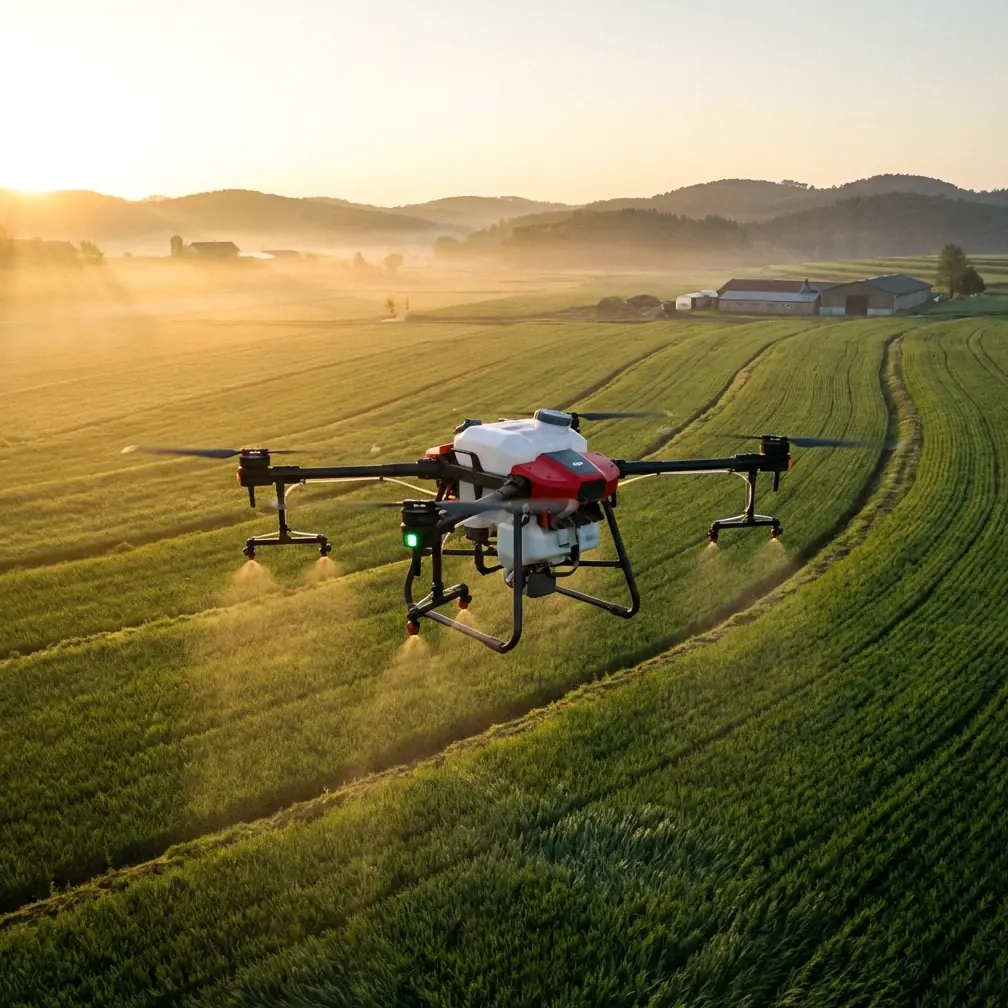
Field Report: Using the Agras T70P to Scout Wind-Exposed Power Lines With Better Altitude Discipline
META: A field-based expert report on using the Agras T70P for power line scouting in windy conditions, with practical altitude guidance, RTK precision considerations, drift control, and low-altitude airspace awareness.
By Dr. Sarah Chen
Power line scouting in wind is never just about image capture. The real task is maintaining a stable, repeatable inspection pattern in a corridor where turbulence, terrain effects, and low-altitude airspace uncertainty all compete for your attention. That is where the Agras T70P becomes interesting.
Not because it was conceived as a classic utility inspection aircraft. It was not. But because the same design priorities that matter in agricultural work—precise low-altitude control, disciplined swath management, robust spraying hardware, and weather-tolerant construction—translate in surprisingly useful ways to corridor scouting when the operator understands the boundaries of the platform.
For crews looking at transmission or distribution routes in windy conditions, the T70P is best approached as a stable low-level workhorse that can document vegetation encroachment, corridor access conditions, tower surroundings, and surface-level anomalies near the right-of-way. It is less about replacing a dedicated long-endurance inspection stack and more about getting dependable, close-in field intelligence where wind makes smaller aircraft feel nervous and inconsistent.
Why low-altitude airspace awareness suddenly matters more
A detail from recent industry reporting deserves attention here, even though it did not come from the inspection side of the market. At the Motorola Solutions Summit 2026, DRONELIFE interviewed Melissa Swisher of SkySafe.io about the challenge of rogue drones and the broader difficulty of managing low-altitude airspace. One operational point stands out: agencies often detect unauthorized drones without having the authority or means to respond directly.
That matters to a utility scouting crew because power line inspections increasingly happen in the same contested low-altitude environment. A windy corridor near roads, substations, public spaces, or critical infrastructure is not just meteorologically difficult. It can also be unpredictable from an airspace management perspective. The SkySafe-Motorola integration discussed in that report signals a larger industry move toward better awareness of what is happening below traditional air traffic layers.
For a T70P operator, the significance is practical. Before you even think about wind compensation or flight altitude, you need to think like a professional working in shared airspace. If another drone appears near your inspection route, your challenge is not simply collision avoidance. It is mission continuity, evidence quality, and crew safety in an environment where detection and response are not always neatly aligned. In other words, your flight plan for power line scouting needs to account for both gusts and unexpected aircraft behavior at low altitude.
That is not abstract policy talk. It directly affects whether your collected data is clean enough to support maintenance decisions.
What the T70P does well in this scenario
The Agras line is built around disciplined path execution. In agriculture, that discipline defines coverage, overlap, deposition consistency, and work rate. In power line scouting, the same characteristics help with corridor repeatability. If you need to fly parallel passes along a right-of-way, revisit the same tower approach angle, or compare vegetation change over time, repeatability is the whole game.
This is where centimeter precision and RTK fix stability matter more than raw speed. In windy line work, drift is cumulative. A few small corrections per second can become a jagged track, which then produces inconsistent viewing geometry and weak comparison data between sorties. If your RTK fix rate stays healthy, the aircraft has a much better chance of holding a disciplined line despite lateral disturbance.
That does not mean RTK magically cancels wind. It means the aircraft knows where it is with enough confidence to make smarter corrections. For a corridor inspection team, that translates into fewer “almost the same” passes and more genuinely comparable route captures.
The platform’s weather-hardened build also matters. An IPX6K-class resistance profile is not a license to ignore weather, but it does signal a machine designed for harsh field conditions rather than fragile laboratory calm. Along power corridors, where dust, mist, light contamination, and repeated deployment cycles are normal, that kind of resilience reduces interruptions. When crews are hopping between access points and launching from rough roadside positions, ruggedness stops being a brochure feature and becomes a scheduling advantage.
The altitude question: the most common mistake in windy corridor scouting
Most pilots new to power line scouting in wind choose one of two bad options. They either fly too high, hoping altitude will smooth out obstacle risk, or too low, trying to maximize detail while underestimating line-of-sight distortion and turbulence close to structures.
For the Agras T70P in this specific scouting role, the best operational insight is simple: in windy conditions, a moderate and consistent altitude usually beats aggressive proximity flying.
A practical target is to work around 12 to 18 meters above the inspection reference surface, adjusted for terrain, conductor sag, nearby vegetation, and local flight rules. That range often provides the best compromise between stability and usable detail when scouting the corridor rather than conducting a highly specialized conductor-focused diagnostic inspection.
Why that band works:
- It gives the aircraft enough separation from localized turbulence around poles, towers, and tree lines.
- It keeps the visual geometry consistent enough for repeat passes.
- It reduces the temptation to make abrupt pitch and roll corrections that degrade image usefulness.
- It preserves safer clearance margins in gusting conditions.
Below that range, the aircraft can get bullied by rotor wash interactions, surface turbulence, and obstacle-induced gusts. Above it, your corridor detail becomes more generalized, and subtle encroachment patterns can be harder to document consistently.
This is one place where agricultural thinking helps. In spraying, altitude drives drift, droplet placement, and swath integrity. In scouting, altitude drives data stability, corridor readability, and repeatability. Different payload purpose, same discipline: altitude is not just a safety setting. It is a data quality setting.
What spray drift teaches us about inspection flying
The T70P’s agricultural roots offer a useful conceptual advantage. Anyone who has spent time calibrating nozzles, managing spray drift, and balancing swath width already understands that wind does not merely push the aircraft. It alters the entire outcome of the mission.
That mindset is valuable in power line scouting. Wind changes approach angles, optical clarity, overlap, and the consistency of what you see from pass to pass. Operators who come from spray operations tend to think in terms of controlled variables: altitude, speed, lateral offset, and repeat path accuracy. That makes them better corridor scouts than pilots who rely on improvisation.
Even if the spray system is not the focus of the mission, the logic of nozzle calibration has an inspection parallel. Calibration in agriculture is about ensuring the hardware produces a known result under known conditions. In scouting, the equivalent is verifying your sensor alignment, route spacing, altitude offset, and RTK health before committing to a full corridor run. Both disciplines punish “good enough” setup habits.
The same goes for swath width. In spraying, you manage overlap to avoid misses or excess application. In utility corridor scouting, your effective visual swath determines whether vegetation edges, access roads, pole bases, and adjacent hazards are captured in a coherent strip. Fly too narrow and you miss context. Fly too wide and your useful resolution falls off. The T70P performs best when the operator decides this intentionally, not casually.
Wind handling is not only about the aircraft
A capable airframe can still produce poor field results if the mission design is weak. When scouting power lines with the T70P in wind, three planning habits matter more than pilots expect.
1. Build the route around wind direction, not just line direction
If the corridor runs north-south and the crosswind is severe, a simple parallel route may generate constant lateral correction. Sometimes it is better to break the mission into shorter segments with altered entry points so the aircraft spends less time fighting the same gust profile.
2. Treat RTK fix quality as a go/no-go factor for repeatability
A weak fix does not always stop the aircraft from flying, but it can ruin the scientific value of the mission. If the point is change detection around infrastructure, centimeter precision is not decorative. It is the difference between trustworthy comparison and visual guesswork.
3. Use altitude consistency as a performance metric
Pilots often monitor battery, speed, and total area covered. In windy scouting work, vertical consistency deserves equal attention. If your altitude trace is unstable, your corridor data usually is too.
Where multispectral thinking can help, even if the mission is visual
The T70P conversation often drifts toward payload practicality, and rightly so. But for line-side vegetation and right-of-way trend analysis, a multispectral workflow can complement standard scouting logic if your wider operation supports it. The reason is not gadget appeal. It is prioritization.
Power line corridors do not fail all at once. Vegetation stress, water accumulation, soil change, and access path deterioration often develop gradually. A scouting platform that helps crews identify where to dispatch deeper inspection resources can improve maintenance efficiency. The T70P fits best at the front end of that chain: fast field collection, disciplined route execution, and enough positional precision to make follow-up work targeted rather than broad.
The low-altitude airspace issue returns during utility work
This is where the DRONELIFE report connects back to daily operations. The article’s key point was not only that rogue drones are a growing problem. It was that the ecosystem is moving toward integrated detection and awareness because direct response is often constrained. For civilian utility teams, that suggests a near-future operating reality in which inspection flights increasingly need to coexist with broader low-altitude monitoring frameworks.
That is operationally significant for T70P crews. If you are scouting near substations, roads, or publicly visible utility assets, your presence may attract attention, and other drone activity may appear without warning. The answer is not to overcomplicate every sortie. The answer is to normalize preflight coordination, visual observer discipline, and clean documentation of your planned route and operating window.
A reliable aircraft helps. A disciplined airspace mindset helps more.
A practical field setup for windy power line scouting
If I were briefing a crew for this scenario, the checklist would sound like this:
- Launch from a position with clean visibility down the corridor.
- Confirm RTK health before the first committed pass.
- Start in the 12 to 18 meter altitude band and adjust only for structure geometry or terrain.
- Use moderate speed rather than chasing area coverage.
- Define your corridor swath in advance so every pass serves a known documentation goal.
- Watch for evidence of unstable crosswind correction early; if visible, shorten the segment and relaunch from a better angle.
- Keep records of altitude, wind behavior, and route offsets so future sorties are comparable.
If your team wants to compare notes on setup choices for the T70P in corridor work, a quick field discussion can be arranged here: message the flight support desk.
The real value of the T70P in this role
The Agras T70P is not compelling for power line scouting because it can brute-force bad conditions. It is compelling because it rewards disciplined operators with stable, repeatable low-altitude performance in places where wind and terrain expose sloppy habits immediately.
Its agricultural DNA is not a limitation here. It is the reason the platform can be useful. Operators who understand spray drift, nozzle calibration logic, swath control, and centimeter-precision route execution already know the central truth of corridor work: consistency beats improvisation.
And in a low-altitude environment where even public agencies are grappling with unauthorized drone activity and limited response options, consistency extends beyond the aircraft. It includes airspace awareness, route discipline, and a realistic altitude strategy.
For windy power line scouting, that altitude strategy is the key takeaway. Resist the urge to fly too high for comfort or too low for detail. Hold a measured band, protect your RTK quality, and let the T70P do what robust field platforms do best: produce dependable work when conditions are less than polite.
Ready for your own Agras T70P? Contact our team for expert consultation.