
T70P Field Scouting Guide: Dusty Condition Mastery
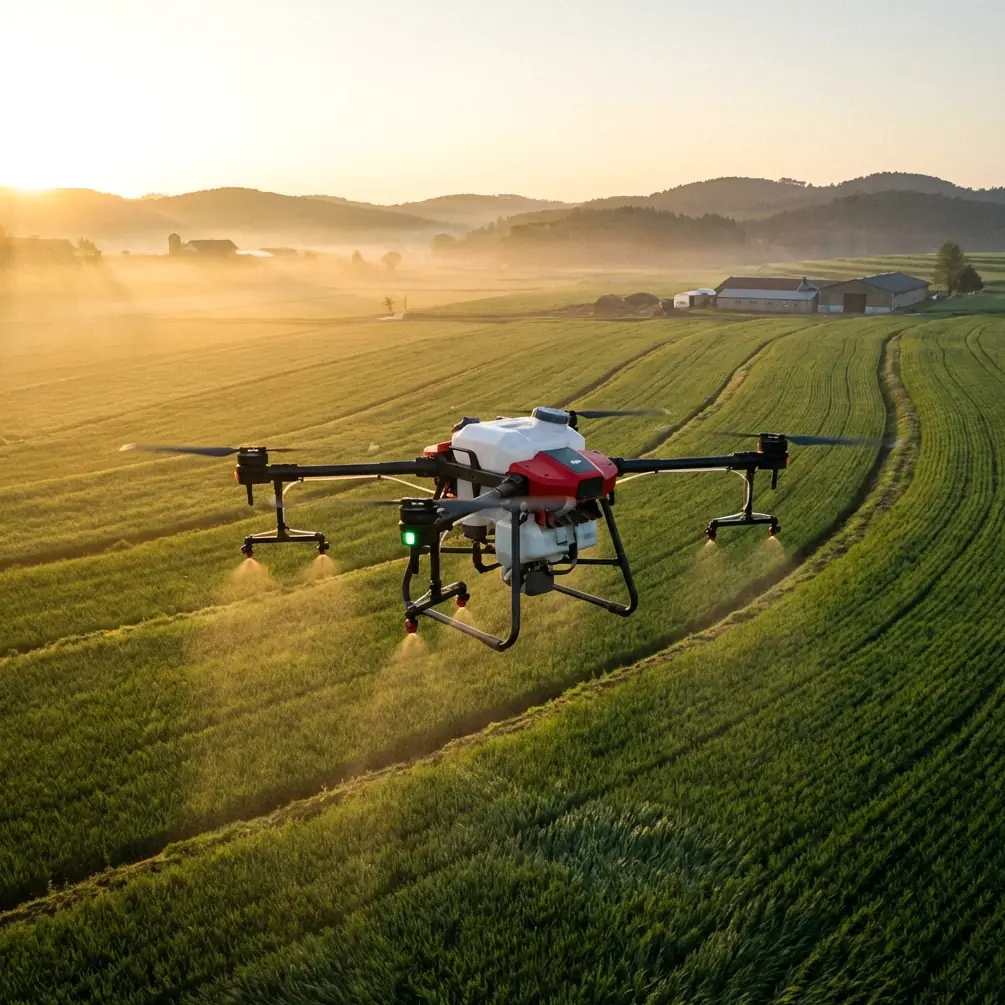
T70P Field Scouting Guide: Dusty Condition Mastery
META: Master field scouting with the Agras T70P in dusty conditions. Expert tips on flight altitude, sensor protection, and precision mapping for agricultural professionals.
TL;DR
- Optimal flight altitude of 15-25 meters balances dust avoidance with multispectral sensor accuracy during field scouting operations
- The T70P's IPX6K rating protects critical components from fine particulate infiltration common in arid agricultural environments
- RTK Fix rate above 95% remains achievable in dusty conditions when proper pre-flight protocols are followed
- Centimeter precision mapping transforms raw scouting data into actionable crop management decisions
Why Dusty Field Conditions Demand Specialized Drone Solutions
Dust particles wreak havoc on standard agricultural drones. Sensor contamination, motor degradation, and signal interference plague operators who attempt field scouting during harvest season or in arid climates.
The Agras T70P addresses these challenges through engineering decisions that prioritize operational resilience. Understanding how to leverage these features separates successful scouting missions from costly equipment failures.
Agricultural consultants working across diverse terrain face a consistent problem: clients need field data regardless of environmental conditions. Waiting for perfect weather means missing critical crop stress indicators.
Expert Insight: Flying at 18-22 meters altitude creates the ideal balance for dusty conditions. This height keeps the drone above ground-level dust clouds stirred by wind while maintaining multispectral sensor resolution below 2.5 cm/pixel—the threshold for detecting early-stage nutrient deficiencies.
Pre-Flight Preparation for Dusty Environments
Equipment Inspection Protocol
Before launching in dusty conditions, systematic equipment checks prevent mid-mission failures.
Start with the propulsion system:
- Inspect motor vents for accumulated debris from previous flights
- Verify propeller blade edges show no erosion damage
- Confirm all motor mounting bolts maintain proper torque
- Check ESC cooling pathways remain unobstructed
The T70P's sealed motor design provides significant protection, but accumulated dust from multiple flights eventually requires attention.
Sensor Calibration Considerations
Multispectral sensors require specific preparation when dust is present. The T70P's sensor array captures data across multiple wavelengths, and even minor contamination affects spectral accuracy.
Clean all optical surfaces using microfiber cloths designed for precision optics. Avoid compressed air, which can drive fine particles into sensor housings.
Calibration panels must remain dust-free during pre-flight reference captures. A simple solution: keep calibration targets in sealed containers until the moment of use, then return them immediately after capture.
RTK Base Station Positioning
Achieving consistent RTK Fix rates above 95% in dusty conditions requires strategic base station placement.
Position the base station:
- Upwind from the survey area when possible
- On stable ground that won't shift during operations
- Away from metallic structures that create multipath interference
- At elevation when terrain permits
The T70P's dual-antenna RTK system provides centimeter precision positioning, but only when the base station maintains clear satellite visibility throughout the mission.
Flight Planning Strategies for Maximum Data Quality
Altitude Selection Framework
Flight altitude directly impacts both data quality and dust exposure. Lower altitudes capture higher resolution imagery but place the drone within the dust zone created by rotor downwash and ground-level wind.
| Altitude (m) | Resolution (cm/px) | Dust Exposure | Best Use Case |
|---|---|---|---|
| 10-15 | 1.0-1.5 | High | Targeted problem areas |
| 15-25 | 1.5-2.5 | Moderate | Standard scouting |
| 25-35 | 2.5-3.5 | Low | Large area overview |
| 35-50 | 3.5-5.0 | Minimal | Preliminary assessment |
For comprehensive field scouting in dusty conditions, the 15-25 meter range delivers optimal results. This altitude provides sufficient resolution for identifying crop stress patterns while minimizing particulate exposure.
Swath Width Optimization
The T70P's camera system allows flexible swath width configuration. Wider swaths reduce total flight time but require higher altitudes or wider-angle lens settings.
In dusty conditions, prioritize efficiency through:
- 70% front overlap for reliable stitching despite potential image degradation
- 65% side overlap to ensure complete coverage without excessive redundancy
- Flight line orientation perpendicular to prevailing wind direction
These settings account for the occasional image quality reduction that dust particles cause while maintaining mapping accuracy.
Pro Tip: Schedule scouting flights during early morning hours when dust levels typically reach their daily minimum. Surface moisture from overnight dew suppresses particulate suspension, and calmer wind conditions reduce airborne contamination. The 2-hour window after sunrise often provides the best conditions.
Multispectral Data Collection Techniques
Spectral Band Selection for Crop Assessment
The T70P's multispectral capabilities enable detection of crop stress invisible to standard RGB cameras. Different spectral bands reveal specific plant health indicators.
Key bands for agricultural scouting include:
- Red Edge (710-740nm): Chlorophyll content and nitrogen status
- Near-Infrared (840-880nm): Plant vigor and biomass estimation
- Red (660-680nm): Chlorophyll absorption patterns
- Green (540-580nm): Peak reflectance for healthy vegetation
Combining these bands generates vegetation indices that quantify crop health across entire fields.
NDVI Mapping Considerations
Normalized Difference Vegetation Index calculations require clean spectral data. Dust contamination on sensors creates systematic errors that propagate through index calculations.
The T70P's sensor protection systems minimize this risk, but operators should:
- Capture calibration images at mission start and end
- Monitor for sudden changes in index values that indicate contamination
- Plan landing zones away from the dustiest field areas
Thermal Integration for Stress Detection
Water stress often accompanies dusty conditions, making thermal data particularly valuable. The T70P platform supports thermal sensor integration for comprehensive crop assessment.
Thermal imaging reveals:
- Irrigation system failures through temperature differentials
- Early drought stress before visible symptoms appear
- Soil moisture variation patterns across fields
Post-Flight Data Processing Workflow
Image Quality Assessment
Before investing processing time, evaluate captured imagery for dust-related degradation.
Check for:
- Haze or reduced contrast in sequential images
- Spot artifacts from particles on sensor surfaces
- Inconsistent exposure between flight lines
- Blur from dust accumulation on optical elements
The T70P's high-quality optics resist contamination, but extended operations in severe dust may require mid-mission sensor cleaning.
Orthomosaic Generation Settings
Processing software settings require adjustment for dusty condition imagery. Standard algorithms may struggle with reduced contrast and atmospheric haze.
Recommended adjustments:
- Enable atmospheric correction preprocessing
- Increase tie point density for reliable matching
- Use ground control points to verify positional accuracy
- Apply histogram equalization before index calculation
Actionable Report Generation
Raw data holds no value until translated into management decisions. Effective scouting reports connect multispectral findings to specific field interventions.
Structure reports around:
- Problem area identification with GPS coordinates
- Severity classification using standardized scales
- Recommended response actions with priority rankings
- Follow-up scouting schedule for monitoring
Common Mistakes to Avoid
Ignoring wind direction during flight planning causes the drone to fly through its own dust cloud on return passes. Always orient flight lines to minimize dust re-encounter.
Skipping post-flight cleaning allows fine particles to work into sealed components over time. The T70P's IPX6K rating protects against water and dust ingress, but accumulated contamination eventually overwhelms any seal.
Flying too low to "get better data" exposes sensors to maximum dust concentration while providing marginal resolution improvement. The relationship between altitude and resolution follows a curve of diminishing returns below 12 meters.
Neglecting RTK base station maintenance in dusty environments leads to gradual accuracy degradation. Clean base station antennas and verify mounting stability before each session.
Processing data without calibration correction produces indices that cannot be compared across dates or fields. Always capture and apply calibration panel references.
Frequently Asked Questions
How does dust affect the T70P's spray drift performance during application flights?
While this guide focuses on scouting operations, the T70P's spray system demonstrates remarkable dust resilience. Nozzle calibration remains stable because the pressurized system prevents particle ingress during operation. The sealed tank design protects spray solutions from contamination. Operators transitioning between scouting and application modes should clean external surfaces but rarely need internal system maintenance due to dust exposure.
What RTK Fix rate should I expect in dusty conditions?
Properly configured systems maintain RTK Fix rates of 95-98% even in moderately dusty environments. Dust itself doesn't directly affect GPS signals, but the conditions that create dust—open terrain, minimal vegetation—often provide excellent satellite visibility. The primary risk comes from dust accumulating on base station equipment during extended operations. Regular cleaning maintains optimal performance.
Can I scout fields immediately after harvest when dust levels peak?
Post-harvest scouting provides valuable data for next-season planning, and the T70P handles these challenging conditions effectively. Increase flight altitude to 25-30 meters during peak dust periods, accept slightly reduced resolution, and plan shorter missions with cleaning breaks. The IPX6K-rated enclosures protect critical electronics, but limiting exposure duration extends equipment lifespan.
Maximizing Your Field Scouting Investment
Successful field scouting in dusty conditions combines proper equipment selection with informed operational practices. The Agras T70P provides the hardware foundation through robust construction, precise positioning systems, and versatile sensor integration.
Operators who master altitude optimization, understand spectral data collection, and maintain rigorous equipment care protocols extract maximum value from every flight hour.
The techniques outlined here apply across diverse agricultural contexts—from arid grain production to irrigated specialty crops experiencing seasonal dust events.
Consistent application of these practices builds a scouting program that delivers reliable data regardless of environmental challenges.
Ready for your own Agras T70P? Contact our team for expert consultation.