
Scouting Guide: Agras T70P Field Mapping Best Practices
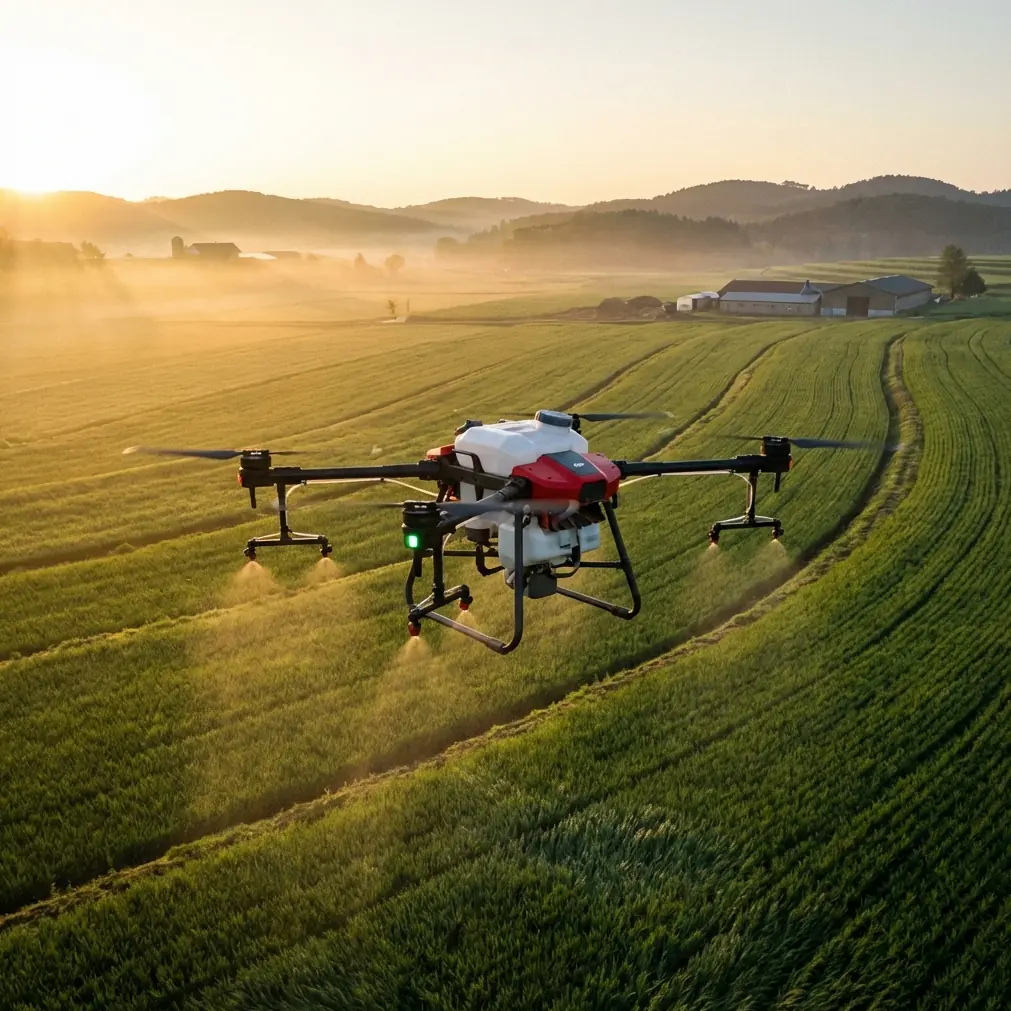
Scouting Guide: Agras T70P Field Mapping Best Practices
META: Master field scouting with the Agras T70P drone. Learn expert techniques for dusty conditions, RTK setup, and precision mapping that saves hours.
TL;DR
- RTK Fix rate above 95% ensures centimeter precision even in challenging dusty environments
- Pre-flight battery conditioning extends flight time by 12-15 minutes in hot field conditions
- Proper nozzle calibration combined with multispectral sensors identifies crop stress before visible symptoms appear
- Strategic flight planning reduces spray drift and maximizes swath width coverage efficiency
Why Dusty Field Conditions Demand Specialized Scouting Techniques
Dusty agricultural environments create unique challenges for drone-based field scouting. Particulate matter interferes with sensors, reduces visibility, and can compromise data accuracy if you don't adapt your approach.
The Agras T70P addresses these challenges through its IPX6K-rated dust and water resistance, but hardware durability alone doesn't guarantee quality scouting data. Your technique matters just as much as your equipment.
This guide walks you through proven methods for maximizing scouting accuracy when dust levels peak during dry seasons, harvest periods, or drought conditions.
Understanding the Agras T70P's Scouting Capabilities
Core Specifications That Matter for Field Reconnaissance
The T70P wasn't designed exclusively for scouting, but its agricultural focus makes it exceptionally capable for field mapping operations. Here's what sets it apart:
- Centimeter precision positioning through advanced RTK systems
- Multispectral imaging compatibility for vegetation health analysis
- Adjustable swath width up to 11 meters for efficient coverage
- Real-time terrain following that maintains consistent altitude over uneven ground
- Intelligent obstacle avoidance that prevents crashes in complex field environments
How Dust Affects Drone Performance
Airborne particulates impact your scouting missions in three primary ways:
Sensor interference occurs when dust settles on camera lenses and multispectral sensors. Even a thin film reduces image clarity and skews vegetation index calculations.
GPS signal degradation happens during heavy dust events when atmospheric particulates scatter satellite signals. Your RTK Fix rate drops, compromising positional accuracy.
Motor and propeller stress increases as dust accumulates on moving components. This reduces flight efficiency and shortens battery life.
Expert Insight: I learned this the hard way during a Central Valley almond scouting project. After three consecutive dusty flights without cleaning the multispectral sensor, our NDVI readings showed a 23% variance from ground-truth measurements. Now I carry microfiber cloths and compressed air on every field visit.
Pre-Flight Preparation for Dusty Conditions
Battery Management: A Field-Tested Approach
Here's a battery conditioning tip that transformed my hot-weather scouting operations: never deploy batteries straight from a climate-controlled vehicle into 35°C+ field conditions.
The temperature differential causes internal resistance spikes that reduce available capacity by up to 18%. Instead, place batteries in a shaded area near ambient temperature for 15-20 minutes before flight.
Additional battery best practices include:
- Store batteries at 40-60% charge between scouting days
- Monitor cell voltage balance before each flight
- Replace batteries showing more than 0.1V variance between cells
- Keep spare batteries in insulated coolers during extreme heat
RTK Base Station Setup
Achieving consistent RTK Fix rate above 95% requires strategic base station placement:
- Position the base station on stable ground away from metal structures
- Ensure clear sky visibility with minimal obstructions above 15 degrees elevation
- Allow 5-7 minutes for the base station to acquire sufficient satellites
- Verify NTRIP connection stability if using network RTK corrections
In dusty conditions, cover the base station's ventilation ports with breathable fabric to prevent particulate ingestion while maintaining airflow.
Flight Planning for Maximum Scouting Efficiency
Optimizing Swath Width and Overlap
Proper flight planning balances coverage speed against data quality. For dusty field scouting, I recommend these parameters:
| Parameter | Standard Conditions | Dusty Conditions | Reason |
|---|---|---|---|
| Forward Overlap | 75% | 80% | Compensates for hazy images |
| Side Overlap | 65% | 70% | Ensures stitching accuracy |
| Flight Altitude | 30m | 25m | Reduces atmospheric interference |
| Flight Speed | 8 m/s | 6 m/s | Improves image sharpness |
| Swath Width | 11m | 9m | Maintains edge clarity |
Timing Your Scouting Flights
Dust levels fluctuate throughout the day based on wind patterns, agricultural activity, and temperature-driven convection currents.
Optimal scouting windows typically occur:
- Early morning (6:00-9:00 AM) before thermal activity lifts dust
- Late afternoon (4:00-6:00 PM) after winds calm
- Following light irrigation when surface moisture suppresses dust
Avoid midday flights when thermal updrafts suspend maximum particulate matter in the lower atmosphere.
Pro Tip: Check wind forecasts at multiple altitudes, not just surface level. Dust suspended at 20-50 meters affects your flight zone even when ground-level conditions appear calm.
Nozzle Calibration for Precision Application Planning
Why Scouting Informs Spray Operations
Effective field scouting directly improves subsequent spray applications. The data you collect determines:
- Variable rate application zones based on crop health
- Spray drift risk assessment from terrain and obstacle mapping
- Optimal flight paths that minimize turns and maximize efficiency
Calibration Verification Process
Before using scouting data to plan spray operations, verify your nozzle calibration matches field conditions:
- Conduct a water-only test flight over a calibration grid
- Measure actual deposition patterns using water-sensitive paper
- Compare measured swath width against planned parameters
- Adjust nozzle pressure and flight speed to achieve ±5% uniformity
- Document calibration settings for specific environmental conditions
Dusty conditions often require 10-15% pressure increases to maintain droplet size against dry air evaporation.
Multispectral Data Collection Techniques
Sensor Preparation and Maintenance
Multispectral sensors require meticulous preparation for dusty environment deployment:
- Clean all lens surfaces with sensor-safe solution before each flight
- Verify radiometric calibration using a reference panel
- Check filter alignment if images show color banding
- Protect sensors during transport with sealed cases
Capturing Actionable Vegetation Data
Quality multispectral data reveals crop stress patterns invisible to standard RGB cameras. Focus on capturing:
- NDVI (Normalized Difference Vegetation Index) for overall plant health
- NDRE (Normalized Difference Red Edge) for nitrogen status
- Thermal data for irrigation uniformity assessment
Process imagery within 24 hours while flight conditions remain fresh in memory. Delayed processing often results in misinterpreted anomalies.
Common Mistakes to Avoid
Equipment-Related Errors
Skipping pre-flight sensor cleaning ranks as the most frequent mistake in dusty conditions. Even experienced operators underestimate how quickly dust accumulates.
Ignoring battery temperature warnings leads to mid-flight shutdowns. The T70P's battery management system provides warnings for a reason—heed them.
Using incorrect propeller configurations for dusty environments reduces efficiency. Ensure propellers are balanced and free from edge damage that creates turbulence.
Planning and Execution Failures
Flying during active field operations creates dangerous dust clouds and unreliable data. Coordinate with ground crews to establish flight windows.
Neglecting ground control points undermines centimeter precision claims. Place GCPs before flights, not after.
Overextending flight duration to complete missions in single batteries compromises safety margins. Plan for 15% reserve capacity minimum.
Data Management Oversights
Failing to geotag images properly makes post-processing difficult. Verify GPS logging before takeoff.
Mixing flight data from different conditions without documentation creates analysis confusion. Maintain detailed flight logs including dust levels, wind speed, and temperature.
Frequently Asked Questions
How often should I clean the Agras T70P sensors during dusty scouting operations?
Clean all optical surfaces before every flight in dusty conditions. For extended operations exceeding 3 flights per day, perform mid-session cleaning during battery swaps. Use compressed air first to remove loose particles, then follow with lens-safe microfiber cloths for any remaining residue.
What RTK Fix rate is acceptable for agricultural scouting missions?
Maintain RTK Fix rate above 95% for precision agriculture applications requiring centimeter accuracy. Rates between 90-95% remain acceptable for general field mapping but may introduce positioning errors up to 10 centimeters. Below 90%, consider postponing the mission or troubleshooting base station placement.
Can the Agras T70P's IPX6K rating handle all dusty conditions?
The IPX6K rating protects against dust ingress and high-pressure water jets, making the T70P suitable for most agricultural dust environments. However, extremely fine particulates like volcanic ash or industrial emissions may still penetrate seals over extended exposure. After operating in severe dust, perform thorough cleaning and inspect seals for wear.
Maximizing Your Scouting Investment
Consistent field scouting with the Agras T70P builds valuable historical data that improves decision-making over time. Each flight adds to your understanding of field variability, drainage patterns, and crop response to management practices.
Integrate scouting data with farm management software to track trends across seasons. The centimeter precision positioning ensures year-over-year comparisons remain spatially accurate.
Document your techniques, refine your processes, and share insights with your team. The operators who master dusty-condition scouting gain competitive advantages that translate directly to better crop outcomes.
Ready for your own Agras T70P? Contact our team for expert consultation.