
Agras T70P for Coastal Scouting in Extreme Temperatures
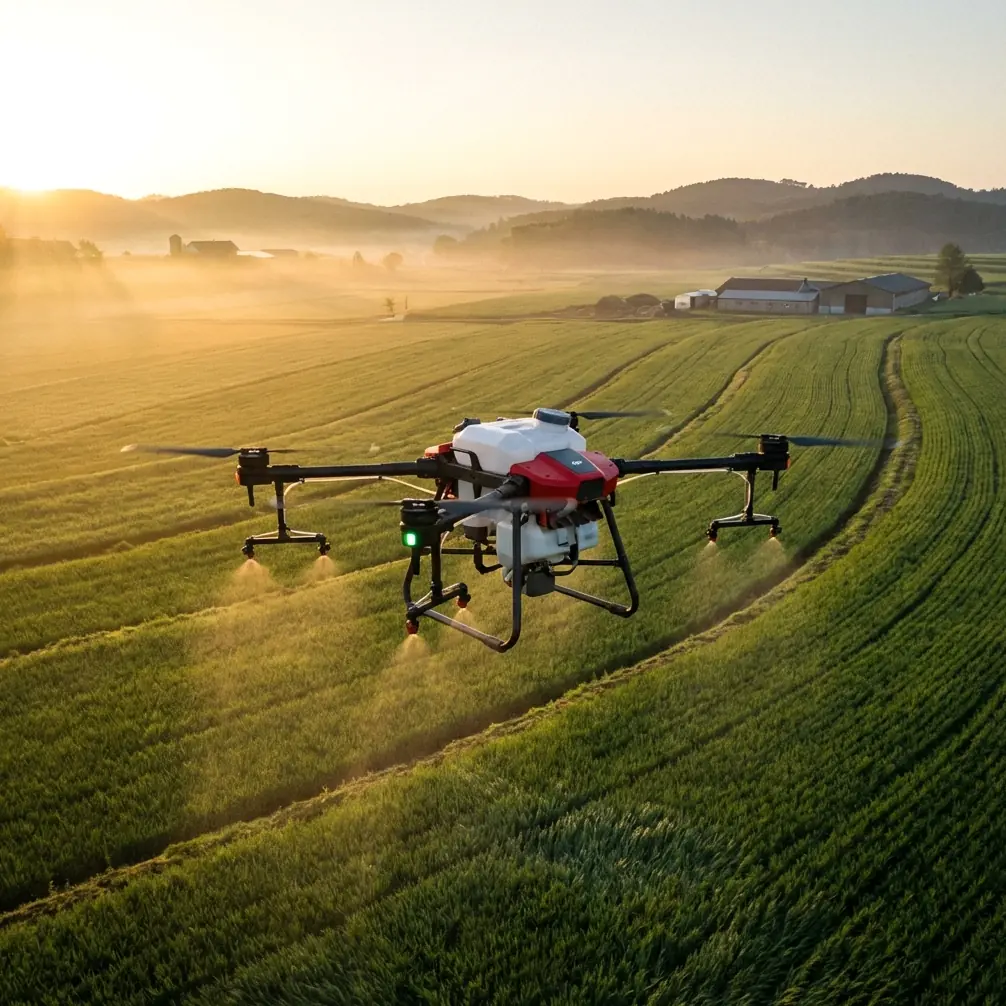
Agras T70P for Coastal Scouting in Extreme Temperatures: What Actually Matters in the Field
META: A field-focused look at how Agras T70P fits coastal scouting workflows, from route control and camera-based situational awareness to trajectory precision, data fusion, and stable operation in harsh temperatures.
Coastal scouting sounds simple until the environment starts stacking variables against you. Salt in the air. Crosswinds that change by the minute. Temperature swings that punish electronics at dawn and again at midday. Long, narrow corridors that resemble utility right-of-way missions more than ordinary farm blocks. If you are evaluating the Agras T70P for this kind of work, the real question is not whether it can fly. The question is whether it can maintain usable route discipline, sensor consistency, and decision-grade data when the coast stops cooperating.
That is where a more technical reading of the T70P becomes useful.
Most buyers approach the Agras platform from an agricultural angle: payload, swath width, nozzle calibration, spray drift control, and operating efficiency. Those are valid concerns. But when the mission shifts to coastline scouting in extreme temperatures, the conversation changes. You start caring more about stable movement logic, camera-led environmental familiarization, RTK Fix rate, and the quality of positional data that survives post-processing. In that setting, the T70P’s value is not just hardware toughness. It is how well the aircraft fits into a disciplined workflow.
The coastline problem is really a corridor problem
A lot of coastal scouting resembles linear inspection. Think dunes, sea walls, drainage edges, aquaculture boundaries, access roads, erosion zones, or utility-adjacent shoreline stretches. Operationally, this is closer to a 300 km corridor mapping assignment than a simple point inspection.
One reference project from Guangdong described a 300-kilometer powerline inspection corridor with an 80-meter width, where the client required laser inspection outputs in the WGS84 coordinate framework, a 3D point cloud model, and an analysis report. That is not an agriculture mission on paper, yet the planning logic transfers surprisingly well to coastal scouting. The reason is straightforward: long and narrow mission geometry punishes drift, weak trajectory control, and poor data alignment.
For an Agras T70P operator, this matters because a coastline mission often creates the same pressure points:
- consistent lane spacing over long distances
- repeatable altitude and speed behavior
- reliable positioning under changing atmospheric conditions
- clean handoff between onboard sensing and downstream analysis
Many competing platforms can claim broad environmental capability. Fewer hold their value when the task is a corridor mission in a harsh marine edge zone, where every positional wobble compounds over distance.
Start with the part many crews skip: environmental familiarization
One of the most practical ideas buried in the reference material comes from a training scenario, not a commercial brochure. The drone is instructed to activate the camera, wait 1 second, take off to 80 centimeters, climb another 50 centimeters, rotate 360 degrees clockwise, then land and shut the camera off. That puts the aircraft at roughly 130 centimeters above ground during the scan.
On the surface, this is basic instruction. In real coastal work, it is a smart pre-mission habit.
Why? Because coastlines are full of launch-site traps. Loose sand. Thin spray mist. Small but damaging obstructions. Reflective pools. People moving through public access areas. Temporary equipment parked where it was not yesterday. A quick camera-on hover and rotation sequence lets the crew verify surface conditions, wind cues, and immediate obstacle context before committing the aircraft to a wider route.
The operational significance is bigger than the number itself. That 80 cm + 50 cm staged climb is not about dramatic altitude. It is about controlled situational awareness. The T70P, used this way, becomes more than a task drone. It becomes a disciplined scouting tool that checks its own working envelope before starting the real pass.
This is one area where experienced operators often outperform less technical crews using similar hardware. They do not just launch. They establish local context first.
Flight behavior matters more on the coast than inland
The second highly useful detail from the reference set comes from a control experiment involving stick inputs and motion patterns. The training notes show that changing multiple control parameters while setting one to zero produces very different trajectories. One finding stands out: when yaw alone is set to 0, the drone moves in a straight diagonal climb or descent. Another: when throttle is 0, the aircraft can move in a circular path while holding the same height.
That is educational content, yes. But it also points to something coastal operators should understand deeply: the shape of your motion path is a product of control logic, not just wind.
On a shoreline mission, where the aircraft may need to track edges, arc around outcroppings, inspect curved sea defenses, or hold a stable height over uneven access zones, this matters. The T70P’s usefulness depends partly on how precisely its movement can be managed when environmental forces are already pushing it away from ideal geometry.
A less stable competitor may still publish acceptable top-line specs, yet in crosswind corridor work the difference becomes obvious. The aircraft that holds cleaner path discipline produces better image overlap, more reliable georeferencing, and fewer ugly surprises when you try to compare passes from different dates.
That is why RTK Fix rate and centimeter precision are not just nice words on a sheet. Along the coast, they are the difference between trend analysis and guesswork.
Extreme temperatures expose weak workflows before they expose weak airframes
People often reduce harsh-temperature readiness to enclosure protection or battery chemistry. Those matter, of course. An IPX6K-grade level of resistance, when present in an operational ecosystem, speaks to survivability around water exposure and washdown-oriented protection expectations. Near the coast, that translates to better tolerance for spray, residue, and messy staging conditions.
But extreme temperatures usually break the workflow first.
In cold starts, crews rush. In heat, they shorten checks. Sensor warm-up gets ignored. Battery behavior changes decision timing. Operators become tempted to reduce route quality to preserve cycle time. That is exactly where the T70P has a chance to separate itself from flimsier field procedures.
The reference data on lidar processing gives a good blueprint. In the corridor project, trajectory handling was built around GNSS and IMU fusion using Inertial Explorer, producing a POS file for downstream point cloud integration. Then a preprocessing layer fused laser points with high-accuracy position and attitude data so that each point received spatial attributes.
Even if your Agras T70P coastline mission is not running a full lidar stack, the lesson is the same: do not treat flight, navigation, and data output as separate jobs. Treat them as one chain. The aircraft’s path quality, attitude stability, and timing integrity all determine whether your images, observations, or multispectral captures can support serious interpretation later.
That is where some competitors fall behind. They may fly adequately, but the ecosystem around route repeatability, positional confidence, and workflow discipline is often weaker. The T70P earns its place when used as part of a tightly managed capture-and-verification system, not as a standalone flying platform.
Route design should be calculated, not improvised
Another useful technical clue from the references is the method used for lidar parameter design: calculate scan speed and route spacing based on effective range, flight height, and speed. That logic applies directly to the T70P in coastal scouting.
If you are documenting shoreline vegetation stress, storm impact, drainage failure, or erosion progression, swath width cannot be treated as a generic marketing number. It has to be tied to altitude, motion, sensor objective, and the environmental penalty of wind. A route plan that looks fine inland may leave data gaps at the coast because gusts alter overlap and edge fidelity.
This is also where nozzle calibration and spray drift awareness remain relevant, even in a scouting article. Many T70P operators will use the same aircraft for both assessment and treatment planning. If the scouting mission identifies saline stress bands, invasive growth, or disease-prone moisture pockets, the next operational step may involve a spray application. In coastal conditions, drift risk is not theoretical. The scouting data should inform treatment geometry, and the aircraft used for scouting should already be operating with enough positional discipline to support that transition.
A strong operator does not separate reconnaissance from application planning. The T70P works best when those stages inform each other.
Camera-first checks are underrated in marine environments
The training material’s “surround view” sequence deserves another look because it solves a very practical problem: local uncertainty right after takeoff.
Turn on the camera. Pause. Lift in stages. Rotate. Observe. Then proceed.
That small routine helps crews catch:
- reflective glare zones that will compromise visual capture
- unstable takeoff surfaces
- unexpected foot traffic
- spray or mist concentration near the launch point
- shifting wind signatures visible in vegetation or water texture
Plenty of platforms can carry a camera. The difference is how deliberately the crew uses it. The T70P benefits from operators who think in structured checks rather than improvised reactions. That is not a glamorous point, but it is the kind that saves sorties.
If your team is refining a coastline workflow and wants to compare route logic or environmental setup, a direct field discussion is usually more useful than a spec-sheet debate; you can message a UAV consultant here and talk through the mission profile in practical terms.
Precision is not only for mapping teams
The corridor reference also highlighted compatibility with multiple GNSS base station sources, including NovAtel, Trimble, JAVAD, Leica, NAVCOM, and Septentrio. That sort of interoperability matters more than many operators realize.
Coastal projects are often multi-party jobs. One team may capture aerial data. Another handles geospatial control. A third compares change over time. If your operational environment requires handoff into broader GIS or engineering workflows, compatibility and coordinate consistency become major value drivers.
Even when the T70P is not being framed as a traditional survey aircraft, the expectation around coordinate discipline is rising. Coastal asset owners increasingly want outputs that align with preexisting geospatial systems, not isolated flight media. That is why centimeter precision and RTK Fix rate deserve attention in procurement and in field procedure. Not because the terms sound advanced, but because they determine whether the mission result can be trusted outside the flight team.
Where the T70P stands out against weaker alternatives
Here is the honest comparison point.
Some competing drones perform well in mild conditions and short missions, then begin to lose practical value when the operating area becomes long, narrow, windy, and thermally punishing. Their weakness is rarely one dramatic failure. It is cumulative sloppiness: route inconsistency, positional uncertainty, reduced confidence in overlap, and poor integration into technical reporting workflows.
The T70P is better suited to serious coastal scouting when the operator builds around:
- disciplined pre-flight camera familiarization
- calculated swath and spacing decisions
- RTK-aware route execution
- stable movement logic under environmental pressure
- workflow continuity from capture to analysis
That combination is what makes it useful. Not hype. Not one headline feature. The whole chain.
The practical takeaway for coastal teams
If you are scouting coastlines in extreme temperatures with an Agras T70P, think like a corridor-inspection crew and fly like a risk manager.
Borrow the educational habit of the 130 cm surround-view check before mission commitment. Understand how control inputs shape trajectory, because coastal geometry punishes sloppy path behavior. Plan lane spacing the way lidar teams do: from flight height, speed, and required coverage, not from habit. Treat RTK Fix rate and centimeter precision as operational necessities. And if your mission may transition into treatment planning, keep spray drift and nozzle calibration in the same decision framework rather than in a separate silo.
That is the version of the T70P that holds up on the coast: not just a capable aircraft, but a platform used with enough technical discipline to make the data believable.
Ready for your own Agras T70P? Contact our team for expert consultation.