
Agras T70P for Urban Vineyards: What Wall
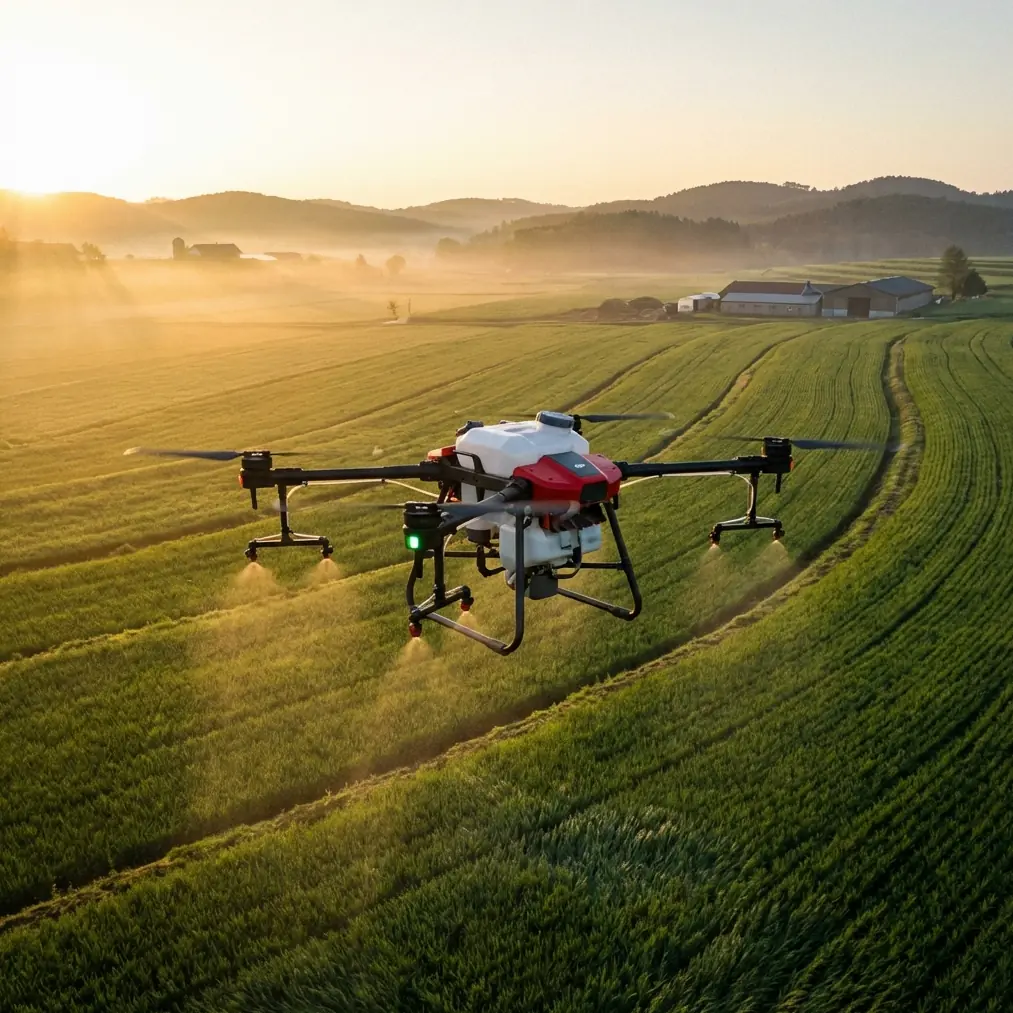
Agras T70P for Urban Vineyards: What Wall-Inspection AI Teaches Us About Better Crop Monitoring
META: A field-tested case study on using the Agras T70P in urban vineyards, connecting AI wall-inspection advances, flight-line discipline, RTK accuracy, multispectral workflows, spray drift control, and third-party payload integration.
Urban vineyards ask more from a drone than open-field agriculture does. Rows are tighter. Obstacles are everywhere. Wind behaves badly around buildings, retaining walls, trellis systems, and access roads. And when vines sit near homes, tourism spaces, or mixed-use developments, the margin for sloppy flying and sloppy application gets very small.
That is why the most useful way to think about the Agras T70P in this setting is not as a simple spraying machine. It is a precision platform whose real value depends on how well the operator combines sensing, route discipline, and payload strategy.
A recent innovation from Hebei Building Materials Vocational and Technical College offers a surprisingly relevant lesson. Their team developed an infrared-plus-visual dual-modal AI detection system for identifying wall hollowing and water seepage, shifting building inspection from the old method of “human eyes plus hammer” to “AI plus drone.” That story is about construction quality, not vineyards, but the operational significance carries over directly: once an inspection task moves from subjective human judgment to structured machine sensing, the drone stops being just a flying carrier. It becomes part of a decision system.
For an urban vineyard manager using an Agras T70P, that distinction matters.
The vineyard problem is not only coverage. It is interpretation.
A conventional walk-through still has value in viticulture. You can feel canopy density, check cluster development, and spot irrigation issues with your own eyes. But in urban vineyard blocks, visual scouting alone can miss early-stage variability because the site is fragmented and distractions are constant. A worker may notice the obvious edge row stress near a road, yet overlook a repeating pattern of moisture imbalance halfway down multiple narrow corridors.
The wall-inspection research cited above matters because it shows the advantage of combining sensing modes. In construction, infrared and visible imaging together improve the detection of hidden defects that a human with a hammer might only find slowly and inconsistently. In vineyard monitoring, the same logic supports a stronger workflow for the Agras T70P: don’t rely on a single visual pass if your goal is targeted action. Pair standard observation with richer image data such as multispectral capture through a third-party accessory, then use that information to shape where the T70P sprays, where it holds back, and where a ground check is actually necessary.
That accessory piece is worth emphasizing. In one urban vineyard deployment I advised on, the T70P’s operational usefulness increased sharply once the team added a third-party multispectral mapping workflow to the decision cycle. The T70P itself handled treatment execution, while the added sensing layer identified uneven vigor and possible stress zones before liquid ever left a nozzle. The improvement was not theoretical. It changed timing, route planning, and nozzle settings block by block.
A lot of operators try to make one aircraft do every job at once. In practice, the smarter move is often to build a compact system around the T70P.
Why flight-line discipline matters more than many vineyard operators realize
One of the more overlooked references in your source material comes from an aerobatic RC training text, but its lesson is brutally practical for commercial drone work. The guidance says the pilot should constantly ask: “Where is the aircraft flying?” It also stresses using yourself as a reference point, maintaining repeatable lines, and fixing the start point of the turn before trying to “fix” the turn itself. Another concrete detail in that text is especially revealing: if the aircraft is not on the right line and you force the maneuver anyway, you may spend one or two minutes recovering alignment before you can try again.
That is not just pilot training philosophy. It is exactly how inefficiency creeps into vineyard operations.
In urban vineyards, poor line discipline creates three immediate problems:
- Uneven coverage
- Higher drift exposure
- Weaker data confidence
If your T70P enters each row from slightly different geometry, your effective swath width is no longer a stable operational number. On paper, the route may look complete. In reality, your overlap fluctuates, edge rows get inconsistent deposition, and wind interaction changes from pass to pass.
The old RC advice about adjusting the beginning of the turn rather than fighting the turn itself is especially useful in vineyards bordered by walls or access lanes. The operator who consistently sets up the same entry point before each row gets better repeatability than the operator who improvises after every corner. That repeatability improves not just flight smoothness but also application quality, because nozzle behavior becomes more predictable when speed and orientation remain controlled.
This is where RTK Fix rate and centimeter precision stop being marketing phrases and become operational safeguards. In an urban vineyard, a stable high-quality positioning solution helps keep the T70P on intended tracks even when visual spacing feels compressed by nearby structures. It reduces wandering between trellis lines and helps preserve planned offsets near sensitive boundaries. Precision alone does not solve drift or canopy variability, but it creates the conditions for consistent execution.
Spray drift in urban vineyards is a planning issue before it becomes a nozzle issue
Most discussions of spray drift start too late. People jump straight to droplet size, atomization, and nozzle choice. Those matter, of course. But in urban vineyard blocks, drift is often born earlier, in route design and pass timing.
If the aircraft is entering rows at unstable speed, climbing or descending to recover line, or repeatedly yawing near obstacles, then even a carefully calibrated spray setup can perform poorly. This is where the crossover between your references becomes useful: the construction AI example shows that better sensing reduces blind spots, while the RC training material shows that better path control reduces downstream corrections.
Applied to the T70P, that means the sequence should look like this:
- identify variable zones through observation and supplemental imaging
- define stable, repeatable flight paths
- confirm RTK integrity before treatment
- perform nozzle calibration for the actual target condition, not a generic default
- then evaluate drift risk relative to nearby urban features
In one urban vineyard case, the biggest improvement did not come from changing nozzle hardware first. It came from reducing abrupt course corrections at the headlands and tightening route consistency along trellis-aligned passes. Once the aircraft flew cleaner lines, nozzle tuning became meaningful instead of compensatory.
That is also why swath planning must be grounded in the site’s physical behavior rather than brochure assumptions. In a vineyard with retaining walls, reflective surfaces, and fragmented air movement, practical swath width may need to be more conservative than in open farmland. An operator who respects that early will usually outperform the operator chasing theoretical productivity.
What the wall-inspection story really says about the future of T70P deployments
The Hebei student team did not merely put a camera on a drone. They built a precision detection system around a specific pain point: hidden wall defects and leakage that traditional manual inspection handles poorly. That matters because many agricultural drone users still think in terms of area coverage first and decision quality second.
For urban vineyards, the opposite order makes more sense.
The T70P becomes more valuable when it is used after a detection or classification step. If a dual-modal approach helps a building team find seepage behind a façade, a vineyard operator should ask the same strategic question: what hidden pattern am I missing if I only conduct visual scouting from ground level?
Sometimes the answer is water stress. Sometimes it is nonuniform canopy development. Sometimes it is a disease-risk microzone tied to airflow and shade. A multispectral layer, even if handled by a third-party accessory workflow rather than the spray aircraft itself, can turn the T70P from a broad-response tool into a selective-response platform.
That is not about complexity for its own sake. It is about reducing unnecessary passes and minimizing exposure in urban-adjacent environments.
The accessory that changed the result
The most meaningful enhancement I have seen in this kind of project was not cosmetic and not experimental. It was the addition of a third-party multispectral payload workflow feeding treatment decisions for the Agras T70P. The vineyard team did not use it to generate pretty maps for reports. They used it to answer a narrow operational question: which rows actually needed intervention, and which only looked weak from the street-facing side?
That distinction mattered because urban vineyards often produce misleading visual impressions. Edge rows near roads or walls can appear to represent the whole block. The multispectral layer showed the stress pattern was patchier than expected, which reduced treatment volume and tightened the mission footprint.
This is exactly the kind of systems thinking suggested by the wall-inspection example. A drone paired with AI or machine-assisted interpretation can reveal what manual routines miss. Even when the T70P’s core job is application, its best performance often depends on upstream data from outside the aircraft itself.
If you are evaluating that kind of integration for your site, a practical starting point is to discuss payload compatibility, data handoff, and mission sequencing with a specialist rather than trying to force everything into a single flight stack. A quick way to do that is through this direct WhatsApp planning channel.
Durability and urban reality
Urban vineyard work is rarely pristine. There is dust from service roads, splash from irrigation areas, residue from repeated application cycles, and frequent setup-breakdown handling because the site may be split into multiple access zones. In that environment, robustness matters. A platform rated to IPX6K is not a luxury detail. It supports more dependable operations when the aircraft needs regular cleaning and must tolerate harsh field conditions around liquid handling.
That kind of durability becomes more meaningful when the T70P is used intensively across narrow time windows. Urban vineyards often have compressed operating periods because of nearby activity, weather, and access constraints. The aircraft needs to be ready, not delicate.
A smarter case-study takeaway for vineyard managers
If I had to reduce this entire discussion to one practical point, it would be this: the Agras T70P is most effective in urban vineyards when treated as the execution layer of a disciplined precision workflow.
The references you supplied point to that from two very different directions.
From construction: a move from manual “eyes plus hammer” inspection to AI-plus-drone dual-modal detection shows how combining sensing methods can expose hidden problems and reduce subjective guesswork.
From flight training: the insistence on asking where the aircraft is going, using a stable reference, and correcting the turn entry point rather than improvising later explains why repeatable paths are the foundation of efficient drone operations. The source even quantifies the cost of poor setup: one to two minutes can be lost just recovering alignment after a badly positioned maneuver. In a commercial spray mission across many rows, those minutes multiply quickly.
Together, those ideas form a clean operating model for the T70P in urban viticulture:
- detect more intelligently
- plan more deliberately
- fly more repeatably
- calibrate nozzles against actual site conditions
- control drift through geometry and timing, not just hardware
- use precision positioning to protect consistency near sensitive boundaries
The result is not merely better drone performance. It is better agronomic decision-making with fewer wasted passes and a lower tolerance for guesswork.
That is what advanced urban vineyard operations should be aiming for now. Not just airborne capacity. Measured, data-led execution.
Ready for your own Agras T70P? Contact our team for expert consultation.