
Monitoring Vineyards in Windy Conditions with the Agras T70P
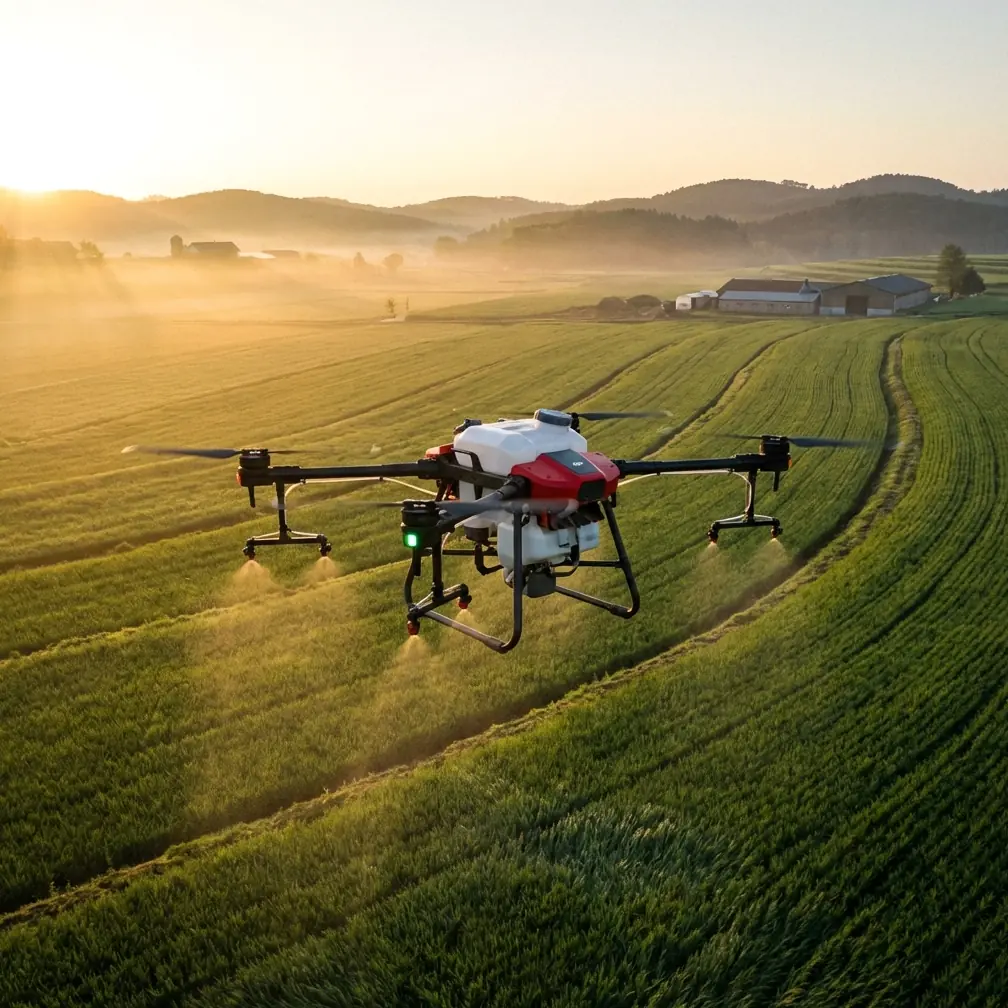
Monitoring Vineyards in Windy Conditions with the Agras T70P
META: Practical expert advice on using the Agras T70P for vineyard monitoring in wind, with insights on spray drift, RTK fix stability, antenna adjustment, nozzle calibration, swath control, and IPX6K field resilience.
Wind changes everything in a vineyard.
It changes how droplets move, how rows should be approached, how confidently an operator can trust a planned swath width, and even how stable positioning remains when terrain, trellis wire, and nearby infrastructure begin to interfere with signals. If the mission is to monitor vine health and apply treatments precisely, the Agras T70P has to do more than fly a route. It has to stay predictable in conditions that are rarely ideal.
That is where most vineyard operators run into the real problem. The challenge is not simply “flying in wind.” The challenge is preserving decision quality when multiple small errors begin to stack: spray drift at the canopy edge, uneven coverage from poor nozzle calibration, inconsistent RTK fix rate near reflective structures, and electromagnetic interference that quietly nudges positional confidence off center. On paper, each issue looks manageable. In the field, they compound quickly.
For vineyard teams working on exposed blocks, ridge lines, or valleys that funnel gusts between rows, the Agras T70P can be an effective platform precisely because it allows operators to tighten control over those variables rather than treat them as unavoidable noise.
The vineyard problem is really a precision problem
Vineyards punish imprecision. Row crops often offer more forgiveness because target zones are broader and canopy structures are less vertically complex. Grapevines are different. Canopy density changes block by block. Row spacing can vary. End-of-row turns happen near posts, wires, and machinery. A crosswind that looks minor on the ground can push droplets off target or distort coverage on the leeward side of the canopy.
That matters operationally for two reasons.
First, monitoring data loses value if position confidence is weak. If you are correlating visual or multispectral observations to a specific stress pattern, disease pocket, or irrigation inconsistency, centimeter precision matters. Not in a marketing sense, but in a practical one: the agronomist or manager needs to trust that the affected vines identified this week are the same ones being reviewed next week.
Second, treatment quality suffers when flight geometry and liquid delivery are not matched to actual wind behavior. Operators often focus on total area covered, but in vineyards the better metric is useful area covered accurately. A wide swath width sounds efficient until drift and canopy shadowing reduce deposition quality. A narrower pass with better placement can be the smarter choice.
Why the Agras T70P fits this kind of field work
The Agras T70P is most relevant in vineyards when it is treated as a precision field system rather than just a spraying aircraft. That means pairing route discipline, calibration, and signal integrity with the aircraft’s own robustness.
One detail that deserves more attention in vineyard operations is environmental durability. An IPX6K protection rating has practical value here. Vineyard work often includes dust, sticky residues, and repeated washdowns after treatment cycles. A platform that can tolerate high-pressure water ingress resistance is easier to keep in working condition during an intensive season. That does not merely reduce cleaning anxiety. It supports reliability over a campaign when every maintenance shortcut eventually becomes a downtime event.
The second detail is positioning performance. In vineyards, RTK fix rate is not a technical footnote. It is central to repeatability. If the aircraft maintains a stable high-quality fix, row-to-row consistency improves, overlap can be controlled more tightly, and revisit missions become more credible. When the fix becomes unstable, operators often compensate unconsciously by widening margins and reducing confidence in route fidelity. That costs time and can reduce the value of monitoring outputs.
Wind exposure reveals whether your setup is actually disciplined
Many operators assume that if the aircraft is advanced enough, it will absorb most environmental instability. In a vineyard, that assumption usually fails.
The better approach is to treat the T70P as a highly capable tool that still depends on disciplined setup. Three factors matter most in windy blocks: nozzle calibration, swath width management, and RTK integrity.
1. Nozzle calibration determines whether drift becomes a minor correction or a major loss
Spray drift is not only a weather issue. It is also a setup issue. If nozzles are not calibrated correctly, droplet size and flow consistency can vary enough to make wind effects much worse. In vineyards, where target surfaces are layered and partly shielded by leaves and trellis structure, this becomes especially costly.
A well-calibrated nozzle system helps the T70P maintain more predictable droplet behavior at the canopy face. That does not eliminate wind. It reduces unnecessary variability before the aircraft even leaves the ground. For operators monitoring vineyards and applying targeted treatments based on observed stress or disease pressure, this is one of the simplest ways to improve confidence in results.
The operational significance is straightforward: better calibration means less compensation later. Less compensation means routes can be planned around agronomy rather than around equipment uncertainty.
2. Swath width should be earned, not assumed
Swath width is often discussed as a headline efficiency metric. In windy vineyards, that mindset can be misleading.
A swath that works on flat, sheltered ground may not hold up on a sloped parcel where gusts move through open row ends. Trellis systems can also alter airflow in ways that make one side of the pass behave differently from the other. The T70P may be capable of broad coverage, but a vineyard operator should verify effective swath width under actual site conditions rather than rely on nominal values.
This is where experienced teams separate themselves. They use a conservative initial setting, assess deposition pattern and positional consistency, and only widen the working profile when the aircraft, the weather, and the canopy all support it. That protects both monitoring accuracy and application quality.
In practice, a slightly reduced swath width often improves more than coverage uniformity. It also gives the pilot and agronomy team cleaner data for comparing one block to the next.
3. RTK fix stability is the hidden backbone of repeatable vineyard work
Centimeter precision only matters if it is maintained when and where you need it. Vineyards can be surprisingly difficult environments for GNSS performance. Long trellis wires, nearby equipment sheds, terrain breaks, metal infrastructure, and even local signal reflections can degrade the quality of the RTK solution.
That is why RTK fix rate should be monitored as an active operational parameter, not treated as a background system status. If the fix is unstable at the edge of a block or near certain rows, the response should be procedural: identify the pattern, adjust the setup, and verify the fix before trusting route precision.
This is also the point where electromagnetic interference enters the picture.
Handling electromagnetic interference with antenna adjustment
Electromagnetic interference in vineyards is easy to underestimate because it rarely announces itself dramatically. Instead, it often appears as intermittent RTK instability, brief heading uncertainty, or minor route deviations that are blamed on wind. Sometimes wind is the culprit. Sometimes the signal environment is part of the problem.
A practical response starts with antenna placement and adjustment.
If the T70P is operating near reflective metal structures, power equipment, pumps, substations, communication hardware, or dense wire infrastructure, the RTK system may be dealing with a compromised signal environment. In those cases, small antenna adjustments can materially improve fix stability. The goal is not guesswork. The goal is to reduce masking, improve line-of-sight to satellites and correction sources, and minimize local interference exposure.
For vineyard operators, the operational significance is substantial. An improved antenna setup can restore a stronger RTK fix rate, which then supports more reliable row alignment and better repeatability between missions. That translates directly into cleaner monitoring comparisons, especially when using multispectral workflows to track vine vigor, stress response, or disease development over time.
A simple field habit helps: when a block repeatedly shows weak fix behavior, do not just rerun the mission. Pause and inspect the local signal environment. Reposition support equipment if necessary. Evaluate whether nearby metallic surfaces or powered devices are affecting the setup. Then verify that the antenna orientation and placement are optimized before resuming.
This is one of those areas where small procedural discipline pays back disproportionately.
If your team is troubleshooting RTK stability around vineyard infrastructure, this direct field support line for T70P setup questions can be useful when you need a quick second opinion on antenna positioning or interference checks.
Monitoring missions benefit from multispectral thinking, even when the immediate goal is spraying
The T70P discussion in vineyards should not be confined to application mechanics. Monitoring and treatment are increasingly linked. If a grower is using multispectral observations or other crop intelligence to identify stress zones, the aircraft’s ability to revisit rows with dependable precision becomes far more valuable.
This is where the chain of details starts to matter together.
A stable RTK fix rate improves the geographic trustworthiness of the monitoring pass. Antenna adjustment reduces the risk that electromagnetic interference corrupts that precision. Conservative swath width choices keep route execution stable in gusts. Proper nozzle calibration limits drift when a follow-up treatment is performed. And IPX6K durability supports frequent cleaning and field readiness during a busy disease-pressure window.
Individually, these may sound like technical footnotes. Operationally, they form a single system: observe accurately, return precisely, apply consistently.
That is what vineyard managers actually need.
A practical problem-solution framework for windy vineyard blocks
For teams using the Agras T70P in exposed vineyards, a workable framework looks like this:
Problem: Wind causes inconsistent canopy interaction and raises drift risk.
Solution: Reduce assumed swath width, validate the effective pattern in the block, and use nozzle calibration as a first-line control rather than trying to “fly through” setup problems.
Problem: RTK precision degrades near trellis-heavy zones or infrastructure.
Solution: Watch RTK fix rate actively. If instability appears repeatedly in the same area, investigate electromagnetic interference and make deliberate antenna adjustments before repeating the mission.
Problem: Monitoring outputs are hard to compare across dates.
Solution: Preserve centimeter precision through better signal discipline and repeatable route settings. This matters especially if multispectral interpretation is being used to guide agronomic action.
Problem: The aircraft is exposed to harsh field cleanup cycles.
Solution: Take advantage of the T70P’s IPX6K-rated resilience, but pair that with disciplined maintenance so washdown convenience supports reliability rather than encouraging careless handling.
What separates strong operators from average ones
The strongest T70P vineyard operators are rarely the ones chasing the largest area per hour. They are the ones who notice patterns.
They notice that one western edge always loses positional confidence in late afternoon. They recognize that a nominal swath width is too optimistic when valley winds start lifting across the rows. They recalibrate nozzles before uneven output becomes visible in the canopy. They do not dismiss intermittent RTK behavior as random. They investigate it.
That mindset is particularly valuable in vineyards because the crop rewards consistency. A mission that is 90 percent right may still leave a disease-prone edge untreated correctly or mislabel a stress pocket in a monitoring workflow. Precision agriculture only earns the name when the precision is defended in real conditions.
Final takeaway for vineyard teams using the T70P
The Agras T70P makes sense in windy vineyard operations when it is used as a precision platform with field discipline behind it. The headline capabilities matter, but the details determine whether those capabilities survive contact with real terrain and weather.
Two details stand out above the rest. The first is RTK fix rate, because vineyard monitoring depends on trustworthy, repeatable positioning at centimeter precision. The second is nozzle calibration, because spray drift and coverage inconsistency often begin at the liquid delivery system long before they become visible in the air. Add careful antenna adjustment when electromagnetic interference appears, and the aircraft becomes far more dependable in difficult blocks.
For growers and operators working among trellis lines, variable canopy density, and wind-exposed rows, that is the difference between simply flying a mission and producing information and application quality that can be trusted.
Ready for your own Agras T70P? Contact our team for expert consultation.