
Agras T70P for Highway Monitoring in Low Light
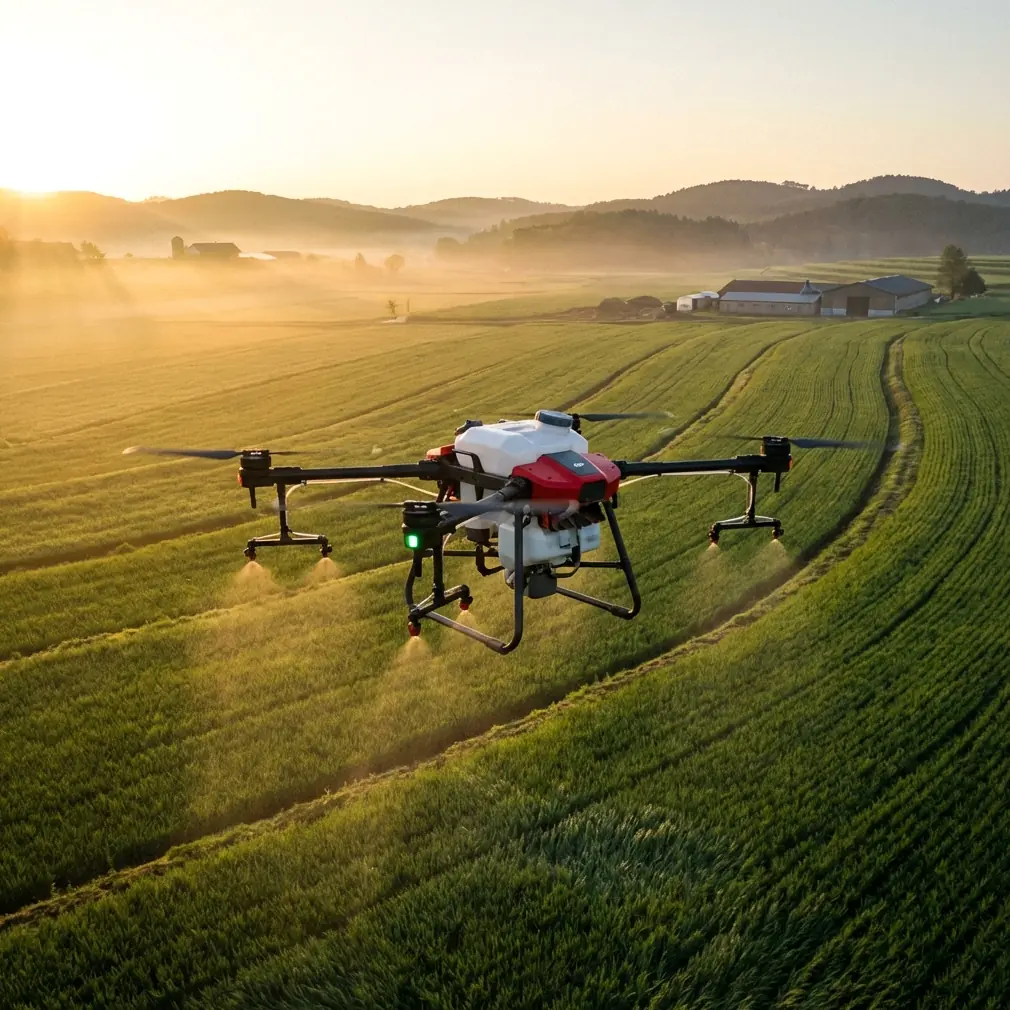
Agras T70P for Highway Monitoring in Low Light: A Practical Flight Strategy
META: Expert tutorial on using the Agras T70P for low-light highway monitoring, with optimal flight altitude, RTK precision, nozzle setup, and drift control insights.
Highway monitoring at dawn, dusk, or under overcast low-light conditions asks more from a drone pilot than a standard daylight field mission. Contrast drops. Surface texture becomes harder to read. Lane markings can bloom under vehicle headlights while shoulders and embankments fall into shadow. If your platform is the Agras T70P, the challenge is even more specific: this aircraft was designed first for agricultural work, so extracting reliable highway inspection value from it depends on how well you adapt its strengths rather than pretending it is a purpose-built police or corridor-survey drone.
That is the right starting point. Not hype. Configuration.
I’m writing this from the standpoint of operational design, not brochure language. The Agras T70P can be useful in low-light highway monitoring when the mission is tightly scoped: shoulder condition checks, vegetation encroachment review, runoff pattern observation, barrier-line continuity, and post-treatment corridor assessment near transport infrastructure. In those tasks, the platform’s stability, payload logic, route discipline, and centimeter-level positioning can become real advantages. But only if altitude, swath planning, RTK behavior, and even spray-system settings are treated with discipline.
Yes, even spray-system settings. On a platform like the T70P, nozzle calibration and drift management are not side notes. They change the aircraft’s balance, mission efficiency, and sensing clarity, especially when operating near active roads in marginal light.
Why low-light highway work is different on the T70P
The first thing to understand is that low-light monitoring is not just “normal flying, but darker.” In practice, low light compresses the visual margin for error. Small pavement defects, edge rutting, pooled water, and vegetation intrusion stop standing out cleanly. The operator has less tolerance for unstable altitude, vague route overlap, and positional drift.
That is where RTK matters. If your T70P is holding a strong RTK fix rate, the aircraft is not simply following a rough path over a road corridor; it is repeatedly placing itself with centimeter precision relative to prior passes and known corridor geometry. That changes the quality of comparison work. If you are revisiting the same highway shoulder after rainfall, herbicide treatment, or maintenance activity, repeatability is often more valuable than raw speed. A visually impressive pass means little if your second mission does not line up with the first.
For low-light work, I would prioritize route consistency over aggressive coverage speed every time.
The optimal flight altitude for this scenario
For highway monitoring in low light, my preferred working altitude on the Agras T70P is typically 8 to 15 meters above the target surface, with 10 to 12 meters being the practical sweet spot for most corridor checks.
That number is not arbitrary. It balances four competing demands:
- Image readability in weak light
- Obstacle margin around signs, poles, and barriers
- Route stability near the corridor edge
- Useful ground detail without excessive noise
At heights above roughly 15 meters, low-light conditions begin to flatten small but operationally important details. Surface cracking, shoulder edge fraying, pooling water, and narrow vegetation intrusion become easier to miss, especially if the operator is relying on live view rather than slower analytical review. Headlight glare from passing vehicles also spreads more across the frame when you are trying to interpret detail from too high up.
Go too low, however, and the T70P becomes less forgiving around roadside clutter. Guardrails, reflective signage, lighting columns, tree lines, overhead cables, and uneven embankments all compress your safe operating envelope. This is particularly problematic in low light because depth perception and obstacle contrast degrade faster than many pilots expect.
So if you want one field-ready recommendation, use 10 to 12 meters AGL as your baseline. Raise toward 15 meters only where roadside clutter or terrain shape demands more clearance. Drop toward 8 meters only when the task is highly specific, speeds are conservative, and obstacle conditions are fully understood.
That altitude band also supports more disciplined swath width planning. Even though the T70P is associated with broad-area agricultural coverage, highway work benefits from narrower, cleaner corridor passes. Wider isn’t better if shoulder defects disappear into low-contrast imagery.
Swath width should be tightened, not stretched
The temptation with a large-capacity agricultural drone is to think in terms of maximum area productivity. That instinct hurts corridor monitoring.
On highway missions, your swath width should be treated as an interpretation variable, not just a coverage variable. In low light, a narrower effective swath gives the operator cleaner edge definition and more dependable overlap. For a road shoulder, median edge, drainage strip, or embankment transition, that is exactly what you need.
If your target area is the paved shoulder and adjacent verge, I recommend designing the route so each pass captures the pavement edge plus a controlled margin of surrounding ground rather than trying to absorb the whole roadside scene in one shot. The operational benefit is straightforward: you reduce visual clutter, improve defect discrimination, and make repeat flights easier to compare.
This is where centimeter precision and a strong RTK fix rate become operationally significant rather than just technically impressive. A repeatable corridor path lets you compare vegetation growth, runoff channels, or post-maintenance changes without guessing whether the aircraft simply drifted off line on the previous mission.
Why nozzle calibration still matters during monitoring
Some operators assume that if the task is “monitoring,” the spray system is irrelevant. On the Agras T70P, that is a mistake.
If the aircraft is configured for dual-use operations, or if the mission follows a treatment pass along roadside vegetation, nozzle calibration directly affects aircraft behavior and mission trustworthiness. Uneven nozzle output creates uneven mass flow and can subtly affect handling, endurance, and pass consistency. It also undermines post-flight interpretation because you can no longer separate a true application issue from a route or environmental issue.
For example, if you are monitoring the effectiveness of a roadside vegetation treatment in low light the next morning, you need confidence that the original application was actually uniform. Poor nozzle calibration corrupts the monitoring story before the aircraft ever leaves the ground.
There is also a safety dimension. Highway corridors are sensitive environments. Spray drift near live traffic lanes, drainage infrastructure, or adjacent land use is not an academic concern. It is a mission-planning constraint. If a T70P is being used in a sequence of treatment and verification flights, the pilot must tune droplet behavior, pressure logic, and route placement to minimize off-target movement. Drift is harder to evaluate visually in low light, which makes pre-flight setup even more critical.
In other words, monitoring quality begins with application discipline.
Managing spray drift near highways
Spray drift deserves its own section because it sits at the intersection of flight safety, environmental control, and data interpretation.
Near highways, drift is amplified by vehicle-induced airflow, crosswinds along open corridors, heat differentials over pavement, and the turbulence created by embankments and noise barriers. Low light often arrives with changing atmospheric conditions, especially at dawn and dusk, when air can seem calm at launch but behave very differently once the drone settles into a corridor.
The T70P gives you the ability to execute highly repeatable passes, but repeatability only helps if the environmental model is realistic. When planning a low-light corridor mission, assume that the pavement itself may alter local airflow. That means you should avoid using the widest practical swath or the fastest practical transit when the task has any treatment component. A conservative line with tighter overlap and verified nozzle calibration is usually the superior choice.
Operationally, this matters because later monitoring results are only as trustworthy as the treatment geometry. If drift carried material toward the lane edge or away from the target shoulder, a low-light inspection may falsely suggest poor efficacy when the real issue was deposition error.
RTK fix rate is the quiet hero
A lot of public discussion about agricultural drones fixates on payload and throughput. For highway monitoring, neither is the lead story. The quiet hero is positional discipline.
A robust RTK fix rate gives the Agras T70P something highway operators value immensely: repeatable geometry. That means you can fly the same shoulder at the same relative offset, inspect the same runoff line after weather events, and compare encroachment at the same barrier sections with less ambiguity. In practical terms, you move from “general observation” toward “structured monitoring.”
This is also the best answer to a common misconception: that low-light operations should always be flown higher to stay safe. Safety is not just a function of altitude. It is a function of predictability. A T70P with stable route control, verified obstacles, disciplined speed, and solid RTK performance at 10 to 12 meters is often safer and more useful than a loosely managed flight at 20 meters that sacrifices detail and pushes the operator into guesswork.
If you are troubleshooting inconsistent repeat flights, check RTK behavior before blaming the camera feed, the weather, or the pilot’s memory of the route.
What about multispectral use?
The mention of multispectral tools often draws interest because roadside monitoring is not only about pavement. It can include vegetation stress, drainage-related growth patterns, and treatment assessment over linear infrastructure corridors. If your broader workflow includes multispectral analysis, the T70P can contribute meaningfully as part of that operational chain, even if it is not the sole sensing platform.
The key is to understand role separation. In low-light highway work, the T70P is strongest when used for stable corridor execution, repeatable route following, and treatment-linked monitoring. If you are integrating multispectral outputs from another stage of the workflow, the T70P’s value lies in helping maintain geographic consistency and operational timing around those datasets. That is particularly useful in roadside vegetation management, where visible symptoms and spectral changes do not always peak at the same time.
So yes, multispectral thinking belongs in the planning conversation. But the T70P should be assigned tasks that suit its flight character rather than burdened with every sensing expectation at once.
Weather resilience and the practical value of IPX6K
One detail that matters more than many people admit is environmental resilience. The T70P’s IPX6K protection level is operationally meaningful for corridor work because highway edges are rarely clean environments. Dust, wet vegetation, fine spray residue, roadside grime, and intermittent precipitation all impose wear on aircraft operating close to infrastructure.
That does not mean you should treat poor weather casually. It means the aircraft is better aligned with the realities of repeated field deployment. On low-light missions, especially around damp shoulders or post-rain inspections, that resilience supports reliability and maintenance confidence. Professionals notice the difference over time.
The operational significance is simple: an aircraft that tolerates harsh field conditions is more likely to remain mission-ready when you need repeat flights to compare change across days or weeks.
A practical low-light setup checklist
For a highway monitoring mission with the Agras T70P, here is the setup logic I recommend:
- Set your baseline altitude at 10 to 12 meters AGL
- Narrow the route to the actual inspection corridor instead of maximizing area
- Confirm strong RTK lock before beginning any repeatability-dependent mission
- Verify nozzle calibration if the aircraft is also used for treatment work
- Reduce assumptions about drift near pavement and active traffic
- Plan shorter, cleaner passes rather than broad, visually cluttered coverage
- Build the mission around a single question: surface condition, vegetation encroachment, runoff, or treatment verification
That last point matters. A highway monitoring sortie fails more often from a vague objective than from a technical limitation. The T70P is at its best when the operator knows exactly what the pass is supposed to reveal.
If you want to discuss a corridor-specific setup with a real operator workflow in mind, you can message our flight team here.
The real takeaway
The Agras T70P is not the obvious first name people mention for low-light highway monitoring. That is precisely why disciplined operators can get strong results from it. Its value does not come from pretending it is something else. It comes from leveraging what it already does well: stable repeatable flight, precise routing, durable field performance, and compatibility with tightly managed treatment-monitoring workflows.
For this scenario, the single most useful adjustment is altitude discipline. Start at 10 to 12 meters above ground level and treat that as the center of your operating envelope. Pair it with a high RTK fix rate, narrower swath planning, careful nozzle calibration, and a realistic drift model near pavement. Those decisions do more for low-light monitoring quality than any generic promise about “advanced drone capability.”
Highway environments punish vague setups. The T70P rewards exact ones.
Ready for your own Agras T70P? Contact our team for expert consultation.