
Agras T70P in Complex Coastline Monitoring
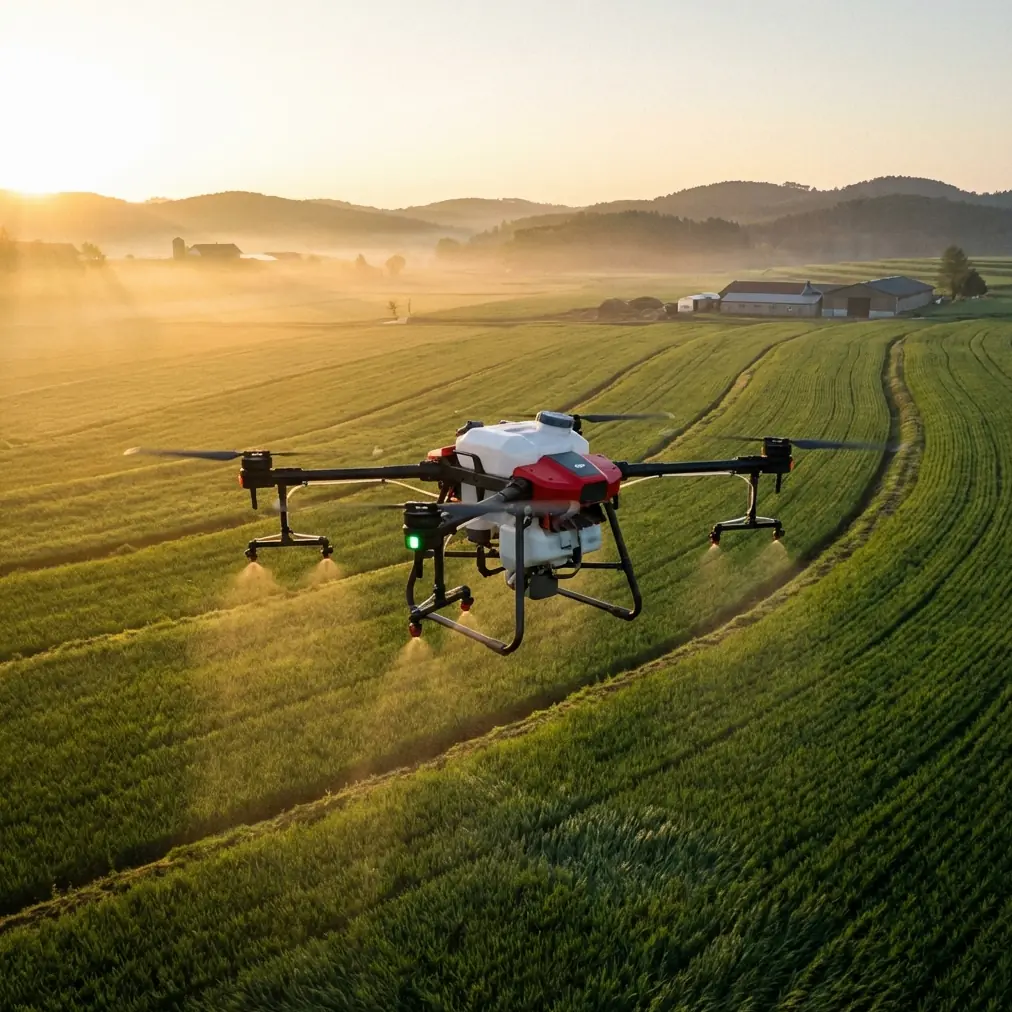
Agras T70P in Complex Coastline Monitoring: A Field Report from the Edge of Wind, Salt, and Geometry
META: A field report on using the Agras T70P for coastline monitoring in difficult terrain, with practical insight on precision flight, drift control, calibration discipline, and why structured training matters.
I did not come to the Agras T70P from a brochure mindset. I came to it from a recurring operational problem.
Coastlines look simple on a map. In practice, they are broken lines full of traps: irregular embankments, salt marsh transitions, wind shear over rock faces, access roads that disappear into mud, and narrow work windows between tide movement and weather. If your aircraft, crew workflow, or data discipline is even slightly loose, those weaknesses show up immediately.
My own turning point came after a season of monitoring exposed shoreline sections where vegetation stress, drainage failure, and erosion patterns had to be documented with more consistency than our previous routine allowed. The challenge was not just flying. It was flying repeatably along awkward edges while keeping coverage, maintaining positional confidence, and reducing the small errors that accumulate when terrain and wind refuse to cooperate.
That is where the Agras T70P started to make sense.
This is not a generic overview. It is a practical reading of why this platform matters when the job is coastline monitoring in complex terrain, especially when precision, repeatability, and environmental robustness all matter at once.
Coastline work punishes sloppy systems
A coastal monitoring mission demands a different mentality from ordinary field operations. The aircraft is dealing with reflective water, gust fronts, saline moisture, uneven takeoff areas, and routes that rarely form neat geometric blocks. On inland sites, a pilot can often absorb minor route errors without losing the mission objective. Along the coast, those same errors can distort trend analysis, skew treatment boundaries, or create uneven application patterns if the mission includes environmental management tasks.
That is why I pay close attention to two things before I look at any headline specification: route discipline and response discipline.
Route discipline is about whether the aircraft can hold intended geometry with dependable positioning. Response discipline is about how predictably the system behaves when the operator needs to adjust speed, direction, or task profile in changing conditions. The T70P’s value begins there.
The context supplied for this article points to concepts such as RTK fix rate, centimeter precision, swath width, nozzle calibration, spray drift, multispectral integration, and IPX6K-grade durability. Those are not scattered marketing terms. In shoreline work, they form a chain. Break one link and the mission quality drops.
Why centimeter-level positioning matters more on a coastline than in an open field
Abrasive wind and complex terrain turn small navigational inaccuracies into operational waste. If you are monitoring dune edges, drainage cuts, invasive growth zones, or salt-affected vegetation boundaries, the difference between “close enough” and centimeter precision is not academic. It changes whether your revisits are scientifically comparable.
That is why the RTK side of the Agras T70P is not a nice extra. A strong RTK fix rate is one of the platform’s most practical strengths for this kind of work. When the aircraft can repeatedly hold its line with centimeter precision, the operator gains something more valuable than neat maps: confidence in temporal comparison.
In other words, when you return to the same stretch of coastline weeks later, you are less likely to be comparing two slightly different routes and calling it environmental change. You are comparing like with like. That distinction matters for erosion tracking, vegetation monitoring, boundary maintenance, and any workflow where repeated surveys need to stand up to scrutiny.
I have seen teams underestimate this. They focus on total area covered and ignore route reproducibility. Then, months later, they discover that the variation in the flight path is contaminating the variation they thought they were measuring in the landscape.
The T70P is most useful when it prevents that mistake.
The old lesson from training drones still applies
One of the more interesting reference details came not from an agricultural airframe at all, but from a DJI TT educational drone manual. It describes a structured indoor exercise where the aircraft maintains a relative distance of 80 centimeters from challenge cards, then performs programmed behaviors such as follow flight and automatic landing based on card numbers. In another task, the drone takes off from “challenge card 1,” flies a rectangular route for 2 laps, and displays the card number when passing overhead.
At first glance, that sounds far removed from a professional coastline mission. It is not.
Those training scenarios teach a discipline that scales surprisingly well to the T70P: treat route geometry as a controlled variable, not an improvisation. A rectangle flown twice in a classroom is a simplified version of what experienced operators need to do on a shoreline edge—repeat a defined path, verify waypoint logic, and ensure that the aircraft’s behavior at known positions is predictable.
That operational significance is easy to miss. The point is not the challenge card itself. The point is that repeatability has to be designed and practiced. When we moved our own teams toward more structured route planning for complicated coast sections, performance improved less because the terrain got easier and more because the workflow got stricter.
The T70P rewards that discipline. It is not a platform that removes the need for careful mission design. It is a platform that makes careful mission design pay off.
Swath width is useful only when matched to coastline geometry
People often talk about swath width as if a wider pass is automatically better. Coastline monitoring exposes the weakness in that logic.
On a shoreline with bends, retaining structures, creek mouths, rocks, and fragmented vegetation bands, the wrong swath width can create overlap waste on one side and undercoverage on the other. The T70P’s operational advantage is not simply that it can cover ground efficiently. It is that the coverage plan can be tuned to the site rather than forced onto it.
That becomes especially relevant where environmental management is paired with observation. If the mission includes targeted application work, spray drift becomes the limiting factor. On the coast, wind direction is rarely stable for long, and sea breezes can shift enough to move droplets off target, especially along exposed embankments.
Here, nozzle calibration is not paperwork. It is mission control.
A well-calibrated nozzle setup helps align flow, droplet behavior, and aircraft speed with the actual shape of the treatment corridor. In practice, that means fewer assumptions and tighter control over what reaches the intended zone. When people ask me what improves shoreline spraying quality fastest, I usually do not start with hardware. I start with calibration discipline and wind-aware planning. The T70P gives you a capable platform, but the operator still has to earn precision.
The hidden-function lesson from smartphones applies surprisingly well
Another reference item mentioned a smartphone article aimed at middle-aged and elderly users who often photograph flowers, family, and scenery. It argued that blurry images, poor lighting, and messy composition are frequently caused not by bad phones, but by people not knowing the device’s hidden functions. The article promised six hidden camera features that improve results without editing.
That observation transfers almost perfectly to advanced drone operations.
I have met crews who assumed weak mission output meant the aircraft was underperforming. In reality, the bottleneck was usually underused system capability. They were flying a sophisticated platform with the habits of a casual operator. Their route setup was crude, calibration was inconsistent, environmental variables were not being logged carefully, and onboard precision features were treated as optional.
The smartphone analogy matters because it explains a common T70P failure mode: not technical failure, but operational underuse.
If your results are blurry in a drone sense—uneven coverage, weak revisit consistency, poor edge definition, uncertain treatment boundaries—the first question should not be “Is the aircraft inadequate?” It should be “Are we fully using the control, positioning, and calibration tools already available?”
That shift in thinking saved us time. Instead of chasing hardware excuses, we tightened procedures.
IPX6K matters more than people admit
Salt air is unforgiving. So is spray mist. Add rough weather margins and repeated field deployment, and equipment sealing becomes a serious operational concern rather than a specification to skim past.
That is why IPX6K-grade protection deserves attention in the T70P conversation. For coastline teams, environmental resistance affects uptime, maintenance burden, and confidence in the field. It does not make the aircraft invulnerable, and it does not remove the need for proper post-mission cleaning and inspection. But it does mean the platform is built with harsher exposure in mind.
In practical terms, that matters on days when the mission site is damp before takeoff, when saline residue is unavoidable, or when light spray and airborne moisture are part of the work environment. Operators working inland sometimes underestimate how quickly coastal conditions exploit weak sealing and poor maintenance habits. Along the shoreline, durability is not glamorous. It is operational continuity.
Multispectral thinking changes the mission from observation to interpretation
A coastline can look stable to the eye while shifting biologically or hydrologically underneath. That is where multispectral workflows become useful. Not every site requires them, but when the objective includes identifying plant stress, tracking moisture patterns, or separating healthy cover from degraded zones, visible observation alone may not be enough.
The T70P becomes more interesting when used as part of a broader evidence chain rather than as a standalone flying machine. That chain can include repeatable routes, RTK-backed positioning, calibrated application parameters, and multispectral interpretation where needed.
The operational significance is straightforward: you stop merely documenting the coastline and start diagnosing it.
This is especially relevant where vegetation management and environmental monitoring overlap. A visual pass may show patchiness. Multispectral data can help determine whether that patchiness reflects salt stress, drainage imbalance, disease pressure, or a boundary effect from prior treatment distribution. Better diagnosis leads to better route design the next time the aircraft goes up.
Responsiveness matters, but not in the way hobby pilots discuss it
The BLHeli manual in the reference set may seem peripheral, but one detail is worth borrowing conceptually: throttle change rate values range through settings such as 2, 3, 4, 6, 8, 12, 16, 24, 32, 48, 64, reflecting how response behavior can be tuned rather than assumed. That document is not about the T70P, and I would not map those settings directly onto this platform. But the underlying lesson is relevant.
Aircraft behavior is not just about raw power. It is about controlled response. In coastline operations, abrupt or poorly matched response can undermine route quality, especially near irregular edges and changing wind bands. What professionals want is not aggressive feel. They want a predictable aircraft that transitions cleanly and holds mission intent under load and environmental variability.
The significance here is operational temperament. A useful coastline platform behaves consistently enough that the pilot can think ahead instead of constantly correcting. That is part of what made the T70P easier for our workflows: less mental energy spent wrestling the route, more attention available for the site itself.
What changed for us after adopting a stricter T70P workflow
The biggest improvement was not spectacle. It was fewer avoidable mistakes.
We became more disciplined about pre-mission nozzle calibration. We stopped treating RTK consistency as a background assumption and started logging it as a mission-quality variable. We tailored swath width to the shoreline segment rather than using one blanket setting. We paid closer attention to spray drift windows and postponed flights more often when the conditions were wrong. And we designed our route logic with the same mindset seen in training exercises: repeatable geometry first, improvisation second.
That combination made complex coastal sections easier to manage.
The T70P did not magically simplify the terrain. It gave us a platform robust enough and precise enough that good decisions produced visible benefits. That is the real threshold with professional UAVs. A strong aircraft amplifies discipline. A weak workflow squanders it.
If you are evaluating the Agras T70P for coastline monitoring, that is the frame I would use. Look past broad claims and ask harder questions. How well can your team repeat a mission line? How confident are you in your RTK fix stability? Are your nozzle calibration habits good enough for windy, irregular margins? Is your swath planning matched to actual geography? Do you have a data path that turns flight output into interpretation?
If those answers are mature, the T70P can be a serious tool in this environment.
And if you are still shaping the workflow, that is normal too. The fastest progress usually comes from tightening procedures around the aircraft you already have or plan to deploy. If you want to compare route planning or coastline setup scenarios with someone who has worked through them, you can message us here.
The Agras T70P earns its place on difficult coastlines not because the landscape becomes forgiving, but because the aircraft gives a disciplined team a better chance to stay precise when the landscape is anything but.
Ready for your own Agras T70P? Contact our team for expert consultation.