
Agras T70P Best Practices for Mapping Construction Sites
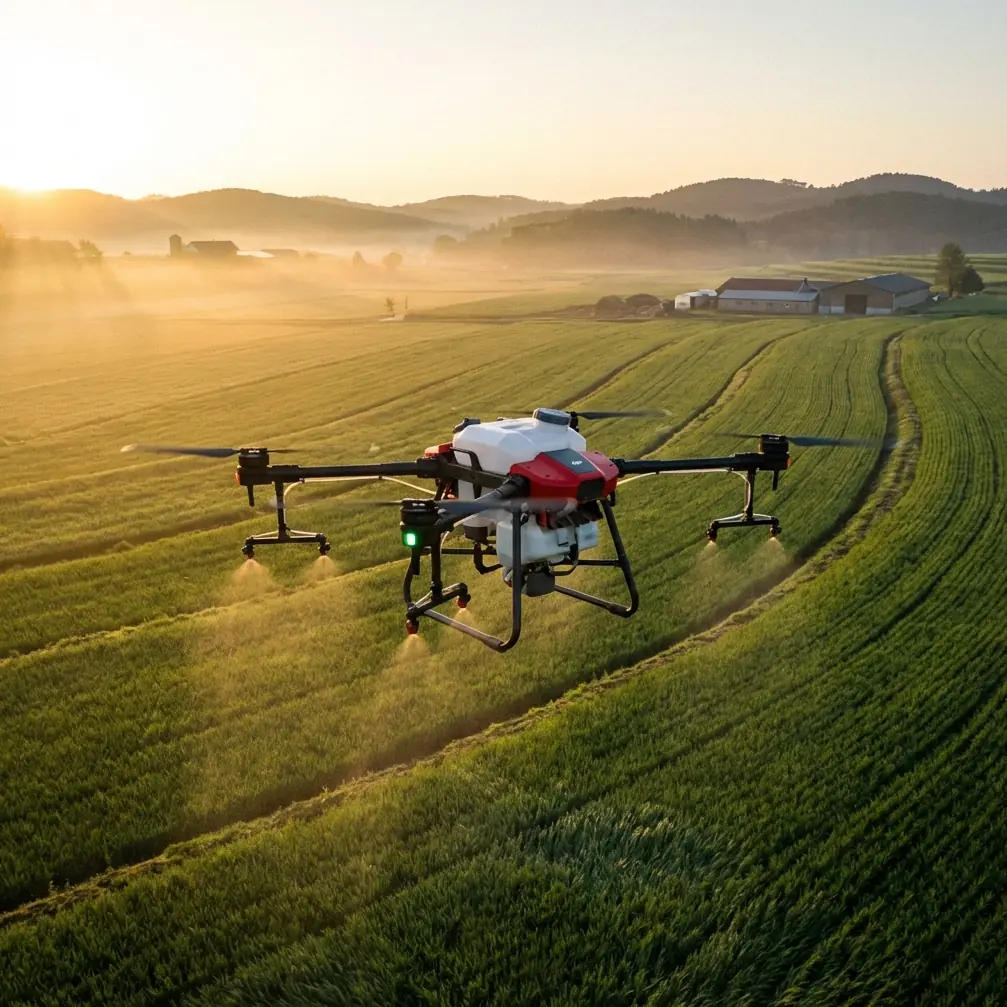
Agras T70P Best Practices for Mapping Construction Sites in Low Light
META: Practical Agras T70P low-light mapping guide covering RTK setup, antenna positioning, swath planning, nozzle considerations, and field-proven tips for construction site accuracy.
Low-light site mapping changes the way you have to think about aircraft setup. The margins get tighter. Visual references soften. Dust, reflective surfaces, and uneven terrain start to interfere with both the pilot’s judgment and the aircraft’s positioning confidence. If you are using the Agras T70P around construction activity at dawn, dusk, or under overcast conditions, the difference between a clean data capture and a wasted sortie often comes down to preparation rather than flying skill.
That is especially true when the mission is not simple crop application but structured site documentation. Construction teams usually care about measurable outputs: edge conditions, stockpile changes, trench progress, access road grading, drainage patterns, and equipment staging. In that environment, the Agras T70P has to be treated less like a general-purpose ag platform and more like a precision field tool that happens to be operating in difficult lighting.
I approach this kind of mission with a simple principle: if visibility drops, your tolerance for weak positioning drops with it. A low-light mapping run only works when the aircraft is holding a stable RTK fix, the antenna layout is optimized for signal integrity, and the flight plan respects the realities of a cluttered work zone.
Start with the right expectation for the T70P
The Agras T70P is better known in conversations about payload, spraying efficiency, swath width, and field productivity. That reputation can cause operators to overlook how useful the platform can be in adjacent workflows where stability, repeatability, and environmental resilience matter just as much. On a construction site, those same traits become valuable for capturing consistent passes over rough ground and active machinery corridors.
One detail that matters immediately is environmental protection. The T70P’s IPX6K-rated design is not just a spec-sheet talking point. On low-light construction jobs, you are often flying in exactly the conditions that create sensor contamination and maintenance issues: wet dust, residual mud spray, light rain, and washdown environments. An aircraft that can tolerate aggressive exposure gives you more operational continuity between sorties and reduces the chance that grime buildup interrupts a time-sensitive capture window.
That resilience does not make the aircraft invincible. It does mean you can plan more confidently for early-morning moisture and dusty evening work, both of which are common when site crews try to avoid mid-day heat or heavy equipment congestion.
Why RTK fix rate matters more in low light
If there is one number to care about before takeoff, it is not speed or acreage coverage. It is your RTK fix rate and the consistency of that lock across the whole mission. Construction mapping depends on repeatable geometry. When you compare progress between flights, small positioning errors start to look like actual earthwork movement. That is how bad decisions get made.
Centimeter precision is not a luxury on a construction site. It is the basis for comparing cuts, fills, material piles, and temporary boundaries with confidence. In bright conditions, a pilot can sometimes catch subtle drift visually and intervene early. In low light, that safety net weakens. If the RTK solution degrades, the aircraft may still fly, but your dataset may stop being trustworthy.
That is why I recommend a stricter go/no-go threshold for low-light work than many operators use during routine daylight flights. Do not settle for an intermittent fix simply because the aircraft is technically airborne. Watch the fix behavior before launch, verify base or network corrections are stable, and confirm the site itself is not creating signal shadows from cranes, steel framing, temporary offices, or concrete structures.
A good habit is to hold on the pad for a short confirmation period after startup rather than rushing to lift. If the fix is unstable on the ground, it rarely improves once you are out over a mixed-reflectivity surface with more interference sources.
Antenna positioning advice for maximum range
This is the field detail that gets ignored until range collapses at the worst possible moment. Antenna placement is not an accessory decision. It is part of the flight system.
For maximum range and cleaner control links on a construction site, position the controller antennas so the broad face of the antenna pattern is aimed toward the aircraft’s operating area, not the tips. Too many pilots point antenna ends at the drone, which weakens the link. Keep the controller high on your body line rather than low against your torso, because your body absorbs and blocks signal more than most operators realize. If you are wearing a radio vest, tool belt, or heavy jacket, that blockage can get worse.
Your own position on the site matters just as much. Stand where the aircraft’s expected route maintains the cleanest possible line of sight. That usually means avoiding placement beside site containers, rebar stacks, concrete pump trucks, and steel-framed structures. Even moving five to ten meters to the side can significantly improve signal continuity if it clears a reflective or blocking object from the path.
For longer runs, I prefer to place myself on slightly elevated ground with an unobstructed view of the mission box, even if that means a longer walk from vehicle staging. Antennas work best when the signal path is simple. Construction sites rarely offer a simple path, so you have to create one.
If you want a second opinion on field layout before launch, send your mission sketch through our WhatsApp flight review channel. It is often easier to spot a signal problem from the site geometry than from the aircraft menu.
Plan swath width conservatively, not aggressively
Operators coming from agricultural use often think in terms of maximizing swath width and reducing pass count. That instinct can work against you during low-light mapping around construction activity.
A narrower, more controlled swath usually produces better consistency in environments with variable elevation, temporary obstacles, and visual ambiguity. The wider your pass spacing, the more exposed you are to overlap gaps if the aircraft has to compensate for crosswind, signal variation, or obstacle avoidance. On a farm field that may be manageable. On a construction site where you need dependable visual continuity around piles, retaining edges, or trench lines, it can create data holes exactly where the client needs clarity.
The practical point is simple: choose a swath plan that reflects the site, not the aircraft’s theoretical maximum coverage. If the site has tall equipment, scaffold sections, utility poles, or changing grade, build in overlap margin. Low-light operations reward disciplined redundancy.
Spray system details still matter, even during mapping workflows
This may sound counterintuitive, but the spray system cannot be ignored just because your primary goal is mapping or inspection. The Agras T70P is still a spray platform at heart, and anything left uncalibrated or improperly configured can affect aircraft balance, residue, contamination risk, and operational safety.
Nozzle calibration is one of those overlooked checks that has indirect value. A mismatched or partially clogged nozzle can alter spray symmetry and leave residue patterns that contaminate parts of the airframe or landing area. On a construction site, where dust and moisture already combine into abrasive grime, that creates more cleanup and more chances for sensor obstruction.
Spray drift is another consideration when the aircraft is working near exposed materials, survey markers, fresh concrete forms, or crews. If the aircraft is carrying liquid during adjacent site tasks, low-light periods often overlap with changing wind behavior near dawn or sunset. Surface winds may appear calm while localized gusts move unpredictably around structures. That can push droplets or mist into sensitive areas.
Even if your mapping mission is separate from application work, treat the T70P as a system that must be clean, balanced, and correctly configured before every data-collection flight. Precision starts long before waypoint one.
Use multispectral thinking, even if the mission is visual
Not every low-light construction mission requires a dedicated multispectral workflow, but the mindset behind multispectral operations is useful. It forces the operator to think about contrast, material differentiation, and how surface conditions change what the aircraft can reliably detect.
Low light flattens textures. Compacted soil, gravel, wet concrete, and standing water can start to look deceptively similar from the air, especially late in the day. If you plan as though the site will visually separate itself for you, you may end up with weak usable detail. Instead, identify before takeoff which features are likely to lose contrast and design the route around stronger capture geometry, slower passes, and better overlap.
This is where experienced operators outperform checklist-only pilots. They do not just fly the box. They predict where the image set will struggle and compensate in advance.
Site-specific low-light checklist I use with the T70P
Here is the framework I recommend when the mission window is early morning, late afternoon, or heavy overcast:
- Arrive early enough to evaluate reflective hazards. Standing water, metal decking, glass, and fresh aggregate can distort visual judgment in dim conditions.
- Verify RTK corrections before motor start, then confirm the fix remains stable during a short hold at the launch point.
- Choose the pilot position based on line of sight, not convenience. The best antenna placement cannot rescue a bad operating position.
- Reduce route ambition. Keep the mission box tight enough that you can monitor aircraft behavior without chasing the aircraft visually.
- Increase overlap margin where terrain changes abruptly or equipment moves through the area.
- Confirm the airframe is clean, especially around sensors, landing gear, and any spray-related components.
- Recheck nozzle calibration and tank state if the aircraft has recently been used for application work.
- Watch micro-weather, not just the forecast. Wind around unfinished structures can behave very differently from the nearest weather station report.
That list is not elaborate. It is practical. Most failed low-light jobs do not fail because the aircraft is incapable. They fail because site conditions were treated casually.
Common mistakes that reduce mapping quality
The first mistake is trusting visual orientation more than positioning quality. In low light, your eyes become less reliable before your confidence does. If the RTK fix rate is drifting or corrections are unstable, stop there and fix the root issue.
The second is poor antenna discipline. A pilot can have a capable aircraft and still create avoidable range problems by standing beside a steel object, pointing antenna tips at the drone, or letting their own body block the signal path.
The third is carrying over agricultural efficiency habits into a construction workflow. Maximum swath width is not the target. Repeatable data is. Those are not the same thing.
The fourth is ignoring residue, dust, and moisture because the aircraft is weather resistant. IPX6K protection helps you keep working in harsh conditions, but it does not replace maintenance between sorties. Low-light flying exaggerates the consequences of a dirty platform.
What separates a clean mission from a frustrating one
On paper, low-light mapping with the Agras T70P sounds like a niche use case. In practice, it is exactly the kind of mission where disciplined operators can extract real value from the platform. Construction sites often need documentation outside peak daylight hours because crews, equipment, and weather do not wait for ideal imaging conditions.
The operators who get repeatable results are the ones who treat positioning as the foundation, protect link quality through smart antenna placement, and plan their swath width around the site’s complexity rather than chasing raw coverage. They also understand that details such as nozzle calibration, spray drift awareness, and airframe cleanliness still affect mission quality even when the aircraft is being used beyond classic application work.
If you are mapping in dim conditions, do not ask whether the T70P can technically fly the mission. Ask whether your setup can preserve centimeter precision from takeoff to landing. That is the standard that matters.
Ready for your own Agras T70P? Contact our team for expert consultation.