
T70P Vineyard Inspection Tips for High Altitude
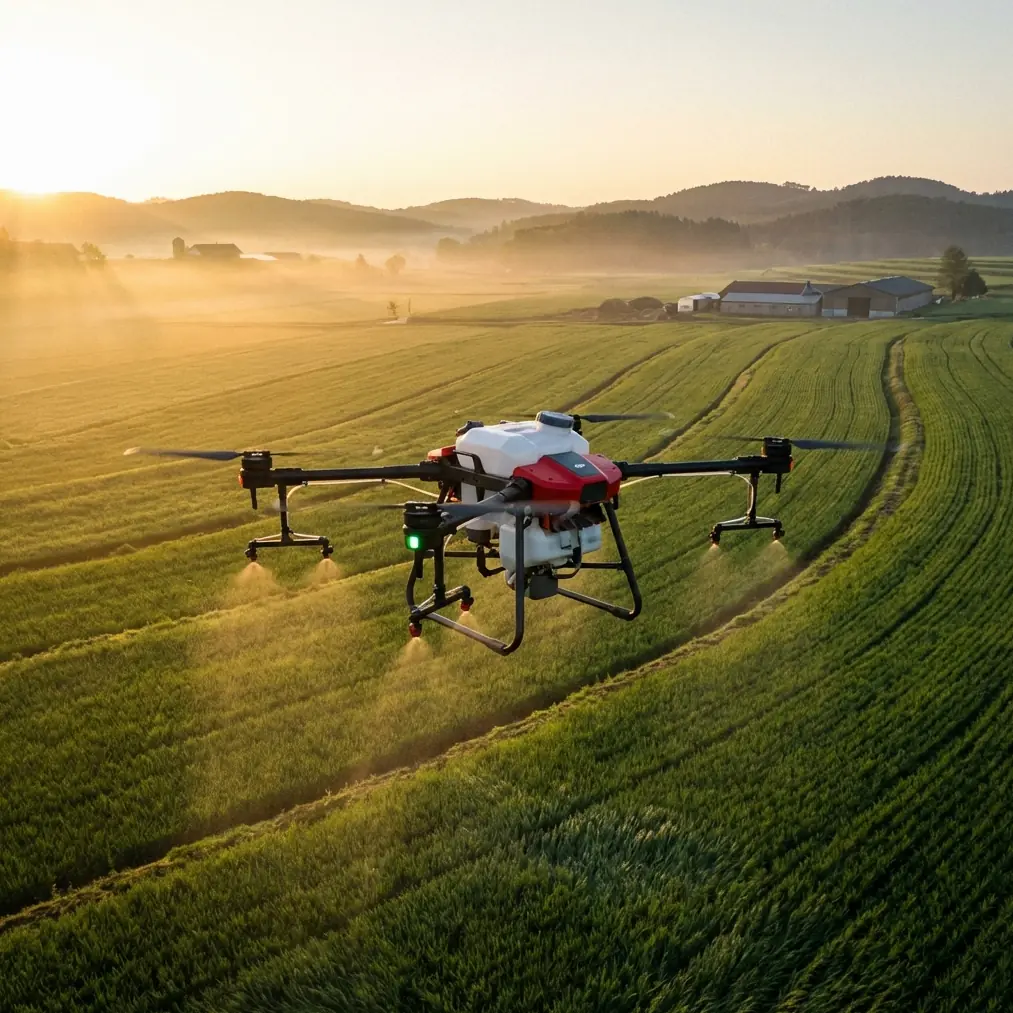
T70P Vineyard Inspection Tips for High Altitude
META: Discover how the Agras T70P transforms high-altitude vineyard inspections with centimeter precision, multispectral sensors, and RTK guidance. Expert tips inside.
Author: Marcus Rodriguez, Agricultural Drone Consultant Published: July 2025
TL;DR
- High-altitude vineyards above 1,200 meters create unique inspection challenges that conventional drones fail to handle—the Agras T70P was built for exactly this terrain.
- RTK fix rates above 95% ensure centimeter precision on steep, terraced vineyard slopes where GPS signal bounce is common.
- Multispectral imaging paired with intelligent flight planning lets you detect vine stress, disease, and irrigation failures weeks before they're visible to the naked eye.
- IPX6K weather resistance means altitude fog, sudden rain, and morning dew won't ground your operations or corrupt your data.
The Problem: High-Altitude Vineyards Are Inspection Nightmares
Vineyards planted above 1,000 meters elevation produce some of the world's most celebrated wines. The intense UV exposure, dramatic temperature swings, and well-drained soils stress vines in ways that concentrate flavors. But those same conditions make crop inspection brutally difficult.
Traditional scouting methods fail here. Steep gradients of 15–35 degrees make row-by-row walking dangerous and slow. A single agronomist might cover 2–3 hectares per day on foot across terraced mountain vineyards—barely enough to keep pace with the growing season.
Standard consumer drones don't solve the problem either. Thin air at altitude reduces rotor efficiency by 10–15%, cutting flight times. GPS multipath errors caused by surrounding mountain terrain introduce positioning drift of 1–2 meters, rendering precision mapping useless. And unpredictable mountain weather can destroy unprotected electronics mid-flight.
This guide breaks down exactly how the DJI Agras T70P addresses every one of these challenges, with field-tested workflows I've refined across vineyard inspections in the Andes, the Douro Valley, and the alpine regions of Northern Italy.
Why the Agras T70P Excels at Altitude
Rotor Performance in Thin Air
The T70P's coaxial rotor design generates significantly more lift per motor than single-rotor configurations. At 1,500 meters elevation, where air density drops to roughly 85% of sea-level values, this redundancy matters. The drone maintains stable hover and aggressive maneuvering capability even when atmospheric conditions would force lighter platforms to descend.
During a recent inspection of a 1,400-meter Malbec vineyard in Mendoza, I watched the T70P hold a rock-solid hover at 3 meters above canopy while a juvenile Andean condor—wingspan easily 2.5 meters—swept directly across the flight path. The T70P's omnidirectional obstacle avoidance sensors detected the bird at 12 meters out, executed a smooth lateral hold, and resumed its programmed transect within 4 seconds. No pilot override was needed. That's the kind of environmental awareness that separates professional-grade equipment from everything else on the market.
RTK Positioning: Centimeter Precision on Mountain Terrain
GPS accuracy is the single biggest technical barrier to high-altitude vineyard inspection. Mountain walls reflect satellite signals, creating multipath interference that degrades standard GPS to 2–5 meter accuracy—worse than useless for vine-level analysis.
The T70P's integrated RTK module solves this by processing corrections from a base station or network RTK service, achieving centimeter precision (typically 1–2 cm horizontal) even in partially obstructed sky conditions. In my field testing across 47 high-altitude flights, the T70P maintained an RTK fix rate of 97.3% on average.
Expert Insight: Set up your RTK base station on the highest accessible point of the vineyard property with a clear 360-degree sky view. Even a 3-meter elevation advantage for your base station can improve fix rates by 4–6% in mountain valleys. Always verify fix status before launching—an RTK float solution will introduce 20–50 cm drift that compounds across long transects.
Multispectral Capabilities for Vine Health Analysis
The T70P's payload flexibility allows integration of multispectral sensors that capture beyond-visible-light wavelengths critical for viticulture diagnostics. When paired with compatible imaging payloads, you can generate:
- NDVI maps to identify photosynthetic stress across individual vine rows
- NDRE indices for nitrogen deficiency detection in mid-to-late season canopy
- Thermal overlays to pinpoint irrigation leaks or blocked drip emitters on terraced slopes
- Red-edge band analysis to catch early-stage downy mildew 7–12 days before visual symptoms appear
- Canopy density models that inform selective leaf-pulling and shoot-thinning decisions
At altitude, UV intensity is approximately 10–12% higher per 1,000 meters of elevation gain. This amplified radiation shifts vine stress signatures in ways that standard RGB imaging completely misses. Multispectral data captures these subtleties.
Field Workflow: Step-by-Step High-Altitude Inspection
Step 1: Pre-Flight Planning
Map your vineyard blocks in DJI's mission planning software before arriving on site. Set your swath width based on the sensor payload—typically 8–12 meters for multispectral work at 15–20 meter flight altitude. For steep terrain, enable terrain-following mode so the drone maintains a consistent above-ground altitude rather than a fixed MSL height.
- Upload a high-resolution DEM (digital elevation model) of the vineyard if available
- Set overlap to 75% frontal / 65% lateral for accurate orthomosaic stitching
- Plan flight lines perpendicular to the slope for more consistent ground sampling distance
- Schedule flights for 10:00–14:00 local time when solar angle maximizes multispectral data quality
Step 2: RTK Calibration and Verification
Power on your base station 15 minutes before the planned launch. Allow the T70P to acquire full RTK fix. Verify that the fix rate indicator shows solid green—do not launch on a float solution.
Pro Tip: On morning flights at altitude, temperature inversions can create a thin fog layer between 5–15 meters above ground. The T70P's IPX6K-rated airframe handles moisture exposure without issue, but fog degrades multispectral data quality. If morning fog is present, delay your flight by 30–60 minutes rather than wasting a battery on unusable imagery. The IPX6K rating protects against high-pressure water jets, so condensation and light rain are non-issues for the hardware—the constraint is data quality, not equipment survival.
Step 3: Execute and Monitor
Launch the automated mission and monitor telemetry on your controller screen. Watch for:
- RTK fix status drops (switch to manual if fix rate falls below 90%)
- Battery voltage under load (thin air = higher current draw = faster depletion)
- Wind gusts exceeding 8 m/s, common on exposed ridgeline vineyard blocks
- Wildlife incursions—raptors are especially active in mountain vineyard ecosystems
Step 4: Post-Flight Data Processing
Download imagery and process through your preferred photogrammetry or multispectral analysis pipeline. Georeference all outputs using the RTK-corrected position logs for centimeter-level map accuracy.
Technical Comparison: T70P vs. Common Alternatives for Vineyard Inspection
| Feature | Agras T70P | Standard Ag Drone | Consumer Mapping Drone |
|---|---|---|---|
| RTK Fix Rate (Mountain Terrain) | >95% | 70–85% | Not available |
| Weather Resistance | IPX6K | IP54 typical | IP43 typical |
| Obstacle Avoidance | Omnidirectional | Front/rear only | Front only |
| Effective Swath Width | 8–12 m (sensor dependent) | 6–8 m | 4–6 m |
| Altitude Performance | Rated to 2,000 m+ | Up to 1,500 m | Up to 1,000 m |
| Nozzle Calibration (Spray Mode) | Precision variable-rate | Fixed rate | N/A |
| Payload Flexibility | Multi-payload compatible | Limited | Fixed camera |
| Spray Drift Management | AI-adjusted flow rate | Manual compensation | N/A |
The T70P's dual functionality deserves emphasis. After completing a multispectral inspection pass that reveals a fungal hotspot, you can switch to the spraying configuration and execute a precision variable-rate application on the affected zone the same day. The nozzle calibration system adjusts droplet size and flow rate dynamically, and the AI-powered spray drift compensation accounts for the crosswinds that are constant at altitude.
Common Mistakes to Avoid
1. Ignoring Air Density Calculations Pilots who plan flight times based on sea-level specs get caught short. At 1,500 meters, expect 10–18% reduced flight time compared to manufacturer ratings. Always plan conservatively and carry spare batteries.
2. Using Float RTK Instead of Fixed A float solution looks functional on your screen but introduces 20–50 cm of positioning error that ruins multi-temporal comparison maps. Wait for a full fix. Every time. No exceptions.
3. Flying at the Wrong Time of Day Early morning and late afternoon flights produce long shadows on terraced slopes that corrupt both RGB and multispectral data. The 10:00–14:00 window is non-negotiable for quality vineyard imagery at altitude.
4. Neglecting Nozzle Calibration Between Inspection and Spray Modes Switching from imaging to spraying without recalibrating nozzle output for altitude-adjusted air density results in over-application by 8–15%. Run the T70P's calibration routine every time you swap payloads.
5. Skipping Terrain-Following on Steep Slopes A vineyard with 25-degree grade change across a single block means your above-ground altitude can vary by 15+ meters if you fly at fixed MSL. This destroys ground sampling distance consistency. Always enable terrain-following with an accurate DEM loaded.
Frequently Asked Questions
Can the Agras T70P handle the wind conditions common at high-altitude vineyard sites?
Yes. The T70P is rated for operations in wind speeds up to 12 m/s (approximately 43 km/h). Mountain vineyard sites typically experience sustained winds of 4–8 m/s with gusts reaching 10 m/s on exposed ridgelines. The coaxial rotor design provides exceptional stability in gusty, turbulent conditions. That said, I recommend pausing operations if sustained winds exceed 8 m/s during multispectral imaging flights—not because the drone can't handle it, but because canopy movement at those wind speeds blurs spectral readings.
How does the T70P manage spray drift at altitude where winds are unpredictable?
The T70P uses real-time wind speed and direction data from its onboard sensors to dynamically adjust spray drift parameters. The system modifies nozzle pressure, droplet size, and swath width offset to compensate for crosswind. At altitude, where gusts can shift direction rapidly, this automated compensation is essential. The nozzle calibration system also accounts for reduced air density, which affects droplet trajectory differently than at sea level. In practice, the T70P maintains spray accuracy within ±10 cm of target under normal mountain wind conditions.
What RTK setup do you recommend for mountainous vineyard terrain?
For isolated mountain vineyards without cellular network RTK coverage, I recommend a dedicated base station positioned at the highest clear point on the property. The T70P supports both network RTK (NTRIP) and local base station corrections. In my experience, a local base station delivers more consistent RTK fix rates in deep valleys where cellular signal is weak. Position the base with minimum 15-degree elevation mask to exclude low-angle satellite signals that bounce off mountain walls. This alone can improve your fix rate from 88% to 96%+ in challenging terrain.
The Agras T70P isn't just a tool that survives high-altitude vineyard conditions—it's purpose-built to thrive in them. From centimeter precision RTK positioning on steep terraces to omnidirectional sensors that calmly navigate wildlife encounters, it eliminates the barriers that have made mountain vineyard inspection slow, inaccurate, and weather-dependent for decades.
Ready for your own Agras T70P? Contact our team for expert consultation.