
Agras T70P for Coastal Power Line Work: A Field Case Study
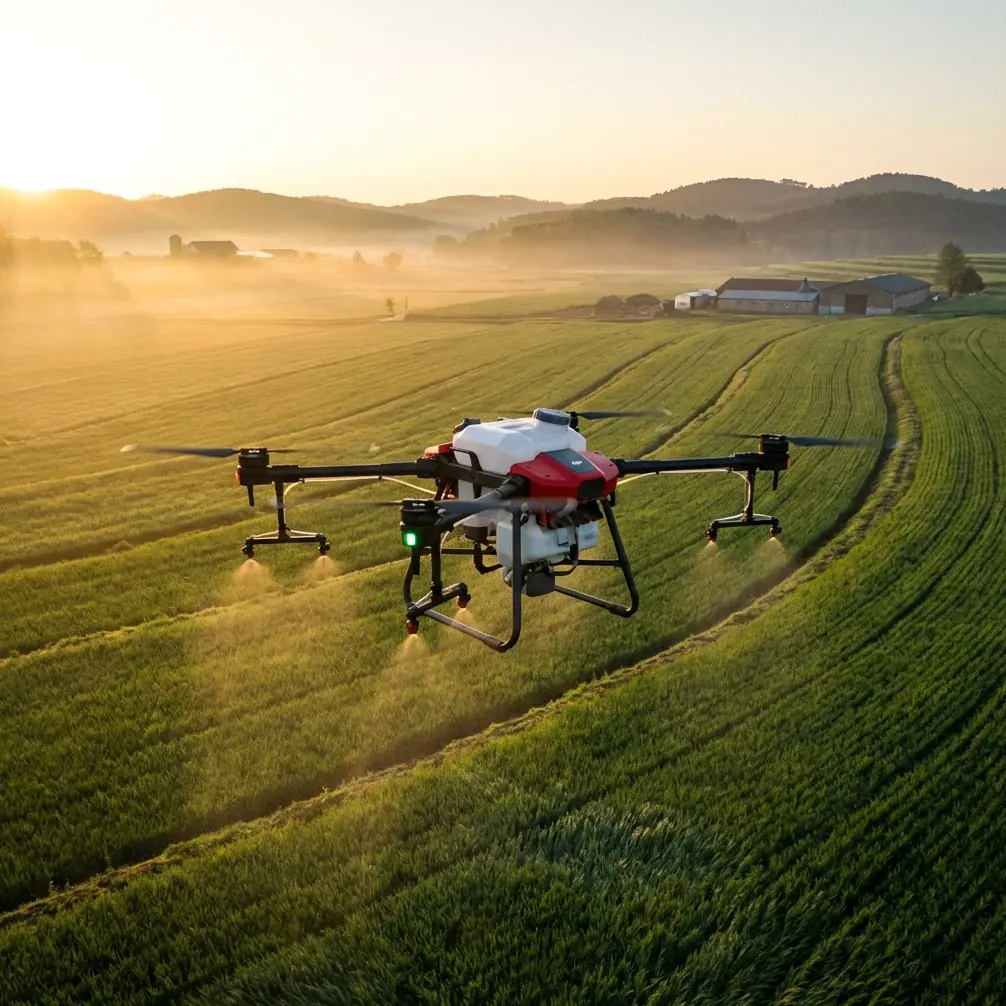
Agras T70P for Coastal Power Line Work: A Field Case Study on Wind, Data Quality, and Battery Discipline
META: A practical case study on using the Agras T70P around coastal power line corridors, with expert insight on wind handling, LiDAR-era accuracy expectations, RTK discipline, and battery management in demanding field conditions.
Coastal power line inspection looks simple on a map. Long linear assets. Repeating structures. Open access in some places. The reality is messier.
Salt air changes equipment behavior. Wind near the shoreline rarely behaves the same at launch height as it does once the aircraft climbs. Wetland edges, service roads, drainage cuts, and scrub vegetation can make ground access slow and inconsistent. And when the mission is not just to “look” at a corridor but to document condition with repeatable accuracy, small operational mistakes become expensive very quickly.
This is where the Agras T70P deserves a more serious conversation than it usually gets.
Most people associate the Agras line with agricultural work first. Fair enough. But in the field, platform value comes down to whether a drone can hold a predictable line, survive ugly environmental exposure, and support disciplined operations when conditions are not ideal. For coastal utility inspection, that matters more than marketing categories.
I recently worked through a planning exercise for a coastal power line corridor where the client’s main challenge was not coverage. It was consistency. They needed repeat passes across exposed sections near marsh and low-lying access roads, with enough positional confidence to compare observations between visits. The lesson from that project was clear: if you treat a coastal inspection like a routine open-field flight, the site will punish you.
Why coastal power lines expose weak flight planning
The most overlooked detail in shoreline inspection is vertical wind variation.
One training reference on small UAV operations makes a point that remains surprisingly relevant even when you move up to larger commercial platforms: wind can feel negligible near the ground, yet become significantly stronger above 10 meters. That is not theory. It is exactly what crews see along coastal utility routes. A launch point can appear calm while the inspection altitude is already dealing with a crosswind strong enough to distort spacing, slow turns, and raise battery consumption.
That same reference recommends keeping actual flights below 10 meters for a micro training drone and prioritizing low-wind environments. Obviously, the Agras T70P is not a classroom aircraft and should not be treated as one. But the operational significance carries over: surface conditions are not a reliable proxy for working altitude conditions.
For coastal power lines, this changes how I brief crews.
I do not ask, “Is it windy at the truck?” I ask, “What is the wind gradient between launch and inspection altitude, and what will it do to track stability?”
That distinction matters if you care about RTK Fix rate, image overlap consistency, and the ability to compare the same conductor span week after week.
The T70P advantage is not raw power alone
The Agras T70P’s value in this setting is less about brute lift and more about platform discipline under repetitive corridor work. A coastal line inspection mission demands three things from the aircraft:
- Stable path control in changing crosswinds
- Repeatable positioning for trend analysis
- Fast turnarounds without sloppy battery decisions
The second point deserves extra attention. When operators talk loosely about “centimeter precision,” they often blend together aircraft navigation, payload performance, and final inspection output as if they are the same thing. They are not.
One of the supplied LiDAR references gives a useful benchmark for the kind of accuracy serious asset documentation systems target. It describes mobile mapping systems with 5 cm accuracy at 100 meters, and another system with relative accuracy of 5 cm and absolute accuracy of 10 cm. Those numbers are not about the T70P specifically, but they are operationally important because they set the standard your inspection workflow is competing against.
If your client expects utility asset records that support repeat maintenance decisions, then your drone operation needs to be built around repeatability, not just successful flight. That means the T70P should be flown with a data mindset: maintain strong RTK lock discipline, avoid unnecessary altitude variation, and preserve a consistent stand-off from structures whenever the corridor geometry allows it.
In other words, the aircraft must behave like part of a measurement process, not a sightseeing tool.
Why coastal access conditions make UAV inspection attractive in the first place
The LiDAR material also highlights another useful point: some survey areas are simply hard to reach. It specifically calls out environments such as wetlands, canyons, and other areas where traditional instruments are difficult to deploy, and where standard aerial photogrammetry may struggle to extract strong features from repetitive imagery.
That lands very close to the real-world coastal utility problem.
Power lines running near marshes, tidal flats, or low-contrast terrain often force crews into awkward compromises. Ground inspection is slow. Vehicle-based methods cannot always reach the right angle. Traditional image-only collection can struggle when the background lacks distinct features or when reflective water and uniform vegetation reduce visual quality.
This is where the T70P can be more useful than its label suggests. Not because it magically solves every sensing problem, but because it gives crews a robust working platform to inspect linear infrastructure in places where conventional access is inefficient. If your corridor includes wetland shoulders or exposed service tracks, a capable UAV can cut down the number of risky or time-consuming ground interventions.
That is the operational story. Less scrambling for access. More controlled observation passes. Better consistency between visits.
The battery management mistake I see most often
Now for the field tip that actually saves missions.
On coastal jobs, crews often judge battery readiness by percentage alone. That is lazy thinking.
My rule with the T70P is simple: never launch the “next easy segment” on a battery that just came off a wind-heavy pass unless you have checked temperature recovery and voltage behavior under load expectations. Coastal wind drains packs unevenly because one leg of the route often fights a stronger headwind while the return leg looks deceptively light. The battery may still show an acceptable state of charge, but it has already delivered current under stress and carries more performance risk than the display suggests.
I learned this the hard way years ago on another corridor platform. The second flight did not fail, but the aircraft’s energy margin compressed fast during a crosswind reposition. Since then, I treat coastal battery rotation as a discipline, not a convenience.
Here is the practical method I recommend for T70P inspection work:
- Assign batteries to specific route segments rather than flying opportunistically.
- After any pass with sustained wind correction, let the pack rest and cool before deciding whether it belongs in another exposed section.
- Log not just remaining percentage, but how the battery behaved during the final minute of the previous mission.
- Reserve your strongest, freshest packs for the longest shoreline spans or the least accessible tower sections.
This matters because coastal inspections rarely fail at the center of the mission. They fail at the margins: one extra hover, one misjudged reposition, one battery that looked fine on paper.
RTK Fix rate is not a background metric
If you are inspecting power lines and planning repeat visits, RTK Fix rate should be treated as an active go/no-go metric rather than a nice technical detail.
Why? Because corridor inspection is about comparison. You are often trying to validate whether a fitting has changed, whether vegetation encroachment is progressing, whether a known issue is stable, or whether storm exposure has shifted the condition of a segment. The better your positional repeatability, the less ambiguity you introduce into that comparison.
A coastal environment can interfere with workflow discipline in subtle ways. Operators rush between weather windows. They reposition vehicles to avoid soft ground. They improvise launch points because access roads narrow out. Every one of those adjustments can affect geometry, telemetry confidence, and how faithfully the T70P reproduces a previous route.
That is why I tell teams to think beyond “GPS available.” For this class of work, the target is stable, repeatable RTK behavior that supports corridor-to-corridor consistency. Centimeter precision is only meaningful when it is sustained through the operational routine, not just shown briefly on a screen.
What about spray drift, nozzle calibration, and other agriculture-first concerns?
These terms might seem out of place in a power line article, but they are useful because they reflect how the Agras ecosystem is built.
A platform designed with spray drift awareness and nozzle calibration logic is already rooted in controlled output and repeatable coverage. That operating philosophy translates well to inspection work. You want the same mindset: measured path spacing, controlled stand-off, minimized deviation in wind, and repeatable route execution.
No, you are not calibrating a nozzle for utility inspection. But you are benefiting from an aircraft family engineered around precision in outdoor environments where air movement can disrupt the job. That lineage is not trivial. It shapes how crews should operate the T70P: verify settings, control variables, do not guess.
The same goes for swath width thinking. In agriculture, swath width determines coverage efficiency and overlap quality. In power line inspection, the equivalent question is how much corridor you can responsibly capture in one pass without diluting detail or compromising control near structures. Experienced operators know that “more width” is not always better. The right width is the one that preserves target clarity and predictable aircraft behavior.
Coastal power line inspections are really a manufacturing problem, too
One of the more interesting reference points came from outside utility operations entirely: at XPONENTIAL 2026, University of Michigan leaders argued that Michigan could become a hub for the low altitude economy by linking aerospace innovation with Detroit’s manufacturing strength.
That idea sounds abstract until you look at utility drone work.
A good inspection program is not just about pilots. It is about repeatable systems. Standardized batteries, predictable maintenance cycles, ruggedized workflow, and equipment that can survive daily use in real industrial conditions. That is manufacturing logic applied to aviation operations.
The low altitude economy is often discussed in big visionary terms, but for a T70P crew on a coastal line route, the concept becomes practical. Can the aircraft perform repeatedly? Can the operation scale beyond one excellent pilot? Can the workflow absorb rough terrain, salty air, and variable weather without collapsing into improvisation?
That is why utility operators should pay attention to this broader industry conversation. The future winners in drone inspection will not just fly well. They will industrialize well.
Where LiDAR-era expectations should shape T70P inspections
The mobile mapping reference included some very specific performance figures, including systems capable of 55万 to 75万 points per second and ranges of 920 m or 1350 m, plus lighter configurations around 2.2 kg and 1.5 kg for different deployment scenarios. Again, these are not T70P specifications. They are context.
Their significance is this: clients are becoming accustomed to high-density, high-accuracy asset data from multiple platforms. That means T70P inspection teams need to define clearly what the mission is intended to produce. Visual verification? Condition tracking? Corridor change detection? Support for a broader digital twin workflow?
If you do not answer that upfront, you risk underserving a client who assumes all drone-collected infrastructure data arrives at the same level of geometric rigor.
The better path is to position the T70P as part of a layered inspection strategy. It excels when you need agile corridor access, repeatable route execution, and efficient field deployment in difficult coastal environments. If the asset owner later requires deeper 3D capture or survey-grade geometry beyond the scope of the mission, that requirement should be handled intentionally, not implied accidentally.
My preferred operating pattern for the T70P in this scenario
For coastal power line work, I recommend a conservative but efficient pattern:
Start low and validate wind at working altitude early.
Do not assume the shoreline section behaves like the inland access road.
Watch RTK status before the first serious pass, not halfway through the route.
Rotate batteries based on mission stress, not just displayed percentage.
Keep route geometry consistent between visits.
And when the corridor crosses wetlands or visually repetitive terrain, be honest about what your payload and output can reliably resolve.
If your team is building this kind of workflow and wants to compare notes on route setup or battery rotation practices, you can reach me directly through this field support chat.
Final take
The Agras T70P can be a very credible tool for coastal power line inspection if it is used with the right mindset. Not as a generic “big drone.” Not as an agriculture machine forced awkwardly into utility work. And not as a shortcut around planning.
Its real value shows up when coastal wind, restricted access, and repeatability demands all collide. That is exactly where disciplined operations separate useful inspection programs from noisy drone footage.
The strongest lesson from the reference material is surprisingly simple. Wind changes with height. Difficult terrain changes the economics of access. High-accuracy asset work demands more than a successful flight. Put those three ideas together, and the T70P starts to make sense as a serious corridor platform.
Ready for your own Agras T70P? Contact our team for expert consultation.