
How I’d Use the Agras T70P to Inspect Mountain Power Lines W
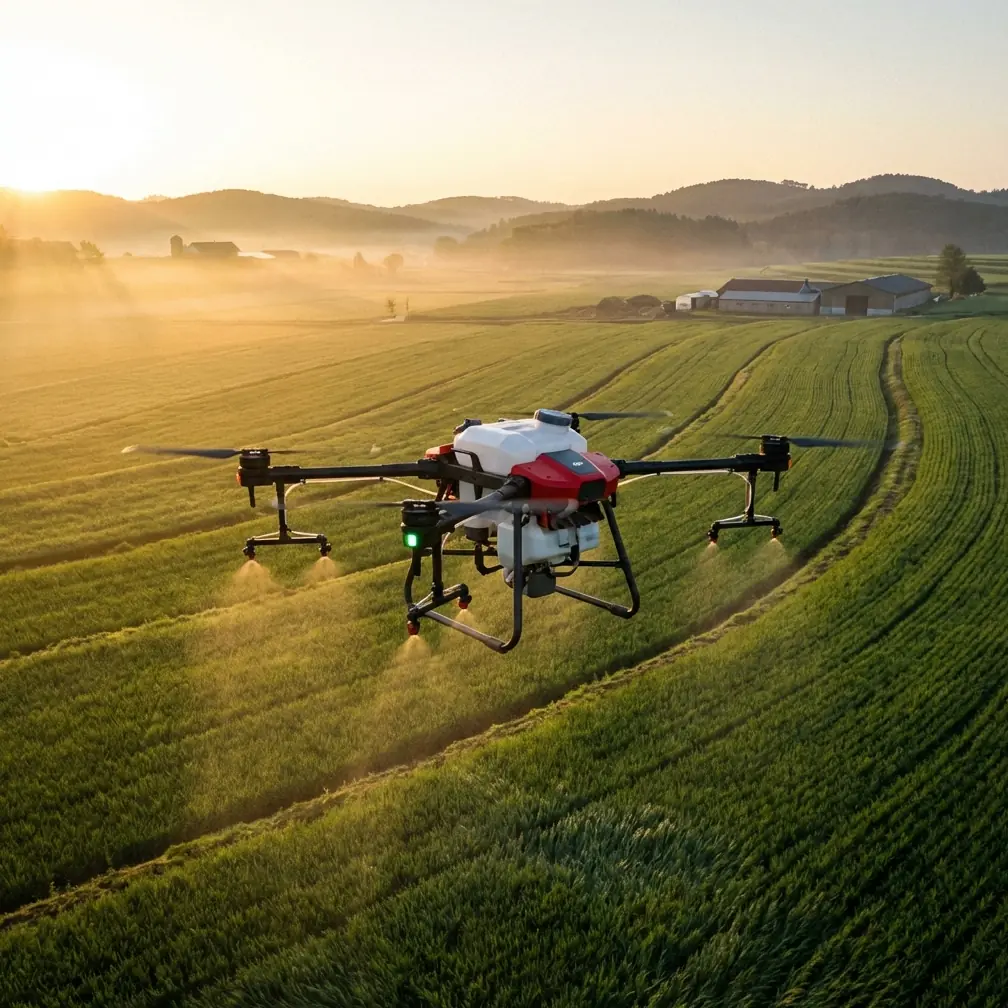
How I’d Use the Agras T70P to Inspect Mountain Power Lines Without Turning the Job Into a Guessing Game
META: A field-focused tutorial on using the Agras T70P for mountain power line inspection, covering flight planning, image capture logic, team coordination, safety spacing, and why mapping discipline matters in steep terrain.
Mountain power line inspection punishes sloppy workflows.
The terrain breaks line of sight. Wind shifts across ridges. Towers, poles, trees, and service roads rarely align in a neat, repeatable pattern. And the biggest mistake I keep seeing is treating the aircraft as the hard part and the data as an afterthought. In real inspection work, especially in mountain corridors, the opposite is often true.
If I were setting up an Agras T70P for this kind of job, I would not begin with the drone. I would begin with the output. What exactly do we need to see, measure, revisit, and hand off? That sounds academic, but it is the difference between a useful inspection mission and a folder full of pretty images that nobody trusts.
This is where an old lesson from aerial survey work becomes unexpectedly relevant. In contact network engineering, drone imagery became far more valuable once teams could connect image data back to design drawings—point to point, line to line, surface to surface. That shift changed maintenance from broad patrols to precise, target-based checks. For mountain power line inspection, the same principle applies. The T70P is not just there to fly the route. It is there to help convert a messy corridor into something structured enough to inspect, verify, and revisit.
Start with the corridor, not the battery
One of the clearest operational facts from UAV survey practice is simple: many commonly used drones have an effective endurance of around 1 hour, and mission planning must stay inside that limit to avoid energy-related risk. Whether your actual T70P setup flies more or less than that in mountain conditions is not the point. The planning discipline is.
In steep terrain, battery assumptions collapse faster than pilots expect. Climbing segments, repeated turns, altitude changes, headwinds near saddles, and cautious hovering around structures all eat time. So when I plan a mountain power line job with the T70P, I break the route into inspection blocks that can stand alone. Each block gets:
- a defined start and finish point,
- known emergency landing options,
- expected line-of-sight challenges,
- obstacle notes,
- and a hard return threshold.
This matters because mountain line inspection is rarely one continuous elegant run. It is a chain of small, controlled decisions.
The source material on contact network aerial survey also points to a practical solution when daily targets are heavy: use multiple UAVs in alternating operations, define node coordinates for handoff, and load the flight plan into an autonomous UAV mode system. That is highly relevant here. If your mountain corridor is long, the smart move is not stretching a single aircraft and crew to exhaustion. It is segmenting the job, assigning clean transfer points, and preserving data consistency between sorties.
With the T70P, that means thinking like a systems operator. Not “Can the drone do it?” but “Can this mission be repeated tomorrow by another crew and produce comparable inspection evidence?”
Why image discipline matters more in the mountains
A lot of mountain utility inspection suffers from a false confidence problem. The pilot sees the tower, sees the conductors, sees the slope, captures a few passes, and assumes the job is covered. Later, during review, gaps appear. The angle was too steep. The overlap was weak. One side of the structure is clear, the other is obscured. A suspected clearance issue cannot be confirmed because the imagery lacks consistency.
Survey literature has been candid about low-altitude UAV imaging: the data can be difficult to process when image overlap is insufficient, frames are small and numerous, and the tilt angles are too large or irregular. That is not just a photogrammetry problem. It is an inspection problem.
If I were building a T70P workflow for power lines in mountains, I would set capture rules that deliberately reduce those weaknesses:
Keep viewing geometry repeatable.
Do not improvise every tower approach. Use a standard sequence for each structure type.Protect overlap on long linear assets.
The corridor may tempt crews to fly fast and “scan” the line. That usually creates holes in the record.Limit dramatic tilt unless the objective requires it.
Aggressive oblique viewing can reveal hardware detail, but if every frame comes from a different angle, later comparison becomes harder.Capture context, not just the asset.
In mountain terrain, the line’s relationship to trees, slopes, road access, and nearby obstacles often matters as much as the conductor itself.
This is also where many operators reach for phone screens and trust what “looks fine” in the moment. That can mislead you. A recent comparison between smartphones and dedicated cameras highlighted that while phones often offer metering options like area, center-weighted, and spot metering, switching between them frequently produces only tiny exposure changes. With mainstream cameras, the difference is usually much more obvious. Operationally, that means field teams should be careful about judging exposure behavior on a phone-style display as if it were a precise imaging tool. If the T70P payload is being used to document line hardware against bright sky, dark forest, or mixed mountain light, you need a more deliberate exposure check than “the screen looked okay.”
That detail may seem far removed from drone operations. It isn’t. In inspection, missed detail often begins as bad exposure judgment.
The mountain workflow I’d actually teach a crew
The T70P may be the aircraft on site, but mountain line inspection is a crew exercise. The agricultural operation standard in the reference material, although written for spray missions, contains two principles that transfer perfectly to inspection work: first, if the team does not share the same understanding of site conditions and procedure, stop the flight and confirm before continuing; second, the observer’s job is to communicate obstacles and aircraft attitude that the pilot cannot judge alone.
That is exactly how I would run an inspection team in mountain terrain.
1. Pre-brief every sortie like a fresh mission
Never assume the second valley is the same as the first.
Before launch, assign roles clearly:
- pilot,
- observer or spotter,
- safety lead,
- data logger or mission recorder if available.
The reference guidance recommends creating a task assignment sheet because role clarity reduces confusion once operations begin. I agree. In mountain corridors, confusion is not a minor inconvenience. It becomes drift off the intended path, poor obstacle calls, and inconsistent evidence collection.
The pre-brief should include:
- route segment,
- target poles or towers,
- nearby trees and structures,
- wire crossings,
- expected wind direction,
- return trigger,
- emergency landing points,
- and data objective for that sortie.
If the purpose is insulator review, that changes flight geometry. If it is vegetation encroachment, you need more corridor context. If it is post-storm confirmation, repeatability against earlier imagery becomes more important.
2. Use disciplined stand-off from the aircraft
The agricultural safety standard gives a very concrete example of crew spacing after takeoff: at 1 meter aircraft height, keep about 3 meters distance; at 2 meters height, keep about 10 meters distance. Those exact numbers come from a different use case, but the underlying lesson is universal: as rotorcraft height and operating envelope expand, crew spacing must also expand for safety.
For T70P mountain inspections, I would adopt the same mindset. Launch areas in hills are often cramped, uneven, and bordered by brush or loose gravel. Crew members have a habit of clustering too near the aircraft during climb-out, especially when everyone is trying to maintain visual contact around terrain. Don’t let that happen. Build spacing rules into the SOP.
Also borrow the PPE discipline. The reference specifies helmets, face protection, eye protection, long sleeves, long trousers, and boots, with no hanging necklaces or chest tags. That is not overkill in mountain utility work. It is common sense.
3. Let the observer act as the pilot’s second set of eyes
One of the most useful lines in the source is that the spotter must accurately communicate the position, quantity, height, and distance of obstacles such as buildings, wires, poles, and trees. Replace “spray mission” with “power line inspection,” and the instruction still fits perfectly.
In the mountains, a pilot’s depth perception can degrade quickly when the aircraft crosses a slope face or drops below a ridgeline. The observer must call:
- conductor alignment,
- branch encroachment,
- crossarms and guy wires,
- poles hidden by tree crowns,
- and terrain breaks that can distort perceived altitude.
The same source stresses that when communication breaks down, flight should stop until understanding is restored. That one habit prevents a surprising number of incidents.
The hidden value of autonomy
Autonomous flight modes are often discussed as convenience features. For line inspection, I see them differently. They are consistency tools.
The contact network survey document describes UAV mode as a fully autonomous flight control mode capable of executing preloaded navigation and mission instructions, including autonomous takeoff, route execution, and landing. In a mountain setting, full autonomy is never a substitute for pilot judgment. But route automation is excellent for standardizing repeated corridor passes.
With the T70P, autonomy can support:
- repeatable tower-to-tower offsets,
- consistent image collection along the right-of-way,
- controlled speed through inspection zones,
- and cleaner handoff between multiple aircraft or crews.
That consistency matters when an anomaly needs to be rechecked later. If one sortie drifted 15 meters wider than the next, your comparison is weaker. If every pass follows the same corridor logic, defect verification becomes much easier.
Don’t chase live transmission quality at the expense of usable records
Another practical point from the source material: real-time UAV image transmission has limits. Low-resolution or small-scale live views may be available, but higher-precision data often still depends on post-processing. That is a healthy reminder for T70P field teams.
Live view is for flight safety and quick operational judgment. It is not always the final inspection product.
In mountain power line work, I advise crews to separate these two questions:
- Did we fly safely and cover the planned segment?
- Did we collect imagery strong enough for technical review?
Those are related, but not identical.
If you want help designing a repeatable mountain inspection checklist around those two layers, this field support line is a practical place to start: message the operations team here.
Where the Agras T70P fits
The Agras T70P sits in an interesting place for this conversation because the reader often encounters it through agriculture, not infrastructure. Yet the operational habits from serious agricultural flight work—strict crew coordination, obstacle reporting, protective equipment, launch discipline, and stop-and-confirm communication—translate remarkably well to mountain line inspection.
That is the real takeaway.
The aircraft helps, of course. But the reason a T70P-based workflow can make mountain inspection easier is not magic hardware. It is the ability to build a repeatable mission framework around a platform that crews already know how to operate under field pressure.
When I think back to the hardest corridor jobs I have seen, the pain points were rarely dramatic. They were ordinary failures stacked together:
- a route that was too long for the sortie window,
- imagery captured at inconsistent angles,
- weak obstacle calls from the ground,
- exposure decisions made off a phone-like preview,
- and no clean link between field images and the asset record.
Fix those, and the job gets calmer. Faster too.
For anyone using the Agras T70P in mountain power line inspection, that is the standard I would aim for: structure the mission so every flight produces evidence that can be trusted, not just viewed. Plan around endurance limits. Use autonomous routing to keep the corridor consistent. Treat the observer as essential, not optional. Respect crew spacing and PPE. And make image quality a method, not a hope.
That is how you stop mountain inspection from becoming a guessing game.
Ready for your own Agras T70P? Contact our team for expert consultation.