
Agras T70P for Remote Power Line Inspection
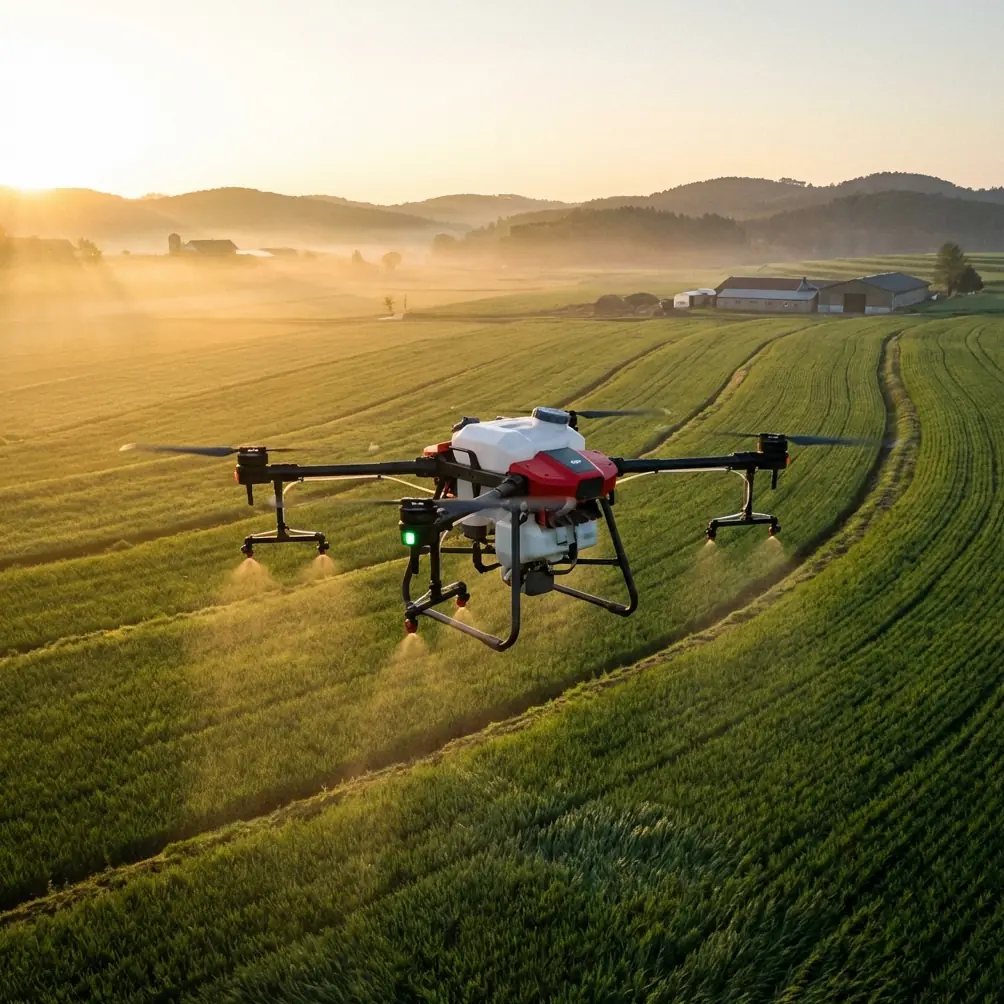
Agras T70P for Remote Power Line Inspection: Field Practices That Actually Hold Up
META: A practical Agras T70P tutorial for remote power line inspection, covering RTK fix rate, electromagnetic interference, antenna setup, IPX6K durability, swath width discipline, and mission planning.
Power line work exposes every weakness in a drone operation. The aircraft has to deal with long distances, broken terrain, patchy connectivity, shifting wind, and one of the most overlooked variables in the field: electromagnetic interference around energized infrastructure. If you are evaluating the Agras T70P for remote inspection support, the real question is not whether it can fly. It is whether it can deliver stable, repeatable data and safe handling when the environment is actively trying to degrade both.
This guide is written from that perspective.
The Agras T70P is better known in spraying circles, so using it around power corridors requires a more disciplined setup mindset than many operators expect. That matters because remote inspection missions punish sloppy configuration. A platform may be rugged and powerful, but if antenna placement is poor, nozzle hardware is left configured in a way that creates unnecessary drag or drift, or the RTK fix rate is unstable, your mission quality drops before the aircraft reaches the first tower.
Start with the mission reality, not the brochure
Remote power line inspection is not a neat, open-field job. It is usually a narrow corridor framed by poles or towers, vegetation, uneven slopes, service tracks, and changing weather. Unlike broad-acre agricultural runs, you are not trying to maximize pure coverage. You are trying to maintain controlled movement near infrastructure while preserving data confidence.
That shifts how the Agras T70P should be prepared.
Three details matter immediately:
- RTK fix rate and positional stability
- Electromagnetic interference management through antenna adjustment
- Environmental resilience, including water and dust exposure
The reason RTK matters here is obvious once you have worked a corridor in real conditions. When you are tracing structures through remote terrain, centimeter precision is not just a nice specification. It determines how reliably you can repeat passes, hold intended offsets from conductors and towers, and correlate observed defects with exact locations for maintenance crews. If the RTK fix rate degrades and the aircraft falls back to less stable positioning, the mission becomes less consistent and post-flight analysis gets messy fast.
The second issue, electromagnetic interference, is where many field teams lose efficiency. Power infrastructure can distort the radio environment enough to create intermittent heading noise, unstable telemetry behavior, or degraded link confidence. Operators often blame the drone first. In practice, poor controller stance, antenna orientation, and launch position are frequently part of the problem.
The third factor is durability. Remote inspection rarely happens on a perfect weather day with a dry takeoff zone and a clean support vehicle. Dust from access roads, mist, wet vegetation, and light precipitation all show up sooner or later. An aircraft with an IPX6K level of protection has practical operational value here because you are less likely to lose time over minor exposure events that would force a more fragile airframe out of rotation.
Before takeoff: strip the mission down to what you actually need
The biggest mistake I see is carrying over agricultural settings and assumptions into an inspection workflow. If the T70P is being cross-utilized, you need a reset process before every power line mission.
Start with the spray system itself. Even if the aircraft is not being used for application on that flight, do not treat the spray hardware as irrelevant. Residual setup choices affect weight, balance, airflow, and contamination risk. Check the boom condition, secure anything that can vibrate, and verify that no nozzle assembly is partially clogged or leaking residue. Nozzle calibration sounds like a farming-only concern, but it matters operationally because an unbalanced or dirty spray system can create asymmetrical flow resistance and collect debris, especially after transport over rough roads.
This also connects directly to spray drift, even in a non-application inspection context. If the aircraft has recently been used for spraying and was not cleaned properly, you do not want residual material atomizing or shedding near energized assets, insulators, or nearby vegetation during a close corridor pass. That is avoidable with proper rinse, inspection, and system isolation.
Next, define your intended imaging objective. Many teams throw around the word multispectral because it sounds advanced, but for power line inspection the question is whether that data type serves the fault hypothesis. If the mission is looking for vegetation encroachment patterns, stressed growth near access routes, or moisture-related conditions around right-of-way areas, multispectral workflows may add value. If the task is conductor hardware observation or structural condition confirmation, the useful payload and flight profile requirements may be different. The point is not to collect every possible dataset. It is to collect the data that can survive operational scrutiny.
Managing electromagnetic interference: antenna adjustment is not optional
Let’s get specific about the issue that the field often underestimates.
Near power lines, especially in remote areas with fewer alternate signal references, electromagnetic interference can produce inconsistent control feel or unstable telemetry confidence. The worst response is to keep pushing forward without changing setup. The better response is to treat interference like a controllable field variable.
Here is the practical sequence I recommend with the Agras T70P:
1. Choose your launch point for signal hygiene, not convenience
Do not set up directly under or beside the line if you can avoid it. Move laterally away from the conductors and any large grounded metal objects before powering on and establishing your link. Even a modest shift in position can clean up the radio environment enough to improve controller behavior and RTK initialization.
2. Establish RTK before approaching the corridor
Your RTK fix rate should be stable before you start the inspection run. If you are fighting to obtain or maintain a fix at the launch area, do not expect it to improve once you are closer to infrastructure and terrain clutter. Wait for a reliable lock, confirm the aircraft is holding consistently, and watch for any irregular updates before beginning the route.
3. Adjust controller antenna orientation deliberately
This sounds simple, but it is where experience shows. Operators often point antennas at the aircraft in the intuitive but wrong way. With most field controller systems, the broad side of the antenna pattern matters more than the tip. Keep the controller oriented so the strongest face of the antenna is presented to the aircraft’s flight path rather than stabbing the antenna directly at the target like a pointer.
When working along a line, continue to make small orientation corrections as the aircraft changes altitude and lateral offset. Near electromagnetic noise sources, these minor adjustments can be the difference between a solid link and a fluctuating one.
4. Keep your body and vehicle out of the signal path
Do not stand with the controller pressed against your chest beside a truck door and expect ideal performance. Step clear of the vehicle, maintain line of sight, and avoid using your own body as a shield between controller and aircraft. If the mission route runs along a ridge or drops behind terrain, reposition early rather than waiting for signal quality to deteriorate.
5. Watch for the pattern, not a single warning
Interference problems are rarely one dramatic event. More often they show up as a cluster of smaller signs: slight heading instability, telemetry lag, inconsistent position confidence, or an RTK state that refuses to stay locked. When those symptoms stack together, stop and reset the geometry of the mission.
If your team wants a fast field checklist for this, I usually share one over WhatsApp for remote inspection setups because antenna discipline is easier to apply when everyone is following the same routine.
Swath width still matters, even when you are not spraying a field
This is one of those details that surprises non-ag operators.
The concept of swath width is useful beyond liquid application because it forces disciplined thinking about corridor coverage. In open agriculture, swath width determines efficiency and overlap. In remote power line inspection, the equivalent principle is observation width: how much of the corridor are you trying to capture per pass without sacrificing detail or safety margin?
If you try to cover too much lateral space in a single run, you increase the odds of weak image geometry, missed hardware details, or unstable obstacle relationships. If you fly too narrowly, you waste battery cycles and time repositioning. The best crews define a realistic observation swath based on terrain, target height, and the resolution needed for maintenance decisions.
With the T70P, that means resisting the temptation to use the aircraft’s size and capability as a reason to broaden every pass. The better approach is repeatable, conservative corridor slices with known overlap. That gives you cleaner documentation and makes reinspection easier after storms or maintenance interventions.
Weather, washdown, and why IPX6K matters in the real world
Ruggedness claims are easy to dismiss until you are 40 kilometers from the nearest proper staging area and the access track has turned into wet dust. An IPX6K class protection level has direct field significance for remote power work because the aircraft will inevitably face dirty conditions, spray from vegetation, road grime, and occasional rain exposure during deployment and recovery.
This does not mean weather no longer matters. It means your operating envelope is less fragile.
For field teams, the practical advantage is reduced downtime from minor environmental exposure and a simpler cleaning routine after the mission. That can be the difference between completing the second corridor segment that day or calling the operation early because the aircraft needs a more careful dry-down and inspection cycle.
Still, durability should not become overconfidence. Moisture on sensors, dirty connectors, and contamination around moving parts will degrade performance over time if ignored. The right habit is to treat rugged sealing as a buffer, not permission to get careless.
Flight profile choices for remote line work
When you inspect remote power corridors with an aircraft like the Agras T70P, smoothness beats aggressiveness every time.
Use controlled acceleration. Avoid abrupt yaw inputs near structures. Keep vertical changes intentional and early. The goal is to prevent unnecessary instability in the data and minimize the chance that interference, wind shear, or terrain-induced turbulence compounds with pilot input.
A good operating pattern looks like this:
- Launch from a laterally offset position with clean signal conditions.
- Confirm stable RTK and control link.
- Approach the corridor gradually rather than climbing directly into the line environment.
- Hold a consistent offset from the asset.
- Break the route into shorter segments if terrain or signal conditions change.
This segmented approach is especially useful in remote areas where line-of-sight can disappear faster than expected. A shorter, well-documented inspection sequence is usually more valuable than a long continuous run with inconsistent positioning and gaps in observation quality.
When multispectral actually earns its place
The keyword gets thrown around constantly, so let’s put it in context.
Multispectral capability is not automatically necessary for power line inspection, but there are remote scenarios where it can support better decisions. Vegetation encroachment is the clearest example. In corridors where growth stress, water retention, or species differentiation affects clearance planning, multispectral datasets can help prioritize trimming and access work more intelligently than standard visual review alone.
The operational significance is not just “more data.” It is better maintenance timing. If corridor managers can identify where vegetation health patterns suggest rapid near-term growth or moisture-driven instability, they can allocate crews more efficiently and reduce repeat site visits.
That said, multispectral only helps if the aircraft’s positioning is reliable. Without strong RTK performance and consistent pass geometry, comparative mapping quality drops. This is another reason the T70P’s ability to hold precise routes matters more than any single payload buzzword.
Field checklist that saves real time
Before each remote mission with the Agras T70P, verify these points in order:
- Airframe cleaned and inspected after any prior spray mission
- Nozzle assemblies checked and isolated if not in use
- Controller antenna orientation reviewed before launch
- Launch point selected away from immediate conductor influence
- RTK fix stable before corridor approach
- Observation swath defined for the task, not guessed in flight
- Weather and wind reviewed against terrain effects, not just general forecast
- Recovery point planned in case signal quality changes mid-route
None of that is glamorous. All of it affects whether the mission is professional or improvised.
What makes the T70P viable here
The Agras T70P becomes a credible option for remote power line inspection support when it is treated as a precision field platform, not just a powerful agricultural machine used outside its original lane. Its value comes from combining rugged environmental tolerance, strong route discipline through centimeter precision, and predictable handling when the operator actively manages interference instead of reacting to it late.
That last point is the one I would emphasize most. Around power infrastructure, antenna adjustment and launch geometry are not little tweaks. They are core operating skills. Get them right and the aircraft feels composed. Ignore them and you spend the day blaming conditions for problems that were partly created on the ground.
If you are inspecting remote lines, the winning workflow is not complicated. Stabilize the RTK fix rate. Respect the signal environment. Keep your swath width realistic. Treat spray hardware and nozzle calibration as part of aircraft readiness, not irrelevant leftovers. Use rugged sealing like IPX6K as operational resilience, not an excuse. And if multispectral is on the table, make sure it is serving a real maintenance question.
That is how you get repeatable results from the Agras T70P in a corridor environment where shortcuts tend to surface immediately.
Ready for your own Agras T70P? Contact our team for expert consultation.