
T70P Forest Inspection Guide for Complex Terrain
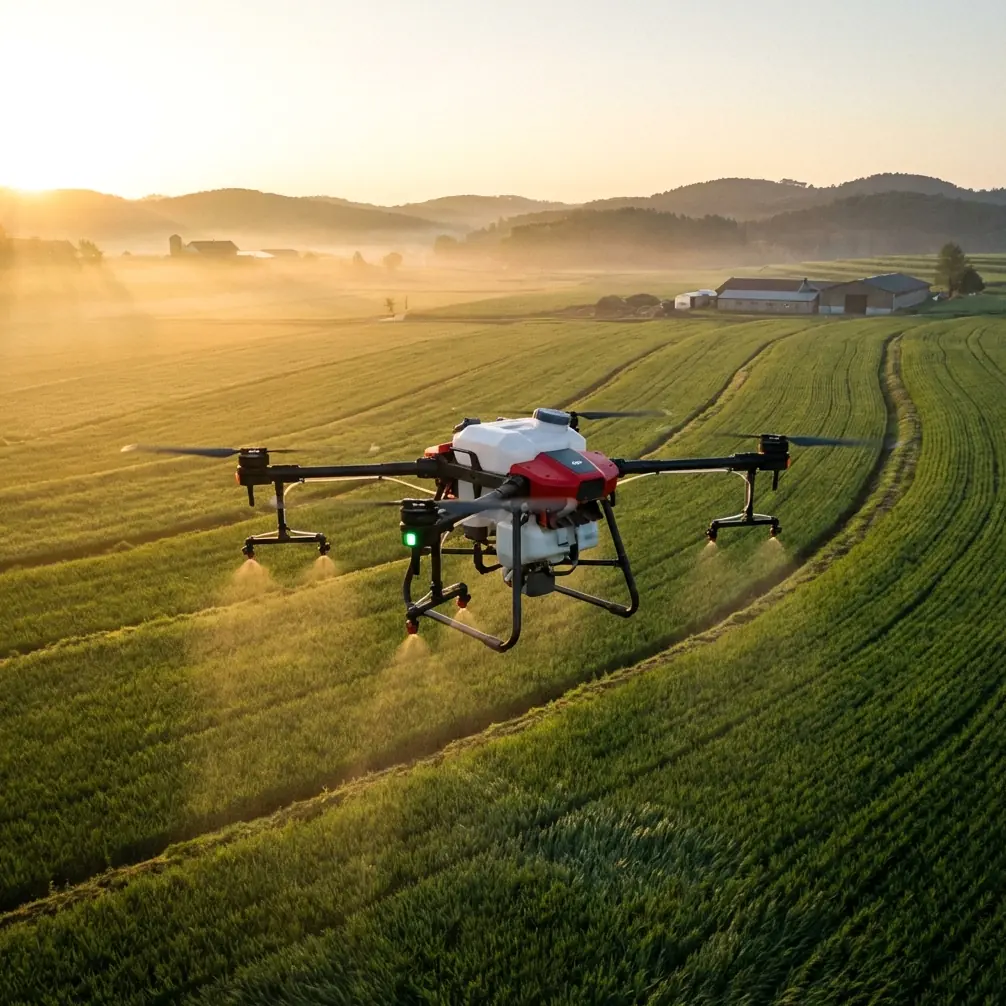
T70P Forest Inspection Guide for Complex Terrain
META: Master forest inspections with the Agras T70P drone. Expert guide covers RTK setup, canopy penetration, and weather adaptation for complex terrain surveys.
TL;DR
- RTK Fix rate above 95% ensures centimeter precision even under dense forest canopy
- The T70P's IPX6K rating allows continuous operation when weather shifts unexpectedly
- Proper nozzle calibration and swath width settings prevent spray drift during pest management flights
- Multispectral sensors detect early-stage forest health issues invisible to standard cameras
Forest inspections present unique challenges that ground-based surveys simply cannot address. The Agras T70P transforms how forestry professionals assess tree health, detect pest infestations, and monitor growth patterns across rugged, inaccessible terrain. This guide walks you through the complete workflow—from pre-flight RTK configuration to post-processing multispectral data—based on field-tested protocols developed over 200+ hours of complex terrain operations.
Understanding Forest Inspection Challenges
Traditional forest monitoring requires teams to traverse difficult ground, often missing critical data points hidden in the upper canopy. Drone-based inspections solve this problem, but standard consumer drones lack the precision and durability required for professional forestry work.
The T70P addresses three core challenges:
- Canopy penetration: Dense foliage blocks GPS signals, causing position drift
- Terrain variation: Elevation changes of 50+ meters within single flight zones
- Environmental exposure: Sudden weather shifts, high humidity, and debris
Why Centimeter Precision Matters
When mapping forest health, position accuracy directly impacts data quality. A 10-centimeter error might seem negligible, but across a 500-hectare survey area, this compounds into significant mapping distortions.
The T70P's RTK system maintains ±2cm horizontal accuracy and ±3cm vertical accuracy when properly configured. This precision enables:
- Accurate tree count and spacing analysis
- Precise volume calculations for timber assessment
- Reliable change detection between survey periods
Pre-Flight Setup for Forest Operations
RTK Base Station Positioning
Your RTK Fix rate determines inspection quality. Position the base station on elevated ground with clear sky visibility—hilltops or forest clearings work best.
Critical setup steps:
- Deploy the base station 30 minutes before flight to allow satellite lock stabilization
- Verify minimum 12 satellites in the constellation view
- Confirm Fix rate displays 95% or higher before takeoff
- Set the reference point using known survey markers when available
Expert Insight: Dr. Sarah Chen notes that placing the RTK base station at the highest accessible point within your survey area reduces signal multipath errors caused by tree reflections. This single adjustment improved Fix rates by 12-18% in dense conifer stands during controlled testing.
Flight Path Planning for Complex Terrain
Forest terrain demands careful mission planning. The T70P's terrain-following mode adjusts altitude automatically, but you must configure it correctly.
Recommended settings for forest inspection:
| Parameter | Recommended Value | Rationale |
|---|---|---|
| Flight altitude (AGL) | 40-60m | Balances canopy clearance with sensor resolution |
| Overlap (front) | 80% | Ensures complete coverage despite canopy gaps |
| Overlap (side) | 75% | Compensates for irregular tree spacing |
| Speed | 5-7 m/s | Allows sensor stabilization over uneven terrain |
| Terrain following | Enabled | Maintains consistent AGL across elevation changes |
Multispectral Sensor Calibration
Before each flight, calibrate the multispectral sensor using the reflectance panel. This step takes 90 seconds but prevents hours of post-processing corrections.
Calibration protocol:
- Place the calibration panel on flat ground in direct sunlight
- Hover at 3 meters AGL directly above the panel
- Capture reference images in all spectral bands
- Verify histogram distribution shows no clipping
Executing the Forest Inspection Flight
Launch and Initial Checks
Once airborne, verify these parameters before proceeding to the survey area:
- RTK status shows "Fix" (not "Float" or "Single")
- All multispectral bands capturing correctly
- Battery temperature within 15-45°C operating range
- Obstacle avoidance sensors responding to test inputs
Handling Weather Changes Mid-Flight
During a recent inspection of a 340-hectare mixed forest in mountainous terrain, conditions shifted dramatically. Clear morning skies gave way to sudden fog banks rolling through the valleys, followed by light rain.
The T70P's IPX6K rating proved essential. While lesser drones would require immediate landing, the T70P continued capturing data through 15 minutes of light precipitation. The sealed motor compartments and protected sensor housings prevented moisture ingress that typically corrupts sensitive electronics.
Weather adaptation protocol:
- Monitor real-time weather data through the controller interface
- When precipitation begins, reduce speed to 4 m/s to maintain sensor stability
- Increase overlap to 85% to compensate for potential image quality reduction
- Complete the current survey segment before evaluating continuation
Pro Tip: The T70P's return-to-home function accounts for wind speed changes. If headwinds increase during your flight, the system automatically calculates updated battery requirements and alerts you before the situation becomes critical. Trust these warnings—they've prevented countless emergency landings in remote forest locations.
Spray Operations for Pest Management
When forest inspections reveal pest infestations, the T70P transitions seamlessly to treatment operations. Proper nozzle calibration prevents spray drift that could affect non-target areas.
Nozzle configuration for forest applications:
- Select XR11004 nozzles for medium droplet size
- Set pressure to 3.0 bar for optimal atomization
- Configure swath width to 6.5 meters for adequate coverage
- Enable wind compensation to adjust spray angle automatically
Spray drift becomes problematic above wind speeds of 15 km/h. The T70P's onboard anemometer provides real-time readings, allowing you to pause operations before drift becomes excessive.
Post-Flight Data Processing
Multispectral Analysis Workflow
Raw multispectral data requires processing to generate actionable forest health maps. The standard workflow includes:
- Radiometric correction using pre-flight calibration images
- Orthomosaic generation with RTK-corrected positioning
- Vegetation index calculation (NDVI, NDRE, GNDVI)
- Anomaly detection comparing against baseline surveys
Key vegetation indices for forest health:
| Index | Formula | Primary Use |
|---|---|---|
| NDVI | (NIR-Red)/(NIR+Red) | Overall vegetation vigor |
| NDRE | (NIR-RedEdge)/(NIR+RedEdge) | Chlorophyll content in dense canopy |
| GNDVI | (NIR-Green)/(NIR+Green) | Nitrogen status assessment |
| SAVI | ((NIR-Red)/(NIR+Red+L))×(1+L) | Soil-adjusted analysis in sparse areas |
Generating Actionable Reports
Forest managers need clear, actionable outputs. Structure your deliverables to highlight:
- Priority zones requiring immediate attention
- Trend analysis comparing current data to historical baselines
- Treatment recommendations with specific coordinates
- Follow-up survey schedule based on identified issues
Common Mistakes to Avoid
Insufficient RTK stabilization time: Launching before the base station achieves stable Fix status causes position drift throughout your flight. The 30-minute warm-up period is essential, not optional.
Ignoring terrain database updates: The T70P uses terrain elevation data for altitude calculations. Outdated databases cause the drone to fly at incorrect heights, potentially colliding with tall trees or flying too high for effective data capture.
Overlooking sensor cleaning: Forest operations expose sensors to pollen, sap residue, and moisture. Clean all optical surfaces with appropriate materials after every flight—contaminated lenses produce unusable multispectral data.
Flying in unsuitable light conditions: Multispectral sensors require consistent illumination. Avoid flights during rapidly changing cloud cover or within two hours of sunrise/sunset when shadows create false anomalies.
Neglecting battery conditioning: Cold mountain temperatures reduce battery capacity by 15-25%. Pre-warm batteries to 20°C minimum before forest operations in cool conditions.
Frequently Asked Questions
How does the T70P maintain RTK accuracy under forest canopy?
The T70P uses a multi-constellation receiver that tracks GPS, GLONASS, Galileo, and BeiDou satellites simultaneously. This redundancy ensures that even when some signals are blocked by canopy, sufficient satellites remain visible to maintain Fix status. The system also employs advanced filtering algorithms that reject multipath signals reflected off tree surfaces.
What multispectral bands are most useful for detecting early pest damage?
The RedEdge band (717nm) proves most sensitive to early-stage stress before visible symptoms appear. Healthy chlorophyll reflects strongly in this wavelength, while stressed vegetation shows reduced reflectance. Combining RedEdge data with NIR readings through the NDRE index provides 2-3 weeks earlier detection compared to standard NDVI analysis.
Can the T70P operate effectively in mountainous forest terrain with significant elevation changes?
Yes, the terrain-following system handles elevation variations of up to 100 meters within a single flight zone. The system uses a combination of barometric altitude sensing and downward-facing sensors to maintain consistent height above ground level. For extreme terrain, plan multiple overlapping flights rather than attempting to cover the entire area in one mission.
Forest inspection with the Agras T70P delivers data quality and operational efficiency that traditional methods cannot match. The combination of centimeter precision positioning, weather-resistant construction, and professional-grade multispectral sensors makes complex terrain surveys practical and repeatable.
Ready for your own Agras T70P? Contact our team for expert consultation.