
Agras T70P for Windy Coastline Inspection
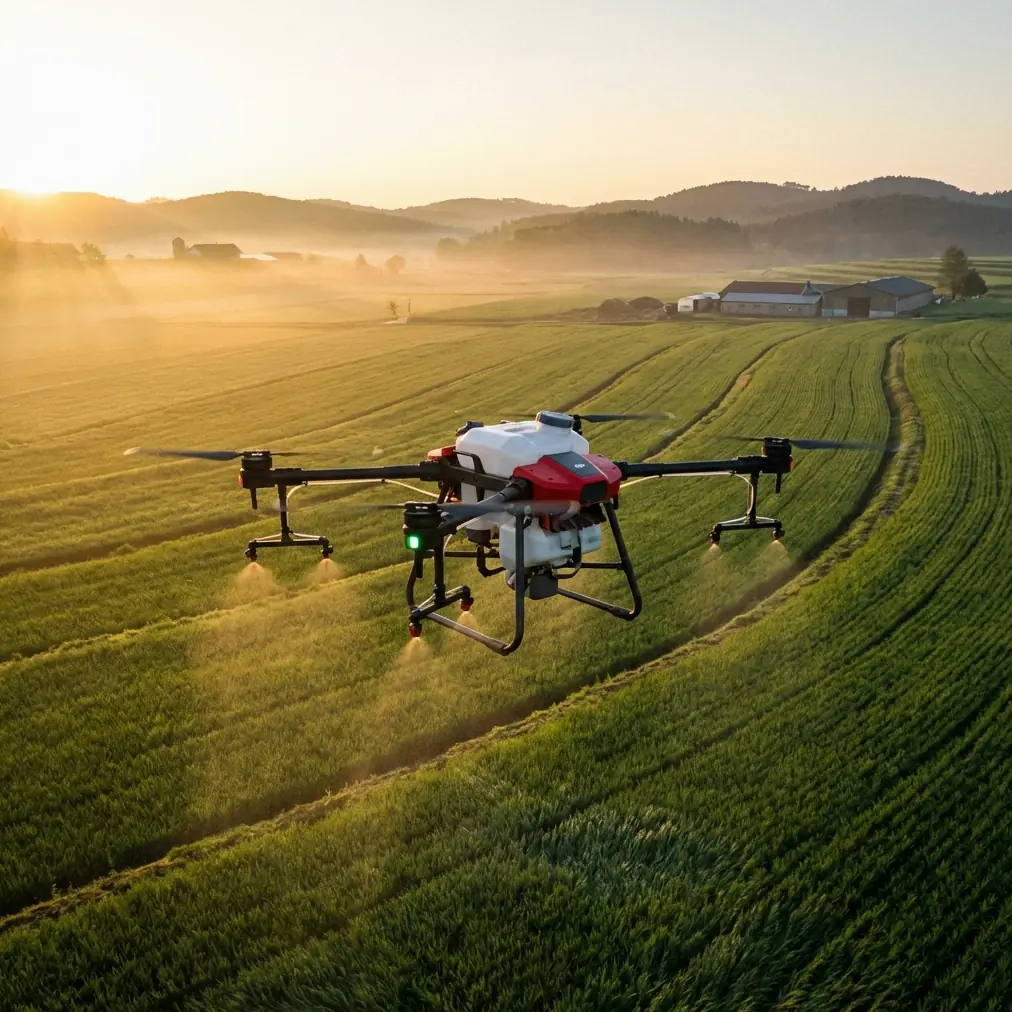
Agras T70P for Windy Coastline Inspection: What the New U.S. Airspace Rules Mean in Practice
META: A technical review of the Agras T70P for windy coastline inspection, linking mid-flight weather realities, precision flight demands, and new U.S. civil airspace rules around drone operations.
Wind along the coast has a way of exposing every weakness in a drone operation.
It changes direction without warning. Salt haze dulls visibility. Gusts wrap around seawalls, dunes, storage yards, and breakwaters in ways that are hard to model from a forecast alone. If you are evaluating a platform like the Agras T70P for coastline inspection, those details matter more than brochure-level performance claims. The real question is whether the aircraft can hold a reliable line, preserve data quality, and keep the mission compliant when conditions stop being tidy.
That question has become more relevant because the operating environment around drones is shifting, not just the weather. On April 13, 2026, DroneLife reported that the Federal Aviation Administration and the U.S. Department of Defense signed a formal safety agreement covering counter-drone operations in U.S. civil airspace. The move followed drone-related incidents in Texas and set new operating rules for how counter-UAS systems are used. That may sound distant from a civilian inspection mission, but it is not. For operators flying near sensitive infrastructure, ports, shoreline utilities, or transport corridors, the message is clear: civil airspace is becoming more structured, more scrutinized, and less tolerant of ambiguity.
That changes how I would review the Agras T70P for coastal work. Not as an isolated airframe, but as part of an operation that has to stay stable physically and administratively.
Why coastline inspection is harder than many inland missions
A windy coastal inspection flight asks a lot from a drone even before regulations enter the picture. The pilot needs consistent track holding across long, exposed stretches. The mission planner needs predictable swath width if the job includes visual condition documentation over marsh edges, shoreline vegetation, drainage channels, or embankments. If the aircraft is carrying a spray system for vegetation management or targeted treatment near access roads and erosion-prone zones, spray drift becomes a serious operational variable, not a footnote.
This is where the Agras T70P becomes interesting. It sits in a category associated with heavy-duty field operations, but that does not limit its relevance to inspection-minded readers. In coastal environments, utility and resilience are often worth more than elegance. A platform designed for demanding agricultural workloads can be attractive because those workloads already assume uneven airflow, repeated low-altitude passes, and a need for tight flight discipline.
The challenge is translating that into inspection value.
Agras-class platforms are often judged by payload and treatment capacity first. For coastline inspection, I care more about how the machine behaves when the mission is interrupted by real weather. Does the aircraft maintain stable positioning when gusts begin to shear across the survey line? How quickly does it recover from small path deviations? Can the operator preserve a usable RTK fix rate near reflective surfaces, standing water, and linear infrastructure where signal conditions may be inconsistent? Those are the details that decide whether the final dataset is credible.
The mid-flight weather shift that actually tests the platform
Let me frame this in the scenario that matters most: the weather changed mid-flight.
The mission started in manageable onshore wind. The plan was to inspect a coastline segment with mixed features: rock revetment, access track, drainage outfalls, and a vegetated buffer that required careful visual review. Early passes were clean. Then the wind built. Not dramatically at first. Just enough to push the aircraft slightly off the intended line on the return leg and force more frequent attitude corrections than during launch conditions.
This is where a technical review separates itself from marketing talk.
A drone handling a coastal mission needs to do three things when the conditions tighten. First, it needs to preserve positional confidence. Centimeter precision is not a vanity metric when documenting shoreline movement, recurring washout points, or maintenance boundaries. If the aircraft’s RTK fix rate becomes unstable, the mission may still be flyable, but the trustworthiness of location-tagged observations begins to erode. Second, it needs to maintain a consistent enough ground track to protect overlap and coverage logic. Third, it needs to give the operator enough system awareness to decide whether to continue, revise the route, or terminate.
For the Agras T70P, that means the flight stack matters as much as the frame itself. In wind, a large working drone is not judged simply by whether it stays airborne. It is judged by whether it stays disciplined. Coastal missions rarely fail all at once. They degrade in layers: slight drift, small heading corrections, uneven spacing, then avoidable rework.
A well-managed T70P operation should be built around that reality. Mission geometry has to anticipate gust fronts. Route design should reduce exposure to crosswind-heavy legs where possible. If the job includes any spray-related work, nozzle calibration must be verified with the expected wind profile in mind, because even a competent aircraft cannot rescue poor liquid application logic once spray drift begins to widen beyond the intended target area.
Spray drift is not just an agriculture issue on the coast
Readers sometimes treat spray drift as relevant only to farm operations. Along coastlines, that is a mistake.
The term matters anywhere a drone may be used for vegetation control, invasive species treatment, or localized maintenance support near drainage channels and embankments. Wind can carry droplets into sensitive habitats, standing water, pedestrian areas, or adjacent infrastructure. That makes nozzle calibration and weather awareness operational safeguards, not technical trivia.
If the Agras T70P is deployed in a hybrid inspection-and-treatment role, calibration discipline becomes one of the strongest indicators of professional practice. A coastal operator must know the relationship between nozzle setup, droplet behavior, aircraft speed, and wind direction shifts. If a breeze turns while the aircraft is already committed to a pass, the pilot has very little time to decide whether the path is still valid. A platform may have excellent route repeatability, but if the calibration choices are mismatched to the actual conditions, the result is preventable drift.
That is one reason the narrative around the T70P should not be limited to capacity or endurance. On a coastline, environmental stewardship and mission precision are welded together.
What the FAA-DoD agreement changes for civilian operators
Now to the policy side, because it directly affects how inspection flights should be planned.
The FAA and DoD did not merely exchange statements. They signed a formal safety agreement on counter-drone operations. According to the April 2026 report, the agreement came after incidents in Texas and establishes new operating rules for the use of counter-UAS systems in U.S. civil airspace. The practical significance is larger than the headline suggests.
For a civilian Agras T70P operator inspecting coastlines, especially near ports, coastal energy sites, government property, transport nodes, or other sensitive corridors, there is a growing need to assume that airspace oversight is becoming more active and more procedural. Even if your mission has nothing to do with security systems, your aircraft may be operating in an environment shaped by them. That means cleaner documentation, clearer flight intent, stronger geospatial planning, and tighter coordination are no longer signs of a large enterprise operator. They are baseline professionalism.
This matters because the Agras T70P is not a pocket-size platform that disappears into the background. It is a serious aircraft class, and serious aircraft invite serious scrutiny. If the mission area overlaps with places where counter-UAS awareness is elevated, the burden is on the operator to fly in a way that is unmistakably legitimate, predictable, and safe.
The agreement also signals a broader shift in how counter-drone technology is managed within U.S. airspace. For inspection teams, that means policy risk now belongs in the pre-flight checklist alongside weather, battery state, GNSS conditions, and route hazards. On windy coasts, pilots are used to adapting to natural turbulence. Increasingly, they also need to adapt to a more structured regulatory atmosphere.
Sensor logic matters as much as airframe toughness
The T70P discussion becomes more productive when framed around mission architecture.
A coastline inspection workflow may include visual assessment, orthomosaic generation, change detection, and in some cases multispectral analysis for vegetation stress or moisture-related patterns in buffer zones. If multispectral data is part of the operation, then stable line-holding and repeatable altitude control matter even more. Small inconsistencies can dilute the comparability of captured data, especially when revisiting the same corridor over time.
Swath width also deserves careful treatment. In windy conditions, the theoretical width of efficient coverage and the practical width of reliable coverage are not the same thing. A disciplined operator narrows expectations when necessary. Trying to preserve maximum efficiency during rising wind often produces uneven data or incomplete edge coverage. The better decision is usually to accept a more conservative swath width and protect the consistency of the record.
This is also where ruggedization counts. Coastal inspections expose aircraft to moisture, airborne particulates, and corrosive conditions. A platform associated with IPX6K-style durability expectations is naturally appealing in that context because washdown resilience and environmental hardening support repeat field use. Toughness does not make a drone immune to salt exposure, but it does improve operational confidence when conditions are messy and turnaround windows are short.
The real value of centimeter precision on the shoreline
Centimeter precision sounds abstract until you use it for a practical coastal task.
Imagine documenting the condition of a drainage outlet that repeatedly clogs after storms. A few meters of location uncertainty can waste time during follow-up visits, especially when multiple similar structures are distributed along a long shoreline. Centimeter-level confidence changes that. The same is true for monitoring erosion edges, maintenance boundaries, rock armor displacement, or recurring problem spots in vegetated strips. Precision reduces ambiguity, and ambiguity is expensive in field operations.
That is why RTK fix rate is not a spec-sheet obsession. It is a measure of whether the mission can produce repeatable, decision-grade results. On coasts, reflective water surfaces, wind-driven attitude changes, and sparse landmarks can all complicate data collection. If the T70P setup maintains a strong RTK solution through those conditions, the inspection team gains more than neat map outputs. They gain a dependable reference for future comparison.
My technical view of the Agras T70P in this role
For windy coastline inspection, the Agras T70P should be viewed as a robust operational tool rather than a generic drone choice. Its value is strongest when the mission demands repeat passes, environmental resilience, and disciplined path control under changing conditions. I would not treat it as a casual option for ad hoc flying. I would treat it as a platform that rewards formal planning.
That includes:
- route design that respects coastal wind geometry
- conservative assumptions about swath width once gusts increase
- strict nozzle calibration where any spray-related task is involved
- active monitoring of RTK fix rate to preserve centimeter precision
- clear documentation and airspace coordination in light of the FAA-DoD regulatory shift
The mid-flight weather change in our scenario is not a dramatic anecdote. It is the normal test. A coastline mission starts as a flight problem and quickly becomes a systems problem: aircraft behavior, data integrity, environmental control, and regulatory awareness all at once. The Agras T70P makes sense when the operator understands that whole stack.
If your team is assessing whether this platform fits a coastal inspection workflow, I would focus less on raw ambition and more on operational composure. In this environment, the better aircraft is often the one that lets you make smaller, smarter decisions at the right time.
If you need a technical discussion around mission planning constraints, coastal wind handling, or inspection setup details, you can reach out directly through this field operations contact channel.
Ready for your own Agras T70P? Contact our team for expert consultation.