
Agras T70P in Mountain Operations: What Really Matters When
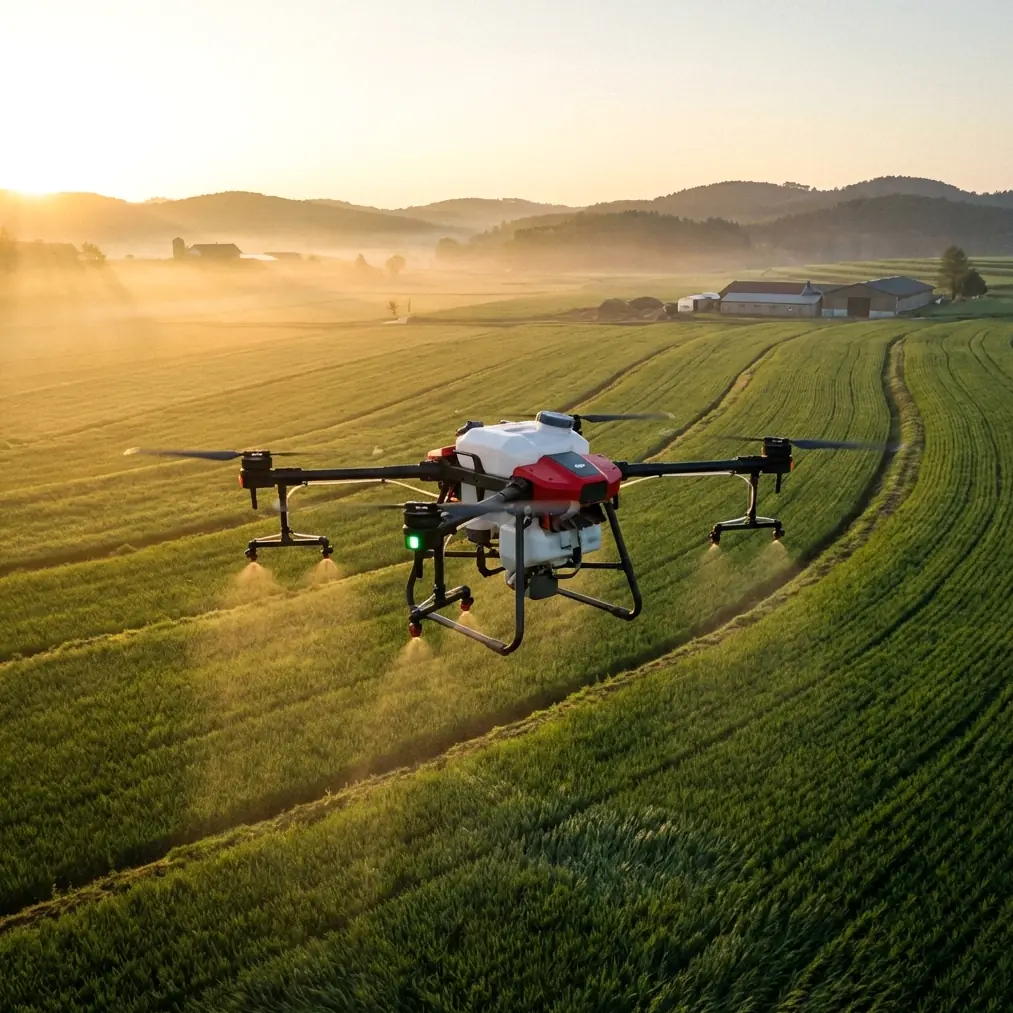
Agras T70P in Mountain Operations: What Really Matters When Conditions Shift Mid-Flight
META: A field-focused look at Agras T70P mountain use, connecting terrain, weather shifts, precision spraying, hyperspectral sensing, and UAV workflow lessons from mapping and drone delivery.
Mountain work exposes the truth about any agricultural drone. Flat-field specs look tidy on paper, but steep terrain, uneven airflow, fast-changing weather, and awkward access routes quickly separate a capable platform from one that simply photographs well in a brochure. That is why the Agras T70P becomes interesting not as an abstract product, but as a working tool in hard terrain.
The usual conversation around mountain operations tends to fixate on payload or flight time alone. That misses the point. In upland orchards, terraced plots, and remote planting zones, the real challenge is not just lifting liquid. It is maintaining useful coverage when wind behavior changes by slope, preserving placement accuracy when GNSS conditions fluctuate near ridgelines, and keeping the operation moving when the site is physically difficult to reach.
A recent civilian drone story outside agriculture helps frame the broader shift. In one province, a vehicle owner became the first recipient in the province of a UAV-based license plate delivery service. His reaction was telling: getting the plate felt “like ordering takeout.” That detail is small, but operationally it matters. It shows how drones are no longer confined to isolated demo flights; they are being trusted for practical, time-sensitive delivery tasks that must work in the real world. For mountain users evaluating an Agras T70P workflow, that same expectation now applies. The question is no longer whether drones can fly. It is whether they can reduce friction in places where roads, labor, and timing all work against you.
The mountain problem is not one problem
Readers interested in filming mountain venues often understand terrain visually but not always aerodynamically. The same is true in agricultural flight planning. A mountainside can look calm from the staging area and still generate cross-slope turbulence fifty meters away. Valleys funnel gusts. Sun-heated rock faces create rising air. Moist pockets near tree lines alter spray behavior. If your mission depends on consistent swath width and controlled droplet deposition, those micro-conditions matter more than headline specs.
That is where concepts like spray drift and nozzle calibration stop being technical footnotes and become daily operational disciplines. Drift in mountain work is rarely a simple left-to-right event. It can lift, curl, and settle unpredictably as wind shears around terraces or orchard edges. A properly calibrated nozzle setup is therefore not just about output volume. It is about matching droplet behavior to actual terrain-induced airflow so that the Agras T70P can do precise work rather than broad, wasteful application.
And then the weather changes.
Mid-flight weather shifts are where workflows break
On a mountain site, a flight can begin under stable conditions and turn complicated within minutes. Clouds move over a ridge, temperature drops, and wind direction rotates. This is the moment when pilots discover whether their operating method is resilient or brittle.
Imagine a morning mission over a hillside venue access road bordered by vegetation and drainage channels. The initial goal might be a treatment pass over difficult-to-reach planted edges, with visual documentation collected around the perimeter. Halfway through the operation, the breeze that had been coming upslope starts quartering across the contour. The change is not dramatic enough to force an immediate shutdown, but it is enough to alter drift risk and effective coverage.
A mature response in that moment is not bravado. It is adjustment. Swath width may need to narrow. Route geometry may need to be re-run to account for the new crosswind component. If the T70P is operating with centimeter-precision positioning support, maintaining line discipline becomes much easier because reduced overlap and tighter edge control are more achievable even as conditions become less forgiving. This is where RTK fix rate matters in practical terms. A strong, stable fix rate is not a marketing trophy; it is what helps keep passes where they belong when terrain and airflow begin to challenge consistency.
In mountain work, precision buys safety margins. Every unnecessary correction burns time, battery, and attention. Every uncertain pass increases the chance of over-application on one strip and under-coverage on the next.
Why mapping lessons matter to an Agras T70P operator
One of the strongest clues about how to think about the T70P comes from outside spraying itself. In engineering and construction, UAV digital surveying has expanded because it solved several old problems at once: high cost of conventional aerial imaging, poor aircraft attitude control, and the practical difficulty of manual measurement in constrained conditions. Those are not small gains. They explain why UAV systems became valuable in planning, small-area rapid mapping, and site modeling.
The same source material goes further. It describes drone-based 3D scanning from multiple angles to collect key point-cloud data from construction projects, then compare reconstructed models against design plans to catch issues early and avoid expensive mistakes. That logic translates surprisingly well to mountainous agricultural operations.
Here is the connection: when you operate an Agras T70P in mountain terrain, the flight itself is only one layer of the job. The real efficiency comes from integrating terrain knowledge before takeoff. Slope shape, canopy variation, edge geometry, access constraints, and refill logistics all affect the outcome. If a UAV-enabled workflow in construction can detect deviations early through dense spatial data, then a T70P operation can benefit from the same mindset: measure first, fly with intent second.
This is especially relevant for readers whose mountain scenario includes filming venues, access roads, landscaped embankments, or complex outdoor properties. A drone operation around those sites is often hybrid by nature. One mission may involve documentation, terrain awareness, vegetation management, and precision treatment planning within the same operational window. The better your spatial model, the less guesswork enters the spraying phase.
The overlooked value of advanced sensing
Most people looking up the Agras T70P are thinking about liquid handling, route efficiency, and terrain following. Fair enough. But another reference point deserves attention: UAV hyperspectral imaging.
A hyperspectral system cited in the source material highlights nanometer-level spectral resolution, which allows operators to capture diagnostic spectral characteristics that conventional multispectral methods often miss. That is not academic trivia. In water-quality monitoring, the higher spectral resolution improved multi-parameter inversion accuracy and helped address one of the classic weaknesses of conventional remote sensing: difficulty isolating diagnostic absorption features.
Why does that matter for a mountain-focused T70P article?
Because it points to the direction serious drone operations are heading. The most capable workflows are no longer just “fly and apply.” They are “sense, interpret, act, verify.” In the water-monitoring example, researchers linked remotely sensed spectral data with ground-truth measurements to estimate parameters like suspended solids and evaluate eutrophication status. The broader lesson is operational: better sensing leads to better intervention decisions.
For mountainous agriculture or vegetation management, that same logic supports pairing application flights with data-rich scouting. Multispectral and, where appropriate, hyperspectral insights can help distinguish moisture stress, nutrient imbalance, disease expression, or inconsistent vigor across elevation bands. Even if the T70P itself is not the sensing platform in every workflow, it becomes far more effective when dispatched on the basis of actual field variability rather than visual assumption.
In hard terrain, every refill and battery cycle counts. Data-driven targeting matters more there than in an easy-access flat field.
Weather resilience is not just about surviving moisture
Mountain operators often ask whether a platform can handle bad weather as if the answer lives entirely in an ingress protection rating. IPX6K matters. It signals serious resistance to water exposure in demanding working conditions. But on a real hillside, resilience is broader than sealing.
It includes whether the airframe stays predictable when wind becomes patchy. It includes whether the pilot can confidently pause, re-plan, and resume without losing field logic. It includes whether nozzle performance remains trustworthy after repeated exposure to moisture, dust, and uneven loading cycles. It includes whether terrain-following behavior remains useful when the landscape is visually obvious but aerodynamically deceptive.
That is why weather shifts mid-flight are such a revealing test. The point is not that the T70P should blindly push through worsening conditions. The point is that a robust platform and workflow give you options: continue safely with tighter parameters, break the mission into smaller blocks, or suspend and restart with minimal confusion once conditions stabilize.
For mountain venue environments, where access windows can be narrow and afternoon conditions can deteriorate quickly, that flexibility has real value.
Mountain operations reward precision disciplines, not heroics
A lot of field underperformance comes from treating precision features as optional extras. They are not optional in the hills.
- Nozzle calibration determines whether your target output remains consistent across elevation changes and repeated refills.
- Swath width discipline helps manage crosswind effects and terrain-edge overlap.
- RTK-based centimeter precision reduces cumulative line error on irregular plots and narrow terraces.
- Drift awareness protects adjacent vegetation, water edges, and public-facing landscapes.
These are not glamorous topics, but they are where results are won.
The engineering reference offered another useful reminder: UAV mapping proved valuable because it delivered quick, economical data for scales such as 1:2000, 1:5000, and 1:10000 planning work, particularly where traditional methods were costly or difficult. Mountain agricultural sites fit that same pattern. They are often fragmented, hard to access, and poorly served by blunt operating methods. When a drone workflow is properly structured, the gain is not simply faster flight. The gain is better decision quality across the whole job.
A more realistic way to think about the Agras T70P
So what should a mountain operator actually expect from an Agras T70P-centered workflow?
Not magic. Not all-weather invincibility. Not perfect uniformity in a terrain class famous for defeating uniformity.
What you can reasonably expect is a platform that becomes valuable when paired with strong operating habits: pre-mission terrain understanding, careful weather reading, nozzle calibration discipline, and precision guidance that holds up when ridgelines and terraces complicate geometry. Add complementary sensing—whether multispectral scouting or more advanced spectral analysis in specialized projects—and the drone shifts from a spraying machine to part of a much smarter field system.
That system perspective also explains why stories like drone license plate delivery matter more than they first appear. When civilian users start describing drone service as feeling as convenient as ordering takeout, they are reacting to reliability made visible. The same cultural shift is happening in professional field work. Operators no longer want drones that merely impress. They want drones that remove delay, compress logistics, and make difficult sites manageable.
Mountain terrain is where that promise either holds up or falls apart.
If your work involves remote blocks, elevated venues, steep access roads, orchards on contour, or landscaped mountain properties, the Agras T70P deserves to be judged on operational coherence: how well it supports precise application after the wind turns, how reliably it maintains route intent on complex ground, and how effectively it integrates into a broader sensing-and-action workflow.
That is the standard that matters.
If you want to compare mountain workflow setups or discuss field constraints in a practical way, you can reach out here: https://wa.me/85255379740
Ready for your own Agras T70P? Contact our team for expert consultation.