
Filming forests in low light with the Agras T70P
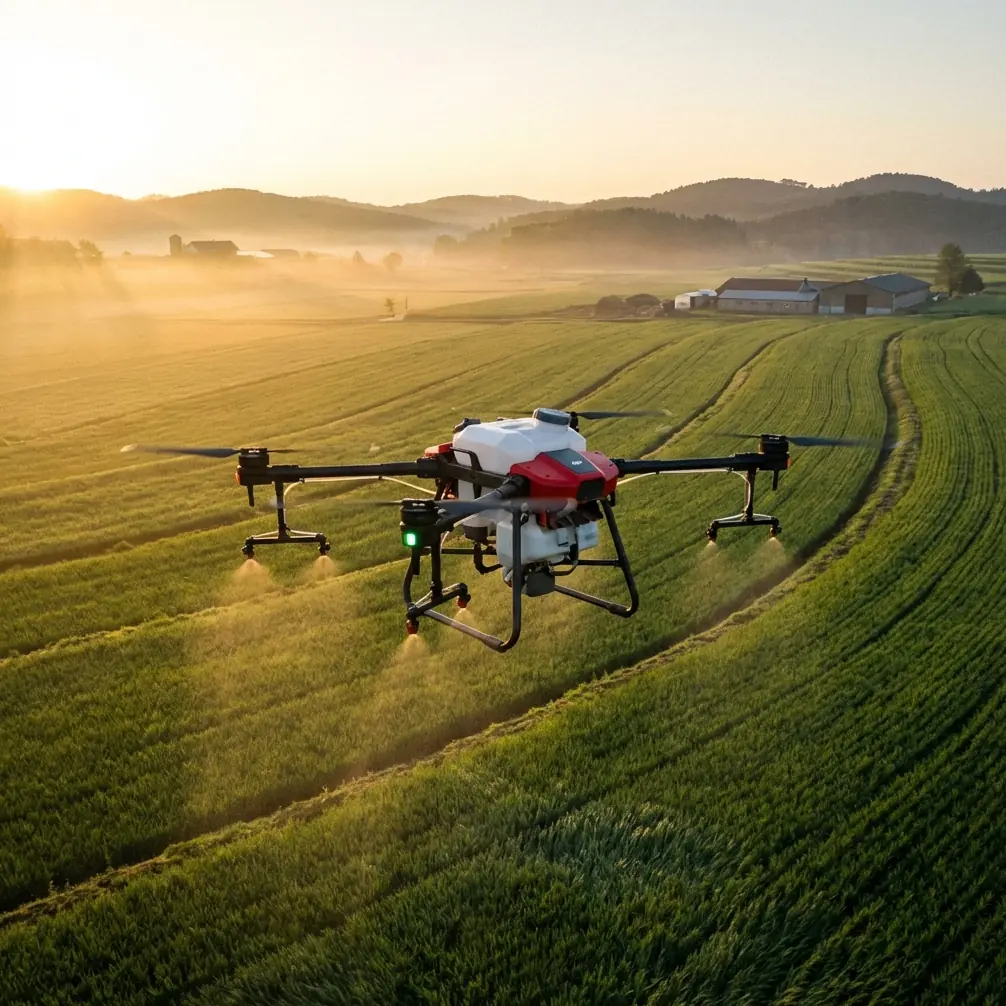
Filming forests in low light with the Agras T70P: what actually matters in the field
META: A field-focused look at using the Agras T70P around forestry work in low light, with practical insight on flight data, geofencing, operator rules, and image workflow for large-area drone operations.
Low-light forestry work exposes every weak point in a drone operation. Shadows merge into terrain. Moisture builds faster than expected. Tree lines distort depth perception. And the moment weather shifts, the pilot’s margin gets thinner.
That is why the most useful way to think about the Agras T70P is not as a standalone aircraft, but as part of a working system. The machine matters, of course. But in forest environments—especially when you are documenting canopy edges, drainage paths, disease spread, or planting zones in dim conditions—the aircraft only performs as well as the surrounding workflow: pilot discipline, flight data visibility, airspace controls, and what happens to the imagery after landing.
This is where the broader drone industry has been heading for years. At the Rebuild2018 technology and business summit in Chengdu on July 21, drone discussion increasingly centered on application and artificial intelligence rather than the aircraft alone. That shift still explains the real value of a platform like the Agras T70P today. The operational question is no longer “which drone flies?” It is “which drone fits a complete job chain in the field?”
For forestry users working in low light, that distinction is not academic. It changes whether the mission is safe, repeatable, and useful.
The problem with low-light forest operations
Forests are visually dense and operationally unforgiving. Light fades earlier under canopy. Ground references disappear in uneven terrain. Moisture, fog, and wind channels can change minute by minute. If you are trying to collect usable visual data near dusk or under overcast conditions, you are already dealing with compressed decision time.
An aircraft like the Agras T70P may be discussed in agriculture-first terms, but the discipline behind agricultural drone work is highly relevant to forestry imaging and survey support. Agricultural operators are trained to think in lanes, coverage consistency, edge management, environmental drift, and repeatable output. Those habits transfer well to forest-adjacent flying, especially in low light where “close enough” quickly becomes operationally dangerous.
The biggest mistake I see in this category is assuming that difficult light can be solved purely with flying skill. It cannot. Low-light work is mainly a systems issue.
Why the “drone cloud” concept matters more than most operators realize
One of the most concrete regulatory details in the reference material is the definition of the unmanned aircraft cloud system, or 无人机云系统. The regulation describes it as a dynamic operational database for light civil drones that provides navigation and weather services while monitoring flight data in real time, including operating information, position, altitude, and speed. It also states that connected aircraft should upload flight data immediately, and that the system can generate alerts when a drone intrudes into an electronic fence.
That sounds bureaucratic until weather turns.
On one recent forest-edge documentation scenario, conditions began with a stable overcast and manageable visibility. Halfway through the mission, wind started funneling through a cut corridor between tree stands, and moisture thickened enough to flatten contrast across the scene. In bright open farmland, that kind of change is annoying. In a forest, it can erase the visual cues a pilot depends on.
This is where live operational awareness becomes more than a compliance checkbox. If your flight stack continuously tracks position, altitude, and speed, and ties that to weather and route awareness, you are much better placed to make disciplined decisions instead of instinctive ones. With a platform such as the Agras T70P, operators often focus on payload, spray capability, swath width, or nozzle calibration because those are tangible metrics. Yet in low-light forestry support, the less glamorous layer—flight telemetry flowing into a monitored operational system—can be what keeps the mission orderly when the environment becomes ambiguous.
That same regulation also highlights electronic fences. In forestry work, geofencing is not just about prohibited airspace. It is also useful as a practical planning concept. Tree lines near roads, utility corridors, protected zones, and site boundaries create invisible operational edges. A geofence-backed workflow gives the operator a hard limit when visual judgment is under pressure. In dim conditions, that matters.
The mid-flight weather change test
Low light rarely stays constant. It usually gets worse.
When weather shifted mid-flight in the scenario above, the right response was not to “push through” for one more pass. It was to lean on the discipline that regulated commercial operations are built around: verify flight status, respect boundaries, and reduce ambiguity. A pilot flying under changing visibility should not be improvising around obstacles or trying to salvage a marginal run. The regulations cited in the source make the pilot in command directly responsible for the operation and give that person final authority. That is exactly how it should be interpreted in forest work.
The same document also prohibits drone operation within 8 hours of drinking alcohol and bars flying under the influence of any substance that impairs safe performance. On the surface, that may seem unrelated to a technical article about the Agras T70P. In practice, it cuts to the heart of low-light operations. Flying around forests at dusk requires judgment, not just control input. Anything that degrades reaction time or visual processing compounds the environmental risk quickly.
The operational significance is simple: when the weather changes mid-flight, the aircraft’s capability matters less than the pilot’s willingness to make a conservative call early.
Why image workflow matters as much as flight performance
Many T70P discussions stop at the aircraft. That leaves out the part that usually consumes the most time after a large-area mission: making the data useful.
The ArcGIS-based crop survey reference is surprisingly relevant here. It notes that Envi OneButton can rapidly generate high-resolution orthomosaics and Esri mosaic datasets from drone imagery. It also explains that ArcMap supports deeper GIS processing and map management, including combining drone imagery, sample plots, parcel boundaries, and geotagged photos into one working map. Then it pushes the argument further: at city or provincial survey scale, one campaign can generate thousands upon thousands of orthomosaic outputs, and over several years those accumulations become expensive and difficult to manage without an image management system.
Forestry readers should pay attention to that.
If you are filming forests in low light for condition assessment, regeneration monitoring, access route planning, erosion tracking, or disease documentation, your challenge is not just capturing footage. It is preserving spatial context over time. A one-off video clip has limited value. A stitched orthographic base layer, matched to location-tagged field notes and organized in a searchable archive, becomes operational intelligence.
That is where a drone like the Agras T70P fits into a broader data ecosystem. The aircraft collects; the GIS stack interprets; the portal layer distributes.
From isolated flights to collaborative forest programs
The source material’s discussion of ArcGIS Portal is especially useful because it addresses a common scaling problem. Portal allows multiple users inside and outside an organization to co-build and share spatial data, creating integrated field and office collaboration. In plain terms, that means the people collecting imagery in rough conditions do not have to carry the entire analytical burden themselves.
For forestry programs, this changes how low-light missions can be justified. A pilot can capture imagery late in the day when surface contrast highlights canopy gaps or waterlogging patterns differently than midday light would. That material can then be published into a controlled environment where remote interpreters, supervisors, and planners review the results together. The source specifically notes that such a portal helps more personnel work on high-definition drone imagery at the same time and gives higher-level departments a better view of progress.
Operationally, that is significant. Forest work is often spread across wide geographies and fragmented teams. If a T70P mission is flown in a difficult weather window, the value of that flight increases sharply when the output is easy to distribute, compare, and retrieve later by time, area, and resolution.
The practical lesson for Agras T70P users
So how should an Agras T70P user approach low-light forestry work if the mission involves filming, documentation, or survey support rather than generic demonstration flying?
First, think beyond the aircraft. The strongest field outcomes come from linking flight operations to a monitored system that tracks position, altitude, speed, and airspace boundaries in real time. The regulatory reference to the drone cloud system is not abstract policy language; it reflects the operational backbone needed when visibility drops and weather shifts.
Second, treat geofencing as part of your forest method, not just a software restriction. In wooded environments, edge discipline is essential. A pilot dealing with dim light and changing wind should not have to mentally reconstruct every boundary in real time.
Third, plan the post-flight chain before takeoff. If the mission’s output may later be mosaicked, compared, interpreted, or shared across departments, capture practices should support that. The ArcGIS and Envi workflow described in the reference is a strong model: assemble orthomosaics quickly, connect them to geotagged evidence, and manage them in a way that remains usable after one season turns into several years of accumulated imagery.
Fourth, bring agricultural discipline into visual forestry work. Terms like spray drift, nozzle calibration, RTK fix rate, multispectral options, swath width, centimeter precision, and IPX6K durability are often discussed in crop operations, but the deeper lesson is procedural rigor. Agricultural drone teams succeed because they standardize. Forestry teams using the Agras T70P in low light should borrow that mindset even when they are not spraying a single hectare.
Where the industry shift really lands
The 2018 summit discussion about “+drone” rather than “drone+” captured a mature truth. The drone is no longer the headline. The use case is.
That is particularly true for the Agras T70P around forest-edge and low-light work. Readers searching for this platform may begin with hardware curiosity, but the decisive factors are operational architecture and data handling. Can the mission stay controlled when weather shifts? Can the pilot work within monitored boundaries? Can the output become a durable map product rather than another folder of disconnected files? Can multiple stakeholders use the result without rebuilding the workflow each time?
If the answer is yes, the aircraft becomes far more than a flying camera or field tool. It becomes part of a dependable civilian workflow for land management.
If you are sorting through how to adapt an Agras T70P to forestry imaging, survey support, or GIS-led environmental work, it helps to discuss the workflow as a whole rather than the airframe in isolation. For a direct technical conversation, you can message a field specialist here.
Low-light forest operations reward preparation and punish improvisation. The most capable teams know that the drone, the pilot, the flight data layer, the geofence logic, and the image management stack all have to work together. That is the real story behind using an Agras T70P well.
Ready for your own Agras T70P? Contact our team for expert consultation.